World Atopic Eczema Day 2026

Tonight's webinar, what can coexist with CU, tips for communicating with your provider + a new podcast series

We CU has had a busy, busy summer. We co-produced a podcast (more on that below), hosted a webinar on patient-provider communication, launched a new educational tip series on Facebook last week, traveled to Barcelona for the GAAPP Summit and Annual General Meeting earlier this month -- and we're working hard at planning something special for World Urticaria Day on October 1.


But first: today, September 14, is World Atopic Eczema Day.


Atopic dermatitis (AD) is one of the most common forms of eczema. About 7% of adults in the U.S. live with it, according to the national research study Atopic Dermatitis in America. It's a chronic condition showing up as persistent itch, dry or scaly skin, and interrupted sleep.


This year's theme, #BreakTheInvisibleBurden, is a reminder that atopic eczema carries medical, social, emotional, and economic weight that usually goes unseen. The same is true of chronic urticaria (CU). That's why we're spending the next month on both.


Our AD and CU tip series is running on Facebook now through the second week of October, marking World Atopic Eczema Day and World Urticaria Day.


We invite you to follow along.


The We CU Team


Tonight's webinar

Hives, eczema, and the navigating your care journey


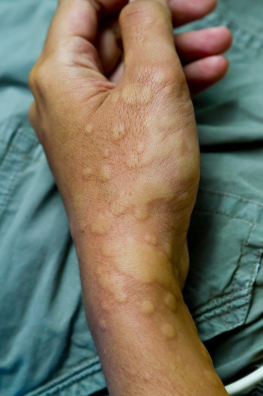
Living with chronic hives or eczema can mean years of confusing symptoms, care split across providers who aren't communicating well, and no clear answer about whether you're dealing with one condition or two.


Tonight at 7 pm ET, Dr. Kuritza (Medical Dermatology Associates of Chicago) speaks with a patient living with both chronic urticaria and atopic dermatitis. They'll get into what sets these conditions apart, where they overlap, and how to recognize when symptoms warrant medical attention. You'll come away with practical tools for self-management and for advocating for yourself in appointments.


Whether you were diagnosed last month or have been managing symptoms for years, there's something here for you.


Save your seat


Can't make it live? Register anyway; we'll send the recording straight to your inbox.  


Credit: Irina Esau via iStock


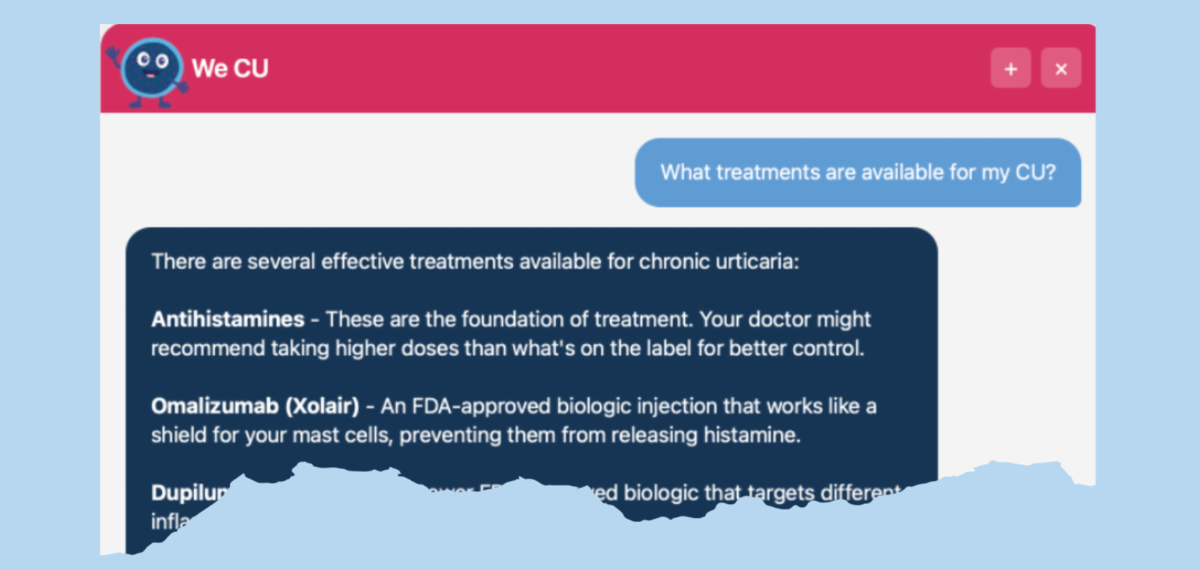
We asked Scratch (and the internet) about CU comorbidities 


Mental health. Studies consistently find higher rates of depression and anxiety among people with chronic urticaria than in the general population. Living with unpredictable symptoms is stressful, and that stress can activate the mast cells involved in hives. Stress can also affect sleep, adding to the daily pressures of living with a chronic condition.


Thyroid and autoimmune conditions. Chronic spontaneous urticaria, the CU subtype that appears without an identifiable trigger, has been associated with autoimmunity in roughly 30–45% of cases, according to a 2020 review in the World Allergy Organization Journal. 


Allergic and atopic conditions. Asthma and allergies occur more often in people with chronic hives than in the general population. Both involve mast cells reacting when they don't need to and where those cells sit shapes what you feel: wheezing and chest tightness in the airways, raised itchy welts on the skin. They're separate conditions that happen to share some of the same biology.


Managing more than one condition at once is not unusual, so if any of this reflects your experiences with CU, it's worth raising with your care team.


Help shape the future of chronic hives care


Do you live with chronic hives?


Researchers and health care professionals need to better understand what life with chronic hives is really like, from symptoms and diagnosis to treatment and quality of life. That's where you come in.


By completing our confidential survey, you'll help ensure that the patient perspective guides future education, research, and advocacy efforts.


Thank you for helping move our community forward. Take the survey here.


Tips for communicating with your health care provider


A new podcast, made with The Patient Project


We sat down with Debbie and Jilonda, two women living with chronic urticaria, for a conversation about what it actually takes to get to a diagnosis, at a time when providers didn't know what was happening with their bodies. They talk about what life was life before a CU diagnosis, the systems they built to get through the tough days following their diagnosis, and what it felt like to be seen without being heard.


We're releasing moments from the conversation throughout the month and beyond World Urticaria Day. The full episode and shorter clips live on our new Tools page.


What We CU stands for

Our Mission

To empower individuals impacted by chronic urticaria by encouraging awareness, education, advocacy, and supporting research to improve understanding, treatment, and patient outcomes.

Our Values

Compassion: We act with care and empathy.

Community: We encourage strong relationships and open dialogue.

Inclusivity: We welcome and respect individuals of all backgrounds.

Integrity: We do the right thing no matter what.


Our Vision

We see a world where you control chronic urticaria rather than it controlling you.