|
Diplomacy Exhausted
President Trump’s administration was negotiating for a peaceful resolution – but Iran’s extremist leaders vowed to continue pursuing nuclear weapons and long-range missiles. An American official recently described how the Iranian negotiators “said to us directly – with no shame – they controlled enriched uranium that could make 11 nuclear bombs.”
The U.S. and other nations had negotiated with Iran for more than a decade. In his recent State of the Union address, Trump reiterated that America would use force against Iran if diplomacy failed.
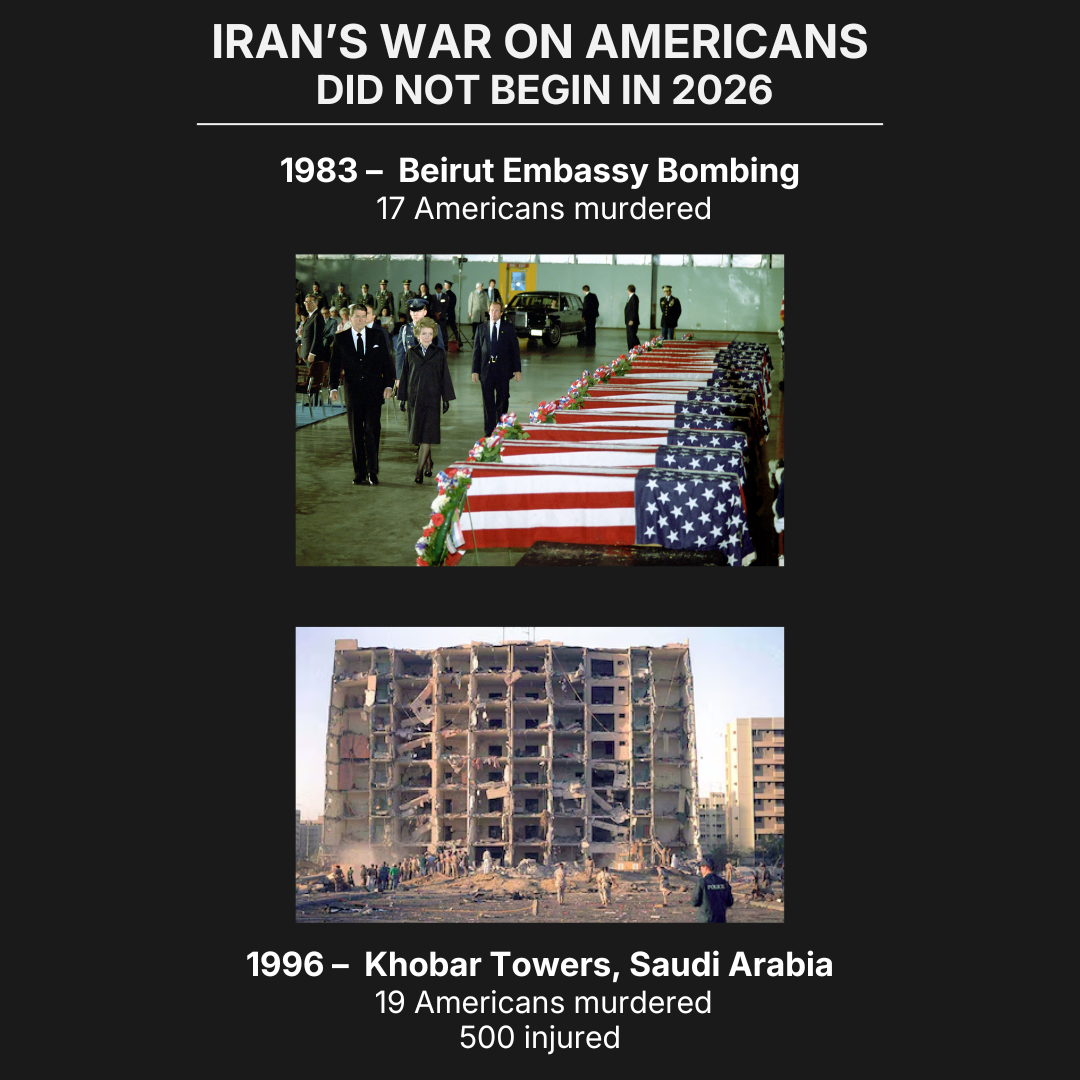
Military strikes have killed dozens of top Iranian regime officials – including Iran’s Supreme Leader Ali Khamenei. Defense Secretary Pete Hegseth summarized decades of U.S. policy bluntly: “If you kill or threaten Americans anywhere in the world – as Iran has – then we will hunt you down, and we will kill you.”
Iran Accelerates Regional War
The Islamic regime attacked its own neighbors and even EU member Cyprus as it struck out after the American and Israeli air assaults. Iran has launched dozens of missiles and drones towards Israeli civilian neighborhoods. One missile struck a residential neighborhood west of Jerusalem, killing nine Israelis and destroying a synagogue and the public shelter beneath it.
Iran expanded the conflict by targeting any Arab nation it views as an ally or supporter of America. Iran unleashed missile and drone attacks against the Bahrain International Airport, a Saudi oil refinery and hotels in Dubai in the United Arab Emirates. The other three members of the Gulf Cooperation Council – Kuwait, Oman and Qatar – also were hit. GCC nations affirmed their “legal right to respond.”
Australia and Canada immediately backed America’s military campaign, while the UK, France and Germany were more cautious in their responses. The European nations “agreed to work together with the U.S. and regional allies to defend our interests.”
Under attack by Iran’s close ally, Russia, for four years, Ukrainian President Volodymyr Zelensky voiced hope for “giving the Iranian people a chance to get rid of the terrorist regime.”
Voices Rarely Amplified in Media Coverage
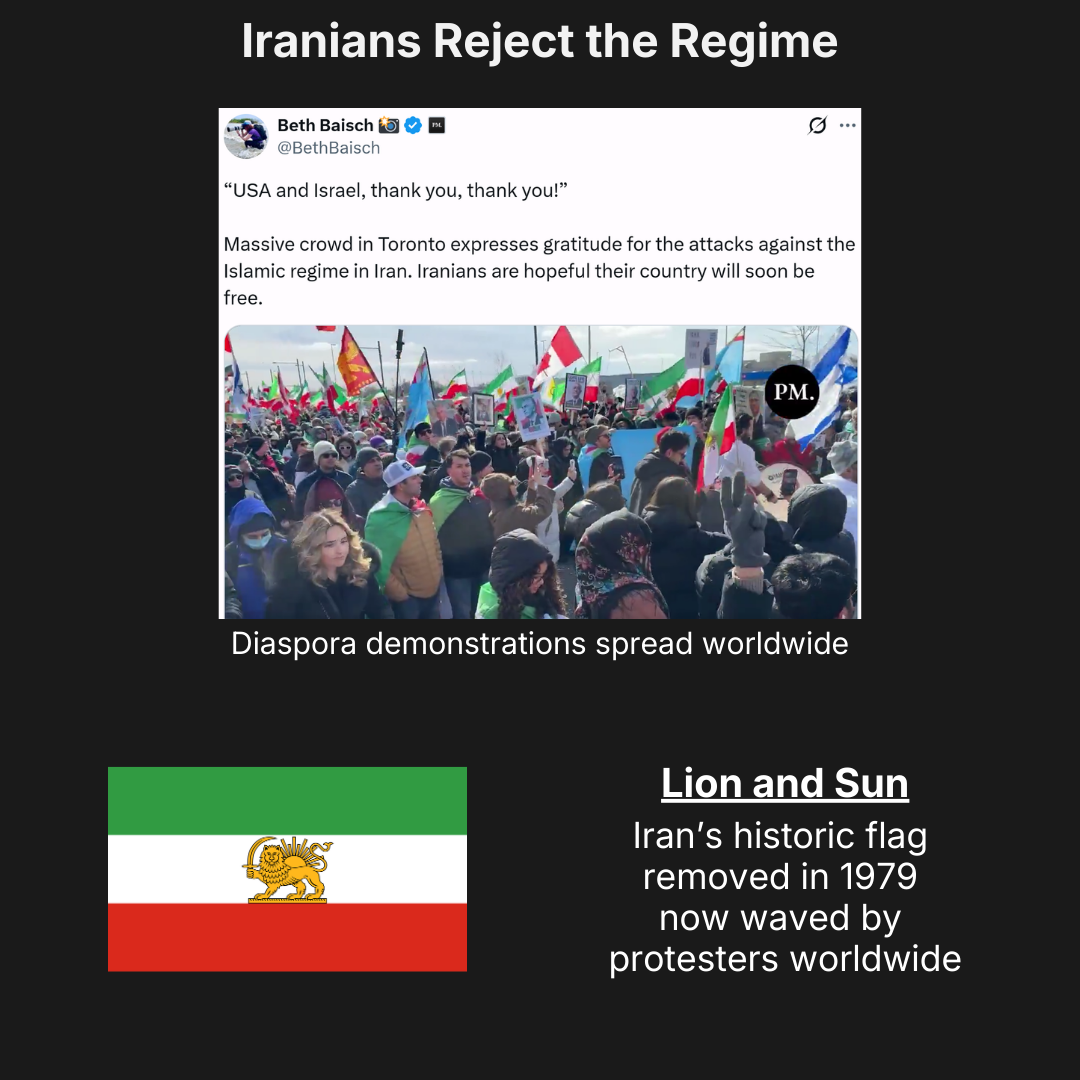
Many Iranians risked arrest – and possible death – to celebrate in the streets and express hope for political change, while some publicly mourned. Many Iranians celebrated around the world. Several Iranians living in Turkey acknowledged that while “war is not good,” they are hopeful that the “brutal theocracy” will end and that “freedom and democracy” will prevail.
Upon hearing of Khamenei’s death, his nephew living in France said, “Like most Iranians, I am happy. I think it’s a step forward, a hope.” Exiled Iranian Crown Prince Reza Pahlavi – supported by many to be Iran’s next leader – declared that “the Iranian people have suffered too much to settle for anything less than the regime’s total collapse.”
The Iranian regime recently massacred its own citizens after they protested against the government. As many as 36,500 Iranians were reportedly murdered in only a few weeks. The government enforces severe restrictions on women, ethnic minorities and the queer community.
Many Jews around the world celebrated shoulder to shoulder with their Iranian neighbors – just as Iranians have supported Israel in its time of need. Rafael Singer attended a rally in London: “We noticed Iranians at rallies against antisemitism. So when they had their own, my family joined in.” Supporters waved Iran’s historic Lion and Sun flags and Israeli flags.
Major American Jewish organizations voiced support for the joint U.S.-Israel strikes. The Anti-Defamation League was “praying for the safety of American service members in harm's way, Israeli civilians and soldiers, our partners and friends in the Gulf and all others in the region who have already been targeted.”
|