|
Hello all,
I hope you are enjoying these few warm days we've been experiencing!
Things are definitely heating up in the legislature, as the next steps in cementing the incredibly lopsided Chiefs Star Bond deal were taken today, with a hearing being held on House Bill 2793, which establishes the Kansas Sports Facilities Authority.
The Authority will be a corporate entity, organized under a single government authority that will be recognized as a subdivision of the state, meaning that it will be delegated specific government powers, functions, and duties by state law.
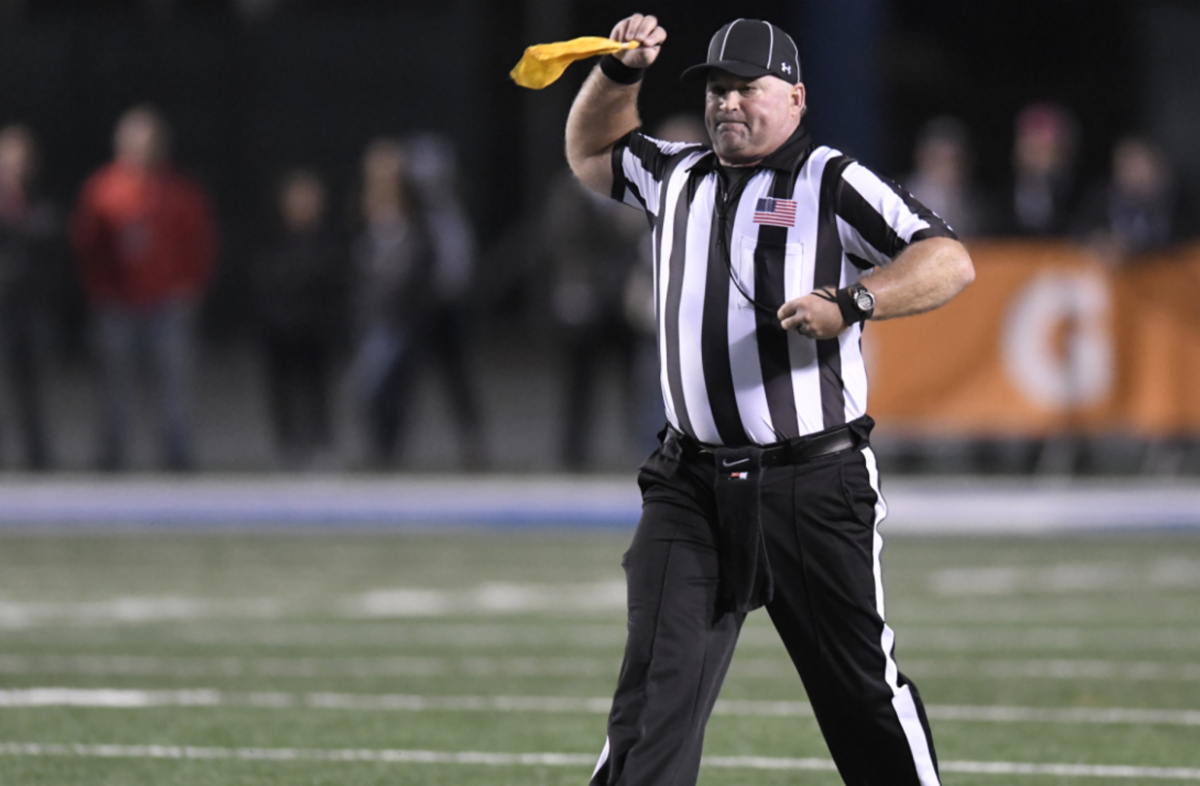
I'm calling almost all the penalties on this one: false start, offsides, AND illegal formation!
If you didn’t like the agreement reached with the Chiefs, you won’t like this bill either. In short, it does the following:
-
The bill codifies the terms set forth in the agreement reached between the State of Kansas and the Kansas City Chiefs back in December. They cannot be changed to give the Kansas taxpayers a fair shake, or a better deal.
-
This bill grows government to accommodate any deal that the authority decides to make in the future, including educational, cultural and commercial activities.
- Although they benefit from it, the Chiefs will have a seat on the Authority. A blatant conflict of interest.
- The Sports Authority will be exempt from a number of laws, including some open records act provisions, competitive bid processes, and fair hiring requirements.
- The Authority always wins when in conflict with other laws.
- The Sports Authority will become an unaccountable “Shadow Government” similar to the Mid America Regional Council that has expanded its scope into areas beyond its original founding with no oversight nor restriction on its actions.
The Deal is Done
Language in the bill states: “Notwithstanding anything in this act to the contrary, the
powers granted to the authority shall not be exercised in a way that conflicts with the terms and conditions set forth in the STAR bond agreement dated December 22, 2025, and executed by the Kansas City Chiefs Football Club, Inc., and the state of Kansas.”
Apparently, the Chiefs’ interests supersede those of Kansas taxpayers.
This Bill Grows Government
While on the surface this Sports Authority is considered as a part of the Chiefs deal, in truth, it goes much farther than that. This bill grows government to accommodate any deal that the authority decides to make… with no oversight, no accountability, and nearly unlimited power to act autonomously once the Sports Authority is formed. This Authority, once established in law, would likely survive even if the Chiefs moved to another state in the future. Getting rid of such an authority becomes virtually impossible once implemented, because of all the legal entanglements that will be involved in future land and property acquisitions, and in other projects the authority is likely to undertake.
Section 1 describes the intent of this bill, and clearly expresses the intent to expand its scope beyond the construction of a stadium for the Chiefs:
“The purpose of the act is to provide for the construction, financing, management and long-term use of sports facilities and sports facility infrastructure as venues for professional sports and a broad range of other civic, community, athletic, educational, cultural and commercial activities.”
What types of doors are we opening here?
Like a Fox in the Henhouse
The Sports Authority will be run by an appointed board, but there appears to be no mechanism within the bill for the legislature to have meaningful oversight. One troublesome fact is that the Chiefs will have a voting seat on the board of directors. Because the Chiefs will directly benefit from the actions of the Sports Authority, this is like the fox guarding the henhouse. In this bill, that means a representative of the Kansas City Chiefs would sit on the governing board of the public authority that:
- finances the stadium
- issues bonds
- negotiates lease terms and oversees construction and operations
In most stadium authorities, teams are tenants or partners but do not have voting authority over the public entity that finances or owns the stadium.
-
The Las Vegas Raiders do not have a voting seat on the Las Vegas Stadium Authority.
-
The Minnesota Vikings do not vote on the Minnesota Sports Facilities Authority board.
Giving a tenant franchise a formal vote in a public body that negotiates with it raises conflict-of-interest concerns in any governance model.
The board will receive compensation, per-diem, and mileage, and the Executive Director will get a yet-to-be-determined salary. I assume those expenses will come out of the State General Fund at least until the stadium is built….and perhaps forever…that is not clearly defined in the bill. The authority will also operate off of funds received from acquiring land, property, lease agreements, collecting rent, and issuing bonds… among other enterprises the Sports Authority will be authorized to undertake.
While the bill requires a report to be sent to the legislature each year, I can confidently assume that there will be no more than a high-level overview extolling the virtues of the Authority’s activities, conveniently omitting any granular details of what the Authority is actually doing. How do I know that? I have seen similar reports from various agencies of the state where we get a rosy report with few details…and no real power to remedy any problems we identify. Plus, this bill exempts the Authority from some open records requirements.
Laws for Thee But Not for Me
Speaking of exemptions, this Sports Authority will be operating above the law and exempt from some provisions of the constitution. It’s in the bill. It says: “The authority shall be exempt from the following laws, unless otherwise provided for in this act:
(a) K.S.A. 12-1675 through 12-1677, and amendments thereto;
(b) K.S.A. 75-1250 through 75-1270, and amendments thereto;
(c) K.S.A. 75-2925 through 75-2975, and amendments thereto;
(d) K.S.A. 75-6601 through 75-6607, and amendments thereto;
(e) K.S.A. 77-501 through 77-550, and amendments thereto;
(f) K.S.A. 75-3739 through K.S.A. 75-3740, and amendments
thereto; and (g) K.S.A. 75-37,102 and 75-37,132, and amendments thereto”
In short, this exempts the Authority from some open record act requirements, competitive bid processes, fair hiring requirements, and a number of other procurement provisions. In other words, it’s opaque cronyism at its finest.
Contractors working on the stadium and any other project of the Authority are not subject to a competitive bid process, and those contractors may purchase equipment and construction materials tax free. Need a new bulldozer? Make sure you buy it while working on a project for the Sports Authority! Never mind that home construction for the average citizen will never get a deal like this!
The Authority will be able to hire more people, meaning a continued expansion of a quasi-governmental entity. Port KC in Kansas City, Missouri, a similar type of authority, is now asking for their own police force! Is that where we eventually end up?
In addition, this bill exempts the Authority from the provisions of sections 6 and 7 of Article 11 of the Kansas constitution. That means the Authority can issue unrestricted debt obligations without the vote of the people, and without any legislative provisions, restrictions, or oversight. This circumvents any debt obligation requirements the legislature or any other entity of county or local government is required to follow.
Here is more of the bill language that authorizes the authority with broad sweeping powers to enter into various agreements:
“The authority may lease, license or enter into use agreements and
may fix, alter, charge and collect rents, fees, including seat licensing fees,
and charges for the use, lease, license, occupation and availability of part
or all of any premises, property or facilities under the authority's
ownership, operation or control for purposes that will provide athletic,
educational, cultural, commercial or other entertainment, instruction or
activity for the citizens of Kansas and visitors. The use agreements may
provide that the other contracting party has exclusive use of the premises
at the times agreed upon, as well as the right to retain some or all revenues
from ticket sales, suite licenses, personalized seat licenses, concessions,
advertising, naming rights, professional sports team designated broadcast
or media, club seats, signage and other revenues derived from a sports
facility. The authority may contract with a professional sports team or
other third party to collect any such revenue on behalf of the authority.
As authorized by the secretary of commerce, the authority shall
have the power to issue special obligation bonds in one or more series to
finance or refinance the acquisition, construction, development,
improvement or operation of any sports facility or sports facility
infrastructure project. Such bonds shall not be a general obligation of the
state. Any such bonds and interest thereon shall be an obligation only of
the authority and shall not constitute a debt of the state of Kansas within
the meaning of section 6 or 7 of article 11 of the constitution of the state of
Kansas.”
Although there is no explicit mention of eminent domain in the bill, eminent domain could still occur indirectly if:
- a city or county condemns land and transfers it to the authority, or
- another entity with condemnation powers acquires the land.
But the authority itself would not possess that power under this bill.
The Authority Wins
Finally, the “super-preemption" clause in Section 8 (near the middle of §8(a)) reads as follows:
“Insofar as the provisions of this act are inconsistent with the provisions of any other law, whether general, specific or local, the provisions of this act shall be controlling.”
This clause essentially says if another Kansas law conflicts with this act, this act wins.
That includes conflicts with general state statutes, specific statutes, and local laws (city or county ordinances). Because the authority is also defined as a political subdivision of the state, the clause gives it unusually strong protection against outside regulation.
If there’s a conflict between this stadium authority statute and another Kansas law, the courts will interpret the conflict in favor of the authority.
This means that if the bill is passed as written, the authority could potentially override or avoid:
Local regulations
- zoning restrictions
- local procurement rules
- local development conditions
- municipal stadium policies
State statutory requirements that might otherwise apply to public entities.
Many of those are already waived elsewhere in the bill (Section 7), but Section 8 goes further by acting as a catch-all override for anything not specifically listed.
Why this matters in stadium projects:
Large sports facility deals often run into conflicts with:
- city land-use rules
- state procurement requirements
- environmental or administrative procedures
- local political conditions attached to financing
A clause like this helps ensure the project authority can move forward even if another statute would normally restrict it.
In closing...
This bill is not good for Kansas for all the reasons I stated above. I could have dived even deeper, but the bottom line is that this bill, if passed, ensures that the Chiefs will get EVERYTHING they asked for in the lopsided STAR BONDS deal. These unelected, unaccountable authorities can never be reined in once they are established. In my opinion, the opportunity to vote this down represents the last free exit on the turnpike to perdition!
With your pocketbooks and interests in mind,
Mike Thompson
Senator, District 10
|