Stay in the Loop with GSQ's Continuous Quality Improvement Newsletter

March 2026 EDITION

  • Update to Self-Reflection
  • Michigan Infant Toddler Caregiver Certificate
  • GSQ Quality Connection
  • Indicator Spotlight
  • On-Site Observation Tips
  • GSQ Job Board
  • Like and Follow!

What's New?

The latest news to help support your program

Self-Reflection Comment Box

Based on feedback from programs, the Comment Box has been expanded to allow more characters! As of March 19, the Comment Box now allows 1,000 characters. Please use this feature to include helpful information about the evidence uploaded, like how the evidence is shared with families and staff, which classroom the evidence is for, or anything additional you would like the Validator to understand. 

Michigan Infant Toddler Caregiver Certificate

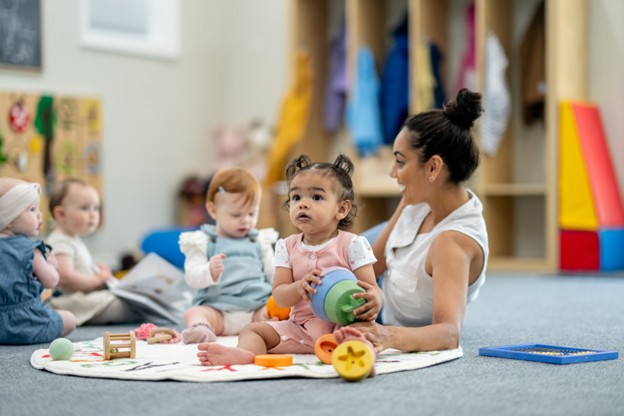
The NEW Michigan Infant and Toddler Caregiver Certificate is here, and our Interest Form is now open on our website! This certificate has been designed to recruit, train, and retain infant-toddler educators.


Do you currently work with, or have staff who work with, infants and/or toddlers? Are you interested in working with infants and/or toddlers as part of your career pathway? If so, the new Michigan Infant and Toddler Caregiver Certificate might be a great fit for you or your staff! This certificate includes training, coaching, and mentoring to support developing and implementing best practices for working with infants, toddlers, and their families. Earn the certificate by participating in a 5-month cohort and fulfilling all requirements. The next cohort begins in August 2026. During this introductory period, participants who complete the certificate are eligible for a $1000 stipend.


Visit our website to learn more and complete and interest form today!

GSQ Quality Connection - Developing Program Policies

We hope you can join us for our next bi-monthly Quality Connection webinar on April 8 from 1:00 – 2:00 p.m. The ECIC GSQ team will share updates and answer your questions about the quality improvement process. We will also discuss how GSQ can support you with Developing Program Policies. 

Validation

Indicator Spotlight

IP3: Program has a description for families and staff on their approach to preventing suspension and expulsion related to challenging behaviors, including how behaviors are observed and addressed.   


Reducing suspension and expulsion rates for younger children is important. When children are not in care, they miss out on their benefits, such as opportunities to learn from staff how they can safely and appropriately manage their emotions/behavior. It can also be a challenge for families to find care, so children may be shuffled through different caregivers and inconsistent routines, which can further impact their emotions and behavior. These consequences create more issues for the child, family, and program staff.   


When thinking about ways to support children with challenging behaviors, consider the following things you could try. Then add what you are implementing to your written description.  


  • Behavior logs to track behavior and then develop strategies to support the children   
  • Use positive redirection when children are exhibiting challenging behaviors   
  • Identify biases to ensure staff bias is not impacting how they view a child’s behavior   
  • Stick to a consistent daily routine so children know what to expect   
  • Have a plan for keeping consistent staff and children in the classroom so relationships can be built   
  • Use restorative justice practices to support children’s interactions and behaviors, especially with school-age children   
  • Meet with families to develop a plan or discuss strategies to support the child both at school and at home   
  • Provide staff with training and professional development related to supporting children with challenging behaviors, conflict resolution techniques, anti-bias practices, and other topics  
  • Offer classroom support, such as additional staff to help when children experience challenging behaviors


This indicator requires that the program has a description of its approach to preventing suspension and expulsion related to challenging behaviors, including how behaviors are observed and addressed. A description is something that is written, and that the program follows and implements. This could be a policy, statement, plan, or something else. The description needs to be shared with both staff and families.  


For more information about this indicator, review the Quality Indicators Guidance Document.


If you have questions, please contact validation@ecic4kids.org

On-Site Observation Tips

GSRP and Head Start CLASS Scores for 2025-2026

GSRP and Head Start programs currently participating in the GSQ process that have a CLASS observation conducted by an ECS or other CLASS-reliable observer are eligible to have those CLASS scores entered directly into the GSQ system as an Approved Assessor for the On-Site Observation portion of the process.


Programs must coordinate with both the Approved Assessor and Great Start to Quality once the Validation is complete.  To be eligible to use 2025-2026 school year scores, the Approved Assessor must be assigned by May 30, 2026 and scores must be input in MiRegistry by June 15, 2026. 


Additional information about Approved Assessors and eligibility requirements is available on the Approved Assessor page of the GSQ website.


Questions regarding this process or timeline may be directed to approvedassessor@ecic4kids.org

Things to Consider When Choosing an Observation Tool

When selecting a tool for On-Site Observation, it’s important to understand what each option involves and what factors to consider before making the decision. Reviewing the program schedule and daily routines in advance will help ensure the observation process runs smoothly and provides meaningful feedback. 


What Each Observation Looks Like 

CLASS Observation 

A CLASS observation lasts about two hours. During that time, the Assessor focuses specifically on adult–child interactions.


Observations occur in 20-minute cycles, followed by 10 minutes for note review and scoring. The primary focus is on how teachers and children interact, including how teachers support learning, respond to children, and create a positive classroom climate. 


ERS Observation 

An ERS observation requires three continuous hours. During this time, the Assessor looks at: 

  • The classroom environment (materials, furnishings, and room layout) 
  • The daily schedule and routines 
  • Key parts of the day, such as group time, free play, and outdoor time 
  • Adult–child interactions as they naturally occur throughout the observation


ERS provides a broader look at how the environment, schedule, and interactions work together to support children’s experiences. 


What to Consider When Choosing CLASS 

Think about how the daily schedule aligns with what can be observed. 

Recess / Outdoor Time: 

  • Unstructured “recess” time—whether indoors (gym, gross motor room) or outdoors—can be observed in infant and toddler classrooms. However, it cannot be observed in preschool classrooms. 

Specials: 

  • Activities such as library, art, or music that are led by outside staff cannot be included in the observation.


If a significant portion of the day includes recess (in preschool) or outside-led specials, programs will want to consider how that affects the observation window. 


What to Consider When Choosing ERS 

ERS requires three uninterrupted hours of observation, so the daily schedule matters. 

Ask yourself: 

  • Does nap time begin so early that the assessor would need to start before 8:00 a.m. to complete the full three hours? 
  • Do classrooms combine in the morning or during low enrollment periods? 

Thinking through these details ahead of time will help ensure the observation captures a typical, fully functioning classroom experience. 


Choosing the Best Fit 

The goal of any observation is to provide supportive, meaningful feedback. By reviewing schedules, staffing patterns, and daily routines in advance, programs can choose the tool that best reflects their program. Programs can receive assistance from their Great Start to Quality Coach with tool selection and available training around the observation tools used by GSQ for On-Site Observation. 

Questions about On-Site Observation? Email us: assessment@ecic4kids.org.

GSQ Job Board

Is your program looking for early educators? GSQ can support your program filling staff vacancies to better support children and families. Promote open positions on Great Start to Quality’s job board today!

Like and Follow!

Great Start to Quality's Family Pages

These social media pages give families resources like tips on finding care, financial assistance, early learning activities, and more. Providers and partners are encouraged to share the pages with the families in your communities.  

Key Contacts

Support with public profiles and general information: greatstarttoquality@ecic4kids.org 

Participation with Great Start to Quality: your Resource Center

Connecting employees or connecting with your Validator: validation@ecic4kids.org

Connecting with your Assessor: assessement@ecic4kids.org

Questions about Approved Assessors: approvedassessor@ecic4kids.org 

If you are thinking about how to maintain or continue making quality improvements, or if you're ready to learn more and need help, contact your local Great Start to Quality Resource Center by calling 877-614-7328 or visit www.greatstarttoquality.org


This newsletter was developed under a grant awarded by the Michigan Department of Lifelong Education, Advancement, and Potential using Child Care Development Funds (CCDF).

Follow Us on Social Media!

The Early Childhood Investment Corporation is responsible for the day-to-day implementation of Great Start to Quality www.ecic4kids.org