May 1, 2023

Top stories

■ Nearly three-quarters of Americans blame media for dividing nation, poll says (Associated Press) / Assessing the news media: trust, coverage, and threats to a free press (AP-NORC)


■ Fox News is bleeding viewers at 8 p.m. after ousting Tucker Carlson (Washington Post) / Tucker Carlson, on leaked video, derides Fox streaming service (The Hill) / Top Fox hosts are telling friends they could be the next to go (Rolling Stone)


■ How CNN miscast Don Lemon as a morning person (Washington Post)


■ Tucker Carlson and Don Lemon are out but not down (Vanity Fair) / ‘Tucker Carlson and Don Lemon have never met. They're not friends. On TV, they were adversaries. But in the past few days, they have been texting with each other, since there's a kinship that comes from being fired on the same day.’ (Brian Stelter) 


■ Biden calls for release of jailed journalist Evan Gershkovich, other detainees (Wall Street Journal) / Biden pledges to secure journalists’ release, defend free press (Bloomberg) / 'Journalism is not a crime': Biden salutes press, stresses freedoms at WHCD (POLITICO)


■ WHCD host Roy Wood Jr calls out right for 'weaponizing' his jokes about Don Lemon (Mediaite) / Roy Wood Jr.’s best White House Correspondents’ Dinner jokes: From Santos and Carlson to DeSantis and Biden (The Wrap) 


■ Twitter to allow publishers to charge users on a per article basis starting May (Reuters) 


■ FCC judge suspends Standard General-Tegna review (Broadcasting & Cable) 


■ Sources: ABC News is scrambling to replace Nate Silver's election forecasting model, which the network rented from Silver as part of ESPN's 2013 deal with 538 (Semafor)


■ AI chatbots have been used to create dozens of news content farms (Bloomberg) 


■ Trump to sit down with CNN in implicit dig at Fox (POLITICO) / ‘Trump adviser adds to me, "CNN executives made a compelling pitch." ’ (Oliver Darcy)


■ In an unusual alliance, Jewish media and striking journalists are uniting to cover the Pittsburgh synagogue shooting trial (Jewish Telegraphic Agency) 


■ Vanessa De Luca out as editor of The Root (Journal-isms) / ‘– my decision is about self-care, something Black women don’t often get the opportunity to honestly admit that we need. ... This is my attempt to break that cycle.’ (Vanessa K. De Luca)


■ Bono likes to sketch Atlantic covers, so the magazine hired him (Washington Post) 


■ ICYMI: Opinion: Requiem for the newsroom (New York Times) 


Press Freedom


■ We must help exiled journalists continue their vital work (Washington Post) 


■ 2 journalists killed in Haiti as gang violence spikes (Associated Press) 


■ Al Jazeera journalist released from detention in Egypt (Al Jazeera)


■ Keeping forbidden stories and journalists alive (Forbes) 


■ Proposed bill to regulate social media in Brazil raises discussion on freedom of speech and the fight against fake news (Brazil Reports)

COMMUNITY

In honor of World Press Freedom Day on May 3, members of the National Press Club's Press Freedom Team have interviewed journalists in exile from around the world. We will feature their stories every day this week to shed light on press freedom issues worldwide.

'We are going to let the world know what is happening': Exiled Afghan journalist on the power of good journalism


by NPC Press Freedom Team volunteer Jeff Cowart


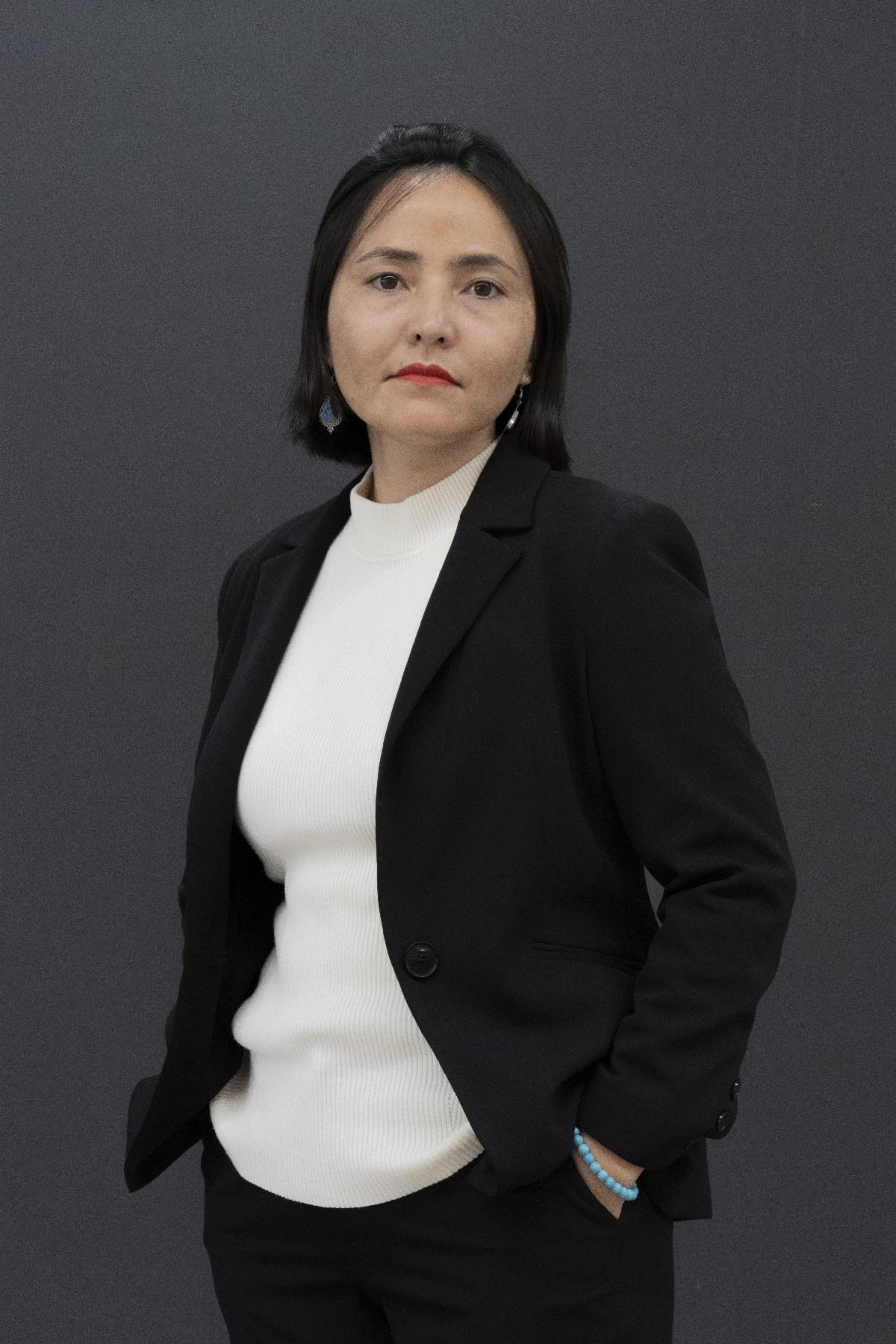
As a young female in Afghanistan, forced with her family early on to relocate to Iran when the Taliban took power, Zahra Nader knows firsthand the personal and societal impact of policies that essentially deny women the right to learn. 

“For my entire childhood, I longed for the education that I couldn’t get,” she says.


Once the Taliban rule collapsed, she and her family returned to Afghanistan where she entered school, ultimately earning a bachelor’s degree in law. She established herself as a journalist with a sharp focus on gender and equality issues, and for a time worked in Kabul for The New York Times.


Today, Nader is a Ph.D student at York University in Toronto, where she lives in exile as editor-in-chief of Zan Times, a women-led investigative newsroom she founded with others in August 2022 that covers human rights violations in Afghanistan with a focus on women, the LGBTQ community, and environmental issues. The goal of the Zan Times journalists working inside and outside of Afghanistan is to tell stories of marginalized populations who rarely have a voice to shape and inform public discourse.

Zahra Nader

You had an interesting exchange with a podcaster about activism in journalism. You took the position that good journalism may create activism. But, good journalism always comes first. Can you talk about how that kind of commitment to journalism is shaping your work at Zan Times?


Nader: We say that we are the voice of the marginalized. And the marginalized are the people of Afghanistan; particularly, the group we cover is mostly women, the LGBTQ community, and the environmental crisis that is a disaster for all of us. We give the importance of the voice to women. 


The Taliban is represented in our stories through a set of facts in a community that is suffering under the Taliban. The Taliban go on TV and say that everybody is lying except the Taliban. The facts of what the Taliban actually does speak for themselves. We want to make sure that the marginalized have a voice in that conversation also. The Taliban wants to erase that voice. As journalists, we want to make sure that even if this community cannot get out of their houses, even if we don’t see their faces – we hear their voices. Good journalism is at the center of what we do.


You have said that one of the founding principles of Zan Times is that too often the voices of women in Afghanistan are framed as victims – and they are – but that there is much more to their story, and that Zan Times is dedicated to presenting a more comprehensive and clear picture of the diversity and activity of this community.


Nader: At Zan Times, we are mostly, but not exclusively, women journalists. We believe the perspective that women bring to the stories of marginalized women in Afghanistan enlarges the story. It is not about bringing a bias to the story. The perspective of women journalists writing about women brings a different depth and understanding to the story. We see women in a great range of diversity — the daily lives that they lead, the hopes and dreams that they have — all playing out in the context of the marginalization they experience. These are bigger and deeper stories than the stories of victims.


About half a dozen of your journalists operate under pen names — no photos, no bios — because they are under real threat. Yet, they feel the work of journalism is so important that they are willing to take the risk. Can you talk about that level of commitment?


Nader: Our journalists are very much aware of the threats and the risks they take just by being a journalist in Afghanistan. We talk about that risk. We recently had a workshop on coping with trauma. One of my colleagues who works in northern Afghanistan said: “You know, every time I go out, I feel this is the last day I will go out because the Taliban will arrest me. But I go out anyway. I go out with lots of fear. And I think, why should I have to live like this in my own country? Why am I not able to do my job? Because I’m a woman. Because I’m a journalist.” 


And, I tell them: We are journalists, and we can take women’s voices out into the world, and we are going to let the world know what is happening. When women see their stories are published, they feel empowered. And my colleagues feel that they are doing something that means so much, even though they might be contained within the walls of their house. There is a purpose every morning. There is hope. That makes them powerful.


As editor-in-chief of Zan Times, what advice and counsel do you give journalists around the globe who seek to advance freedom through the narratives of truth?


Nader: One thing I can say is that nobody is you. You know. You really know the place where your stories are coming from. You live the experience. That is singular to you. So, you are the one who can really tell that story. You know what you see, and you can help other people see what you see. You should be the person who brings that particular perspective to the world, and if you don’t, it might never be known. 


And, I want you to always be sure that there are others who carry that experience in their hearts. When you are a human being, you are in search of meaning for your life. Sometimes you can find that meaning by telling particular stories that might be riskier, that might get you killed, but you feel the story is worth telling.


TONIGHT, May 1, at 6 p.m. ET: The National Press Club presents a screening of "Etilaat Roz," a documentary narrating the fall of Afghanistan and the Taliban takeover from inside the office of the Etilaatroz newspaper. (Click here for details and registration.)

THIS WEEK: Join us at 11 a.m. ET on May 4 for a panel discussion on how foreign reporters are coping after their work pushed them from home. (Register here.)

For an extended list of other activities in honor of World Press Freedom Day on May 3, click here.

CRAFT
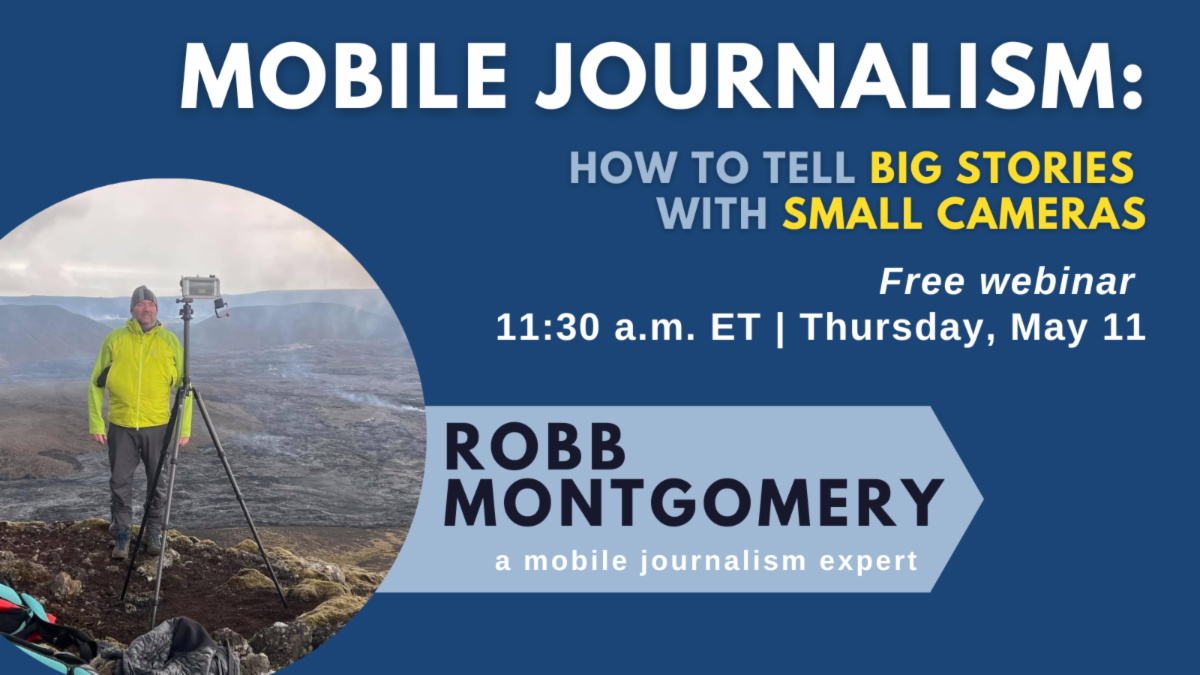
Mobile Journalism: How to tell big stories with small cameras. Free webinar at 11:30 a.m. ET on Thursday, May 11. Featuring mobile journalism expert Robb Montgomery.

In this virtual session, mobile journalism expert Robb Montgomery will showcase the latest technology, tools, apps, and techniques for field reporting with mobile gear. He’ll include fresh case studies and best practices from mobile journalism news reports and documentaries from around the globe. 


Registration is open for this free webinar, which will take place at 11:30 a.m. ET on Thursday, May 11.

REGISTER NOW

Participants will learn from an experienced U.S. visual journalism professional and explore some of the most pressing topics in the world of news reporting with smartphones. The session will include plenty of time for questions from the audience.

CAREER

Video: Building a culture of inclusion

Building a culture of inclusion

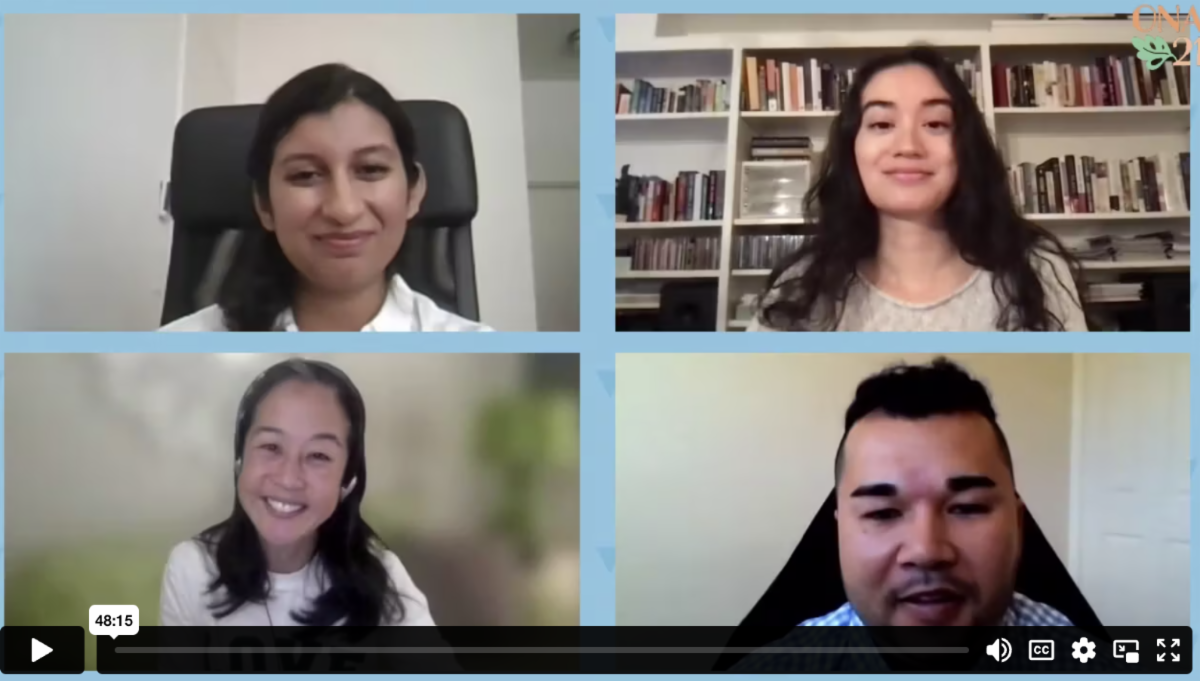
This video from ONA discusses how to build a better workplace culture — whether at a leadership level or a grassroots staff level, featuring leaders from TIME. Watch now.

Resources

This newsletter is written & edited by the National Press Club Journalism Institute staff: Beth Francesco and Holly Butcher Grant. Send us your questions and suggestions for topics to cover.


Get this from a friend? Subscribe, and view the archives.


If you value this newsletter, consider supporting The Latest with a tax-deductible, recurring gift to the Institute: Even $5 a month will help fund the technology and time it takes to provide this important service.  

Facebook  Twitter  Linkedin  Youtube  

The National Press Club Journalism Institute promotes an engaged global citizenry through an independent and free press, and equips journalists with skills and standards to inform the public in ways that inspire a more representative democracy. As the non-profit affiliate of the National Press Club, the Institute powers journalism in the public interest.