March 5, 2025

Top stories

■ “UPDATE: DOGE/OPM aide Gavin Kliger is now working at US Agency for Global Media, which oversees Voice of America et al … Kliger is a software engineer involved in USAID cuts. …” (David Folkenflik)


■ Washington Post publisher Will Lewis quietly met with a conservative editor last month (Status) / House Dem presses Bezos for transparency on Washington Post op-ed pivot (The Hill) 


■ Lachlan Murdoch says Fox News is now the fifth broadcast network (TV NewsCheck) / New book describes Hannity’s efforts to soothe Trump’s anger at Fox (Washington Post)


■ Jon Stewart accepts Elon Musk’s terms for an interview (CNN Business) 


■ Tom Llamas named anchor of ‘NBC Nightly News’ (New York Times) 


■ Disney to cut nearly 6% of staff across ABC News, Disney Entertainment Networks (Wall Street Journal) / FiveThirtyEight is shutting down as part of broader cuts at ABC and Disney (Nieman Journalism Lab) / “As reported, everyone at 538 was laid off this morning. It's a monumental loss for the political data industry…” (G Elliott Morris)


■ WSJ editor Emma Tucker announces the layoffs of some reporters and editors in the Journal’s San Francisco office and in NYC amid a change to how tech coverage is run. (Katie Robertson)


■ US charges Chinese hackers, government officials in broad cyberespionage campaign that included news organizations (AP News) 


■ The LA Times’ new AI tool sympathized with the KKK. Its owner wasn’t aware until hours later (CNN)


■ Inside MSNBC’s ‘The Weekend’ reboot (Hollywood Reporter) 


■ Allen Media to begin hubbing weather again (Ad Week) 


■ As websites disappear, link rot threatens journalism. One Stanford fellow is working on a fix (Poynter) 


■ March 6 is Protect My Public Media Day (Vermont Public)


CRAFT
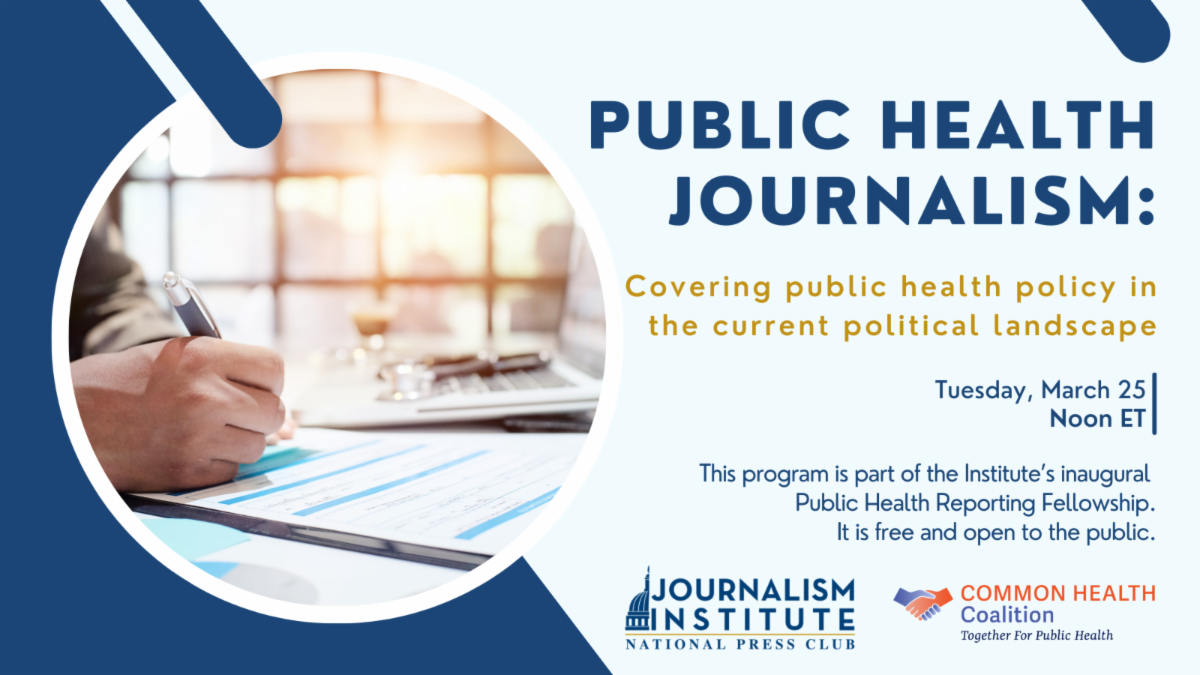
Public Health Journalism: Covering public health policy in the current political landscape. Tuesday, March 25, noon ET. This program is part of the Institute’s inaugural Public Health Reporting Fellowship. It is free and open to the public. Join us over Zoom.

March 25: Covering public health policy in the current political landscape


The Trump administration has already had a significant impact on how the U.S. implements public health policies domestically and on a global scale. The president temporarily paused health-related communications from several federal agencies, has frozen foreign aid, and attempted to halt federal spending for public health research.


These actions present new challenges for journalists covering public health policy, especially as some traditional sources of vital information have become unavailable in wide swaths or made more difficult to access.


Julie Rovner, chief Washington correspondent at KFF Health News, will share advice to adapt to this shifting environment while discovering innovative ways to tell critical public health stories.


Join the National Press Club Journalism Institute at noon ET on Tuesday, March 25.

REGISTER NOW

This program is part of the Institute’s inaugural Public Health Reporting Fellowship, funded by the Common Health Coalition. It’s being opened to the public at no cost.

CAREER

How news leaders can support a journalist experiencing safety threats on the job


Advice from PEN America's Viktorya Vilk, director, digital safety and free expression, and Tat Bellamy-Walker, program manager, digital safety training and resources (media).

PEN America: Newsroom leaders have a responsibility to support staff and freelancers who are under attack for their work, online and off. A simple place to start is to make space to discuss safety and harassment during regular check-ins, whether one-on-one, team, or all-staff meetings. Ensure that reporters have at least three distinct channels to report online abuse and other safety challenges; these could be their manager, HR, and a designated email address or Slack channel focused on safety. 


Consider revising your newsroom’s social media policy to acknowledge online harassment and clarify how journalists are expected to navigate it. Better yet, develop a protocol that clearly spells out what kind of safety support reporters can access within their newsroom and how they can access it. 


If a reporter is facing harassment, check in privately to see how they’re doing and what they need. You can offer to help monitor their mentions and report abusive content on their behalf. In the case of death threats, doxing, or other physical safety risks, you can provide access to a physical security expert, help report the incident to law enforcement, or subsidize a short stay in a hotel until the threat has been investigated. 


In the case of legal risks, you can provide access to a lawyer. You can regularly remind reporters about which subsidized mental health care resources they can access, either through an EAP, a healthcare plan, or in-house counseling or peer support. And you can consider making a private or public statement of support, provided that the targeted individual would be comfortable with that. 


Finally, consider adjusting how your newsroom moderates comments on stories to reduce abuse by, for example, having a visible content moderation policy spelling out what kind of commentary is unwelcome and/or leveraging automated tools, such as Perspective API or Coral, to help human moderators filter and review content.


Read on for more digital security tips from PEN America.


Watch: Bellamy-Walker recently joined an Institute webinar on how to handle (and prevent) online threats as a journalist.

COMMUNITY

Resources


This newsletter is written & edited by the National Press Club Journalism Institute staff: Beth Francesco, Holly Butcher Grant, Elliot C. Williams, and Mitch Harle. Send us your questions and suggestions for topics to cover.


Get this from a friend? Subscribe, and view the archives.

Facebook  X  Linkedin  Youtube  

DONATE TO THE INSTITUTE


The National Press Club Journalism Institute promotes an engaged global citizenry through an independent and free press, and equips journalists with skills and standards to inform the public in ways that inspire a more representative democracy. As the non-profit affiliate of the National Press Club, the Institute powers journalism in the public interest. The Institute's tax ID number is 52-1750908.