Oct. 1, 2025

Top stories

■ Federal cuts hit public media jobs and member stations (WBUR) / NPR to advertisers: ‘We’re not going anywhere’ despite funding cuts (InsideRadio) / On the day federal funding ends, GBH launches a $225 million campaign to invest in the future of public media (GBH) / Aspen Public Radio launches resiliency fund to secure lost federal funding (Aspen Public Radio) / New Mexico legislators to consider funding for public broadcasting (KUNM)


■ 'There's been a lot of tears': Local public media stations grapple with federal cuts (NPR) / 'Going to get real': Indiana public media see layoffs, program cuts as federal money dries up (IndyStar) / Iowa PBS, public broadcast faces challenges amid budget cuts (The Daily Iowan) / WKU Public Media lays off a third of staff due to budget cuts (WBKO) / Prairie Public eliminates 12 staff positions due to federal, state funding cuts (KVRR Local News) 


■ FCC suspends operations after Congress fails to keep federal government open (TV News Check) / The shutdown is cutting off data you paid for (Axios) 


■ The Pentagon press corps gears up for a fight (Columbia Journalism Review) 


■ New York governor criticizes ICE officers who she says shoved and injured journalists (Reuters) / SAG-AFTRA condemns ICE's 'illegal and excessive tactics' after attacking CBS journalist with pepper spray (The Wrap) / ICYMI: Federal agents grab and shove journalists outside NYC immigration court, sending one to hospital (Associated Press) 


■ 404 Media and Freedom of the Press Foundation sue U.S. Department of Homeland Security (404 Media) / ICYMI: Trump administration hands over Medicaid recipients’ personal data, including addresses, to ICE (Associated Press)


■ NBCUniversal, YouTube TV agree to short extension of carriage agreement as negotiations continue (The Wrap)


■ ‘60 Minutes’ season 58 premiere scores over 10 million viewers, down slightly from previous opener (The Wrap) 


■ ‘Johanna Mayer-Jones, the executive tasked with helming The Post’s ad business, has been weighing her future at the paper — raising the prospect of another high-profile departure at a precarious moment.’ (Status) / ‘WSJ Editor-in-Chief Emma Tucker announces that deputy editor in chief Charles Forelle is leaving’ (Ben Mullin)


■ Nexstar appoints Adam VerCammen as senior vice president of revenue for The Hill (Nexstar) / Tampa Bay Times appoints vice president of marketing and philanthropy (Tampa Bay Times) / Rest of World hires Saft as publisher (Talking Biz News) / POLITICO expands California coverage with new housing beat, welcomes veteran reporter Liam Dillon (POLITICO) / ‘Post Opinions editor Adam O'Neal announces new opinion journalists, reporting to James Hohmann.’ (Washington Post) / Daily News announces historic staffing changes (Galveston County Daily News) / Press Freedom Center at National Press Club announces new additions to advisory board (National Press Club)


■ Relatively few Americans are getting news from AI chatbots like ChatGPT (Pew Research Center) 


■ U.S. ethnic and Indigenous media play critical role in countering disinformation, new ICFJ study finds (International Center for Journalists)

CRAFT

How Civil Eats helps reporters and audiences understand federal food policy


By Holly Butcher Grant


As government cuts and the current shutdown threaten food safety and food access across the country, journalists need timely information about how communities may be affected.


To connect federal food policy decisions to how Americans grow, sell, and consume food, Civil Eats launched the Food Policy Tracker earlier this year. As their coverage continues to expand during the second Trump administration, the staff also created a four-part email crash course on civics and the food system to help audiences better understand how the government’s decisions and actions impact their daily lives.


The Institute reached out to Civil Eats to learn how these initiatives are engaging new audiences. Lisa Held, senior staff reporter and contributing editor, and Matthew Wheeland, managing editor, shared advice and resources on localizing food policy.  


What advice do you have for journalists to make food policy decisions more relevant to audiences outside of Washington?

Held: The Trump administration and Congress’ actions we report in the Food Policy Tracker have direct implications on communities around the country. Local reporters are often in the best position to document those impacts on the ground. I hope that local reporters will see what we’re publishing and then go out and ask farmers, food bank operators, community organizers, independent grocers, and local waterkeepers about what they’re experiencing. 


For example, we’ve kept track of many different funding and staff cuts at the U.S. Department of Agriculture (USDA):

  • Are farmers in your community losing grant money?
  • Are they having trouble getting help in their local USDA offices to apply for conservation programs?
  • Are food banks struggling to feed local residents because their budgets have been cut?


How can journalists balance deeper policy analysis with human stories that resonate with audiences?


Held: At Civil Eats, we are constantly working on and talking about this question. Generally, we try to put human stories front and center in order to illustrate the impacts and the importance of the policy facts and analysis. But it’s tricky when you’re also trying to explain wonky, complicated policy decisions. 


One thing that helps is publishing different kinds of stories to allow readers to engage with the reporting in different ways. For example, we’ll keep a Food Policy Tracker post that is just us letting the public know about something the U.S. Environmental Protection Agency (EPA) did the day before — short and laser-focused on the policy change, with just a little bit of context to help people understand the change. But if we then write a feature story on what that change means, it will lead with people and their experiences because that’s what really matters and what resonates.


The disappearance of government websites and data sets, along with the massive layoffs among federal agencies, has direct consequences for food policy and food safety. What are alternative information resources you recommend for journalists covering food systems?


Held: There are really great food and agriculture centers at institutions around the country that produce research and data sets and have experts on staff to help reporters understand and interpret policy changes, like the Center for Agriculture and Food Systems at Vermont Law and Graduate School and Johns Hopkins Center for a Livable Future.  


Policy organizations and think tanks can also provide great data and analysis; journalists just might have to source from a few in order to get different perspectives. For instance, I rely often on the Center on Budget and Policy Priorities for data and analysis on changes to Supplemental Nutrition Assistance Program (SNAP) and other hunger programs and Project Drawdown for climate data and analysis related to the food system.


Walk us through how you developed the concept for the crash course on civics and the food system. 

Wheeland: The Crash Course is almost the flip side of our work on the Food Policy Tracker. When Lisa and I were discussing our coverage for 2025 at the end of last year, she had the smart idea to try to really pin down the minutiae of the many policy changes the second Trump administration would propose and pass. And as we started to see that happen immediately after his inauguration in January, it became clear that so many people — ourselves very much included — needed a primer on how the federal government is supposed to work, and how it used to work, so that we can better understand the changes being proposed and enacted in D.C. 

My colleague Kalisha Bass and I created a pilot version of The Crash Course in 2024 in partnership with the Solutions Journalism Network, so we already had a rough idea of how this course could look. From there, we really tapped into our expertise and archives — as well as the day-to-day changes we’re reporting in the tracker — and built out what we hope will be a useful introduction to an important topic.


How do these courses expand your reporting and new audiences?


Wheeland: The main goal of this course is to reach new audiences. We believe everyone who eats should know how policy decisions shape their food options. Because we’ve been reporting on this beat for 16 years, we have a pretty strong grasp of the nuance and complexity of the topic, and we’re hoping to give readers an easy way to start to understand food policy the way that we do. 


With both the Food Policy Tracker and this Crash Course, we’re offering readers a new understanding of the topic, maybe helping them get their heads around it for the first time, and showing them why food policy is fundamentally important to their daily lives. And from there we hope they will want to keep reading our reporting every day and spread the word about the work we’re doing.

CAREER
 
Camp Canva Practical tools to fuel impactful journalism October 2025

How journalists can tap Canva Whiteboards in their reporting

Today is the first day of CAMP CANVA 2025, a month-long initiative from the Institute and Canva to help journalists supercharge their reporting. For the next 31 days, we’re sharing micro-lessons on tips, tools, and Canva templates designed just for journalists. 


New to Canva? Here’s how you can create and log in to your Canva account.


Today’s productivity tool: Canva Whiteboards


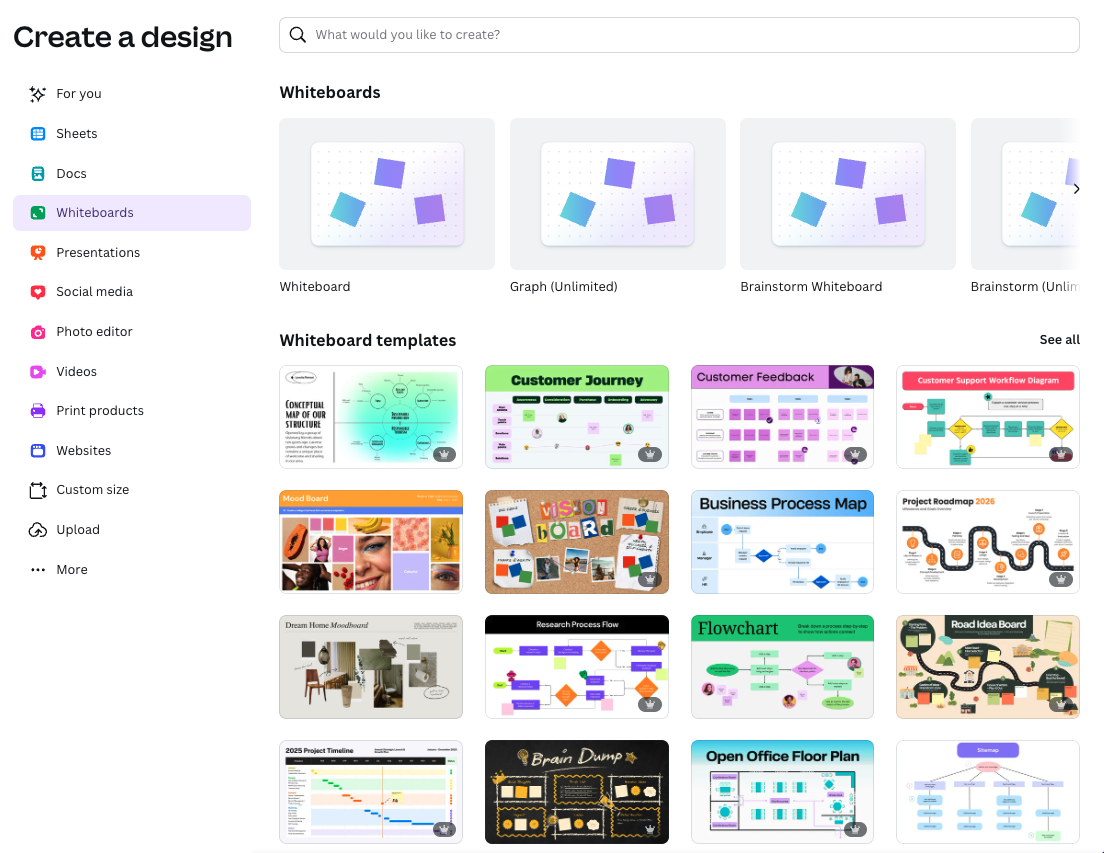
Whether you're planning a big project or mapping out sourcing for a story, collaboration can be key to thorough thinking — or identifying gaps. Canva Whiteboards offer an interactive, visual way for you to brainstorm, plan, and improve your storytelling from the start.

To familiarize yourself with Whiteboards, try this five-minute activity after logging in. Hint: Zoom in on each exercise using the slide at the bottom of your browser window.


We’ll continue sharing highlights from CAMP CANVA 2025 here in The Latest, but we encourage you to sign up any time to receive these free emails and follow the lessons at your own pace.


COMMUNITY


Resources

This newsletter is written and edited by the National Press Club Journalism Institute staff: Beth Francesco, Holly Butcher Grant, and Elliot C. Williams. Send us your questions and suggestions for topics to cover.


Get this from a friend? Subscribe and view the archives.

Facebook  X  Linkedin  Youtube  

DONATE TO THE INSTITUTE


The National Press Club Journalism Institute promotes an engaged global citizenry through an independent and free press, and equips journalists with skills and standards to inform the public in ways that inspire a more representative democracy. As the non-profit affiliate of the National Press Club, the Institute powers journalism in the public interest. The Institute's tax ID number is 52-1750908.