Feb. 4, 2026

Top stories

■ Washington Post says one-third of its staff across all departments is being laid off (Associated Press) / ‘WaPo's Matt Murray told staff the paper is shuttering sports, moving remaining staff to features, shrinking foreign coverage, restructuring metro, closing books coverage, suspending Post Reports podcast’ (Natalie Korach) / Washington Post Amazon beat reporter among those impacted by sweeping layoffs (The Hill) / ‘Here is Washington Post executive editor Matt Murray's note to the newsroom today explaining the bloodbath that resulted in one-third of the paper getting laid off today.’ (Justin Baragona) / A GoFundMe for laid-off Washington Post staffers crossed $130K in a few hours and drew a big donation from Kara Swisher (Business Insider) / How Jeff Bezos brought down the Washington Post (The New Yorker) / Statement on Washington Post layoffs (National Press Club) 


■ The AJC to cut staff as it continues digital transformation (Atlanta Journal-Constitution) / What journalists should know when a layoff hits (Poynter)


■ ‘As speculation swirls over whether CBS News will take any action after new health contributor Peter Attia was ensnared in the Epstein Files, Status has learned what Bari Weiss’s silence actually signals ….’ (Status) / ​​CBS News boss Bari Weiss has made decision on fate of Peter Attia — but she won’t tell staffers (New York Post) 


■ Trump scolds CNN reporter Kaitlan Collins for not smiling as she asks about Epstein abuse survivors – as it happened (Guardian) / Kaitlan Collins confronts Trump’s rant at her on CNN show (Daily Beast) 


■ FBI couldn’t get into WaPo reporter’s iPhone because it had lockdown mode enabled (404 Media) 


■ A defiant Don Lemon appears in New York days after his arrest (New York Times) / Independent journalist Georgia Fort on arrest: ‘Strategic attack on the free press’ is ‘intensifying’ (The Hill) 


■ Journalism students get real-world experience in Minneapolis (CBS Minnesota) / University of Minnesota journalism students prepare for work in dangerous environments through new initiative (University of Minnesota) 


■ Trump to sit for Super Bowl interview with ‘NBC Nightly News’ anchor Tom Llamas (Hollywood Reporter) / ‘NBC Nightly News’ anchor Tom Llamas on why the evening news still matters (Poynter) 


■ Mary Carillo will take over for Savannah Guthrie at NBC Sports’ Winter Olympics (Variety) / ‘We’re wrapping you in love.’ How Savannah Guthrie’s TODAY colleagues are reporting mother’s disappearance (Vanity Fair) 


■ New York Times added 1.4 million digital subscribers in 2025 (New York Times) / Bloomberg Media tops 700,000 subscribers as revenue rises 6% in 2025 (Adweek) / People Inc. scores: Publisher saw a 14% rise in digital in Q4 (MediaPost / The Providence Journal saw its web traffic soar 279% at the end of 2025 (Nieman Journalism Lab)


■ POLITICO unifies energy newsrooms, names Debra Kahn first editorial director for energy and environmental coverage (POLITICO) / The New York Times appoints new deputy editor on Climate desk (New York Times) / Johanna Barr and Shauntel Lowe take on new roles at The New York Times (New York Times) / Joey Martin joins NAB to lead sales team for global connections and events (TV News Check) 


■ Journalism co-ops seem utopian. What’s it like working in one? (Nieman Journalism Lab)


■ ‘A reporter in every county’: WSU, Report for America launch groundbreaking program to confront Washington’s local news crisis (Report for America) / The smallest town in the U.S. with a daily newspaper? Council Grove, Kansas (Kansas Public Radio)

CAREER

How to translate reporting skills to your job search


By Elliot C. Williams

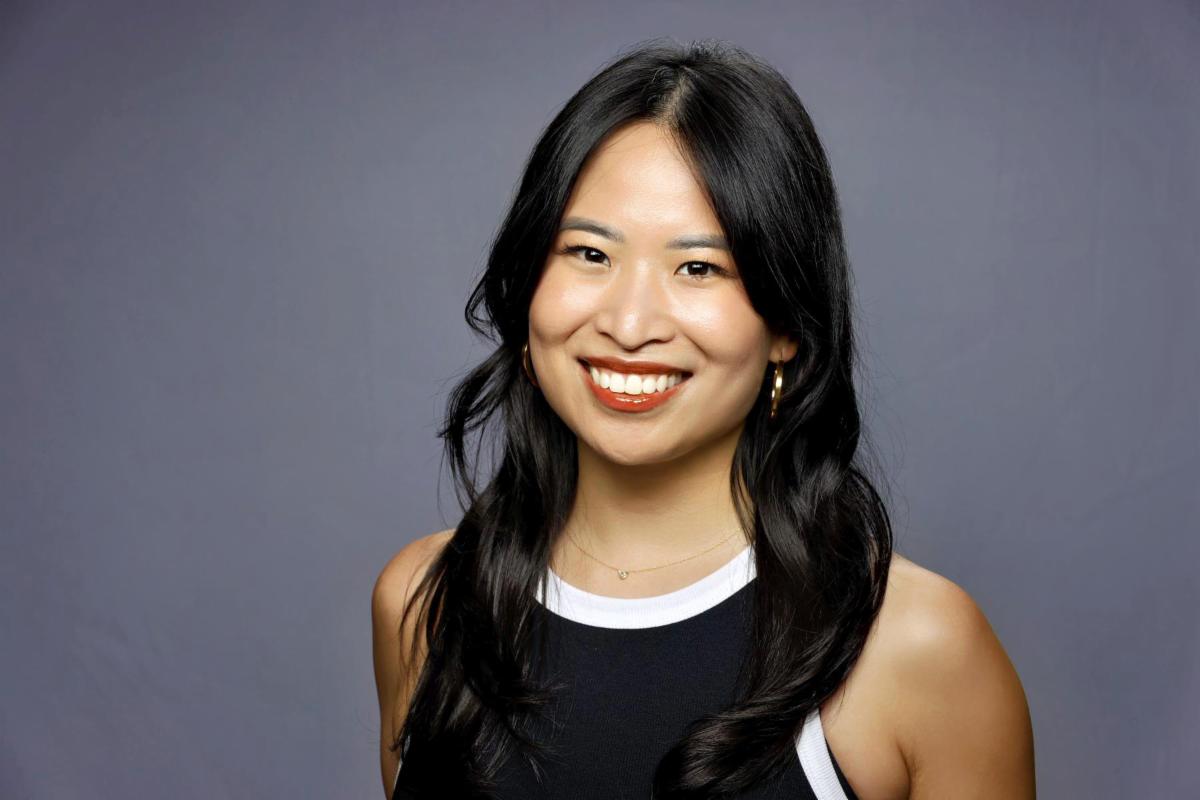
Yesterday, the Institute kicked off its 2026 Career Office Hours series with guest speaker Corinne Chin, director of news talent for recruitment at The Associated Press.


Chin’s career has taken her across the globe — as an Emmy-winning video journalist, an editor, and a leader who now recruits, trains, and supports a diverse and competitive global newsroom.

During the hour-long session, Chin spoke to a group of journalists, communicators, and members of the public about how to stand out as a job applicant for a major global news service and how to stay motivated in a turbulent job market. 


Here are five key takeaways from the discussion:


Approach the job search like a reporting assignment 


Journalists are skilled at telling others’ stories — but these skills can be applied to your own career development. Chin suggested that journalists approach the job hunt like a reporting exercise. 


“Be a good reporter,” she said. “Track down the stakeholders and figure out what the company's goals are, what the hiring manager's goals are, and be strategic … Showcase your work and how you can fill their gaps.”


Align your application with the organization’s values


“Personalize the applications,” Chin said. “Don't send out the same thing to every news organization.” She encouraged applicants to identify the company’s strategic priorities and show how their unique skills and background align with the news organization’s goals for the future. 


For example, The Associated Press is expanding in three main areas, Chin said: strengthening its audience engagement strategy to drive donations, improving its video and social media strategies, and adding even more elections coverage to include roughly 7,000 races across the globe. Knowing these priorities and making clear how your skillset would help advance them will help you stand out in a crowded pool of applicants.


Demonstrate your impact with evidence, not adjectives


It’s always a good idea to highlight work samples and metrics that showcase your impact — this practice goes much further than simply stating that you’re qualified or a hard worker. 


“Instantly, you are standing out, because a lot of people are not doing that,” Chin said.


Can you prove that a video you produced led to increased brand loyalty and audience engagement? Do you have data to back that up? Don’t shy away from including this type of information in your application materials. 


Make clear the value you would add or the gap you would fill


Early-career journalists often make the mistake of telling organizations how much they want or need a particular job to meet their career goals.


“We see a lot of cover letters that are like, ‘Here's what the AP can do for me.’ And that's not the framing you need,” Chin said. “You need: ‘Here's what I can do for the AP.’” 


It may be difficult early in your career to explain what you can do for a major news organization — but Chin suggests leaning into your own unique story. In her case, Chin was hired for an internship at AP after including in her cover letter how the immigrant community she grew up in had a noticeable news gap.


“I was an audience that AP didn’t capture,” she said. She detailed how her reporting would reach new audiences as she kept her own family and lived experiences in mind.


Network beyond the coffee meeting and ask for feedback


The job search can be demoralizing and lengthy application processes can leave you with more questions than answers. Early on, Chin learned a tip from Poynter that has helped her stay motivated throughout these tough moments, which is to organize your own board of directors.


“I think this is a really powerful tool to have that circle of people that you trust to give you honest feedback,” said Chin. “They should be both in and outside of journalism because we don't want to get too much in a bubble.” 


Asking a hiring manager for feedback after a rejection may leave you with a polite but uniform response about how another candidate was a better fit. Instead, seeking feedback from three to five trusted people can help you avoid repeating the same mistakes.


Click here to download these tips.


Advice for coping with media layoffs and the blurring of career and identity


Setting boundaries between work and personal life can be challenging, especially for journalists who often connect their work to their identity.


Here are four considerations for reporters to separate their identity from work and navigate the current turmoil in the media landscape:


Advice pulled from a previous Institute conversation with psychologist Janna Koretz and award-winning journalist Kate Woodsome. Watch the replay:

 
CRAFT
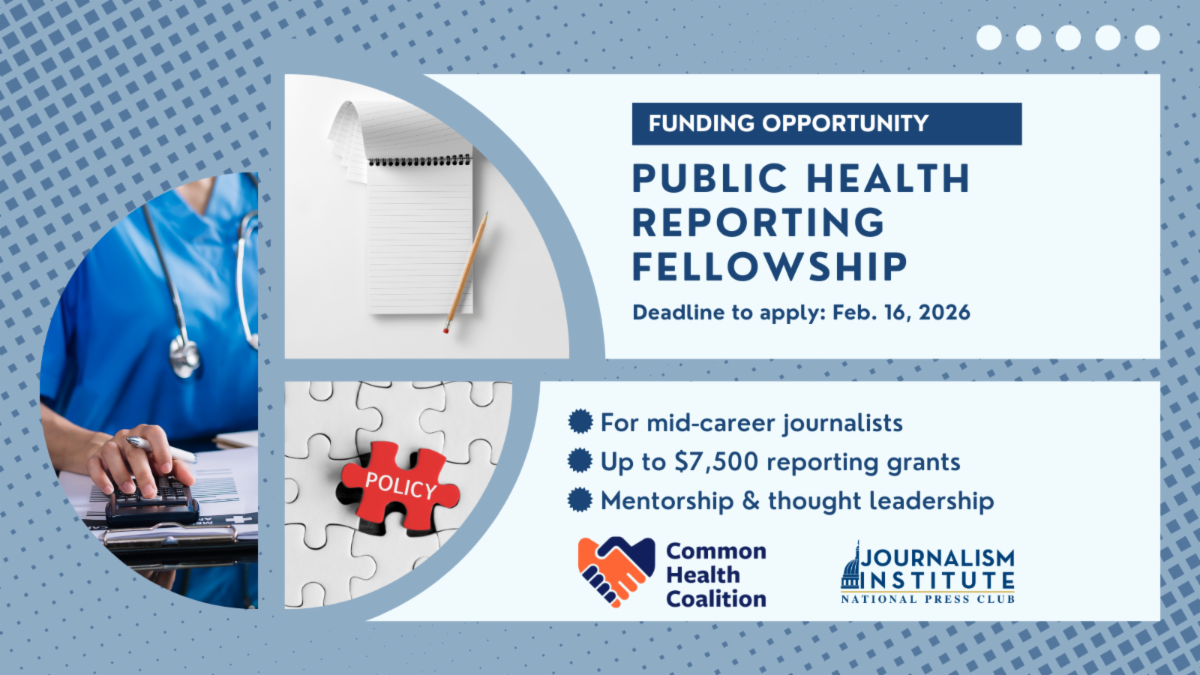
2026 Public Health Reporting Fellowship apply by February 16

Applications for the National Press Club Journalism Institute’s 2026 Public Health Reporting Fellowship are open. This is a funding opportunity for mid-career journalists reporting on critical community, regional, state, or national public health challenges. Financial support provided by the Common Health Coalition. Learn more here.

 
COMMUNITY

Resources

This newsletter is written and edited by the National Press Club Journalism Institute staff: Beth Francesco, Holly Butcher Grant, and Elliot C. Williams. Send us your questions and suggestions for topics to cover.


Get this from a friend? Subscribe and view the archives.

Facebook  X  Linkedin  Youtube  

DONATE TO THE INSTITUTE


The National Press Club Journalism Institute promotes First Amendment values by equipping journalists in Washington, D.C., and nationwide with the skills, knowledge, standards, resources and networks to empower and inform the public. As the non-profit affiliate of the National Press Club, the Institute powers journalism in the public interest. The Institute's tax ID number is 52-1750908.