Nov. 11, 2024

Top stories

■ It's the Senate's last chance to pass the PRESS Act (TechCrunch) / ICYMI: Frequently asked questions about the PRESS Act (Freedom of the Press Foundation)


■ The media’s identity crisis (The Atlantic)


■ How Trump’s win is explained by right and left media outlets (New York Times) / Even Fox News saw a close 2024 election. Then the voting data came in (Variety) / Slate sees 700% spike in subscriptions, heightened traffic after Trump win (The Wrap) / CNN’s existential post-election season (Puck) / An election watch party with Hell Gate, a New York news-and-culture cooperative (Columbia Journalism Review) 


■ Gannett probes possible leak of bombshell Iowa poll (Semafor) 


■ Meta's Threads is 'overrun' with liberal election fraud conspiracies (User Mag) / How TikTok courted conservatives before Trump’s win (The Information) / Google, Meta lift election ad bans (Axios) 


■ ‘When Tom Homan left the Trump admin in 2018, he didn't go far – he joined Fox News as a paid contributor. Now, in a full circle moment, the immigration hard-liner is leaving Fox and becoming the "border czar." The Fox-to-Trump pipeline is turning back on.’ (Brian Stelter)


■ Commissioner Carr tells FCC to cease work ‘on any partisan or controversial matter’ (Inside Radio) 


■ CNN must face Project Veritas' defamation lawsuit, U.S. appeals court rules (Reuters) 


■ Disney, ESPN and Hulu sued for violating streaming technology patents (The Wrap) 


■ AMC Networks acquires full control of BBC America for $42 million (Variety)


■ NPR data shows staff diversity holding steady as voluntary turnover improves (Current) 


■ Unions on strike and a newspaper on pause (New York Times)


■ Steve Hendrix named The Washington Post’s London bureau chief (Washington Post) / The Washington Post’s Gerry Shih named Jerusalem bureau chief (Washington Post) / ‘The Atlantic just announced that it has hired Jonathan Chait as a staff writer.’ (Justin Baragona) / TEGNA appoints Dhanusha Sivajee chief experience officer (TEGNA) / Alex Koppelman, former CNN Business ME, joining NBC News (Talking Biz News) / Charles Watson joins WNBC as reporter (Adweek) / Rory Smith is joining The Athletic (New York Times)


■ Google executive picked to supercharge news efforts has resigned (Wall Street Journal)


■ Murrow Award rescinded for acclaimed ‘Retrograde’ documentary (Washington Post) 


■ WPRI 12 partners with The Boston Globe Rhode Island to deliver unmatched local news coverage (WPRI 12)


Press freedom 


■ ‘Death by a thousand cuts’: How experts warn Trump could use an authoritarian playbook to go after the media (CNN) / A tale of two jets: The old media grapples with its new limits (Semafor) / Ten tips for reporting in an autocracy (Columbia Journalism Review) 


■ Ukrainian war correspondent Andriy Tsaplienko says free press helps Ukraine defend itself against Russia (CBS News) 


■ Moroccan court sentences journalist to 18 months in jail for defamation (Reuters)

COMMUNITY

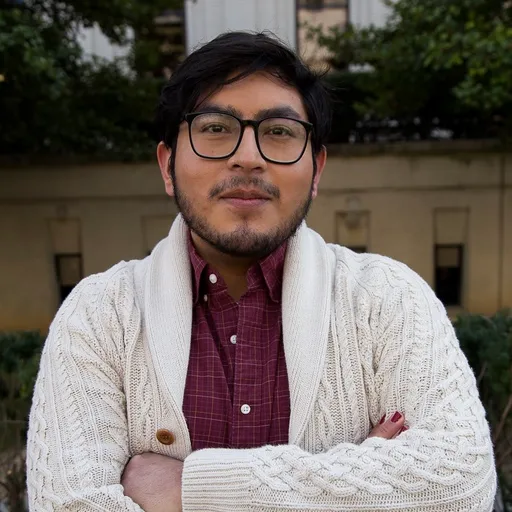
‘Build community outside of politics and journalism’: Vox political reporter on post-election stress

Over the past week, journalists across the country have worked long shifts to cover the election results while grappling with what their profession might look like under a second Trump administration — one that poses a real threat to fact-based journalism, according to several press freedom groups. 


To learn more about how journalists are experiencing this moment, the Institute reached out to Vox Senior Politics Reporter Christian Paz to ask about what concerns he has for the next four years and how he’s handled working at such a fast pace.

What questions are you grappling with as it relates to the journalism industry following Donald Trump’s re-election?


Paz: I'm concerned that we won't see the same kind of pro-journalism tilt from the electorate that we saw in the wake of the last Trump presidency. I'm worried about the economics of journalism. 


I'm not even as worried about my own fatigue and exhaustion — I think I will rally and bounce back. I'm not even at the point of thinking about what D.C. itself will feel like under a second Trump presidency. I do have to admit, I'll have to consider if I should stay within the city or move over the city lines, though.


How are you coping with the stress of this moment? What is keeping you going this week?


Paz: Honestly, I'm personally doing okay. I’m just so tired. I love data and try to integrate it into all of my work. So going through counties, crunching numbers, trying to see trends if there are any — it's that curiosity that's keeping me going this week. 


Talking about the election results on podcasts and radio has also been a great way to process what I'm seeing, almost in real time. I've been covering these trends for a while and get to do, not exactly a victory lap, but a, "Look over here — we were explaining a lot of what was happening with young voters and voters of color for the last year at least."


Are there any resources you'd recommend for working journalists to support their work or health right now?


Paz: I do think it's important to take care of our physical health. I don't know how much sleep I've been getting, but it's not enough. I know I haven't been eating normally, for sure.


But I think it's going to be so important to lean on both our peers in the industry and also on our non-journalist friends. I've always been worried about living in a bubble. Perhaps one way to deal with mental health and stress is to build community outside of politics and journalism.


How are you or your newsroom adjusting to cover post-election issues within your community? Let us know at institute@press.org to share your practices and advice with The Latest readers.

CAREER


Why the end of ‘paying your dues’ is long overdue


“Local reporting has long been the off-off-Broadway of journalism — a staging ground for young talent to establish a beat and gather experience as the first act of a career in the field. Chat with Boomer-era journalists about their beginnings, and they'll likely reminisce about their time in small newsrooms, recalling long hours and stale coffee — a romantic recasting of a period that was really about plotting an escape to greener, higher-profile pastures. But employing young people under the guise of setting them up for a bigger future in journalism elsewhere is outdated. I'm now on my third editor this year; each before him/her was on the sunny side of 25 — burnt out and underpaid.”


-- Lynn Hallarman, journalist and former director of palliative care at Stony Brook University, excerpt from “Why I became a local reporter at the age of 60” (Boston Globe)

 
CRAFT

The case for a ‘groceries’ vertical in local news


“What if local news organizations around the country made it part of their mission to help readers compare grocery prices around town? … Local news outlets cannot change grocery prices. But they can help their readers deal with them — and, in doing so, perhaps increase their readership and draw in people who never would have read them otherwise. Not everybody reads news, but everybody needs to eat.”


-- Laura Hazard Owen, editor of Nieman Journalism Lab, excerpt from "People care about grocery prices a lot. Local news should seize the opportunity." (Nieman Journalism  Lab)

Resources


This newsletter is written & edited by the National Press Club Journalism Institute staff: Beth Francesco, Holly Butcher Grant, Elliot C. Williams, and Mitch Harle. Send us your questions and suggestions for topics to cover.


Get this from a friend? Subscribe, and view the archives.

Facebook  Twitter  Linkedin  Youtube  

DONATE TO THE INSTITUTE


The National Press Club Journalism Institute promotes an engaged global citizenry through an independent and free press, and equips journalists with skills and standards to inform the public in ways that inspire a more representative democracy. As the non-profit affiliate of the National Press Club, the Institute powers journalism in the public interest. The Institute's tax ID number is 52-1750908.