Sept. 2, 2026

Top stories

■ The Trump administration files a brief supporting OpenAI in its dispute with The New York Times, saying training LLMs on copyrighted works generally constitutes fair use (Reuters)


■ Washington Post editorial board defends Iran war report amid 'traitor' criticism (TheWrap) 


■ ‘I asked all the major news orgs about their policy referencing Lake Ontario, after Trump's "Lake America" rebrand. Only The New York Times offered a statement.’ (Oliver Darcy)


■ In a panic over mistakenly shared documents, Entergy lawyers ask judge to restrain journalists (Arkansas Times)


■ Jury in Malta acquits businessman accused of masterminding slaying of journalist (Associated Press) / The killing of Maltese journalist Daphne Caruana Galizia and its aftermath (Reuters)


■ Why ABC self-censored (Columbia Journalism Review) 


■ Saturday Evening Post will stop printing after 205 years (New York Times) / MLive ending print editions for 8 newspapers (Detroit Free Press)


■ Pittsburgh Community Broadcasting to expand service with FM purchase (Current)


■ NewsGuild of New York urges NYT to drop a potential Athletic-Kalshi partnership. Source: The Athletic will not move forward on a Kalshi betting partnership (Front Office Sports) / The Athletic expands live video push with nightly streaming show (TheWrap) 


■ NJ PBS announces six staff appointments (NJ PBS) / Former FiveThirtyEight podcast hosts Nate Silver, Clare Malone, and Galen Druke launch Still Counting, a weekly nonpartisan politics podcast under Crooked Media (New York Times) / Meet Kendal Asbury, the Sarasota Herald-Tribune's newest reporter (Sarasota Herald-Tribune) / Harrison Rich to join Sporting Green team as football trending reporter (SF Chronicle)


■ NYGuild-represented Forbes journalists win first contract (NewsGuild of New York via Editor & Publisher)


■ ‘The founder of The Ringer is taking flak for using artificial intelligence to conjure opinions from the deceased film critic Roger Ebert. Ads from OpenAI have recently run on the show.’ (New York Times) / The Information bets bigger on video with new AI show (Axios) / How POLITICO has boosted AI innovation by moving to one headless CMS (Press Gazette) 


■ Introducing ‘Where is Austin Tice?’ from NPR and the BBC (NPR)

CAREER

How a journalism instructor is teaching his students about fact-checking and misinformation through dihydrogen monoxide


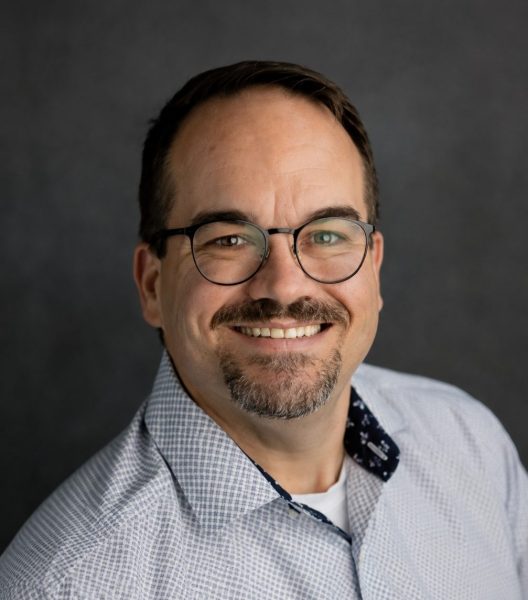
By Kris Seavers, Training Program Coordinator

Eric Jourgensen likes to tell his students about dihydrogen monoxide, a corrosive chemical compound that contributes to erosion and is found in tumors. He asks whether the compound should be regulated or banned and, as students consider this, he reveals one more piece of information: Dihydrogen monoxide is another name for water.


A journalism instructor and yearbook adviser in Florida’s Palm Beach County, Jourgensen uses the exercise to teach his students about fact-checking and how to use context to establish truth in reporting.

Now, Jourgensen is taking his lesson on the road: He’ll use dihydrogen monoxide at the 2026 National News Literacy Conference, taking place Oct. 8 to 10 in Salt Lake City. 


Read on to learn more about how Jourgensen teaches high school students the importance of verifying information in the age of mass misinformation. 


This interview has been lightly edited for length and clarity.


You’re teaching students how to identify what information deserves their trust. Where do you see the widest gaps in media literacy?


Jourgensen: It’s becoming more and more difficult for them to instantaneously discern what is true and what’s not. I think one of the biggest problems we have is that we’ve made the question binary — true or false — and it’s not that anymore. The second problem that we’ve created is: Who made this? Where did it come from? Can any of it really be trusted? 


But what I’m really working with the students on is that I don’t want them to become cynical because that’s the worst thing that can happen. I want them to become optimistic about the truth that they do see — but become more informed and proactive in going out and finding out that information for themselves.


It would be easy at the end of the [water] lesson for me to turn around and be like, “Ta-da, it’s water! You fell for it.” It’s not about embarrassing them. It’s asking them why it worked and that every claim can be technically true, but deception comes from the selection, the framing, the omission, the language. All of that surrounds them, not only in news but in everyday life. Pure accuracy shouldn’t be the goal. That’s the baseline. 


What can you share about how this particular exercise helps students?


Jourgensen: I remember doing this lesson when I was in school. When you find out it’s water, it flips your brain because everything that was said was true. So that really got me doing that lesson with my students and seeing their reaction and some of the commentary that they had, especially after the proliferation of social media.


[After the lesson] they are able to take a step back and go, ‘Oh wait, this might change how everything is because everything in here is true.’ The absence of information is just as important as the information that’s there. 


For folks who won’t be able to attend, what’s the biggest takeaway that you want to share with your audience in Salt Lake City?


Jourgensen: The main crux of what I’m trying to get across is that telling everybody to trust journalism isn’t enough anymore. There’s a problem even defining for [students] what journalism is or where they get their news. TikTok is not a news source. News agencies put news on TikTok, but TikTok is not a source in and of itself. So even just in the framing and verbiage, just getting the students to really think before they post.


Social media is not going anywhere, but if we can apply friction to the speed at which information, or more importantly misinformation, spreads by just getting people to pause and wait five or 10 seconds before they share and actually think about it — that can make a world of difference. You’re not going to undo it, but if you slow it down, that’s going to stop the spread. 

CRAFT


AP Style Tip: Covering flash floods


“A flash flood is a sudden, violent flood. It typically occurs after a heavy rain or the melting of a heavy snow. Stories about floods usually tell how high the water is and where it is expected to crest. Such a story should also list flood stage and how high the water is above, or below, flood stage. Wrong: The river is expected to crest at 39 feet. Right: The river is expected to crest at 39 feet, 12 feet above flood stage.”


-- AP Stylebook via social media


COMMUNITY

Resources

This newsletter is written and edited by the National Press Club Journalism Institute staff. Send us your questions and suggestions for topics to cover.


Get this from a friend? Subscribe and view the archives.

Bluesky  Facebook  Linkedin  X  Youtube

DONATE TO THE INSTITUTE


The National Press Club Journalism Institute promotes First Amendment values by equipping journalists in Washington, D.C., and nationwide with the skills, knowledge, standards, resources and networks to empower and inform the public. As the non-profit affiliate of the National Press Club, the Institute powers journalism in the public interest. The Institute's tax ID number is 52-1750908.