|
As summer begins, many of us look forward to spending more time outdoors, visiting family and friends, traveling, attending community events, and enjoying longer days, warm evenings, and new experiences. Summer often brings opportunities to participate in activities we enjoy and explore our communities.
This month, we are sharing information about summer safety, preparedness, and independence. Hurricane season began on June 1, and now is the time to plan, gather supplies, and think about what you may need before a storm approaches. Taking a few simple steps now can help reduce stress and make it easier to stay safe in an emergency.
This month's featured article by Justine reminds us that independence can take many forms. She shares her experience learning to drive with hand controls and how driving gave her the freedom to go where she wanted, when she wanted. Her story highlights how accommodations and assistive technology can help remove barriers and create new opportunities for participation and independence.
As you enjoy activities this summer, remember to think about water safety as well. Whether you are spending time at a pool, beach, lake, or water park, understanding your abilities, following safety guidelines, and planning ahead can help make summer fun and safe for everyone.
I hope you enjoy this month's newsletter and find information that will help you stay safe, prepared, and connected throughout the summer.
| | |
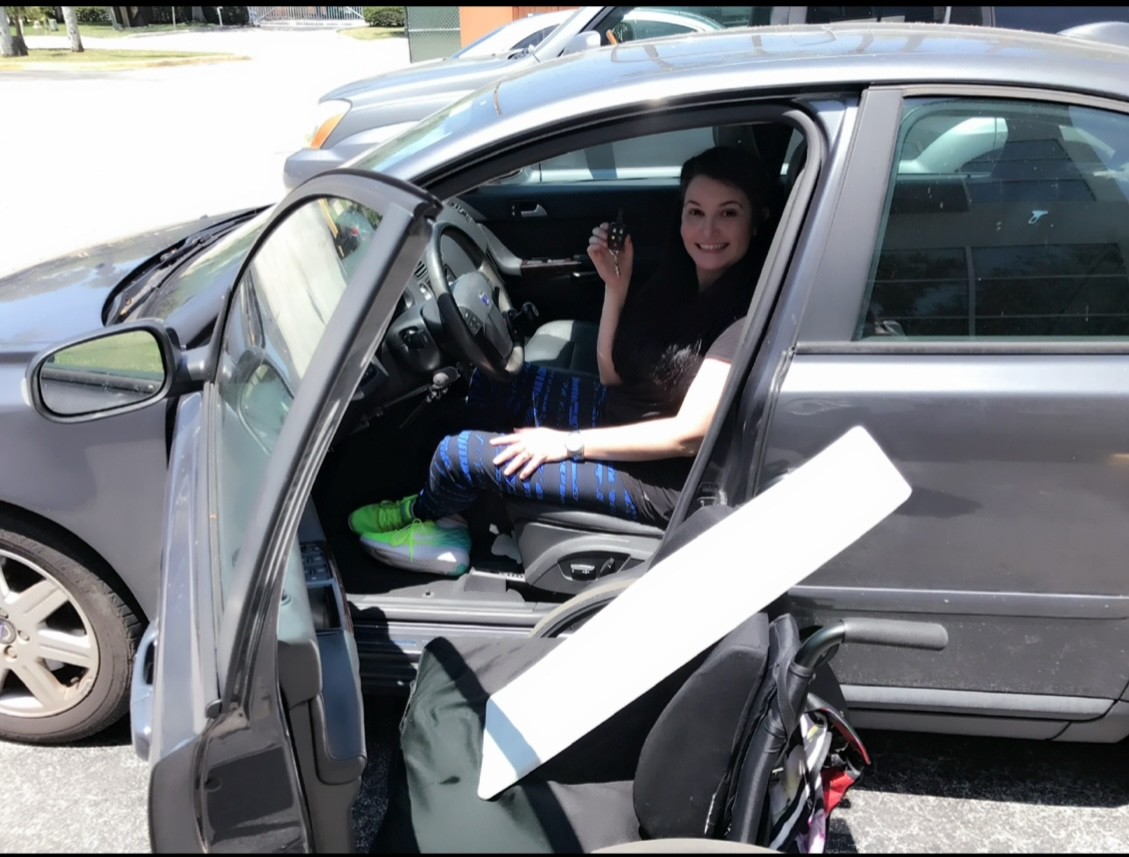
Justine Chichester at In Motion Mobility, retrofitting her car with electronic hand controls and driving for the first time, after suffering a spinal cord injury three years before.
“The road to success is always under construction.” – Lily Tomlin
For many people, getting behind the wheel of their car is something they hardly think about. They grab their keys, start the car and head off to work, the grocery store or dinner with friends. For me, driving represents something much bigger…independence.
Following my spinal cord injury, driving again wasn’t as simple as getting back in my car and turning the key in the ignition. It required training, adaptive equipment (specifically, hand controls) and learning new ways to navigate the road.
Today, almost twelve years later, I drive using electronic hand controls, which allow me to accelerate and brake with my hands instead of my feet. They have given me the freedom to travel where I want, when I want, without relying on someone else to get me there. I’ve come to learn, over the years, that what many people don’t realize is that adaptive driving equipment can be just as important as the vehicle itself.
Recently, I purchased a new car and encountered a minor issue with the electronic system. So, I had to take my car back to the dealership. What should have been a straightforward service appointment, quickly became a lesson in awareness…or rather, the lack of it. As I explained to the many, many service people and mechanics at the dealership about the hand controls in my car and how the system works, I found myself doing something many people with disabilities know all too well…educating the “experts.”
My frustration built as I continually had to explain the hand controls and myself to one person after the next, after the next. I got a lot of “Yeah, yeah, we see this all of the time.” But actually, they had zero clue what this system was, because then after a few hours they came back to me saying, “Oh, we thought it was a GPS system,” and, then “What in the world is this in your car?!” Even after I had repeatedly explained myself, my hand controls and my injury over and over again. At the car dealership! I was mortified.
READ MORE HERE
| | |
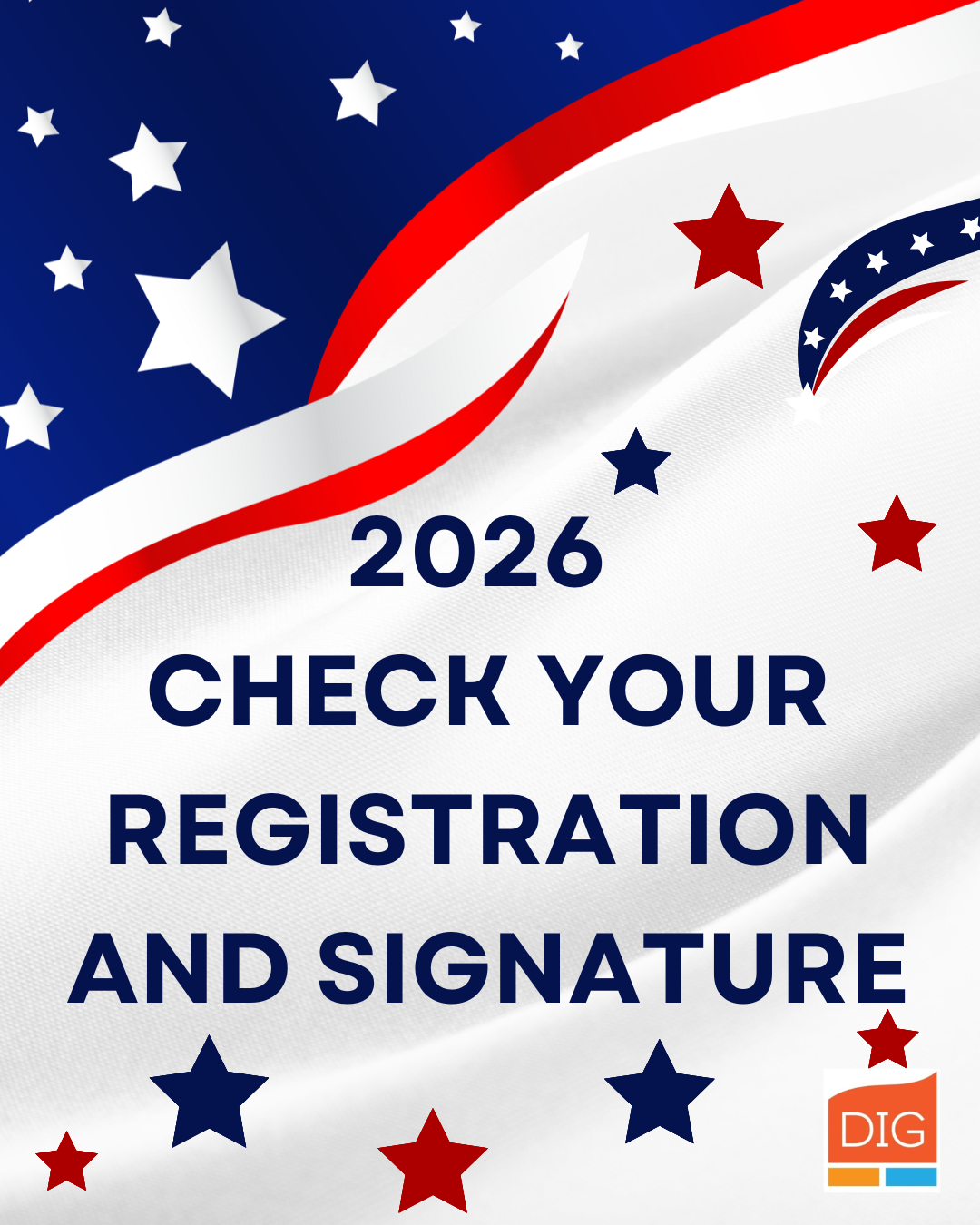
Get Ready to Vote: Check Your Registration and Signature
By: Deborah Dietz
| | |
As we get closer to election season, now is the time to make sure your voter registration information is correct, your signature is up to date, and you know the important voting deadlines.
Many people register once and do not think about it again, but information can change over time. If you moved, changed your name, or your signature looks different than when you first registered, it is a good idea to update your information now.
Your signature is especially important. In some situations, election officials compare the signature on voting forms to the signature they have on file. If your signature has changed because of age, disability, illness, injury, or simply signing differently over time, updating it now may help you avoid problems later.
While you are checking your information, review important election deadlines:
• Register to vote before your state’s registration deadline
• Request your vote-by-mail ballot before the deadline
• Confirm your address, signature, and contact information are correct
Taking a few minutes now can make voting easier and help ensure everything is in place before election season begins.
READ MORE HERE
| | |
DIG's Wallet Card Project focuses on helping people with disabilities and first responders communicate with each other.
The Wallet Card Project is an initiative designed to improve communication during interactions between individuals with intellectual/developmental disabilities or autism spectrum disorder (ASD) and law enforcement.
Whether you're a caregiver, teacher, community organization, or part of law enforcement, be sure to visit our Wallet Card Project Page for more information on how to access these resources and apply for a Wallet Card.
THE WALLET CARD PROJECT
| | |
Benefits from SSA for People with Disabilities
By: Lesly Quintanilla Lopez
The Social Security and Supplemental Security Income disability programs are the largest of several Federal programs that provide assistance to people with disabilities. While these two programs are different in many ways, both are administered by the Social Security Administration and only individuals who have a disability and meet medical criteria may qualify for benefits under either program.
Social Security Disability Insurance or Title II, Disability Benefits SSDI: pays benefits to people with disabilities and certain members of their family if the beneficiary is "insured," meaning that he/she worked long enough and paid Social Security taxes.
Supplemental Security Income SSI or Title XVI pays benefits to people with disabilities based on financial need.
READ MORE HERE
| | |
Hurricane Season: Prepare Before the Storm
By: Deborah Dietz
| |
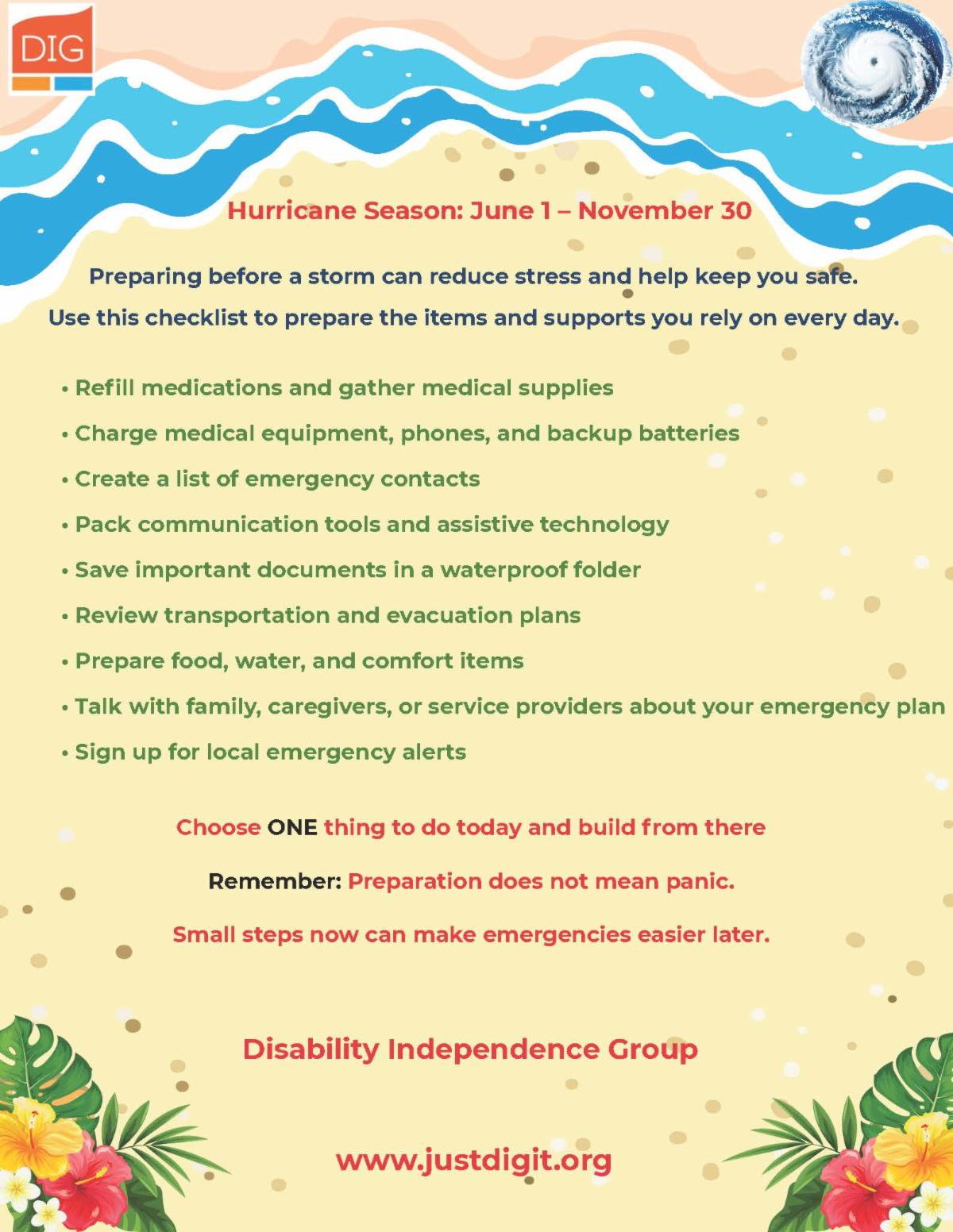
Hurricane season in the Atlantic Ocean is from June 1 through November 30 each year, and includes Florida. While not every day brings a storm, it is best to prepare in advance.
For people with disabilities, emergencies can affect more than shelter and supplies. Power outages, transportation changes, communication barriers, service interruptions, and limited access to medication or medical equipment can all impede staying safe and accessing needed support. Planning ahead can help reduce stress and make emergencies easier to manage.
Preparation does not need to happen all at once. Start by thinking about the things you use every day and what you would need if you had to leave quickly or stay home for several days.
READ MORE HERE
| | |
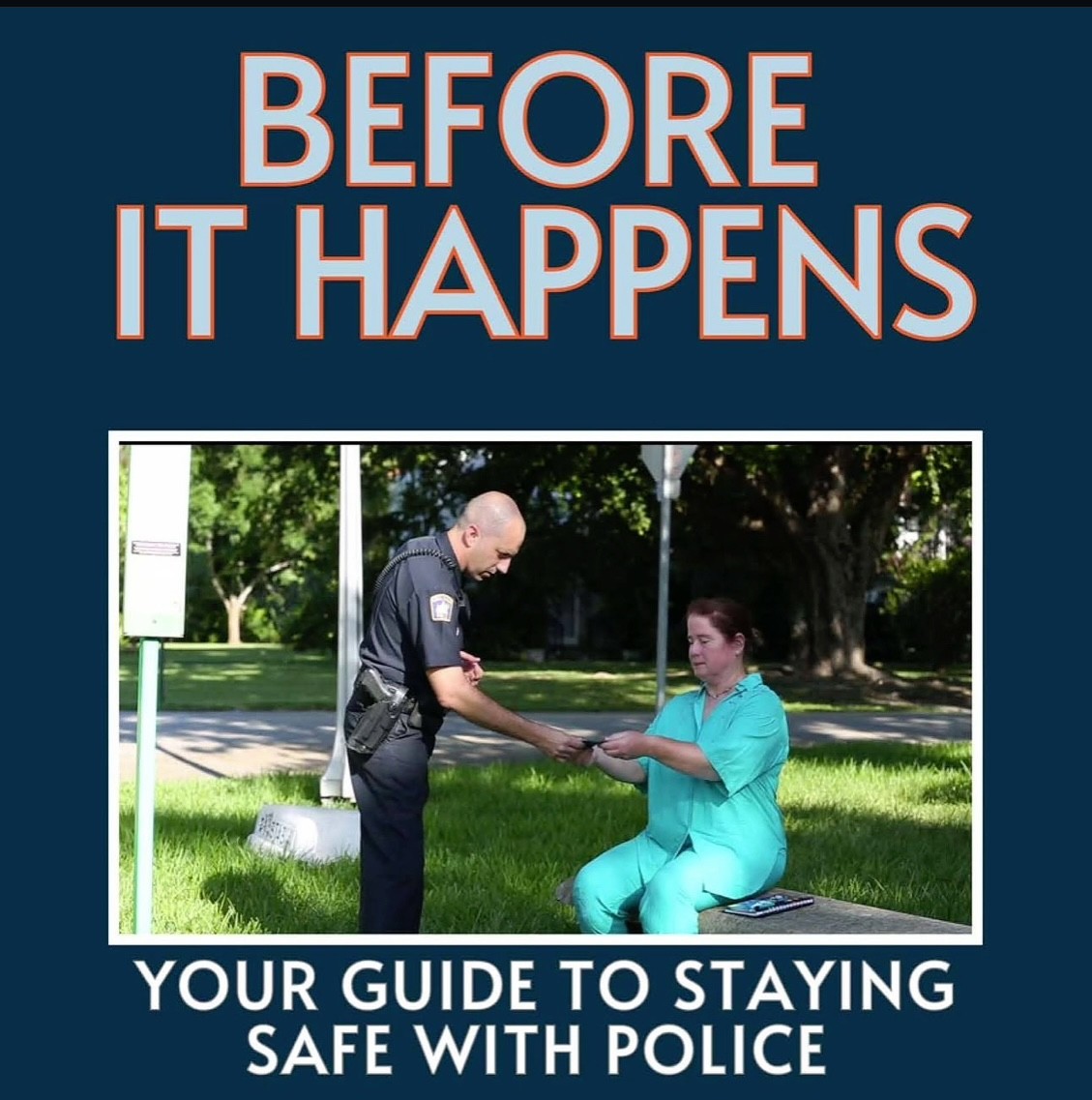
DIG's E-Book, Before It Happens - Your Guide to Staying Safe With Police, is now available!
Order Your E-Book Here
| |
| | |
Be Sure to Check out Our DIG Blog
for Much More
Important Information and Resources!
| | | | |
Do you have suggestions for future content or articles for our monthly newsletter?
If so, email your ideas and suggestions to our newsletter editor,
Justine Chichester.
| | Follow DIG on Social Media | | | | |