|
Celebrating 35 Years of the ADA — Together
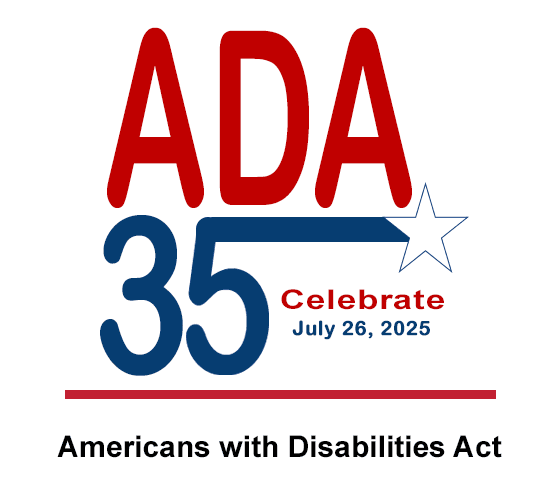
This month, we’re celebrating the 35th Anniversary of the Americans with Disabilities Act. It’s a milestone that reminds us just how far we’ve come, but also how much work is still left to be done.
This year has been especially tough. At times, it’s felt like we’re stuck in a giant game of Chutes and Ladders—climbing steadily toward inclusion and accessibility, only to be sent sliding backward by setbacks that challenge our progress. But the game isn’t over. We’re still here. And the ADA is still the law. It continues to protect the rights of people with disabilities in all aspects of daily life.
That’s why our work at DIG feels more important than ever. What we do matters. People with disabilities matter. We’re committed to sharing tools, information, and programming that help people navigate the world more safely and confidently.
We’d love for you to join us in person at our 2nd Annual Bowling Event on Saturday, July 20, 2025, at Bird Bowl. Come say hi, have some fun, and celebrate community with us.
This month’s newsletter features:
- An essay by Matt Dietz that looks at 35 years of the ADA.
-
A recap of our 4-part Taking Action series—full of practical tips for getting involved and making a difference
-
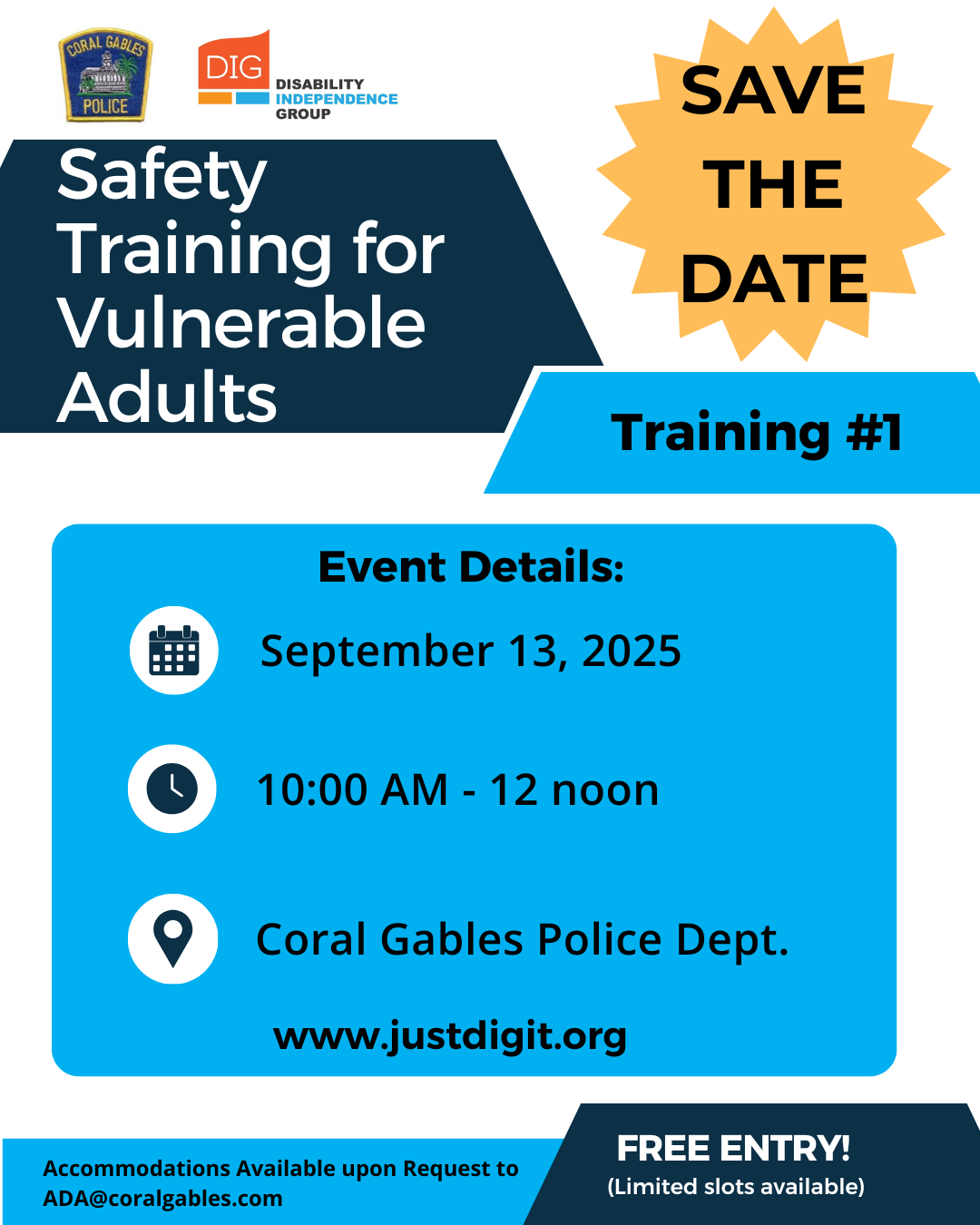
Details on our upcoming community safety training with the Coral Gables Police Department on September 13, 2025. Mark the date on your calendar and stay tuned for more information.
-
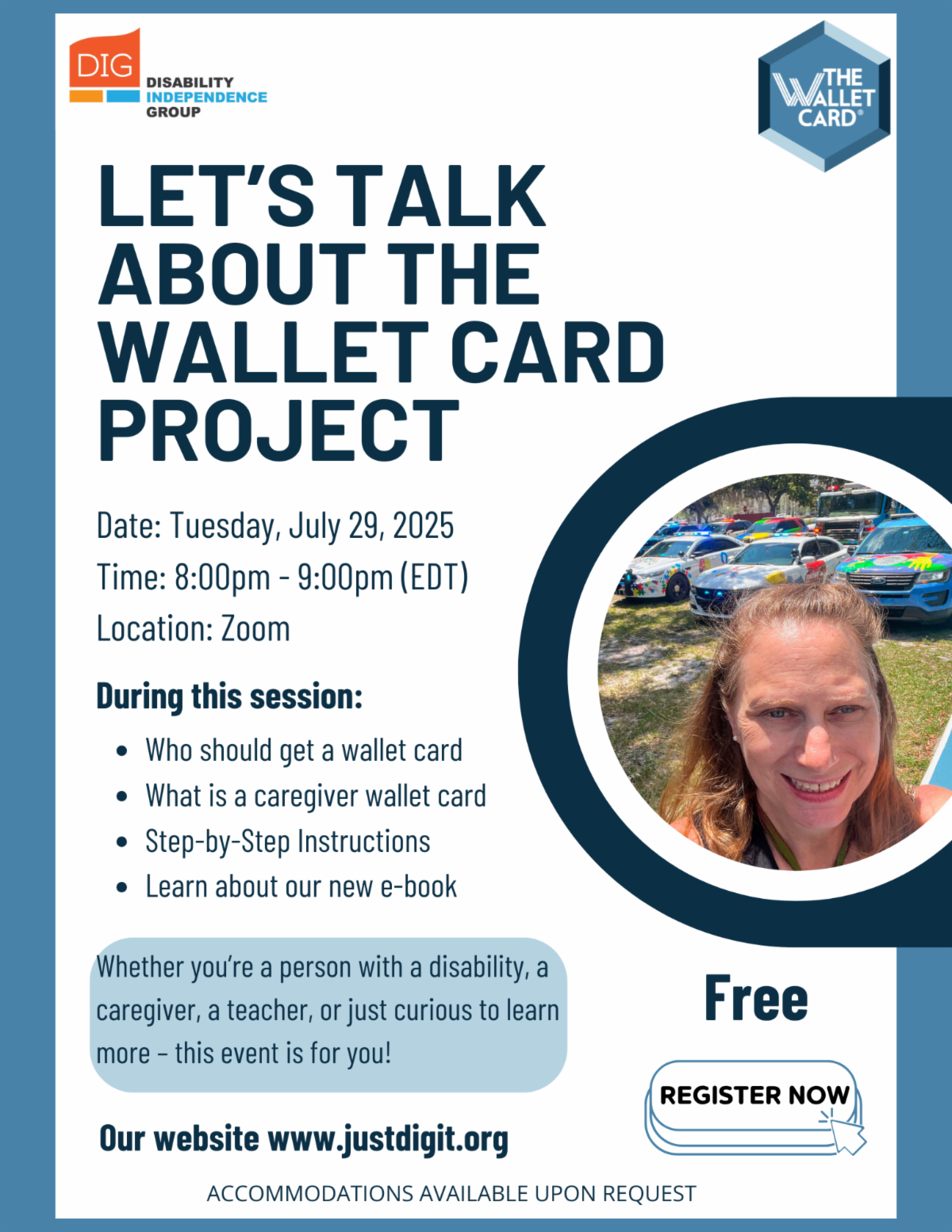
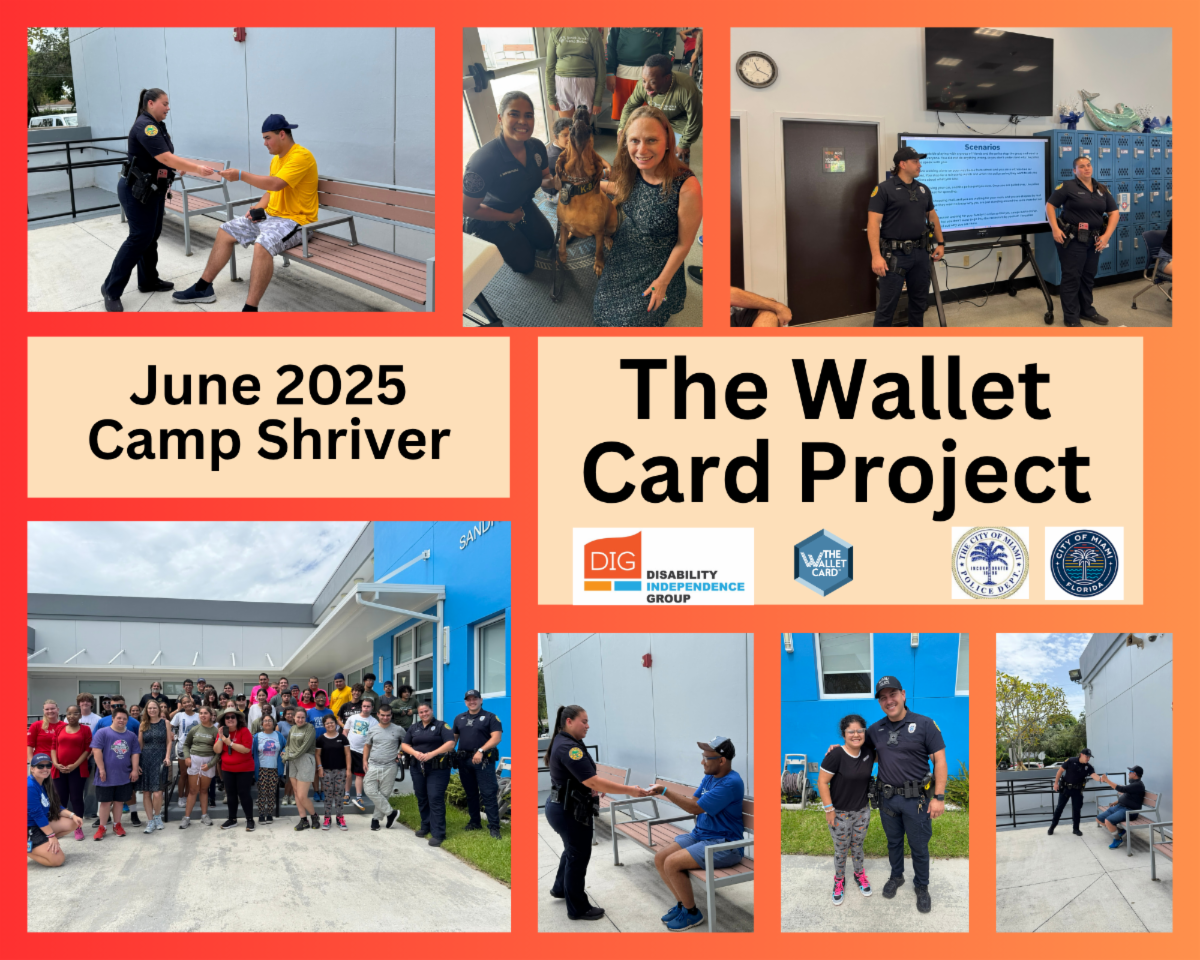
Updates on the Wallet Card Project
-
And an exciting announcement—my very first e-book, Before It Happens: Your Guide to Staying Safe with Police, is now available on Amazon! You can read it for free with Kindle Unlimited or get your own copy for just $0.99.
Be sure to follow us on social media to stay up to date—and please reach out and let us know how you’re doing. We’re in this together.
Enjoy your July,
Debbie
| | |
35th Anniversary of the Signing of the Americans with Disabilities Act (ADA)
By: Justine Chichester
| | |
The Americans with Disabilities Act (ADA) was signed into law 35 years ago on July 26, 1990. This historic law protects the rights of people living with disabilities and has transformed the landscape of civil rights in the United States.
What is the ADA?
The Americans with Disabilities Act (ADA) was signed into law, by President George W. Bush. This piece of legislation prohibits discrimination against individuals with disabilities in all areas of public life – jobs, schools, transportation and all places that are open to the general public.
Background
Before the ADA, Americans living with disabilities faced significant barriers in everyday life. Inaccessible public transportation, lack of accommodations in education and employment, and exclusion from community spaces were common. The disability rights movement, powered by decades of grassroots activism, fought for inclusion and equality, culminating in the passage of the ADA.
Read More Here
| | |
The Americans with Disabilities Act at 35: A Promise in Peril
By: Matthew Dietz
Thirty-five years ago, the Americans with Disabilities Act (ADA) was signed into law, marking a historic commitment to equality and inclusion for people with disabilities. It was a promise that disabled Americans would no longer be excluded from schools, workplaces, public spaces, or civic life. It was a declaration that disability rights are civil rights.
But today, that promise is eroding.
The ADA was not born out of charity or goodwill—it was the result of relentless activism. In 1977, disability rights advocates staged a 26-day sit-in at the San Francisco federal building to demand enforcement of Section 504 of the Rehabilitation Act, the first federal law to prohibit discrimination against people with disabilities in federally funded programs. A decade later, in 1988, students at Gallaudet University—then the only university in the world designed for deaf and hard-of-hearing students—launched the “Deaf President Now” protest, demanding that the university appoint a deaf president. Their victory was a turning point in disability visibility and empowerment. These movements laid the foundation for the ADA, signed into law in 1990, which mandated civil rights protections to millions of Americans with disabilities.
Now, decades later, those protections are being quietly dismantled.
In May, the Department of Energy quietly proposed eliminating its longstanding requirement that new buildings receiving agency funds be accessible to people with disabilities. This requirement, in place across the federal government since 1980 under Section 504, ensures that public infrastructure is inclusive from the ground up. Its proposed removal is not just a bureaucratic adjustment; it is a signal that accessibility is no longer a priority, even in spaces built with public dollars.
Read More Here
| | |
Taking Action: Stay Informed
By: Deborah Dietz
A 4-Step Guide to Getting Involved in Advocacy
Advocacy can feel overwhelming, but it doesn’t have to be. That’s why we created this four-part Taking Action series to break it down into simple, meaningful steps. Whether you’re just getting started or looking to do more, these tips will help you stay informed, get involved, and make your voice count.
Step 1: Find Your Elected Officials
Step 2: Contact Your Elected Officials
Step 3: Check Your Voting Status
Step 4: Stay Informed
You’re Ready to Make a Difference.
We hope this four-part series has helped you feel more confident about getting involved and making your voice count. Every step you take – big or small – helps create a more informed, inclusive and empowered community.
Read More Here
| |
|
The Wallet Card Project focuses on helping people with disabilities and first responders communicate with each other.
The Wallet Card Project is an initiative designed to improve communication during interactions between individuals with intellectual/developmental disabilities or autism spectrum disorder (ASD) and law enforcement.
Whether you’re a caregiver, teacher, community organization, or part of law enforcement, visit our newly updated Wallet Card Project Page for more information on how to access these resources and apply for a wallet card.
| | | | Exciting News! Our First E-Book is Here! | | |
We’re thrilled to announce the release of our very first e-book:
Before It Happens: Your Guide to Staying Safe with Police
Now available on Amazon
FREE with Kindle Unlimited or just $0.99 to own!
This fast-action guide is designed to help you feel safer, calmer, and more prepared before anything happens. Whether you have autism, a developmental disability, or just need extra time to process or respond, this guide gives you the tools to stay in control during a police interaction.
Inside This Guide, You’ll Find:
-
A quick and simple 4-step system to help you stay calm.
-
Easy strategies to build your own communication script.
-
Real-world tips to practice and prepare ahead of time.
-
Clear examples and prompts to help you respond with confidence.
-
Common mistakes people make—and how to avoid them
If you or someone you care about wants to feel more confident and protected in the community, this guide is for you.
Grab your copy now and take the first step toward safer interactions.
Be prepared. Be safe. Know what to do—Before It Happens.
| | |
What is Substantial Gainful Activity or SGA According to The Social Security Administration?
By: Lesly Quintanilla Lopez
To be eligible for disability benefits, a person must be unable to engage in substantial gainful activity (SGA). A person who is earning more than a certain monthly amount (net of impairment related work expenses) is ordinarily considered to be engaging in SGA. The amount of monthly earnings considered as SGA depends on the nature of a person's disability. The Social Security Act specifies a higher SGA amount for statutorily blind individuals; Federal regulations specify a lower SGA amount for non-blind individuals. Both SGA amounts generally change with changes in the national average wage index.
Substantial Gainful Amounts for 2025 are:
For statutorily BLIND individuals for 2025 is $2,700.
For Non-blind individuals, the monthly SGA amount for 2025 is $1,620.
Read More Here
| | |
Preparing a Pet Plan: Hurricane Preparedness
By: Celeste Mazloum
| | |
Since we are in the midst of hurricane season, it is essential to be fully prepared in case a storm is headed your way.
It’s important to have a plan in place that accounts for every family member, including your pet. For many of us, our pets aren’t simply animals; they are family. They rely on us for food, shelter, and safety, just as much as we rely on them for companionship. This month we are focusing on making sure your furry friends are prepared and safe during a storm.
If you stay home, stay together in a safe indoor area. It is best to keep your pet in a crate or carrier with an up-to-date collar and tag. In the event that your pet gets lost, their tags and collars can help identify them and return them home.
However, if you must evacuate your home, DO NOT leave your pet behind. There are pet-friendly shelters available during emergencies.
Read More Here
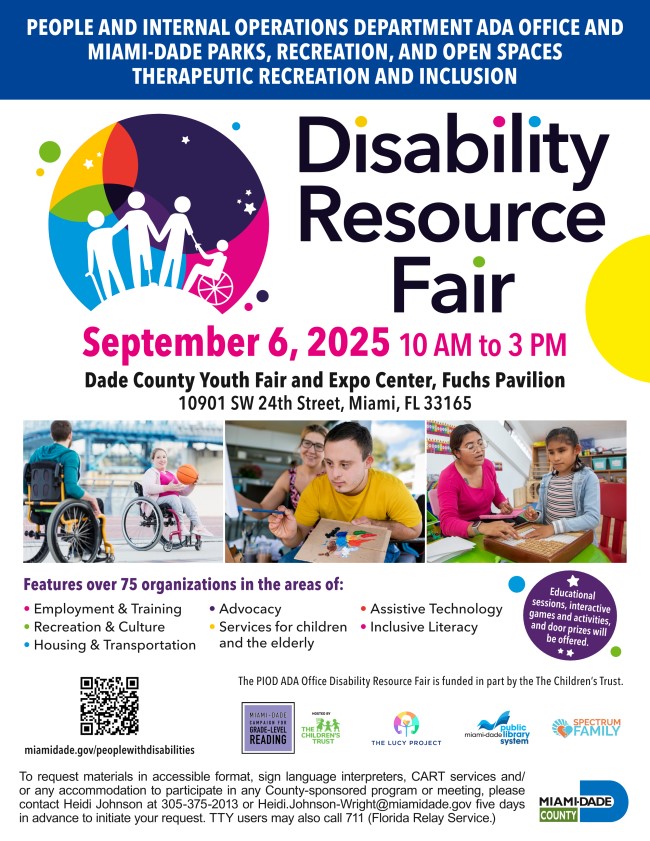
| | Come join the Miami-Dade People and Internal Operations Department ADA Office and the Miami-Dade Parks, Recreation and Open Spaces Department Therapeutic Recreation and Inclusion Division as they host the 2025 Disability Resource Fair on Saturday, September 6th from 10 AM to 3 PM at the Dade County Youth Fair Expo Center, Fuch’s Pavilion. This is the largest resource fair of its kind in Miami-Dade and will feature over 125 different organizations that provide services in the areas of disability advocacy, transportation, public safety, transition programs, literacy, youth and elderly services, recreation and culture, training, employment, and health and wellness. Educational sessions and interactive activities will be provided. Don’t miss this opportunity to connect with resources that will enhance your quality of life and well-being. Admission and parking are free and many door prizes will be awarded. For more information, visit miamidade.gov/peoplewithdisabilities. | |
| | |
Be Sure to Check out Our DIG Blog
for Much More
Important Information and Resources!
| | | | |
Do you have suggestions for future content or articles for our monthly newsletter?
If so, email your ideas and suggestions to our newsletter editor,
Justine Chichester.
| | Follow DIG on Social Media | | | | |