|
Fall Considerations for Your Prairie
Mark Lange, Texas Parks and Wildlife, District 9 Senior Biologist
Clint Faas, TPWD Biologist for Wharton and Northern Jackson Counties
It should not come as a surprise that as conditions and seasons change, so does the plant community in your prairie. Some plants you see in the early spring will complete their ecological cycle and fade away, while other, more heat-tolerant plants will take their place as the hot summer months set in. As fall and winter come on, the plant community will change to those that prefer cooler temperatures.
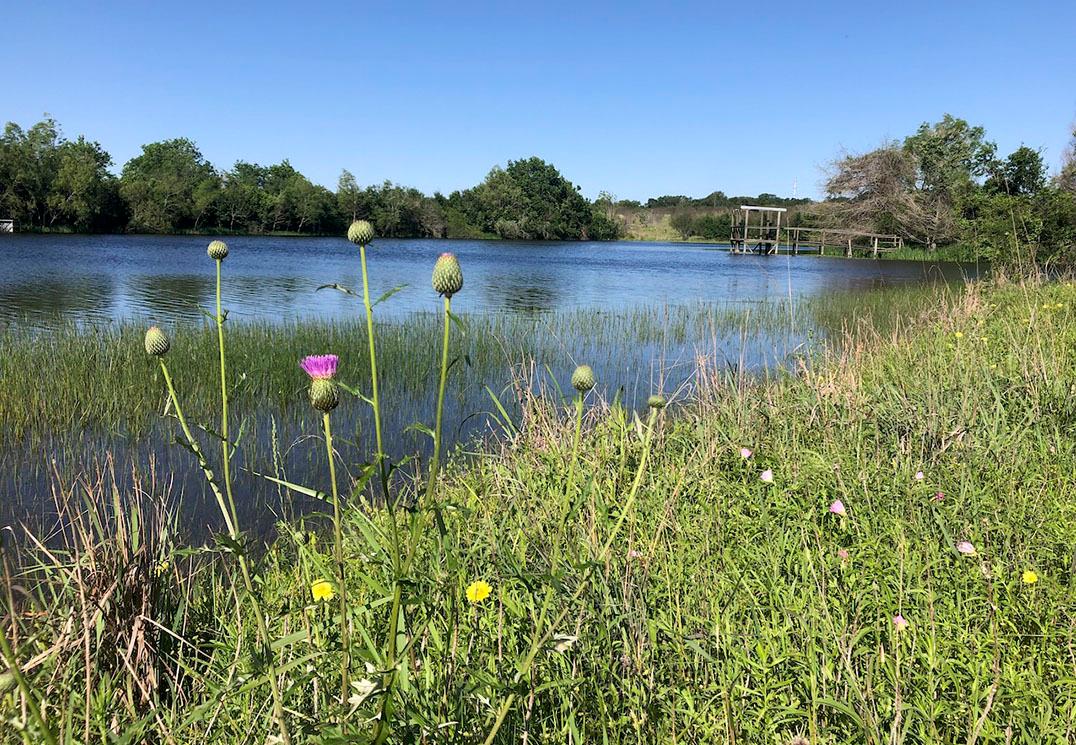
In most years, another thing that varies across seasons is rainfall. Although August has turned dry for most of the area, a large portion received at least some regular rain earlier this summer. This rain resulted in higher-than-average soil moisture levels during June and July. In areas where soil moisture remains high for extended periods compared to others (i.e., lowlands or even slight depressions), you will likely see a different plant community inhabit those areas. These plants prefer wet soils and need them to survive.
One of the plants commonly found in our region in moist soils is known as rattlebox or rattlepods (Family: Fabaceae, Genus: Crotalaria). This short-lived shrub produces a yellow flower and then a seed pod that, when dry, can give off a rattle, making you think you are near a different rattling creature with fangs. Rattlebox can help stabilize soil due to its root structure, improve soil fertility, and be a desirable plant for pollinators.
Unfortunately, rattlebox also has some undesirable qualities, one of which is its potential toxicity to livestock, caused by toxins that may lead to liver damage. Rattlebox can also be invasive in your prairie where it finds suitable conditions, often appearing suddenly due to dormant seeds on the landscape.
While rattlebox can be controlled, it is often best to treat it before the plants go to flower and produce seed. Smaller plants can be pulled by hand in moist soil, but larger plants may be difficult to uproot. Repeated mowing or cutting can reduce seed production over time; however, some species of rattlebox may propagate from root or stem fragments. When livestock toxicity is a concern, exercise caution when mowing, as toxins may remain hazardous even after the plant is cut. If the area can be dried, like a controlled moist-soil wetland, repeated disking and maintaining dry soil throughout the summer may decrease plant abundance.
Herbicide treatments are often the most effective method of control, with increased effectiveness in the spring before the plants mature. Cut stumps can be treated with triclopyr, with the highest mortality coming from treatment within several minutes of cutting. Foliar-applied herbicides containing the active ingredients dicamba, 2,4-D, triclopyr, aminopyralid, or combinations of these ingredients have been shown to be effective for different species of rattlebox.
For plants growing in standing water, aquatic labeled glyphosate and triclopyr may also be effective. For specific treatment options, it is always best to identify the particular species of rattlebox present and determine which herbicide is most effective. Remember always to read the product label for directions and precautions. Not only will it mention specifically the plants it is listed to control, but the label is the law.
|