|
HAPPY SUMMER!
This extra edition of "The Latest Dirt" brings you more inspiration to
KEEP TEXAS PRAIRIE
| | | | |
FAYETTE PRAIRIE CHAPTER
THE LATEST DIRT
| | The Fayette Prairie Chapter of NPAT is committed to local education and native prairie restoration. To support our members, we organize field trips, conduct outreach, and collaborate on conservation and restoration efforts. | | | Coming
Up | Haven't You
Been Busy! | Seasonal
Restoration Guide | Restoring
Smaller Acreage | Stewardship
in Action | | |
|
Estate Planning for the Conservationist
How might your estate planning change as a prairie conservationist?
Learn from our panel of experts
Basics of Estate Planning
Wills & Trusts
What if land is involved?
What is legacy giving?
Should you consider a conservation easement?
Do you know your burial options?
How to start the conversation with family
Monday, August 4, 2025
6:00pm - 7:30pm
No registration required
Join on Zoom: https://tinyurl.com/EstatePlanningZoom2025
| | | |
|
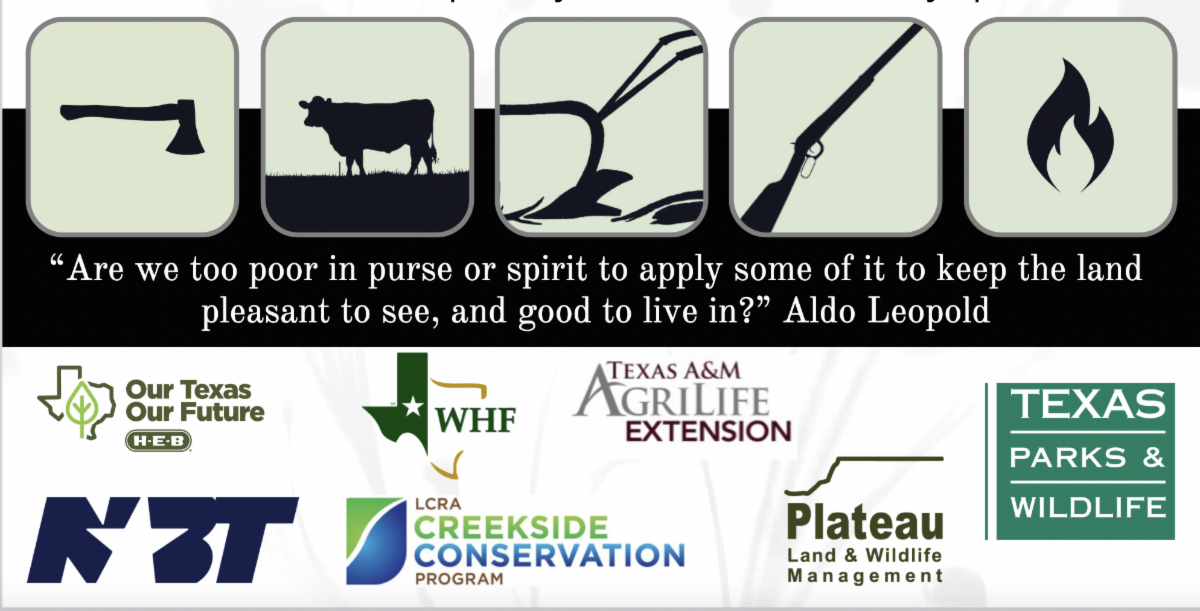
Five Tools of Prairie Restoration
Landowner Symposium
Aldo Leopold, the “Father of Wildlife Ecology,” is a key figure in holistic, modern wildlife conservation and management. His insights on the value of land and wildlife inspire our work today.
Stewardship of private lands supports game and wildlife species, leading to healthier ecosystems and a more sustainable future. Discover how to apply these five tools in the modern landscape to nurture and restore our native prairies.
Friday, August 22, 2025 |8:45 am - 5:00 pm
(Doors open at 8:00 am for check-in)
Casino Hall, 254 N Jefferson St., La Grange, TX 78945
$40, includes lunch
| |
In his essay "The Farmer as a Conservationist," Leopold wrote, "The landscape of any farm is the owner's portrait of himself".
How does your land reflect you?
| |
- Lessons from Leopold
- Moczygemba Rewild Ranch - Our Prairie Restoration Journey
- Brush Control of Invasive Plants
- Grazing for Native and Invasive Grasses
- Mechanical Disturbance for a Sustainable Food Plot
- Fire for Successional Diversity
- Managing Exotic and Native Wildlife
- An Ecologist’s Toolbox for Holistic Stewardship
| | | |
Annual Fall Social
An evening of prairie inspiration
SATURDAY, OCTOBER 4, 2025
6:00 pm - 10:00 pm
Frisch Auf! Valley Country Club
La Grange, TX
Mark your calendar and watch for exciting details!
| | | |
Elder Prairie Fall Plant Walk
with Tim Siegmund, TPWD
Friday, October 3, 2025 | Chappell Hill
Those who walked with Tim for the spring walk asked to return in the fall.
We say, "YES!"
Tim will take us on a fall walk to observe how a prairie changes seasonally and continue walking along the restoration timeline at the speed of botany.
This event is free, but registration is appreciated.
Learn more about Elder Prairie: https://texasprairie.org/elder-prairie-preserve/
See our full calendar of events: https://texasprairie.org/fayette-prairie-chapter/
| | | |
|
2025 Wildlife and Woodlands
Landowner Workshops
The TPWD programs cover a wide range of important topics that will help you manage wildlife habitats in the prairies, savannahs, and woodlands of the Post Oak Savannah. We encourage you to attend the workshop specific to your county, as the speakers, biologists, and local organizations are tailored to your needs. If you are unable to attend your county’s workshop, you are welcome to join any of the other sessions, where you will still find the information valuable. Please share this invitation with your friends, family, and neighbors.
-
July 11th - KC Hall Annex in Hallettsville, Lavaca County (FLYER) (REGISTER HERE)
-
August 1st - Wheelock Bloodworth Community Center in Robertson County (REGISTER HERE)
-
August 8th – Cat Spring Agricultural Society Hall in Austin County (FLYER) (REGISTER HERE)
-
August 15th –Hilltop Lakes Community Center in Leon County (REGISTER HERE)
-
August 22nd – Caldwell Civic Center in Burleson County (REGISTER HERE)
| | | |
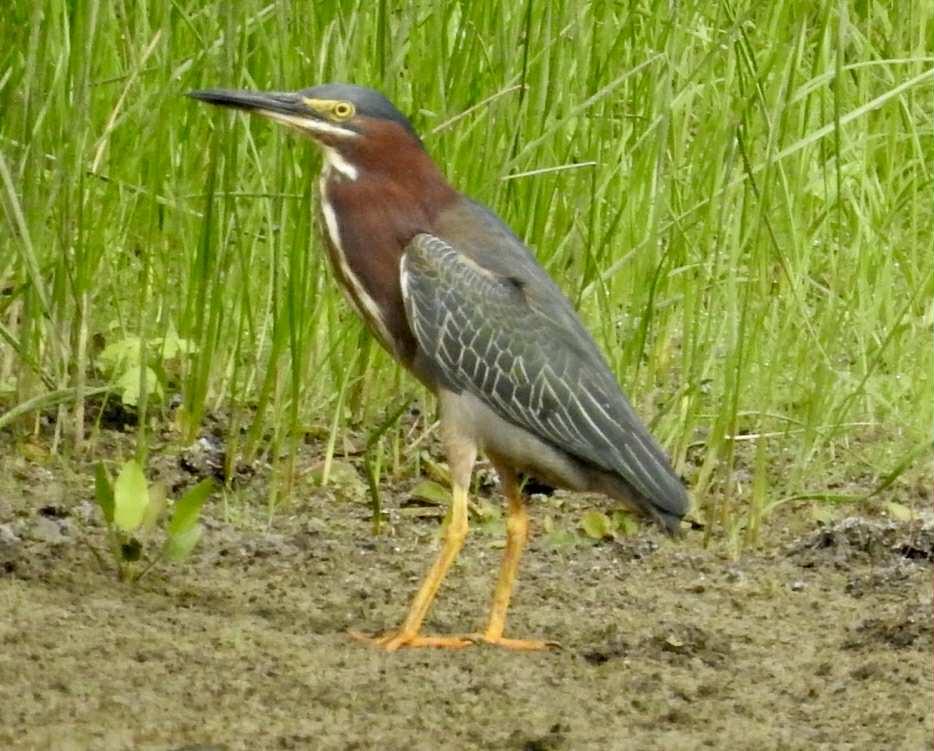
Elder Prairie Bird Watch
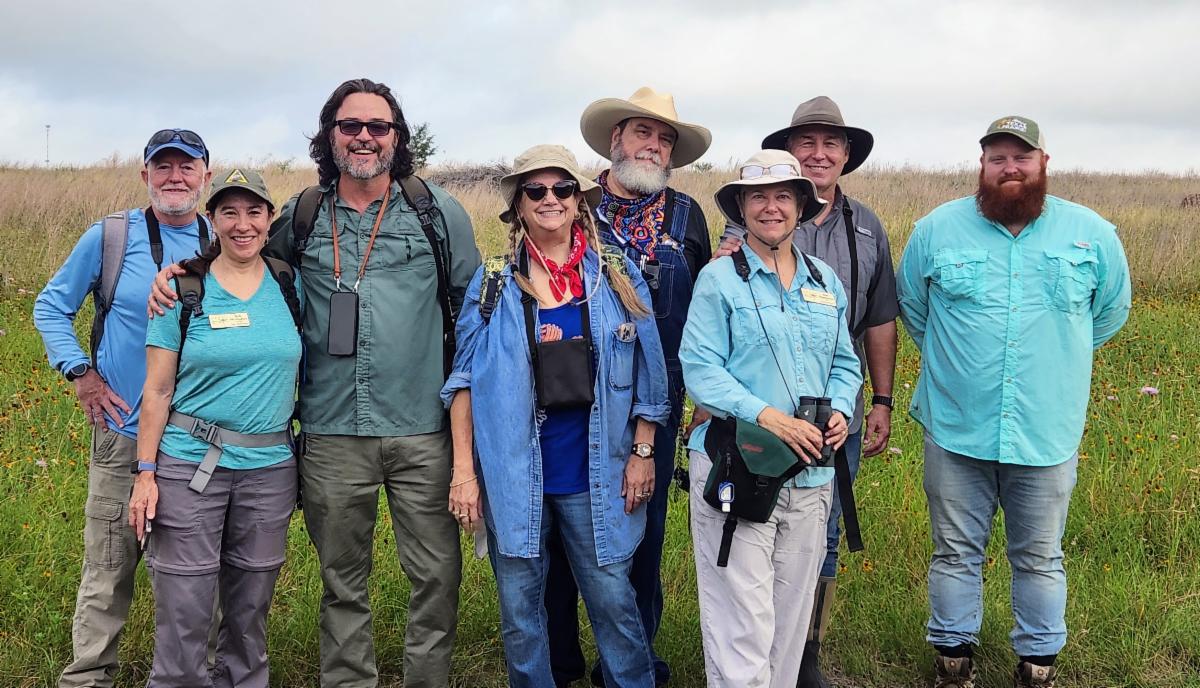
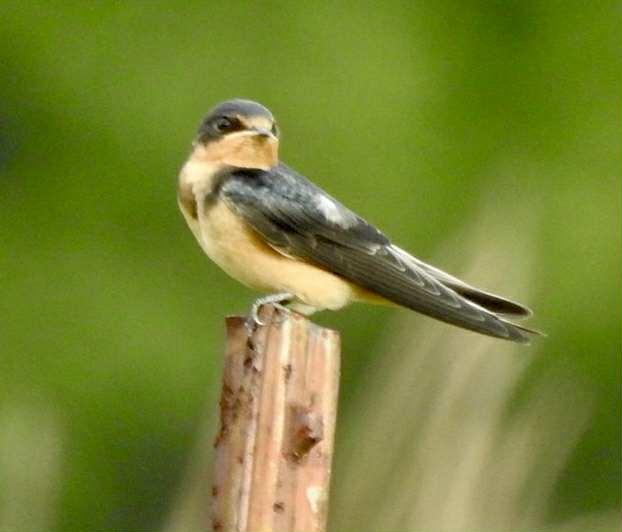
The NPAT-Fayette Prairie Chapter members had a wonderful June morning observing the birds that call Elder Prairie home and sharpening their bird identification skills. Following along with Erik Wolfe and Debbie McMullen was truly inspiring!
| | | | |
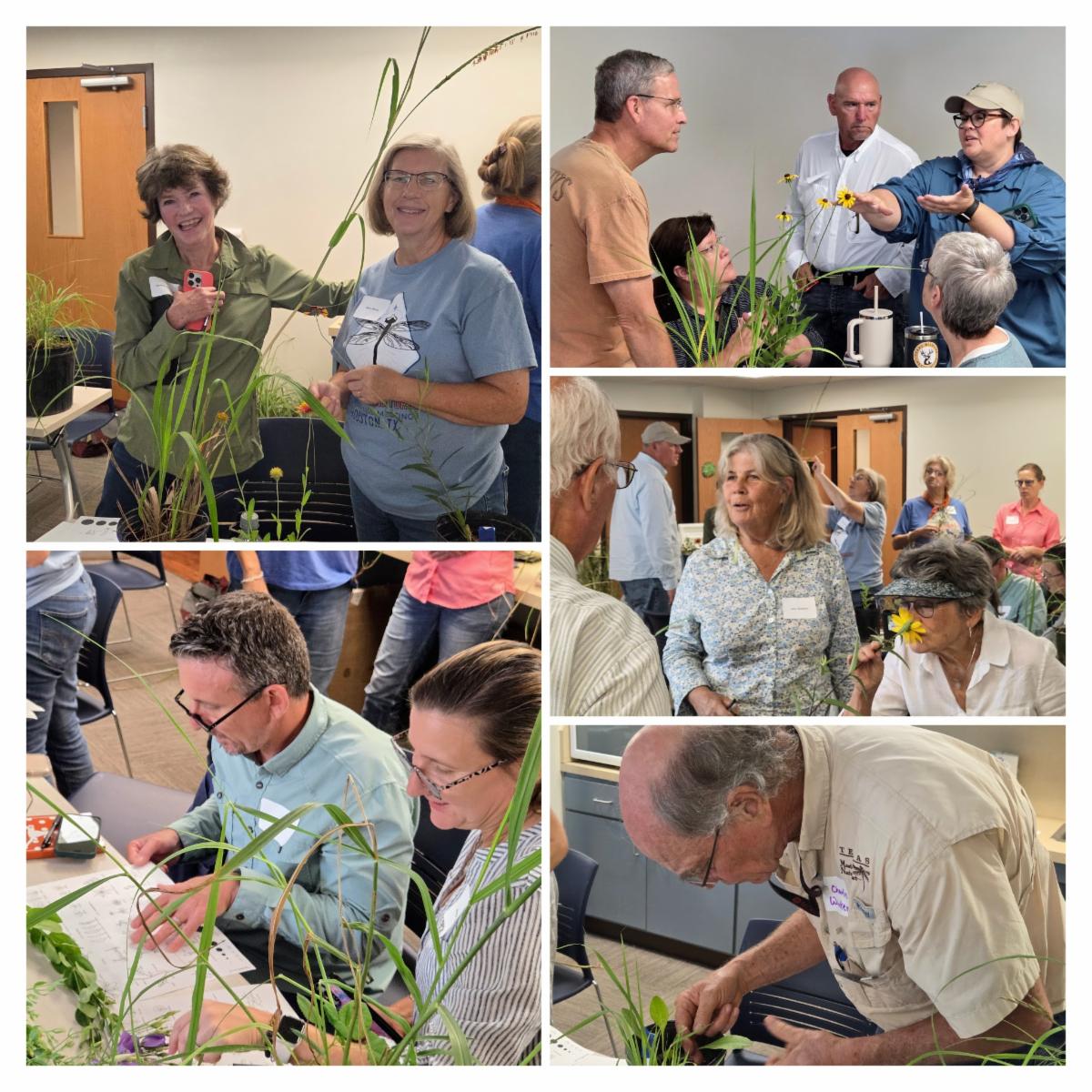
Grass & Forb Identification Workshop
Led by Berri Moffitt, WHF
Our prairie people improved their skills in identifying grasses and forbs. Berri Moffit of WHF shared her expertise on native and introduced plants, providing a relatable and encouraging path toward becoming better stewards of our native habitats.
Using key features and photo techniques for optimal technical assistance, the class practiced identifying the differences between:
- Johnson Grass & Switchgrass
- Chinese privet, Yaupon, & Coralberry
- The Bluestems
- Bahia & Brownseed paspalum
- Various coneflowers
Keeping Texas Prairie!
| | | | |
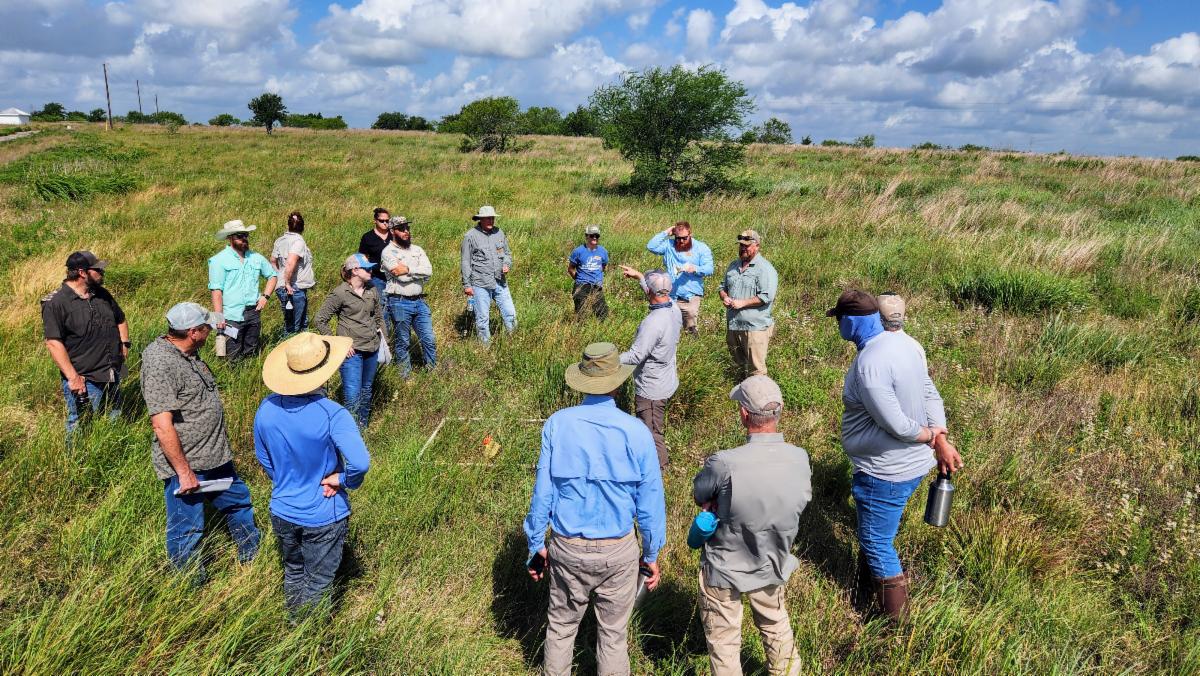
Fayette Prairie Chapter Hosts
TPWD Biologist Continuing Education
The NPAT Fayette Prairie Chapter values its partnership with the Texas Parks and Wildlife Department (TPWD) biologists. Our county biologists provide support and consultation to land stewards dedicated to restoring native prairies and protecting wildlife habitats.
The TPWD wildlife biologists bring both passion and expertise, dedicating time to ongoing education. Our chapter had the honor of hosting Wildlife BIologists for a full day of prairie tours and workshops to enhance their skills in providing us with valuable consultations and guidance.
| | If you have a Wildlife Valuation or would like assistance in developing a wildlife or prairie restoration plan, reach out to your local biologist for assistance. | | | | Seasonal Restoration Guide | |
Summer Considerations on a Native Prairie
Mark Lange, TPWD Senior Wildlife Biologist
Bobby Eichler, TPWD Wildlife Biologist, District 9 Leader
The process of prairie restoration involves decisions made as the project area responds to both previous treatments, such as herbicide applications, and the weather conditions of that year. Every project is unique in that previous land use, soils, and the plant community present when the project begins vary; therefore, the restoration process involves taking action, waiting to see the reaction, and then planning the next step. Many times, adjustments are made throughout the project based on the response to previous treatments, so it is impossible to supply a step-by-step process that will fit every project. The goal of this article is to present various scenarios that arise on restoration projects during the summer months.
- For areas not yet seeded in native grasses, current broadcast and spot spraying should be focused on your existing grasses (Bermuda, Bahia, Old World bluestems)
- If the project area is suffering from drought conditions, plants need to be actively growing for herbicide to be effective, otherwise, it would be best to postpone herbicide application.
- Normally, September and October allow for one last application for spraying and killing invasive grasses. Ideally, this would be the second spraying of warm season exotics with the first being late May through June.
- For existing restoration areas where native warm-season grasses such as Little bluestem, Indian grass, and Switchgrass are present, be on the lookout for other invasive grasses, such as Johnson grass. Johnson grass, being taller than most native grasses, can be treated with wick-type applicators and glyphosate. Areas of Bermuda, Bahia, Old World bluestems that are not taller than their surrounding natives should be spot-treated with glyphosate with a pump-up or electric sprayer.
- If a winter prescribed burn is in the mix, start preparing fire breaks as soon as fall rains soften the soil. If King Ranch bluestem is present in the project area, research has shown that growing season (summer) burns coupled with glyphosate treatments can significantly reduce its presence.
- Many times, the first response to an early summer herbicide treatment is the growth of weeds/forbs. If native seeds have not been planted, this response is expected and can serve a purpose for both shade to help control invasive grasses and soil health throughout the summer. Forbs offer many benefits to wildlife, so their presence is not a significant concern, and many will phase out by next spring. If native seeds have been planted but are under taller forbs, shredding over the top of the grasses to remove the tops of the forbs can reduce the shade on those grasses and promote their growth, but be careful not to shred the grasses.
- Lastly, the ongoing process of learning and identifying the undesirable exotic grasses such as those mentioned (Bermuda, Bahia, Old-world bluestems, and Johnson grass) as well as the preferred warm-season grasses (little bluestem, Big bluestem, Indian grass, Switchgrass, and Side oats grama) is important. Being able to spot exotic grasses and treat problematic areas quickly is critical to the long-term success of restoration projects.
| | | | Restoring Smaller Acreage | |
|
Your Native Prairie Restoration Partner
Smaller Acreage Restoration Program (SARP)
Regardless of the size of your land, you can play a vital role in restoring tallgrass prairie. The Fayette Prairie Chapter’s Smaller Acreage Restoration Program (SARP) offers essential resources to support members in their prairie restoration efforts. With financial assistance, technical expertise, educational opportunities, and access to equipment and chapter resources, we are committed to promoting effective restoration and sustainable prairie maintenance.
Working closely with the Texas Parks and Wildlife Department (TPWD), SARP tailors customized restoration plans for each steward and their land. Focused on prairies under 25 acres—the general cutoff for TPWD cost-sharing programs—we assist with upfront costs for materials such as herbicides, native grass and forb seeds identified specifically for our ecoregions, and contractor support. Our restoration plans also provide guidance, access to necessary equipment, and organized workdays to facilitate the completion of the restoration process. As more people move to rural areas and seek to nurture their land, SARP plays a crucial role in addressing the fragmentation of the Fayette Prairie and the surrounding Post Oak Savanna.
Restoring smaller-acreage prairies not only benefits pollinators and numerous bird species but also creates essential connectivity between larger restored areas and remnant tracts. Maximizing connectivity, projects also include available public spaces identified and adopted by Texas Master Naturalists. One such restoration is being directed by Megan Lowery and Nancy Rabensburg of the TMN Lost Pines Chapter, with expert guidance from TPWD Biologists Rachel Patterson, Blake Hendon, and Tim Siegmund. Restoring three acres adjacent to Bob Bryant Park in Bastrop County will provide crucial habitat for wildlife and pollinators. While demonstrating the importance of native prairies to the public, it will also serve as encouragement to support pollinators in our own spaces. Together, we can establish a checkerboard of habitats that sustain the ecosystem.
While restoration can present challenges, our chapter provides invaluable education for land stewards eager to learn about the process, timing considerations, and how to identify personal goals. We invite you to join NPAT, the Fayette Prairie Chapter, and subscribe to our newsletter, where you will find support for your restoration and stewardship aspirations.
We are grateful to all our members who recognize the significance of prairie restoration and conservation across the state. We are eager to hear from landowners engaged in prairie restoration projects and from local sponsors who want to support this vital endeavor.
To begin your journey toward restoring your land to native prairie, please visit https://texasprairie.org/sarp/. Your property could be an ideal candidate for the SARP program, and a restoration plan tailored by Texas Parks and Wildlife.
If you have questions, please contact Clare Fields, NPAT Lands Manager and SARP Coordinator, at Clare_Fields@texasprairie.org. We look forward to working with you!
| | | | |
Share the Prairie
“The most meaningful way to succeed is to help others succeed.” – ADAM GRANT
| | |
Have you appreciated the education and support gained from your NPAT membership?
Our chapter has opportunities to "Share the Prairie" at upcoming events with an NPAT-Fayette Prairie Chapter display table.
No experience is necessary; you will enjoy meeting and working with other NPAT members.
If you're available to help, please drop us a line.
We provide all of the materials and partnership -- You provide the smile :)
| | | Jul 11, 2025 | TPWD Landowner Outreach | Hallettsville (Lavaca / Colorado Counties) | | Aug 8, 2025 | TPWD Landowner Outreach | Cat Spring (Austin/Colorado Counties) | | | |
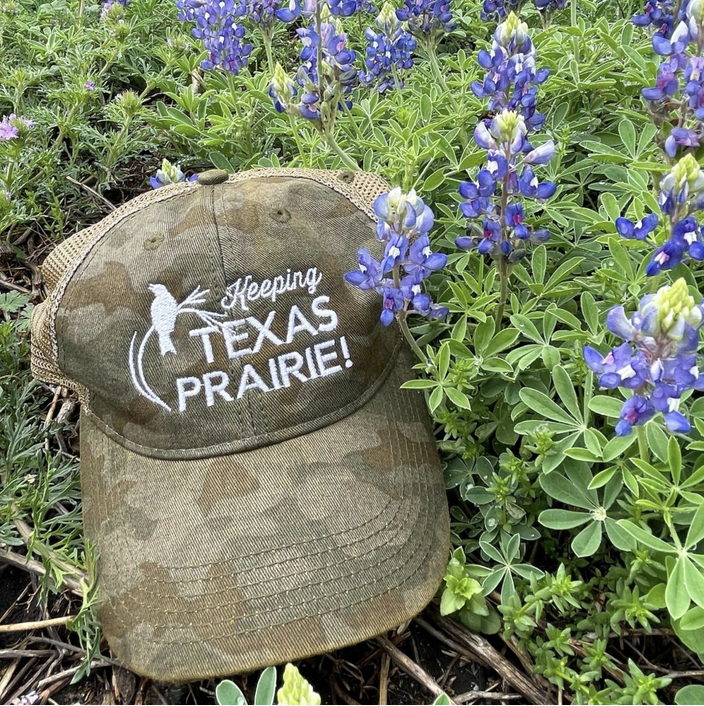
Keep Cool
Camo with Mesh
$25
| | |
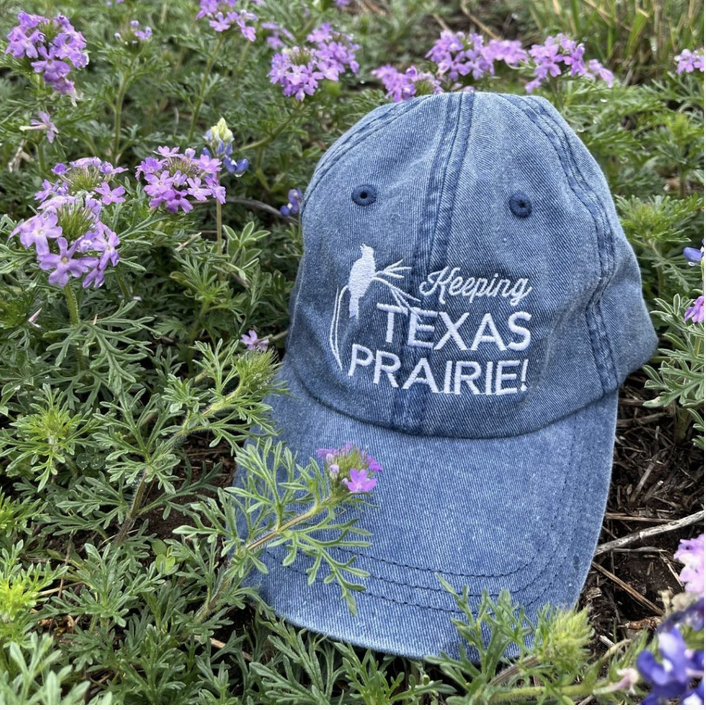
NEW COLOR
Chambray Blue
$25
| | |
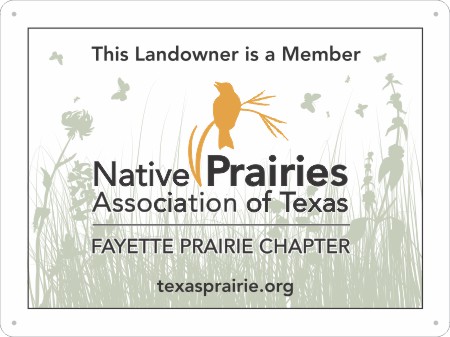
Post your prairie pride with an
18X24 aluminum fence sign
$50
| | |
Available at Fayette Prairie Chapter Events
All proceeds from sales support our mission to conserve, restore, and educate about the value of Texas prairies.
| | | |  | |
Chapter Officers
Mark Brown, President
Marvelyn Granger, Vice President
Norbert Dittrich, Treasurer
Trey Granger, Secretary
Steering Committee
Cheryl Brown
Nancy Dunnahoe
Tayvis Dunnahoe
Bobby Eichler
Bethany Foshee
Rory Johnston
Virginia Johnston
Dianna Kocurek
Mark Lange
Chuck Linton
Jeff Post
Connie Shortes
Dr. Don Steinbach
| | | | |