|
Committees:
Sr. Chair Finance; Vice Chair Energy and Utilities; Agriculture and Environment;
Higher Education; Blockchain and Digital Assets; Redistricting; Rules, Calendar, and Operations of the House; Property Tax Reduction and Reform
| |
NC GOP Leaders Agree on Budget Framework
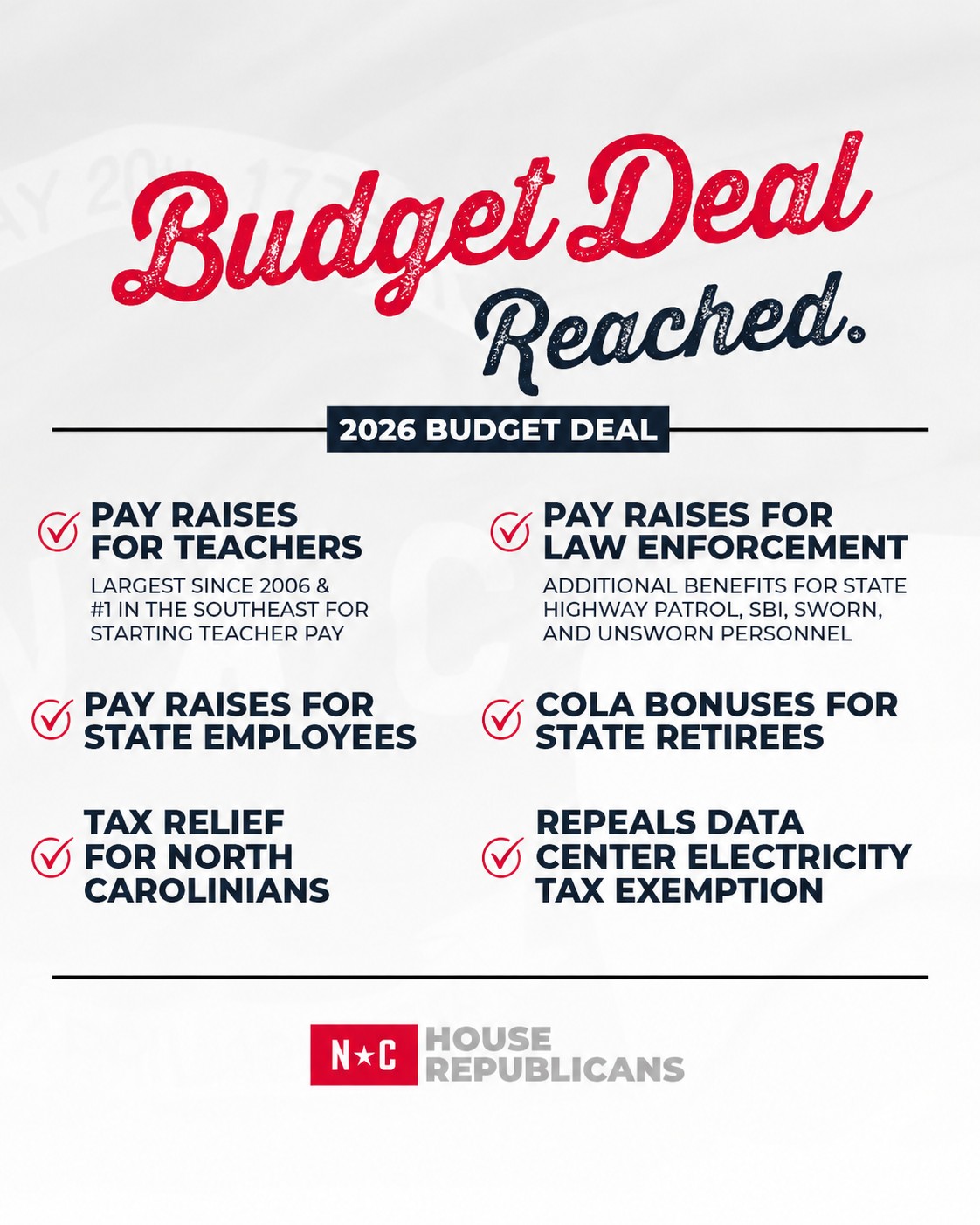
North Carolina’s top Republican legislative leaders said Tuesday they have reached a framework agreement to break a nearly yearlong budget impasse, announcing plans for the largest average teacher pay raise in nearly two decades, double-digit salary increases for most law enforcement officers and a new schedule of personal income tax cuts.
Senate leader Phil Berger (R-Eden) and House Speaker Destin Hall (R-Granite Falls) held a joint news conference announcing they had resolved the biggest structural disputes that have stalled negotiations between the two chambers.
“This is a starting point,” said Berger, who lost his reelection bid in the Republican primary to Rockingham County Sheriff Sam Page in March. “There’s still a lot that will need to be decided and discussed between the two chambers, but this agreement sets out a good framework for us to move forward.”
The centerpiece on the spending side is an 8% average pay raise for teachers, which leaders said would push starting teacher pay to first in the South when counted with local supplements while also lifting veteran teachers across the salary schedule.
“This budget is really an unprecedented one for education in this state,” said Hall, calling it the largest average teacher pay increase since at least 2006.
Teachers with more than 16 years of experience would receive a $1,000 bonus; less experienced teachers would receive $500.
State employees would see an average 3% raise, with bonuses of $1,750 for those earning less than $65,000 and $1,000 for those above that threshold. State retirees would receive a 2.5% bonus.
The agreement reserves the largest percentage increases for sworn law enforcement. SBI and ALE officers would receive an average 20.3% raise including step increases, State Highway Patrol officers 17.7%, correctional officers 15.4%, and probation and parole officers 10.1%. Other state government law enforcement officers would receive 13%. The budget also dedicates roughly $40.1 million for $1,750 one-time bonuses for local officers.
Hall stated that the agreement maintains funding for Opportunity Scholarships.
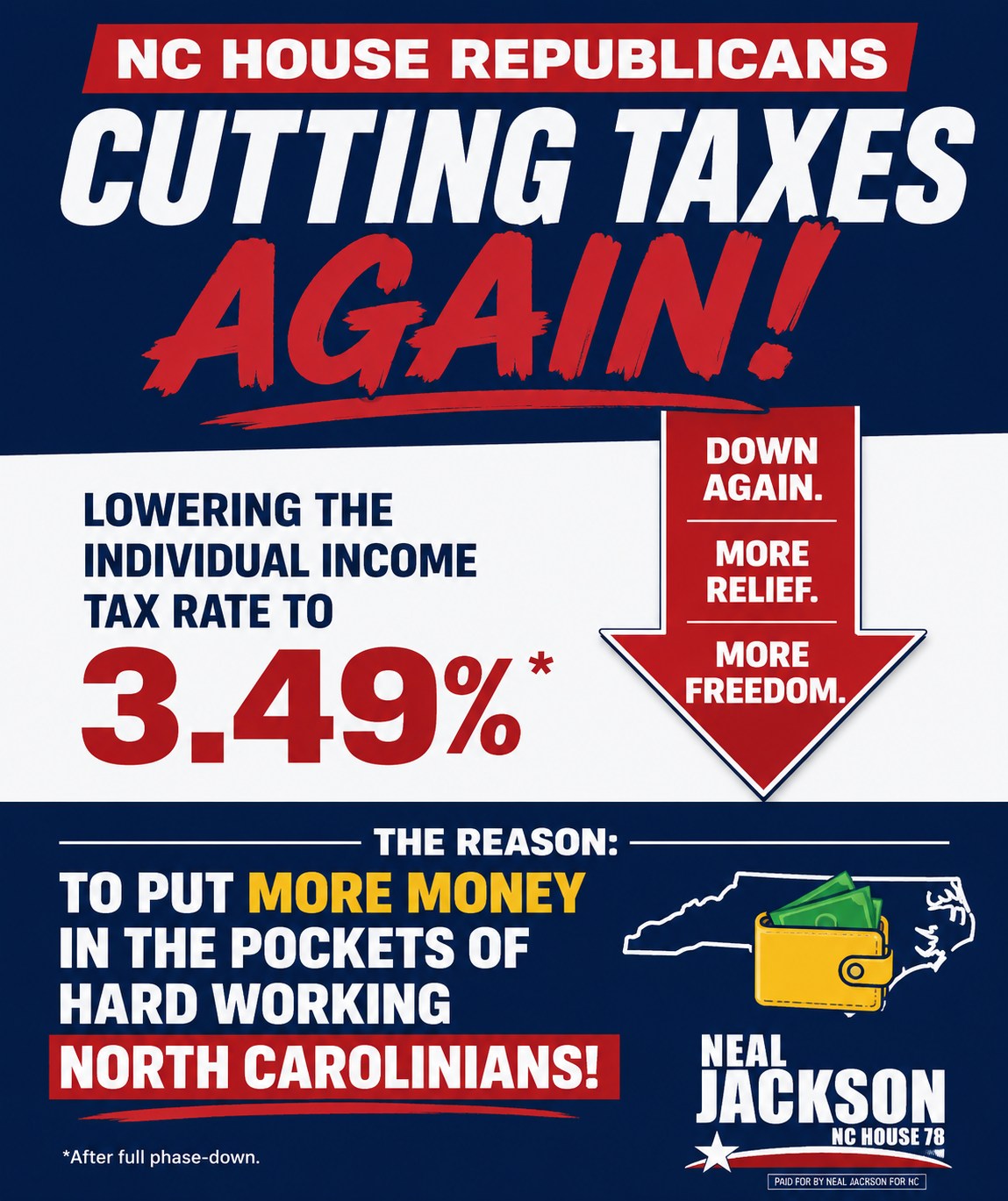
On taxes, the agreement makes no change to the corporate income tax rate reduction schedule. The deal would lower the personal income tax rate to 3.49% from calendar years 2027 through 2029, then 3.24% from 2030 through 2032, and 2.99% from 2033 through 2034. After that, two additional revenue-triggered cuts of 0.25 percentage points each could bring the rate as low as 2.49%.
| |
|
House Finance Committee Votes to Close Property Tax Loophole, Limit Tax Hikes
A state House committee voted Tuesday to close an affordable housing tax loophole that’s causing major budget problems for urban counties.
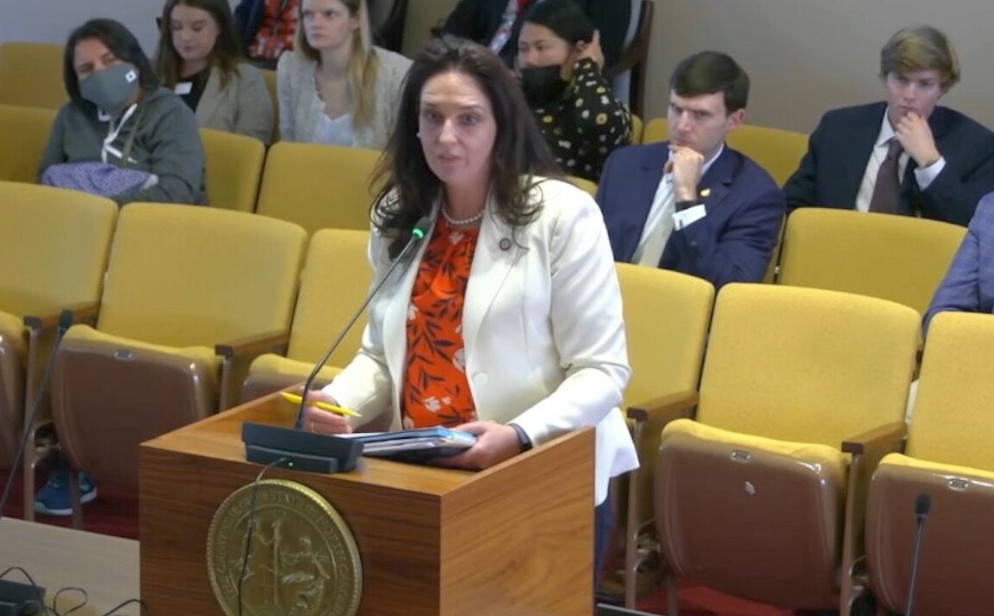
Representative Erin Paré, R-Wake, says real-estate investors are abusing a tax exemption designed to help nonprofits build and operate affordable rental housing. It’s costing local governments, particularly in urban counties, millions of dollars in revenue as more companies use the exemption.
"The increase is from for-profit private equity investors initiating the creation of joint ventures with passive non-profits to buy older properties where rents are naturally well below the statutory requirements, to obtain the exemption while increasing rents — in effect, using public funds for private gain," Paré told the House Finance Committee.
Wake County estimates that the "Blue Ridge housing loophole" will reduce county government revenue by $12.3 million in the coming fiscal year — part of the reason county leaders have proposed a 2-cent increase in the property tax rate.
The current law is vague enough to allow for-profit companies to avoid property taxes by giving nonprofits as small a stake as 0.1% ownership of an apartment complex.
Paré's bill would create new definitions for affordable housing and nonprofit ownership to ensure the tax exemption isn’t abused. It would restrict the ability of for-profit real-estate companies to partner with nonprofits to access the tax exemption, and it would set rent limits for properties seeking to qualify as "affordable rental housing."
| |
NC Unemployment Dips to 3.7% in March
as State Adds 9,400 Jobs
North Carolina's unemployment rate ticked down to 3.7% in March, a 0.1 percentage point decrease from February, according to new state data. The national rate also fell slightly to 4.3%.
The number of unemployed residents dropped by nearly 4,000 over the month to 197,113, while total nonfarm employment increased by 9,400 jobs to about 5.08 million.
Gains were led by Trade, Transportation and Utilities, Manufacturing, and Leisure and Hospitality. Small declines were reported in Government, Information, and a few other sectors.
Over the past year, the state has added 44,500 jobs overall, despite losses in manufacturing and information.
County-level unemployment figures are set to be released May 19.
| |
After Victims Lose Thousands, Push Underway in NC to Stop Cryptocurrency ATM Scams
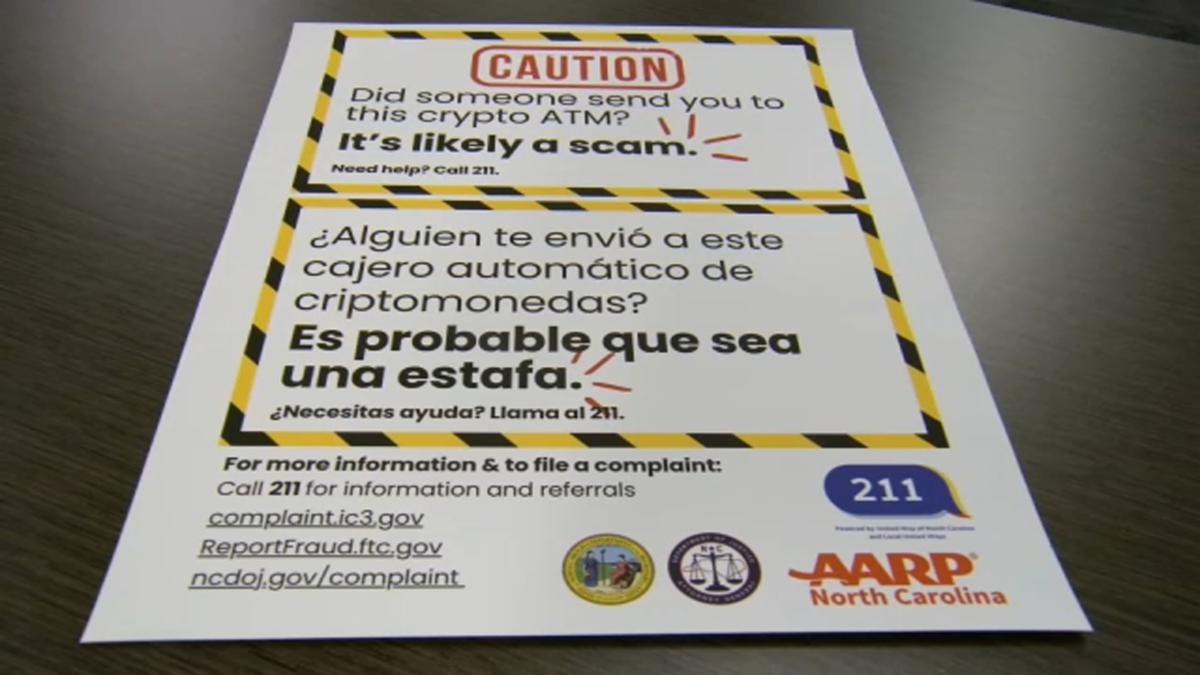
A new push is underway in North Carolina to stop people from losing thousands of dollars to scams involving cryptocurrency ATMs. These kiosks can be found across the state in gas stations, grocery stores, and other businesses.
According to the FBI, scams involving cryptocurrency ATMs cost Americans nearly $389 million in 2025, with older adults being hit the hardest.
To help spread awareness, AARP Fraud Watch volunteers teamed up with law enforcement and visited several Triangle businesses with crypto ATM machines, encouraging owners to place warning signs on the kiosks, alerting customers about scams.
"We like to find business owners like you who want to be part of the solution," said Steve Hahn with AARP. At one gas station, cashier Hari Kharel said customers frequently come in confused about how the machines work. "They question how to use the machine, like how to put the money," Kharel said.
When it comes to victims of cryptocurrency ATM scams in 2025, according to the FBI, 76% of losses connected to victims aged 60 and older.
Dolores Miller became one of those victims after receiving a phone call from someone pretending to be law enforcement. The scammer claimed there was a warrant out for her arrest and even texted her what she now knows was a fake warrant.
| |
Senate Judiciary Debates Limits on Foreign Land Ownership
On May 12, the Senate Judiciary Committee considered a Proposed Committee Substitute (PCS), to the NC Farmland and Military Protection Act (HB 133), a companion bill to SB 394, which was passed unanimously by the Senate last year. A PCS is an amendment to or a new version of the original bill. No action was taken on the bill, but there was an extended discussion on its merits.
State Sen. Bob Brinson, R-Craven, a retired Army aviator, who authored SB 394, presented the PCS to the committee. Brinson worked with Rep. Jennifer Balkcom, R-Henderson, who authored HB 133, to combine the two bills.
Proponents say this bill would protect American farmland and land around military sites from foreign adversaries, establishing a 50-mile buffer around military installations, according to Brinson. Rather than pinpointing specific countries, “foreign adversaries” are tied to the International Traffic in Arms Regulations, updated by the federal government.
In the PCS, National Guard facilities are now included among the military installations, stated Brinson.
“Divestiture requirements only apply to newly acquired property, a divestiture within three years, enforced by the attorney general through receivership,” said Brinson.
Those who are interested in land must register with the secretary of state and the attorney general, and “any future purchase requirements require an affidavit from the buyer attesting that the buyer is not a prohibited party,” said Brinson, with “the affidavit attached to the deed upon filing.”
State Sen. Lisa Grafstein, D-Wake, raised concerns about the federal government’s tracking of foreign adversaries prohibited from owning land, the frequency of federal government updates, and potential complications that could arise.
Balkcom joined the committee to offer comments on the PCS, starting with the definition of adversary.
“It’s restricting because the federal government has already identified that they are presenting a significant concern,” said Balkcom. “So if your small business is actually teaming up with one of these, then we need to be concerned, no matter where you are in the state of North Carolina. So it would not bother a small business from that as long as they are not part of the embargo of national security restrictions.”
| | Follow us on X at @RepNealJackson | |
NC Health Officials are Monitoring the Hantavirus Outbreak, but Say NC Isn't at Risk
The U.S. Centers for Disease Control and Prevention confirm one person from North Carolina is among the passengers evacuated from the cruise ship at the center of a deadly hantavirus outbreak.
That passenger, along with 15 other Americans, was transferred to the University of Nebraska Medical Center’s National Quarantine Unit for monitoring. No further details are being shared about the individual to protect their privacy. Symptoms of hantavirus can develop between four to 42 days after being exposed.
On a call with reporters Tuesday, state health officials said they’re monitoring the situation, but added there’s no reason for people in North Carolina to worry about an increased risk of contracting the virus.
| |
Progress at State Board of Elections
On the one-year anniversary of his appointment to the role, North Carolina State Board of Elections Executive Director Sam Hayes is reflecting on a series of accomplishments. Since May 15, 2025, the agency has launched significant modernization efforts, strengthened voter registration processes, and reorganized internal operations to improve efficiency and effectiveness.
“My administration has made significant progress and I am very proud of our accomplishments so far, but we are by no means done,” said Executive Director Hayes. “With the successful 2026 primaries behind us and the general election approaching, the hard work continues. We have important projects to complete and more improvements on the way. These successes are rooted in the hard work of our board and staff at both the state and county levels.”
Below are highlights from Director Hayes’ first year:
SEIMS Enhancements
· The State Election Information Management System (SEIMS) modernization project is strengthening system functionality and security while bridging the gap until a full system replacement begins within the next two years.
· In February, Director Hayes announced the selection of ReFrame Solutions as the vendor to modernize SEIMS through a $4.66 million contract.
· Modernization work is currently underway.
SEIMS Full Replacement & Campaign Finance System Updates
· The comprehensive replacement of SEIMS - the largest overhaul of election data management in state history - will be conducted through a separate competitive bidding process. Vendor selection and project scope are expected later this year.
· The bipartisan, 22-member MEDS (Modernization of Election Data Systems) Commission, created by State Auditor Dave Boliek, is meeting regularly to provide recommendations on the modernization.
· Director Hayes and Auditor Boliek jointly launched a statewide effort in October to collect input on both SEIMS and the Campaign Finance Reporting System.
· The upgraded platforms will provide enhanced security features, improved usability for State Board and county board staff, increased transparency, and modernized workflows that support efficient election administration.
· The State Board is also in the process of updating North Carolina’s existing campaign finance software, built in the early 2000s, which stores all legally required campaign disclosures and facilitates public access.
Registration Repair Project
· Launched July 17, 2025, the Registration Repair Project seeks to collect missing ID numbers from registered voters—information required by state and federal law to verify identity.
· The project replaced a previous voter registration form that created confusion about required information. In mid-August, letters were sent to approximately 82,000 voters missing the required ID data. In total, the agency has repaired approximately 37% of those missing information, a number expected to increase throughout the year. No voters were removed from the rolls through this project.
Agency Reorganization
· Director Hayes and Chief of Staff Brian LiVecchi have restructured the agency to improve workflow, clarify reporting lines, and strengthen leadership across key areas, including General Counsel, Communications, Elections Administration, Campaign Finance, and Legislative Affairs. This includes the hiring and/or retention of existing personnel at key positions.
· The Election Security and Enforcement Division has also been enhanced, including the hiring of Director Ron Herring, highlighting a new focus on ensuring elections are free of fraud and tampering.
HAVA Lawsuit Settlement
· On September 9, 2025, the State Board reached a settlement with the U.S. Department of Justice in United States of America v. North Carolina State Board of Elections.
· The agreement recognizes the Registration Repair Project as North Carolina’s method for ensuring compliance with federal and state voter registration laws while limiting voter inconvenience.
SAVE Database Review
· On April 17, 2026, the State Board submitted 7,397,734 voter records to the federal SAVE system to improve the accuracy and integrity of the statewide voter registration list.
· Preliminary results indicate that approximately 34,000 registered voters are deceased.
· U.S. Citizenship and Immigration Services continues processing additional records and full data is expected soon.
· Once complete, the State Board will analyze and publish aggregate data, including counts by county, party affiliation, and gender.
Successful November Municipal and March Primary Elections
· North Carolina voters experienced smooth Election Days in recent years in both the Municipal elections held on Nov. 2, 2025 and the Midterm Primary Election held on March 3, 2026. No major disruptions, equipment failures, or administrative issues were reported across all 100 counties.
· Early voting participation in the primary increased 25.4% over the 2022 primary, with 701,140 early ballots cast. Including absentee ballots, 714,247 ballots were submitted before Election Day—a 23% increase from 2022.
· Overall turnout for the primary exceeded 1.5 million voters, a 5% increase from 2022.
The State Board also collaborated with the North Carolina Association of Directors of Elections to hold the first-ever Legislative Day in April to engage county directors with legislators and advocate for support.
| |
Cellphone Bans Deliver Meaningful Gains, Study Finds
Strict classroom cellphone bans deliver meaningful reductions in student tech use but produce few short-term academic or behavioral gains. That’s according to a new multi-university study that examined stricter bans than the one recently adopted in North Carolina.
State Board of Education Vice Chair Alan Duncan flagged the findings at the board’s planning session on May 6 in Duplin County, four months after North Carolina’s Protecting Students in a Digital Age law took effect.
“This is the first year of some control of cell phones in classrooms in North Carolina, and anecdotally I think many of us have been hearing very positive stories from students and teachers and parents about the effect of that,” Duncan told the board.
He then raised the new research, which he described as “the largest study ever of school cellphone bans” finding teachers report fewer distractions but “little evidence that bans quickly bring improved academic achievement or better behavior.”
“I don’t know whether the emphasis there is on the word ‘quickly,’” Duncan said. “But I don’t want this to undercut what we’re trying to do.”
The study — released in April by researchers at Stanford University, Duke University, the University of Michigan, and the University of Pennsylvania — is the largest analysis of US school phone bans to date. It examined more than 43,000 middle and high schools nationwide using a research design that compared schools before and after they adopted the bans.
The study concluded that phone use dropped from 61% to 13% at schools that used the Yondr lockable pouches, the intervention studied. The new law in North Carolina bans phone use during class but allows students to keep their phones with them, including at lunch and between classes. Yondr pouches lock phones away for the entire school day. Most schools in the study had used policies similar to North Carolina’s approach prior to adopting the Yondr pouches.
The study found that in the first year after adoption, school suspension rates rose by about 11% and students reported lower well-being on classroom surveys, with more negative emotions and fewer positive ones. The researchers suggest two possible causes: enforcement of the new phone rules themselves, and students substituting other disruptive behaviors — such as conflicts with peers — once their phones were locked away.
| | |
Boliek Talks Autism Therapy Spending Probe amid Medicaid Fraud Concerns
North Carolina State Auditor Dave Boliek says his office is closely examining the surge in Medicaid-funded autism therapy costs, as lawmakers and state officials confront a projected billion-dollar increase over the coming years.
Boliek’s comments, made in a recent interview with Fox News, come as North Carolina legislators continue examining dramatic increases in spending on applied behavior analysis (ABA) therapy, a treatment for children with autism spectrum disorder.
“Those are vital services to folks and individuals that need that therapy,” Boliek told Fox News. “But when you have, like in North Carolina, a system that went from $1.4 million or so in total billings for autism therapy to more than $660 million a year in billings on autism therapy within a five-year range, that begs an audit from the state auditor, who in North Carolina, we are the top watchdog agency for taxpayer waste, fraud and abuse prevention. So, we’ve dug down into that and are in the middle of that."
As previously reported by the Carolina Journal, data presented to lawmakers at a March 10 meeting of the Joint Legislative Oversight Committees on Health and Human Services and Medicaid showed that spending on autism therapy services surged by 347% from 2022 to 2025.
During this period, the number of children receiving services is expected to grow from 3,844 to 13,447. In addition, the average number of patient care hours per month will rise from 47.5 to 54.1. Lawmakers noted that both the increased number of children served and the higher intensity of treatment contribute to the rapid growth in spending.
Boliek said national reports of Medicaid fraud involving autism therapy providers in other states prompted his office to begin scrutinizing North Carolina’s numbers more closely.
“We want to make sure that taxpayer dollars are being spent appropriately, that services are being rendered appropriately, and that children who need these services are actually receiving them.”
| |
Senate GOP Proposes Ballot Measures to Cap Income Tax at 3.5%
Senate Republicans filed legislation Wednesday that would ask North Carolina voters to lower the state’s constitutional income tax cap from 7% to 3.5% in 2026.
State Sens. Lisa Barnes, R-Nash; Michael Lee, R-New Hanover; and Benton Sawrey, R-Johnston, filed Senate Bill 1080, Lower Taxes for All NC, which would place the proposed constitutional amendment on the November 2026 general election ballot.
The measure would further limit the state’s maximum income tax rate. Voters previously approved a 2018 amendment that lowered the cap from 10% to 7%.
Republican legislative leaders have made income tax reductions a central part of their fiscal policy since taking control of the General Assembly. North Carolina’s personal income tax rate, once nearly 8%, is now 3.99%. The state’s flat income tax rate is scheduled to fall to 3.49% in 2027.
The proposed constitutional amendment is part of the state budget framework agreement announced by Senate leader Phil Berger, R-Rockingham; and House Speaker Destin Hall, R-Caldwell.
“There is no question that North Carolina has one of the strongest, fastest-growing economies in the country, and that’s a direct result of Republican-led fiscal policies,” Lee said in a statement. “A crucial pillar of that success has been consistently lowering taxes and putting money back into the pockets of hardworking North Carolinians. When it comes to setting the maximum rate, the people of our state deserve to have a say.”
Sawrey said the measure would give taxpayers more long-term certainty.
“The people of North Carolina elected a Republican majority for a litany of reasons, but one of those key reasons is our fiscal responsibility,” Sawrey said. “Republicans in the General Assembly have gone to the mat to keep your tax rates in check. Reducing the tax cap gives citizens certainty that they won’t be taken advantage of.”
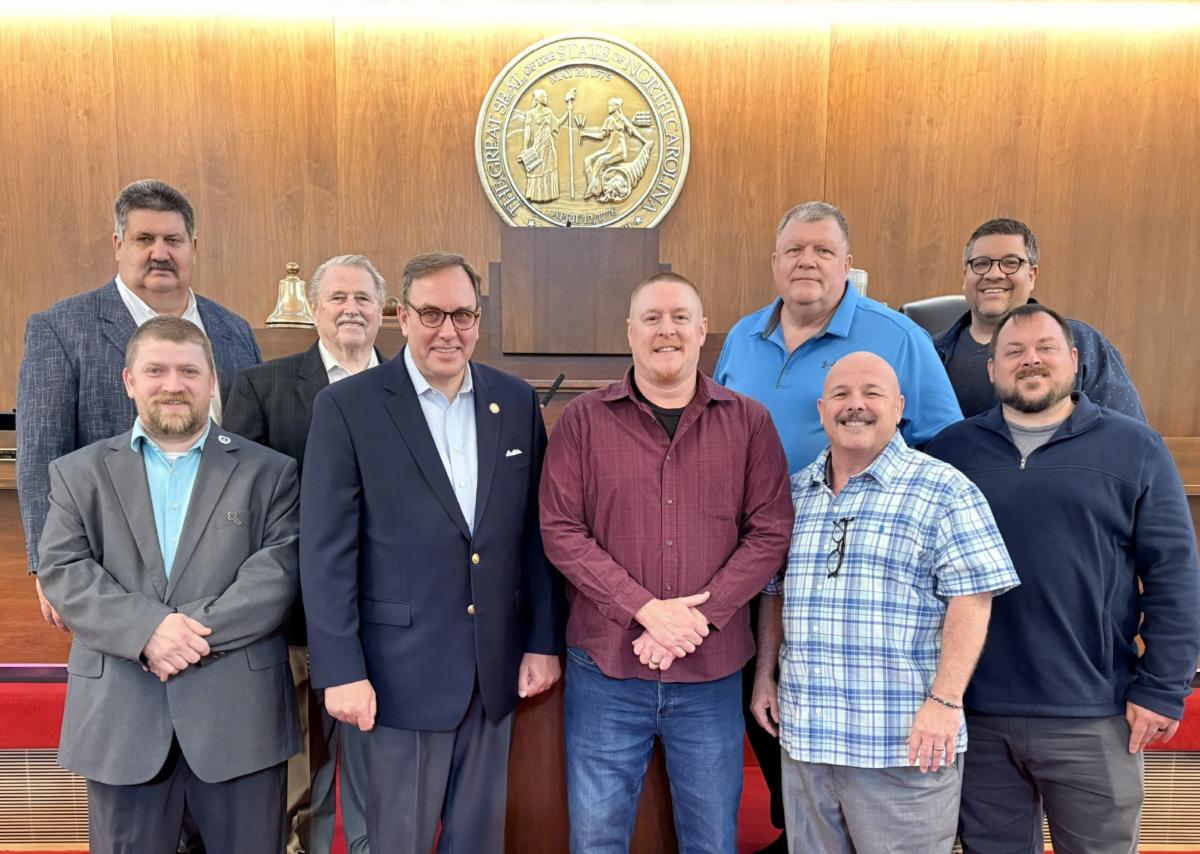
| | On Thursday, Rep. Jackson welcomed a group of pastors from Randolph County to pray for wisdom and God's blessings in the NC House chamber. | | | |
Can Our Office Help?
Our office is open and ready to help meet your needs Monday - Friday 9:00 am - 4:30 pm
300 N. Salisbury Street, Rm. 406
Raleigh, NC 27603-5925
919-715-4946
Jonathan.Clayton@ncleg.gov
| | | | | |