|
House Budget
On April 10th the House narrowly passed the Senate-amended budget resolution, 216-214, after Freedom Caucus members received guarantees of pursuing deeper spending cuts — up to $1.5 trillion. This will allow Republicans to start the reconciliation process, where they aim to extend the 2017 tax cuts and make major spending reforms.
According to the approved budget, the House Agriculture Committee is tasked with finding $230 billion in savings, while the Senate’s version calls for $1 billion in cuts. Those discrepancies will need to be resolved during reconciliation, and any funding increases for farm programs or crop insurance will have to be balanced with additional savings elsewhere (such as from SNAP). The House has indicated a target of mid-May for Committees to provide their proposed savings for the Reconciliation package.
| | |
Current Tariff Breakdown
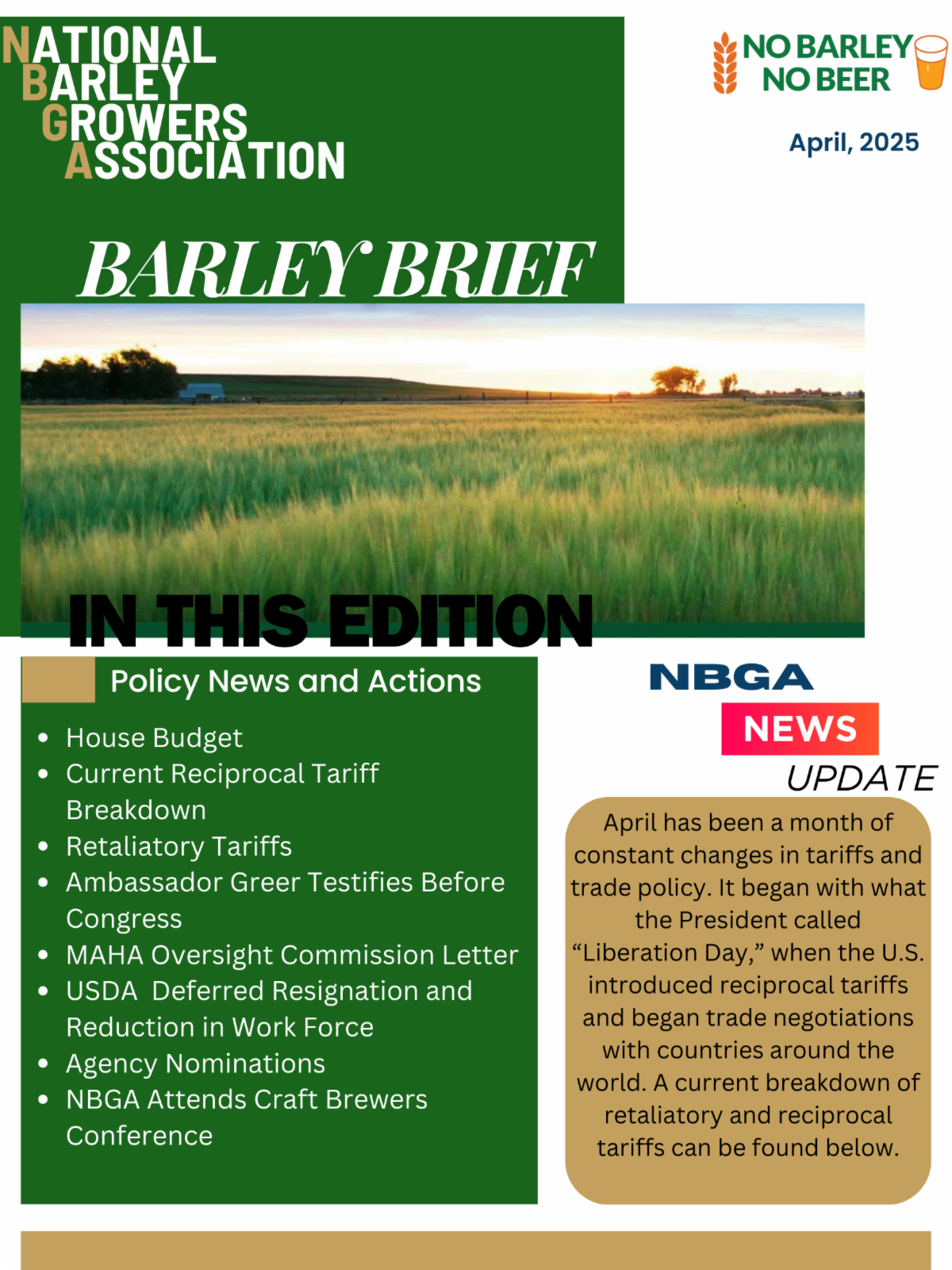
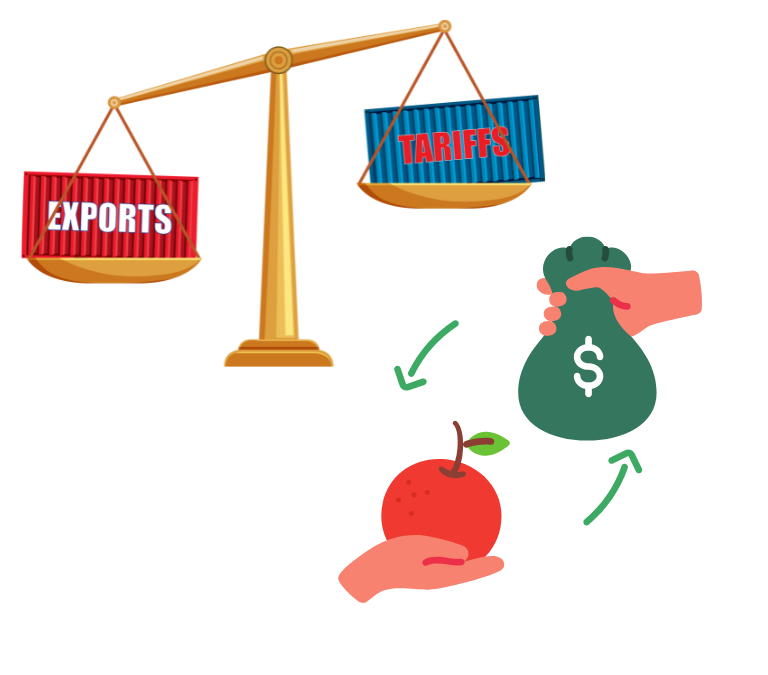
April has been a month of constant change in tariffs and trade policy. It began with what the President called “Liberation Day,” when the U.S. introduced reciprocal tariffs ranging from 10% to 47% on many countries. Throughout the month, there have been several updates related to retaliatory and reciprocal tariffs. Just a few days after the initial rollout, President Trump announced a 90-day pause on the tariffs. During this pause, all countries except China were assigned a flat 10% tariff, as more nations expressed a willingness to enter trade negotiations with the United States. China, which responded to the initial tariffs with retaliatory measures, ultimately faced a final tariff rate of 145%.
Below is a breakdown of the current tariffs being implemented by the United States:
- China: 145% Tariff
- All Other Countries with Reciprocal Tariffs (Annex 1): Reduced to 10%
-
Canada and Mexico: 25% tariff on non-USMCA compliant products and 10% of non-USMCA energy and potash, 0% tariff on USMCA compliant products
- Aluminum and Steel: 25%
| |
Breakdown of Retaliatory Tariffs From Other Countries
-
China: 125% Tariff. China stated on April 11th they will not retaliate further.
-
European Union: On April 9th, the EU voted to approve a list of retaliatory tariffs in response to the U.S. steel and aluminum tariffs. The finalized list has not been released. However, the valuation was estimated at €22 billion, and it is expected to follow the initial proposed list very closely minus bourbon, wine and dairy. These tariffs were set to go into effect in three phases April 15th, May 16th and December 1st. However, after President Trumps decision to pause tariffs for 90 days, the European Union announced on April 10th that they will also be pausing their reciprocal tariffs for 90 days, as negotiations continue.
| | Trade Update: Ambassador Greer Testifies Before Congress | | |
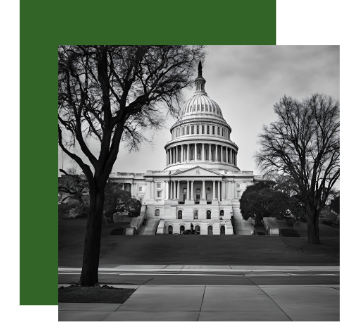
Earlier this month, NBGA attended two key hearings on trade policy: the Senate Finance Committee Hearing on the President’s Trade Agenda and the House Ways and Means Committee Hearing on U.S. Tariff Strategy. Both took place shortly before President Trump announced a 90-day pause on reciprocal tariffs and reduced the rate to a flat 10% for all countries except China. Below are the main takeaways from Ambassador Greer’s testimony:
- The ultimate goal of the tariffs is to achieve true reciprocity in trade relationships.
- The U.S. is open to negotiations with countries that present plans to reduce trade deficits and eliminate trade barriers, including non-tariff barriers.
- Ambassador Greer will personally lead negotiations with Japan and holds regular calls with India, the EU, Kenya, and the U.K.
- Many countries have signaled they will not impose retaliatory tariffs and are working collaboratively with the U.S.
- China is taking a different path, including retaliatory tariffs, while most other nations are pursuing direct negotiations.
- Tariffs are viewed as a short-term strategy to support ongoing long-term trade talks.
- The U.S. will crack down on countries helping China circumvent tariffs, a key concern likely to impact USMCA enforcement.
| |
|
MAHA Oversight Commission Letter
The NBGA collaborated with other agricultural stakeholders on a congressional sign-on letter. As part of this effort, NBGA helped secure 79 signatures from both the House and Senate, including members from key barley growing regions such as Minnesota, Idaho, Montana, and Washington. The letter was led by Senators Ricketts and Fischer, along with Representatives Feenstra and Alford. We recognize their leadership in promoting science-based, risk-driven approaches to public health policy. Ensuring that the Make America Healthy Again Commission bases its decisions on sound science is essential—not only for improving public health outcomes, but also for protecting the future of U.S. agriculture and maintaining a secure, affordable food supply. You can read the full letter here.
| | | | |
USDA Deferred Resignation (DRP, 2.0) and Reduction in Work Force (RIF)
The USDA is currently finalizing data on how many employees accepted the buyout offer that closed last Tuesday. Reports indicate that as many as 12,000 employees may have taken the second buyout offer. Leaders of the House Agriculture Committee have raised concerns that the program could result in the loss of experienced staff and negatively affect the agency’s productivity. Chair GT Thompson shared his concerns, and Ranking Member Angie Craig said she plans to contact USDA Secretary Brooke Rollins to understand how the department will address the potential loss of expertise. Secretary Rollins indicated that buyouts will not be offered to FSA employees as they are not seeking to reduce the staff that directly interface with farmers. She also mentioned that some offices, particularly those with overlapping responsibilities with other agencies such as Rural Development, could be restructured.
| |
|
USDA undersecretary for trade and foreign agricultural affairs
The Senate Agriculture Committee held a confirmation hearing on April 29th for nominee Luke Lindberg. During the hearing, Lindberg emphasized his support for key trade promotion programs, including MAP, FMD, and RAPP. He also highlighted the importance of addressing unfair non-tariff trade barriers that impact farmers. Luke Lindberg has previously been a strong advocate for Free Trade Agreements and brings extensive experience in international trade, particularly through his role as President & CEO of South Dakota Trade. He previously served as Chief of Staff and Chief Strategy Officer at the Export-Import Bank of the United States, where he played a key role in strategic initiatives such as the U.S.-China trade program and critical export markets.
USTR Chief Ag Negotiator
President Trump will nominate Doug Hoelscher, an Iowa native currently working at the America First Policy Institute. Prior to joining AFPI in 2021, Hoelscher held two positions during the first Trump administration, first as the deputy director of White House intergovernmental affairs, then as the assistant to the president for intergovernmental affairs. He also worked for the state of Iowa in the Office of State-Federal Relations and held multiple positions in the Department of Homeland Security during the George W. Bush administration.
| | | |
NBGA Attends 2025 Craft Brewers Conference
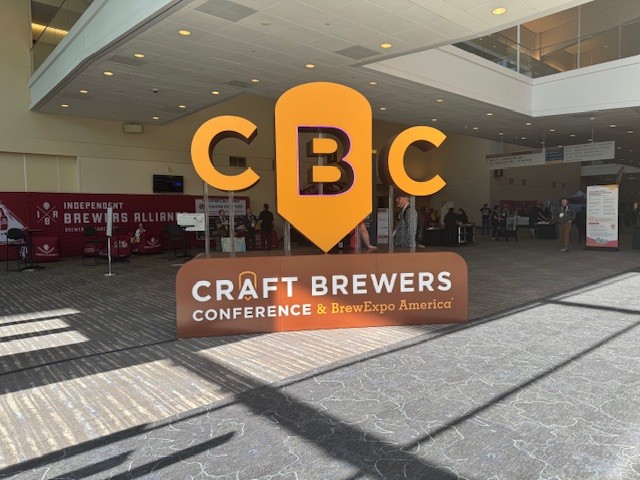
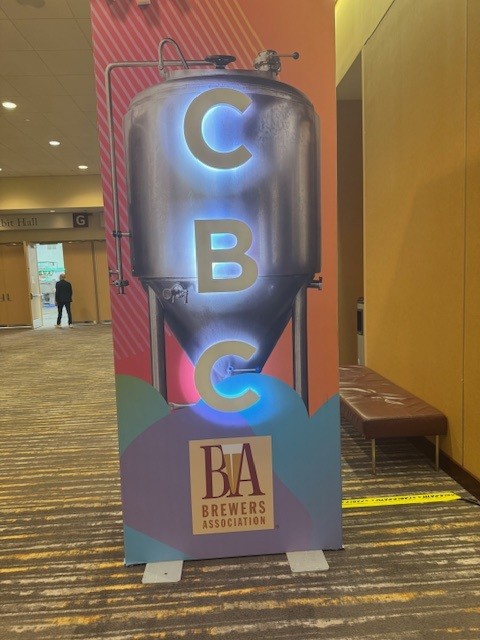
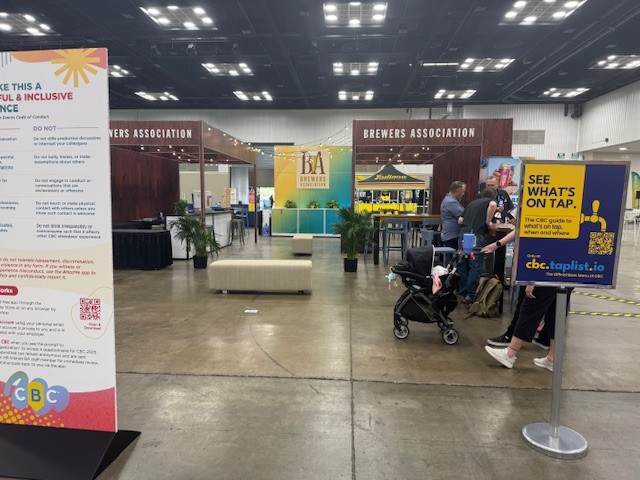
DC staff represented NBGA at the 2025 Craft Brewers Conference in Indianapolis, Indiana. Keynote speakers included Esther and JC Tetreault, founders of Trillium, and Brewers Association President and CEO Bart Watson. The conference featured various networking events, a trade show, and numerous educational seminars. With over 60 sessions and more than 500 exhibitors, the event provided valuable insights into the latest industry trends and innovations, offering great opportunities to connect with other industry professionals. During the conference, NBGA had the opportunity to meet with US Grains Council staff, who were hosting trade mission groups from Japan, China, and Southeast Asia. At the conclusion of the conference, the USGC will bring these barley trade teams to Idaho, where they will have the opportunity to tour barley farms and facilities with the Idaho Barley Commission
| | |
STAY CONNECTED
Want to keep up with the latest updates. Follow and like us below!
| | SHARE THE NEWSLETTER BELOW | | | | |