Company Newsletter

Washington Watch

Farm Bill Programs Included in House Reconciliation Package


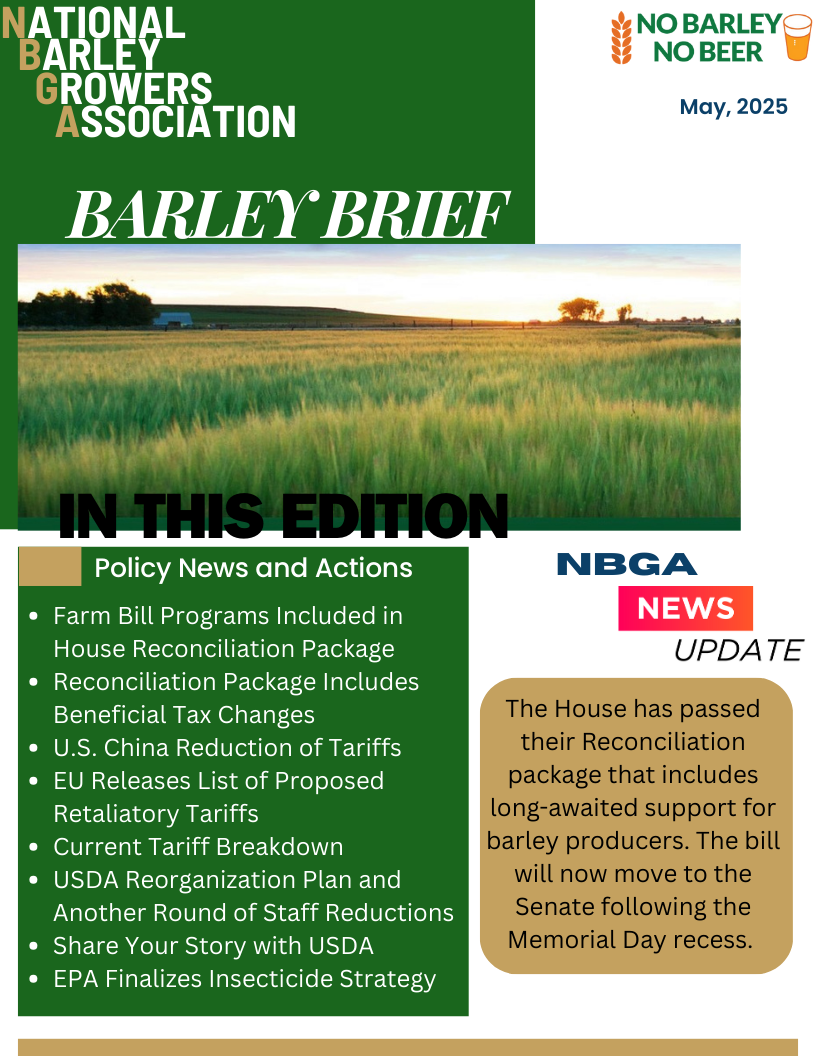
The House passed their Reconciliation bill 215-214 before adjourning for the Memorial Day recess. The bill includes several key provisions for barley producers. The reference price for barley is set at $5.45 per bushel, with an additional 0.5% annual increase starting in 2031, reaching $5.59 per bushel by 2035. The package also includes increases in loan rates for several commodities, including barley, where the loan rate would rise to $2.75 per bushel.


The legislation also would allow producers to enroll new base acres that would be eligible for PLC or ARC coverage. The new allocation would be based on plantings from 2019 to 2023 for producers who currently do not have base or whose average planted and prevented plant acres exceed the current base acres on the farm.


Coverage under Supplemental Coverage Option (SCO) policies is increased from 86% to 90%. The bill also increases premium subsidy levels across the different coverage levels for basic and optional units. The subsidy rates are higher at lower levels of coverage. The largest increase in premium subsidy, however, is for SCO.


The bill also doubles the mandatory funding for agricultural trade promotion and facilitation, with $400 million allocated to the Market Access Program (MAP) and $69 million to the Foreign Market Development (FMD) program from fiscal years 2026 to 2031. Additionally, $125 million in mandatory funding will be allocated annually to support research facilities for agriculture. These provisions reflect a broad effort to support agriculture through various financial and programmatic measures.


Following the Memorial Day Recess, the bill will make i's way to the Senate and will likely see significant changes to the Farm Bill including changes to the SNAP state contribution requirements and to Medicaid.

Reconciliation Package Includes Beneficial Tax Changes


A core focus of the reconciliation package are changes to tax provisions, several of which impact farmers and agricultural operations. In addition to extending the lower individual income tax rates that were enacted in 2017, other key items that benefit farmers include:

  • Maintaining Stepped Up Basis, current capital gains rates, and Like-Kind Exchanges
  • Increasing the estate tax exemption levels to $15 million per individual and $30 million per couple. The rates are adjusted for inflation and made permanent.
  • Section 199A Business Income Deduction increased from 20% to 23% for small businesses and made permanent.
  • 100% Bonus Depreciation is reinstated for 5 years
  • Section 179 expensing allowances would enable businesses to write off up to $2.5 million of the cost of equipment and software.

Trade and Tariffs

Untitled Design

U.S. China Reduction of Tariffs


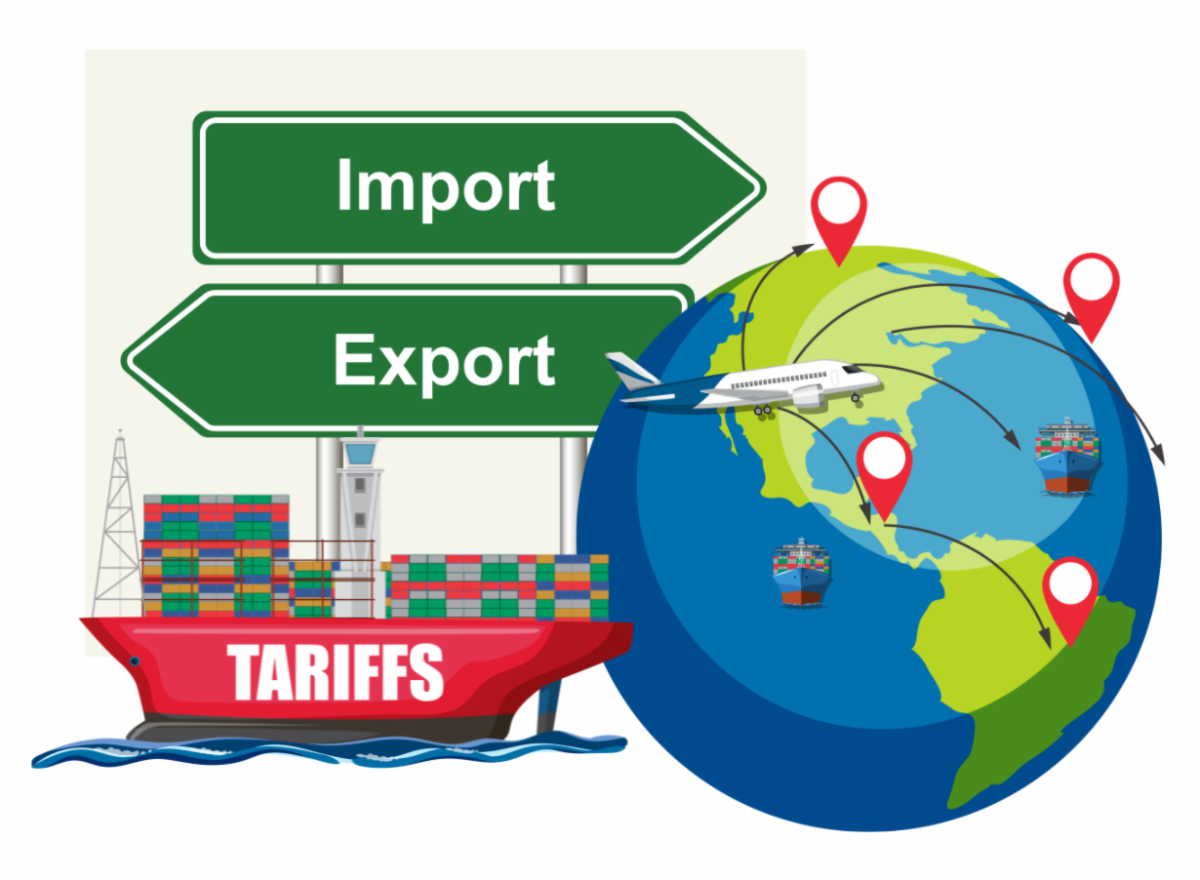
The United States and China have reached an agreement to pause the 145% and 125% tariff rates imposed last month. During the current 90-day pause, the United States has agreed to lower its reciprocal tariffs on China to 10%. However, this 10% tariff will still be applied on top of existing Section 232 tariffs (on steel and aluminum) and Section 301 tariffs (related to non-compliance issues such as fentanyl). As a result, the minimum tariff rate currently applied to Chinese goods would be 30%—comprising the 10% base rate plus a 20% tariff related to fentanyl.


In return, China will reduce its retaliatory tariffs to 10% and has agreed to remove any non-tariff barriers that were introduced in retaliation after April 2.

EU Releases List of Proposed Retaliatory Tariffs

Last month the EU published a list of potential countermeasures in response to the U.S. steel and aluminum tariffs. Although these countermeasures were approved, they were immediately placed on a 90-day hold following President Trump's decision to pause reciprocal tariffs.


The EU is now seeking public comments on a newly proposed list of retaliatory tariffs. These new tariffs, totaling €95 billion, are separate from those previously proposed in response to the steel and aluminum tariffs. They specifically target broader reciprocal tariffs as well as those imposed on cars and auto parts.


A full list of proposed products can be read here. This is currently only a draft list, as the EU has just opened the comment period, which will close on June 10th. 

Current Tariff Breakdown


  • China: 30% (10% reciprocal+20% fentanyl) Tariff
  • Canada and Mexico: 25% tariff on non-USMCA compliant products and 10% of non-USMCA energy and potash, 0% tariff on USMCA compliant products.
  • Aluminum and Steel: 25% 
  • All Other Countries with Reciprocal Tariffs (Annex 1): Tariffs reduced to 10%.
  • United Kingdom: Although the UK has reached a trade agreement with the United States, the 10% reciprocal tariff remains in effect under the terms of the agreement.

USDA Reorganization Plan and Another Round of Staff Reductions


Reports suggest that Secretary Rollins will release the USDA reorganization plan on May 27. The plan may include relocating certain departments out of the Washington, D.C. area, workforce reductions, and the consolidation of departments to reduce redundancy. Following the announcement, the USDA is expected to open a third and final round of Deferred Resignations between June 3 and June 10. It is currently estimated that around 15,000 USDA employees have already opted for Deferred Resignations.

Share Your Story with USDA


Secretary Rollins and the U.S. Department of Agriculture are inviting farmers, ranchers, and producers from across the country to share their stories through short video submissions. This is a great opportunity to highlight your passion for agriculture and the barley industry. USDA will feature selected videos on its digital channels to showcase these videos.


The video should be approx. 60 seconds and filmed vertically. Suggested questions you can answer include where your farm is located, what you grow or raise, and what inspires you to farm. Videos can be submitted here and are being accepted on a rolling basis.

EPA Finalizes Insecticide Strategy


The U.S. Environmental Protection Agency (EPA) has finalized its Insecticide Strategy, incorporating feedback from agricultural groups to refine its approach. Several updates were made in transitioning from the draft to the final strategy. Some of the most notable changes include:


  • Reevaluated and reduced spray drift distances associated with potential population-level impacts.
  • Introduced spray drift reduction measures to increase flexibility, particularly for airblast applications.
  • Added anionic polyacrylamide (PAM) as a new runoff/erosion mitigation option.
  • Increased mitigation relief points for pesticide applications in high-sand soils.
  • Clarified mitigation options related to runoff, including subsurface chemigation and soil type considerations.
  • Updated guidance for growers participating in qualified runoff/erosion programs, including possible recognition of certain conservation programs for 9 mitigation points and clearer definitions of technical experts eligible to provide one mitigation point.
  • Added a PULA specifically for generalist species inhabiting wetland environments to more effectively target mitigation efforts where needed.


Mitigation measures are grouped into the following categories: application parameters, field characteristics, in-field mitigation measures, adjacent-to-field measures, systems that capture and discharge runoff, and other mitigation measures. As a reminder you can automatically receive mitigation relief points based on the county you live in based on your run-off vulnerability risk with medium (2 points), low (3 points), or very low (6 points) pesticide runoff vulnerability.


In the finalized insecticide strategy, the EPA also acknowledged its intention to develop more mobile-friendly options for calculating required points, as well as plans to recognize certain conservation programs for up to 9 mitigation points. As a reminder, both the insecticide and herbicide strategies will go into effect once they appear on the label.


The full strategy can be read here.


BARLEY IN THE NEWS

New Report: Beer Industry is a Cornerstone of Local Economies, Supporting More Than 2.4 Million American Jobs Nationwide


Bipartisan, Bicameral CHEERS Act Aims to Revitalize Bars, Restaurants and Entertainment Venues Nationwide


EVENTS AND INFO

Facebook  Instagram  Web  X

SHARE THE NEWSLETTER BELOW

X Share This Email
LinkedIn Share This Email