Untitled Design

NBGA Elects New Leadership at 2025 Summer Board Meeting


The National Barley Growers Association (NBGA) held its 2025 Summer Board Meeting in Golden, Colorado, from June 17–19. During the meeting, Mitch Konen of Fairfield, Montana was elected NBGA President for the upcoming year, with Josh Jones of Troy, ID elected as Vice President.


Board members gathered to review and discuss key federal policy priorities, including the Farm Bill, trade, and sustainability. Attendees heard a beer market update and outlook from Matt Gacioch, Economist with the Brewer’s Association and an update on export promotion activities from Sadie Marks with the U.S. Grains Council.


NBGA also held a joint session with the American Malting Barley Association, where members discussed shared industry challenges and opportunities, and took part in valuable networking.


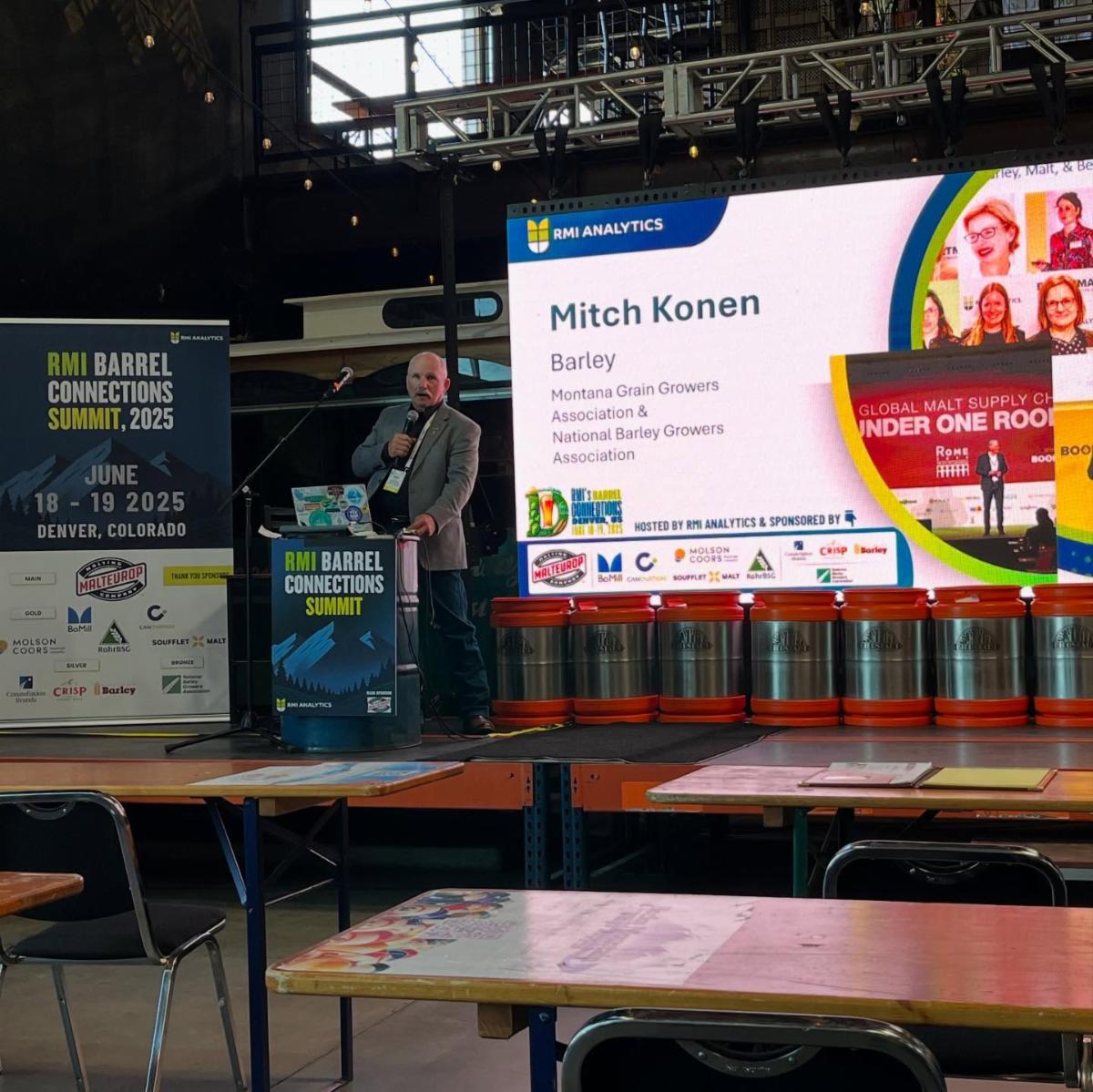
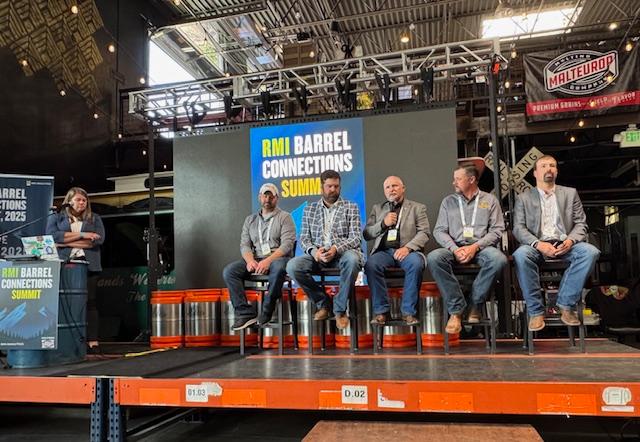
The Summer Board Meeting concluded with NBGA participation in RMI’s Barrel Connections event in Denver. Barley farmers including Mitch Konen, Frank Laufer, and Josh Jones provided a grower’s perspective to the industry audience while industry representatives such as Cody Shick of Molson Coors and Jari Zitzewitz with Rahr Maltin shared insights into what they’re seeing in the market. The event provided an opportunity to connect with others in the global barley community and have conversations about where the industry is headed.

Washington Watch

Congress Passes Reconciliation Bill with

Big Wins for Agriculture


Increases Reference Prices and Expands Farm Program Support


On July 3rd the House voted to pass the Senate version of the much anticipated Reconciliation package. The bill now goes to President Trump for signature. The bill provides an estimated increase of $66 billion in spending on Farm Bill programs above the current baseline. Highlights of the final bill (same as the version passed by the Senate on Tuesday, July 1st) include:


Reference Prices - The Reference Price under the Price Loss Coverage (PLC) program are increased with barley moving from the current $4.95 to $5.45 per bushel.  The bill also bolsters the Effective Reference Price escalator provisions and incorporates an annual automatic .5% increase in Reference Prices beginning in 2031.


ARC - Trigger increased from 86% to 90%. 

The bill would make the new ARC and PLC provisions available for 2025 crop year. Regardless of what a grower signed up for earlier this year, they would get the higher of ARC or PLC assistance for 2025.  This would be for 2025 only and annual program elections would resume in 2026 and after.


Base Acres - Farmers will have the opportunity to voluntarily add base acres using the average of their plantings from 2019 - 2023.


Payment Limits - Increased from $125,000 to $155,000. Adjusted annually for inflation.


Crop Insurance - The premium assistance levels for individual coverage is increased by 3-5% and the premium assistance for the Supplemental Coverage Option (SCO) is increased from 65% to 80%.


MAP/FMD - Funding is provided equivalent to a doubling of the current Market Access Program and Foreign Market Development (MAP/FMD). 

Reconciliation Tax Package Includes Wins for Farmers 


Beyond agriculture-specific provisions, the Reconciliation bill includes a wide array of tax reforms that benefit farmers and small businesses. Key wins include the permanent extension of the 20% Section 199A business income deduction for small businesses, permanent reinstatement of 100% bonus depreciation, and increased Section 179 expensing allowances of up to $2.5 million for equipment and software. The bill also maintains stepped-up basis, current capital gains rates, and like-kind exchanges. The estate tax exemption would rise to $15 million per individual and $30 million per couple, adjusted for inflation and made permanent. 


House Committee Passes Ag Appropriations Bill with Barley Priorities Included, While Current Year Funds Remain Frozen

The House Appropriations Committee passed its agriculture funding bill last week with a vote of 35 to 27, and it includes several items that matter to the barley industry.

The bill continues support for the U.S. Wheat and Barley Scab Initiative. While it doesn’t list a specific funding amount, when the bill is silent like this, it usually means funding will stay at last year’s level.


It also includes a $1 million increase for the Barley Pest Initiative, which supports research focused on managing pest pressures in barley production.


The Resilient Barley Initiative received a $1 million increase as well, with direction to ARS to focus on improving barley’s ability to handle environmental stress—things like drought, heat, or other climate challenges—through better genetics and management practices.


Finally, the bill maintains support for Small Grain Genomics, recognizing the importance of advanced research tools like high-throughput genomics and phenotyping to improve barley and wheat traits and develop new varieties.


Meanwhile, NBGA and barley stakeholders are working to get funding released for the current fiscal year for the barley scab and pest initiatives. This is an Agriculture Research Service (ARS) wide issue impacting many crops and research programs. The Administration has a blanket freeze on ARS funds. It is getting to be time sensitive as they need to release the funds so there is enough time to get agreements in place and funds obligated before the end of the fiscal year (September 30). Stakeholders are urging Congress and the Administration to take action to get the funds released for the scab and barley pest initiatives. 


Trade and Tariffs


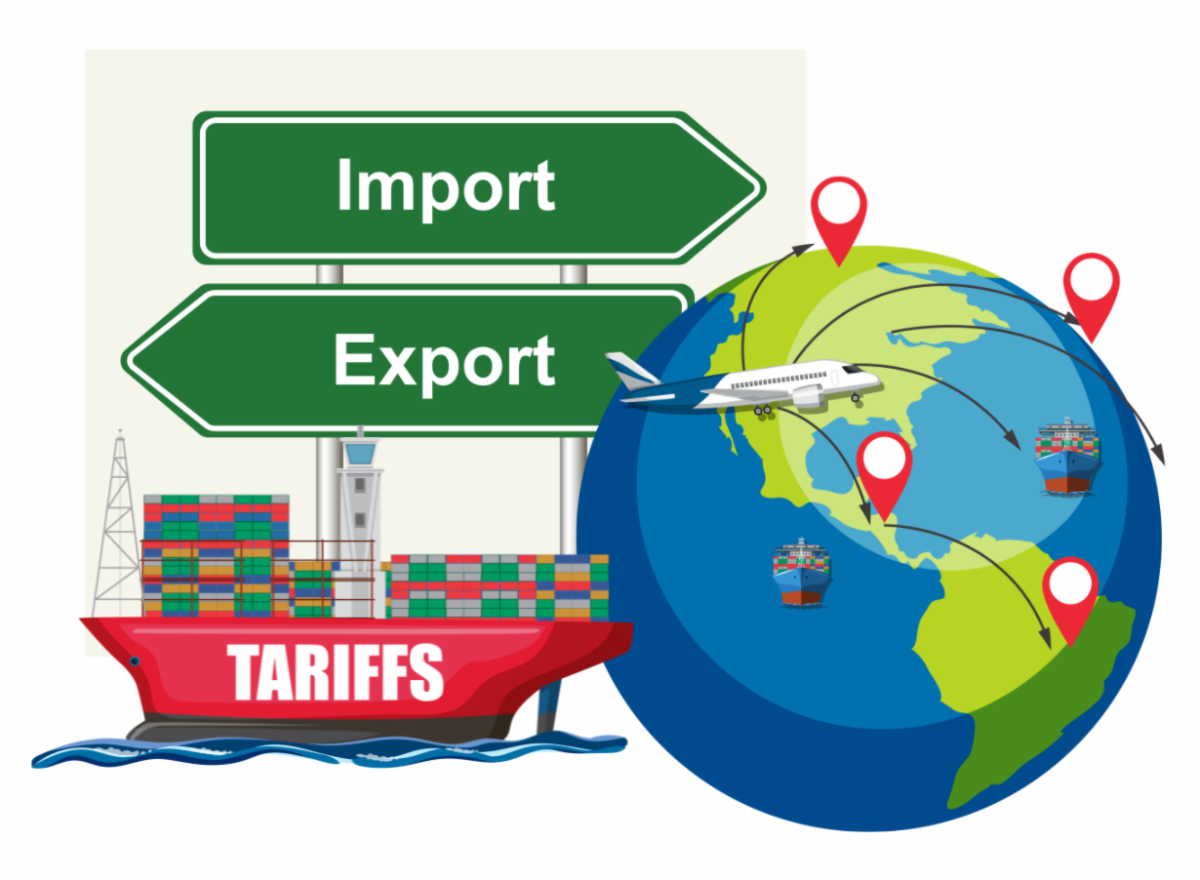
It’s been a relatively quiet month on the trade front, but key deadlines are fast approaching. The pause in the 10% reciprocal tariffs is set to expire on July 9, and there’s still a lot of uncertainty about what will happen next. Complicating things further, a stay is currently in place on the existing tariffs through July 31, while the appeals court reviews whether the administration exceeded its authority under the International Emergency Economic Powers Act (IEEPA). In the meantime, the administration has started urging trade partners to finalize deals and submit proposals ahead of the July 9 deadline.


Canada has also set a deadline of July 21 to reach a trade agreement with the U.S. If a deal isn’t made by then, they’re threatening to raise tariffs on U.S. steel and aluminum. While many Canadian products are currently exempt from tariffs under the USMCA, Canada is likely aiming to reduce Section 232 tariffs, the fentanyl-related tariffs, and address tariffs on items not covered under the USMCA.


Additionally, the Canadian Parliament recently passed legislation requiring parliamentary approval before the Prime Minister can change tariff rate quotas. This move is likely in preparation for upcoming negotiations under the USMCA, particularly regarding issues raised by President Trump around Canada’s dairy quotas.


NBGA Signs on the MAHA Letter


Earlier this month NBGA signed onto a letter urging the administration to involve agriculture in the ongoing work of the Make America Healthy Again (MAHA) Commission. The letter was addressed to Secretary Kennedy, Secretary Rollins, and Administrator Zeldin, and calls out the serious lack of transparency in how the Commission’s recent report was written. Not only was the ag sector left out of the process completely, but the final report also contains misleading claims about farming and food production. The letter calls for transparency and future collaboration with the agricultural sector in this process. In response to the letter and backlash from many agricultural groups, the White House has begun scheduling meetings with various stakeholders.

The full letter can be read here


Share Your Story with USDA


Secretary Rollins and the U.S. Department of Agriculture are inviting farmers, ranchers, and producers from across the country to share their stories through short video submissions. This is a great opportunity to highlight your passion for agriculture and the barley industry. USDA will feature selected videos on its digital channels to showcase these videos.


The video should be approx. 60 seconds and filmed vertically. Suggested questions you can answer include where your farm is located, what you grow or raise, and what inspires you to farm. Videos can be submitted here and are being accepted on a rolling basis.


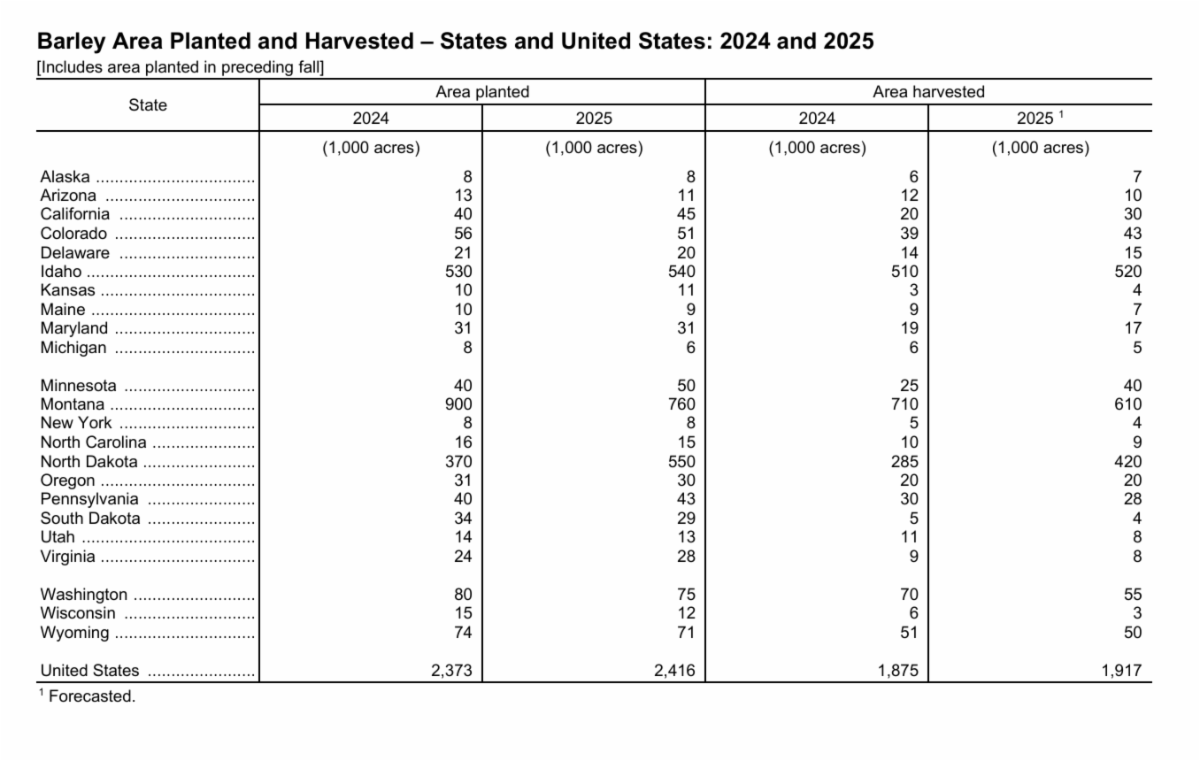
The USDA NASS Releases Updated Planting Acreage Report


The NASS Planted Acreage Report, released June 30th estimates 2.42 million acres of barley for the 2025 crop year, up 2 percent from the previous year. In Montana, acreage is expected to decrease by 16 percent from last year while North Dakota is expected to increase 48% from 2024. 


The full report can be read here

BARLEY IN THE NEWS

New Farm Bill Still Top Priority for Barley Growers


Enabling Trade: Council Connects Major Brewer To Idaho Barley Growers


Bipartisan, Bicameral CHEERS Act Aims to Revitalize Bars, Restaurants and Entertainment Venues Nationwide


EVENTS AND INFO

Facebook  Instagram  Web  X

SHARE THE NEWSLETTER BELOW

X Share This Email
LinkedIn Share This Email