|
Emergency Commodity Assistance Program
On March 18th, the U.S. Department of Agriculture’s Farm Service Agency (USDA FSA) issued details on the Emergency Commodity Assistance Program (ECAP), which was created by Congress last December to help commodity producers manage rising input costs and decreasing market prices. The payment rate for barley will be $21.67. Applications for assistance must be submitted by August 15, 2025. Any growers that have not received a pre-filled ECAP application, it’s recommended to contact your local FSA office for further guidance. For more information click here.
| | |
USDA Releases Plantings Estimate
The USDA's National Agricultural Statistics Service (NASS) released the Prospective Plantings report on March 31 showing producers intend to plant 2.317 million acres of barley, down 2% from 2024 and another record low. Idaho acreage is estimated to be level with last year, while Montana is expected to see an 11% decrease in acreage. Additionally, barley acreage is expected to decline in Washington, Colorado, and Wyoming. North Dakota and Minnesota are projected to see an uptick in acres relative to last year, up 22% and 63% respectively. The full report can be read here.
| | |
NBGA Participates in National Barley Improvement Committee Meetings in Washington, D.C.
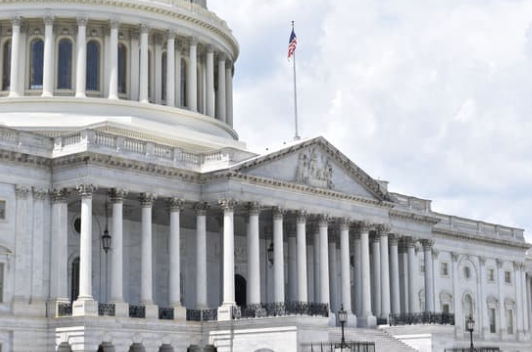
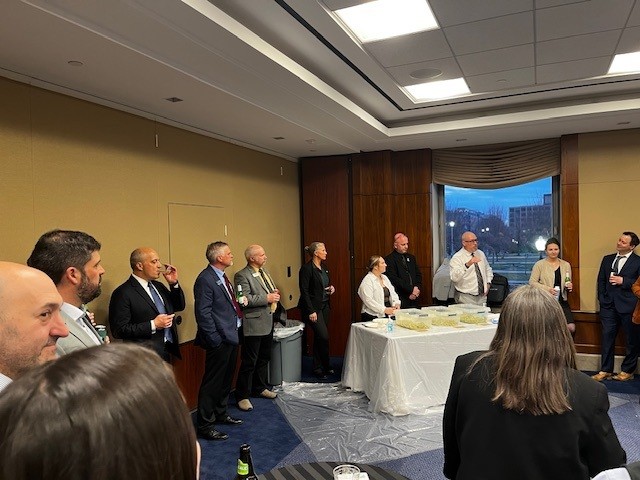
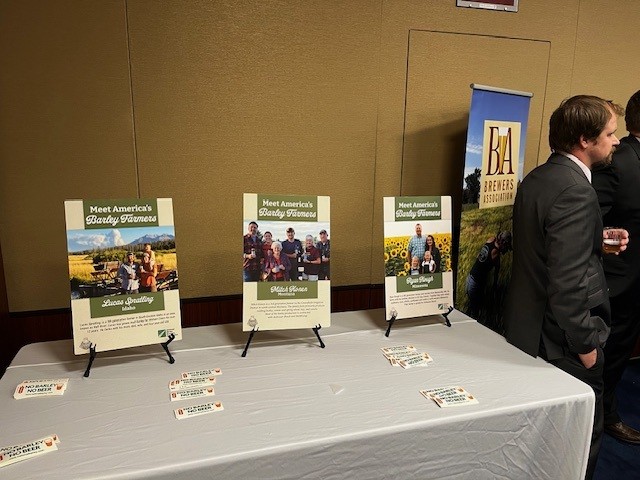
NBGA joined the National Barley Improvement Committee during their annual D.C. fly-in earlier this month. The NBIC, made up of growers, researchers, and barley stakeholders, met to discuss FY26 appropriation priorities. They spent two days on Capitol Hill meeting with U.S. Senators and Representatives. The fly-in concluded with a reception on the Hill, where Hill staff were invited to connect with our growers and learn more about both barley and hops. NBGA was represented by local D.C. staff as well as board members from multiple states.
| | |
April 2nd has been referred to as "Liberation Day" by President Trump. Initially, reciprocal tariffs on all countries were promised, along with the exemption of USMCA products from tariffs, which is set to expire. However, there have been conflicting reports regarding the extent of tariffs that will be implemented on Tuesday. Some officials suggest that a more targeted approach may be taken, with tariffs potentially scaled back to certain countries. As we receive additional updates on the tariffs being enacted on April 2nd, we will continue to keep NBGA members informed.
| |
Tariffs on Aluminum and Steel, Retaliation by EU and Canada
President Trump’s increased tariffs on U.S. steel and aluminum imports officially took effect, reinstating a 25% tariff on all steel and aluminum products. This has sparked immediate retaliation from major trade partners, including Canada and the European Union, who have announced counter-tariffs in response.
Since the initial announcement, the European Union has delayed its retaliatory trade actions until mid-April. The EU had originally planned to impose tariffs on U.S. goods worth $28 billion in two phases, with the first phase scheduled for April 1. However, the new timing will allow the EU more time to assess the potential impact of the U.S. "reciprocal" tariffs, which President Trump is expected to announce on April 2. EU officials hope the delay will provide an opportunity for further negotiations with the U.S. to find a mutually agreeable solution. The tariffs, when implemented, which will affect a wide range of U.S. products, including steel, aluminum, beef, poultry, and bourbon are currently slated to go into effect mid-April.
Canada announced initial retaliatory tariffs worth C$29.8 billion on U.S. goods in response to the U.S. steel and aluminum tariffs. However, Canada has paused the second round of additional tariffs until after the April 2nd deadline. Additionally, Canada has promised to respond to the recent tariffs on automobiles and auto parts in the coming days.
| | | | |
Discussions Over the Renewal of USMCA
Senior officials from the Trump administration, including Commerce Secretary Howard Lutnick and U.S. Trade Representative Jamieson Greer, met with Ontario Premier Doug Ford in Washington last month to discuss the future of the USMCA, which will be up for renewal next year. This meeting followed Ford’s decision to remove a tax on electricity exports to certain U.S. states, which had previously prompted threats from Trump to impose additional duties on Canadian steel and aluminum. Trump, who helped broker the U.S.-Mexico-Canada Agreement, has expressed dissatisfaction with the deal's provisions related to U.S. dairy market access.
| |
NBGA Supports Funding for Ag Research Service
NBGA, along with other agricultural groups, signed a letter supporting an increase in ARS salaries and expenses for FY26. The letter requests $1.877 billion for the ARS salaries and expenses account, which represents a 5% increase over FY25. NBGA had previously signed a similar letter for FY25 last year.
| | | |
NBGA Joint ARS Letter with AMBA and NBIC
NBGA, along with the National Barley Improvement Committee (NBIC) and the American Malting Barley Association (AMBA), sent a joint letter expressing strong concerns about potential workforce reductions within the Agricultural Research Service (ARS), particularly in barley research. The letter emphasized the importance of preserving critical research positions that support the U.S. barley industry and broader sectors such as brewing, malting, and distilling. These industries contribute billions to the U.S. economy and depend heavily on continued research in areas like disease resistance, genetic improvements, and resilience to environmental stresses. The full letter can be found here.
| | | | |
USTR Hosts Hearing on China Maritime Logistics
On March 24th the USTR hosted a hearing on Chinese Maritime Logistics and potential proposals to impose hefty fees on Chinese manufactured ships. American agricultural leaders are increasingly concerned about proposals from the Office of the U.S. Trade Representative (USTR). One key proposal includes imposing a fee of up to $1.5 million each time a Chinese-built, operated, or flagged cargo ship docks in the U.S. While USTR claims the fees are meant to boost domestic shipbuilding, agricultural leaders warn that such measures would significantly raise the cost of transporting U.S. farm products. This, they argue, could lead foreign buyers to turn to competitors like Brazil, diminishing the global competitiveness of U.S. agricultural exports. As discussions continue, agricultural leaders remain concerned about the broader implications of these tariffs, especially as leadership at USTR is currently lacking, with no chief agricultural trade negotiator nominated by Trump.
| | |
Deadline to Release Finalized Insecticide Strategy
The United States District Court for the Northern District of California recently granted a partial extension for the Environmental Protection Agency (EPA) to finalize its Insecticide Strategy, originally due by March 31, 2025. The EPA had requested a 90-day extension due to the large volume of public comments and the change in administration. The Court approved an extension until April 30, 2025, but denied the full request, as it found the EPA did not provide sufficient justification for further delays. The court ruling can be read here.
| | |
Dietary Guidelines
USDA Sec. Rollins and HHS Sec. Kennedy met with the MAHA Commission and indicated their intent to meet the timeframe to complete the final guidelines by December 31, 2025. Both Secretary Rollins and RFK Jr. have acknowledged the importance of finalizing the guidelines by the deadline and have committed to reviewing the 2024 scientific report recommendation line by line. Going forward they have stated goals of increasing transparency of the Dietary Guidelines process and reducing industry influence.
| |
| | |
BeSure! Stewardship Campaign
Good stewardship is always in season! This year, the annual BeSure! campaign returns to champion responsible product usage through best-management practices. The campaign serves as a collaborative opportunity among the ag industry to help spread the message by learning more about the best practices for your crop protection products. If you’re a grower or applicator, BeSure! You’re using pesticides safely by following these easy guidelines.
| | | | |
For Growers
1. Follow directions on the label for appropriate storage, use, handling and disposal practices.
2. When planting treated seed, use advanced seed flow lubricants that minimize dust.
3. When planting treated seed, eliminate flowering plants and weeds in and around the field prior
to planting. For foliar applications, be sure that sprays are directed away from any flowering
plants, follow established buffer zones and calibrate equipment to minimize spray drift.
4. Before making an application, be aware of any honeybees and hives near the field and
communicate with neighboring beekeepers prior to treatment.
5. Remove and properly dispose of all treated seed. Keep all treated seed out of commodity grain channels.
| |  | |
For Applicators
1. Comply with all regulations when using registered pesticide products and help ensure proper employee training prior to application.
2. Apply best stewardship practices when using treated seed, soil drenches or foliar sprays to minimize dust or spray drift. Establish written protocols using best practices to help ensure high-quality seed treatment, foliar or field application.
3. Adopt stewardship documentation for the full life cycle of seed treatment products.
4. Properly discard any unused product, rinse water or seed treatment by following the label disposal instructions to minimize any potential environmental impact.
5. Help ensure that all required and pertinent neonicotinoid treatment information, consistent with the product label, is conveyed to customers.
| | |
For a downloadable version of the grower and applicator guidelines click here | | | | |
STAY CONNECTED
Want to keep up with the latest updates. Follow and like us below!
| | SHARE THE NEWSLETTER BELOW | | | | |