A Note from Lisa A. Miller, CNM, JD

This new year brings a number of new articles for your consideration, as well as an opportunity to spend some time with me live online via a special webinar for the Minnesota AWHONN section. So wherever you may be, whether it is chilly or warm, day or evening, I hope you are enjoying the new year and I look forward to connecting with all of you in 2026!

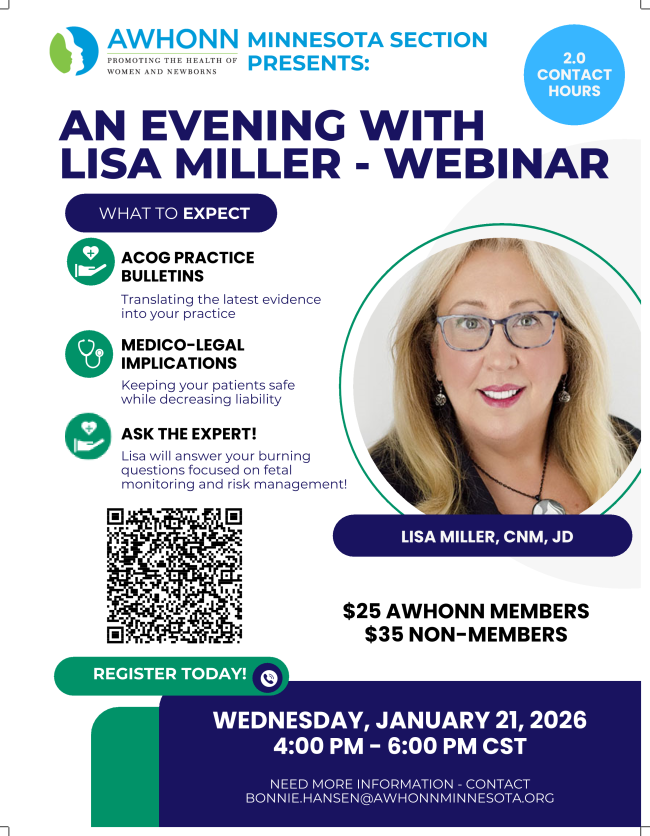
Start the New Year with practical, risk-focused learning! Join me live online on January 21st for a webinar sponsored by the Association of Women’s Health, Obstetric and Neonatal Nurses (AWHONN) Minnesota Section.


We’ll explore real-world challenges in electronic fetal monitoring, oxytocin management, clinical judgment, and escalation, with a strong focus on patient safety, documentation, and liability risk. We’ll also discuss how individual practice patterns and adaptive performance influence outcomes during high-risk situations.


Bring your questions for an interactive, pragmatic discussion designed to help you protect your patients—and yourself—as we kick off 2026!

Does Amnioinfusion Really Make a Difference with Recurrent Variable Decelerations?


A new retrospective cohort study examined its effect using total deceleration area (TDA). The authors found that amnioinfusion reduced TDA by more than 50%, even in patients with normal amniotic fluid, cord entanglement, or differing parity.


This study provides useful evidence to support clinical decision-making at the bedside.


Download this open access resource here.

Time to Quit the Pit?


A recent systematic review suggests that discontinuing oxytocin in active labor may lower rates of cesarean delivery, uterine tachysystole, and concerning fetal heart rate patterns—key drivers of intrapartum risk.


The authors noted that some of the included studies had concerns with trustworthiness, and this may affect the validity of the conclusions. Overall, this article raises important questions about risk mitigation, escalation decisions, and whether long-standing oxytocin practices still reflect the best available evidence. Share it with colleagues and start a discussion…


Click here to check it out!

Hands-On Practice, Real FHR Tracings


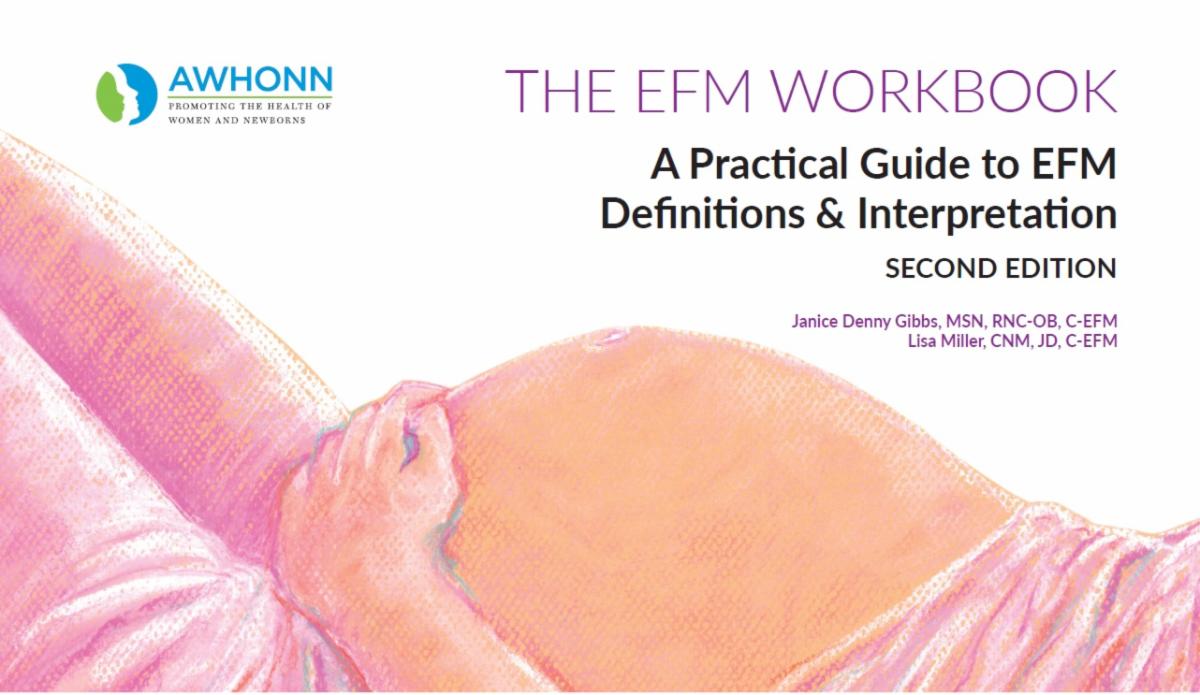
A practical way to strengthen your fetal monitoring assessment and interpretation is now available. The AWHONN EFM Workbook is your go-to resource—featuring 30 full-color practice tracings, expert commentary, and tools to build a shared mental model across your team. Perfect for educators, learners, and anyone committed to safer, clearer communication in L&D.


Order your copy through AWHONN.

Prefer your education on demand?


Then I've got you covered! See below for details and links…

EFM Review Course and Certification Prep


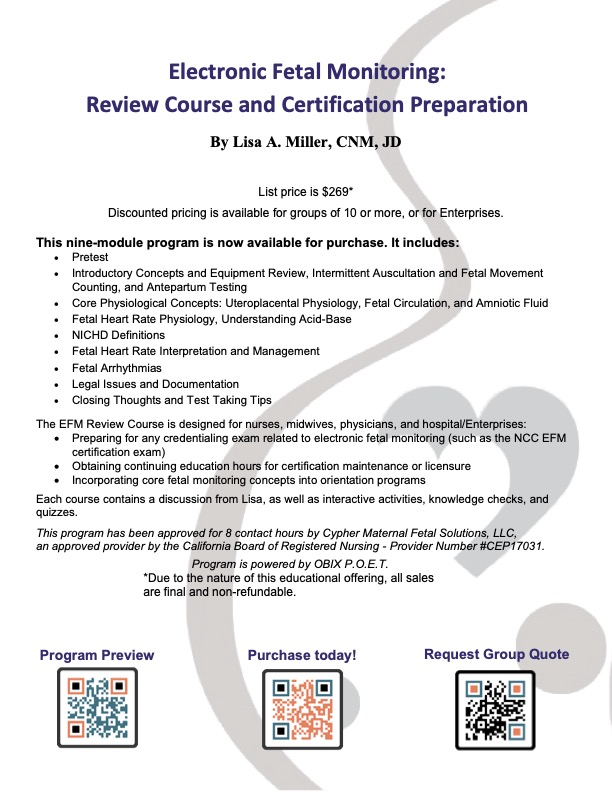
Are you interested in an in-depth online Electronic Fetal Monitoring (EFM) review course suitable for NCC C-EFM exam prep, orientation, or just a refresher?


If so, I have the course for you - it's module-based and allows you to move at your own pace. Click below to view the course brochure, request a quote, or sign up.


Course Information


Expert Insights with Lisa Miller


Focused on essential knowledge and practical skills to enhance patient care and outcomes, you can now stream webinars on your own schedule, earning Continuing Medical Education (CME) credits or nursing contact hours. Discounts are available for AWHONN members, and you can buy the webinars as a bundle!


View the full webinar catalog here.


Available Topics

  • Practice Pearls from a Deep Dive Into the NICHD
  • What’s in a Wave? Understanding the Sinusoidal Pattern
  • Are You Prepared? Surviving the Stress of a Deposition
  • What to Write vs. What to Know: A Clinician’s Guide to Documentation
  • Oxytocin: Use vs. Abuse
  • Physiologic Logic: Uterine Activity During Labor
  • The Oxygen Pathway & Standardized EFM Interpretation
  • What Do I Do with Category 2?
  • Mistakes Were Made, But Not By Me: Cognitive Bias in Nursing, Midwifery, and Medicine
  • Learning from Others: Case Studies in EFM
Facebook