NEWS & VIEWS

Covering Kids & Families of Indiana Newsletter   

April 10, 2025

PUBLIC POLICY

Indiana General Assembly Update


At this point in the Indiana legislative session, bills have passed through committees in both chambers, with some making it all the way through both chambers and arriving at the governor's desk. When there are amendments in the second half of session, the original chamber has two choices: concur or send to conference committee. If they concur, it means they agree to the changes. If they send to conference committee, it means they do not agree to the changes and want a chance to further discuss how the final bill will read. This recap looks at a few bills CKF has been tracking and where they currently stand.


SB 2 - Medicaid Matters

This bill has passed the House and was sent back to the Senate with amendments. Currently, the bill reads:

  • FSSA must report annually on fraud, waste, and abuse, as well as improper payments.
  • State agencies and a person who is contract with FSSA under the Medicaid program cannot advertise or otherwise market Medicaid, and the Secretary of FSSA can make rules about permissible advertising for those contracted with the State.
  • Self-attestation from applicants is no longer permitted for eligibility factors.
  • Monthly and quarterly checks on eligibility are allowed AND if there is a change that may affect eligibility, a redetermination shall promptly be conducted.
  • Hospitals will have new performance standards for the presumptive eligibility program.
  • HIP members must work/volunteer 20 hours per week on a monthly average.
  • There are exemptions from the work requirement.
  • The Secretary shall amend the state plan to remove the HIP population and apply for a waiver from CMS for the HIP program specifically.
  • FSSA may pay for claims incurred before a person is enrolled if certain conditions are met (which in layman's terms is 30 day retroactive coverage).
  • Secretary shall limit enrollment in HIP to ensure spending does not exceed state appropriations for the program.

SB142 - Eviction Issues

This bill has passed both chambers with some amendments, and remains a helpful bill to those with specific eviction circumstances. The Senate plans to concur and send the bill to the governor for signature.

SB 289 - Unlawful Discrimination

This bill was amended in the House. It no longer requires institutions to close their Diversity, Equity, and Inclusion (DEI) offices, but does say they cannot take actions based on a "personal characteristic of the person" like firing, hiring, enrolling, providing or denying aid, and granting or denying a license. It also allows a person to sue and potentially be owed damages if they believe this law has been violated. The bill makes it illegal for public employers to require DEI trainings be attended or DEI statements being attested to. It is on Third Reading in the House, where 17 amendments have been filed.

SB 409 - Employee Absences for Certain Meetings

This bill did not have any new amendments in the House and passed the House with a 96-0 vote. It will allow employees to take time away from work for their child's case conference at school without negative employment actions given the employee adheres to certain rules.

SB 486 - Family and Social Services Matters

This bill requires a sheriff to assist an incarcerated person in applying for Medicaid before their release. Related to Medicaid, the bill also includes: (1) requirements that an insurer respond to OMPP about certain claims, (2) the creation of the Medicaid Beneficiary Advisory Commission (which was federally mandated), and (3) changes to the duties, membership, and terms of office for the Medicaid Advisory Commission. This bill has been signed into law by the governor.

HB 1001 - State Budget

The Senate has yet to release their version of the budget. There is also a budget forecast set to be released on 4/15. This will likely be one of the very last bills voted on this session, so more news to come. One thing to watch is the amount of funding for Health First Indiana (public health funding). There was historic investment in public health in the last budget cycle, but the House has cut some of that funding for this upcoming budget cycle.

Public Health Has a High Return on Investment


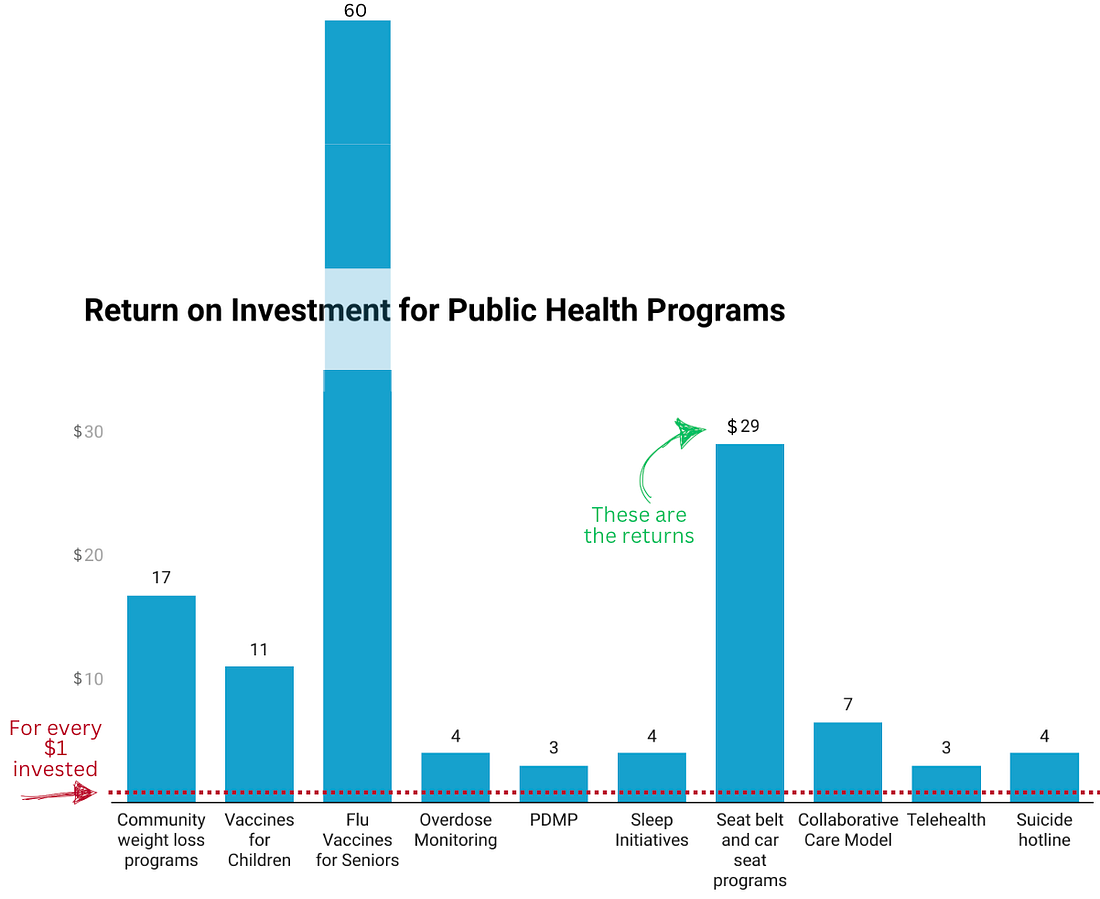
The federal public health workforce is in turmoil as thousands lose their jobs at the Centers for Disease Control (CDC) and the Food and Drug Administration (FDA). One epidemiologist has outlined the cost these losses will have by looking at the Return on Investment (ROI) of public health spending.

Figure by Dr. Katelyn Jetelina, MPH, PhD, epidemiologist. Numbers come from a host of peer-reviewed articles and reports (e.g., here, here, here, here).

Medicaid By Any Other Name Would Smell As Sweet


Some Americans who rely on Medicaid to pay for their health care do not realize their insurance is funded by that very program. One reason is that state programs are not always called “Medicaid," as many states have rebranded their programs with consumer-friendly names. There has been an effort to use alternative names for Medicaid to avoid the stigma attached to the term. Examples in Indiana are Hoosier Healthwise, HIP, Hoosier Care Connect, etc. Nearly all states now use private insurance companies to run their Medicaid programs and Medicaid enrollees often hold an insurance card and related paperwork with the name of a commercial insurance company and no mention of Medicaid.


Read more here.

SCHOOLS & EARLY CHILDHOOD

Registration for the 2025 ISHN Conference is OPEN!


Join over 600 school, community, and public health professionals at the 2025 ISHN Conference! Preconference sessions kick off on Monday, June 9th, with insightful discussions and expert-led workshops. The two-day conference on June 10th and 11th offers a rich agenda filled with thought-provoking keynote speakers, numerous breakout sessions, and more than 50 exhibitors.

ISHN Conference Information
Register Here

Call for Exhibitors


Conference attendance is expected to be over 600 professionals including but not limited to: educators and school administrators, nurses and other healthcare professionals, social workers, outreach and enrollment specialists, managed care professionals, child health advocates, early childhood professionals, and government program partners. The information and resources that exhibitors provide are an integral part of the overall success of the conference.


Reserve your booth now - space is limited!

Exhibitor Prospectus
Submit Exhibitor Request
 
Visit the ISHN Website
Facebook  LinkedIn

OUTREACH & ENROLLMENT

No Surprises Act


The Centers for Medicare and Medicaid Services (CMS) released a new toolkit to help consumers and their advocates resolve medical billing problems. The No Surprises Act is a federal law that went into effect on January 1, 2022 and protects consumers from certain unexpected out-of-network medical bills (balance billing). Those covered under this law include consumers with employer or union coverage, Federal Employees Health Benefits program, and the Health Insurance Marketplace.


It does NOT apply to consumers who only have coverage through Medicare, Medicaid, Children’s Health Insurance Program (CHIP), Indian Health Services, Veterans Affairs Health Care, and TRICARE. These programs generally have separate protections against balance billing. 

Medicaid Expansion Benefits People with Disabilities


The Indiana Justice Project has a one page flier explaining how Indiana Medicaid expansion, the Healthy Indiana Plan (HIP), benefits people with disabilities.


For example:

  • HIP can provide coverage to caregivers who are unable to work a job as they care for their family member with a disability.
  • HIP can provide coverage to people with disabilities who may have a hard time qualifying for other Medicaid coverage under strict disability and income criteria.

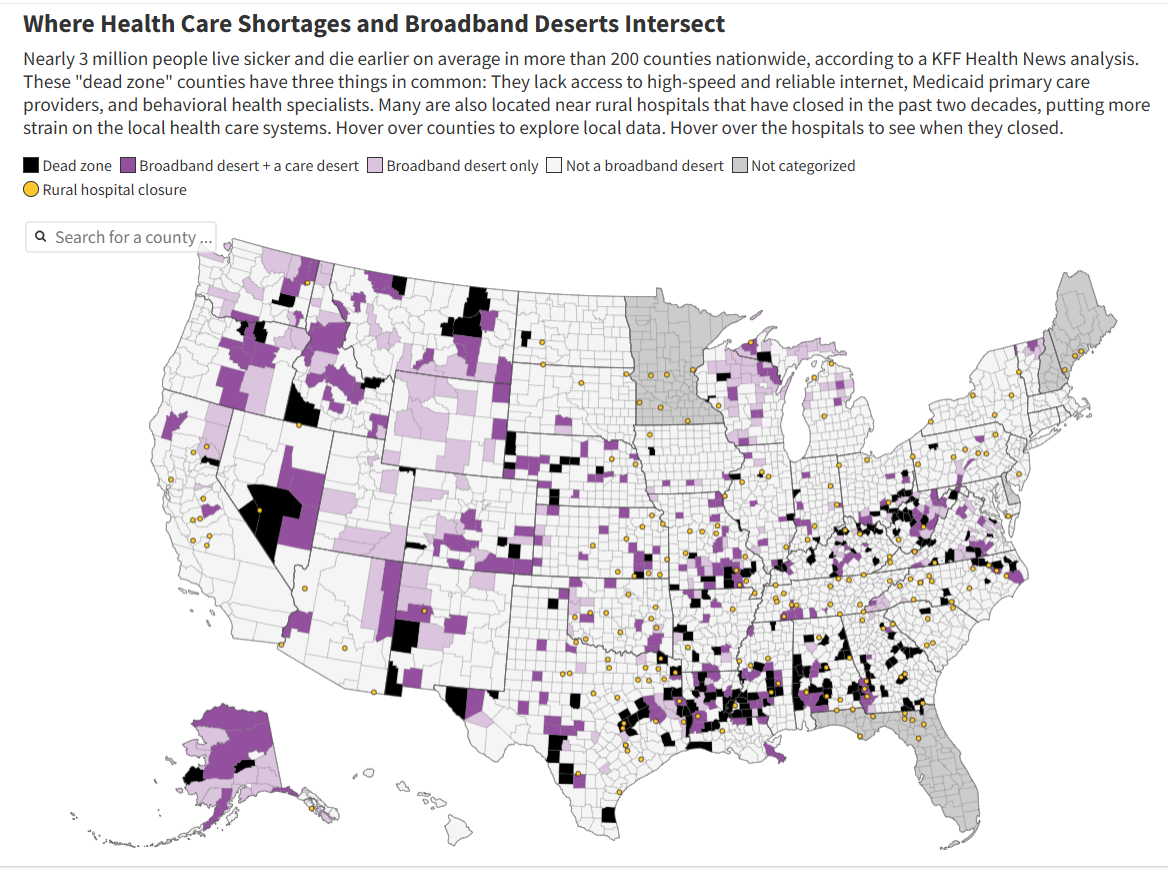
Rural Hospitals and Patients are Disconnected from Care

RESOURCES

Ramp Installation Grants


Ramps are one of the common modifications that can help someone stay in their home. However, the cost of installing a ramp is often a barrier. Ramp Up Indiana provides grants to non-for-profit organizations for the installation of exterior ramps for owner-occupied homes.

Communicating about Public Health


The de Beaumont Foundation offers a toolkit for health professionals, Communicating About Public Health. Based on research, the Foundation found five big ideas – key public health concepts that many people don’t understand but are critical to conveying the importance and value of public health. The toolkit provides research-based talking points and examples on how to fill in knowledge gaps when engaging with communities.


Here are the five big ideas:

  1. Public health works at the community level, while health care works at the individual level.
  2. Public health focuses on preventing people from getting sick or hurt.
  3. Public health workers serve their local communities.
  4. Public health workers play a variety of professional roles and many work behind the scenes.
  5. Public health benefits everyone.

TRAININGS

211 University


Indiana 211 University continues to offer webinars (and their recordings) on a wide variety of topics. This month they kick off a five-part series focusing on 211 call data including unmet needs from five different regions of the state. Their website links to past recorded webinars and offers the opportunity to sign up for notices on upcoming webinars. The upcoming session on April 16, 2025 at 10 am EDT will discuss data from the Northeast Region (Benton, Carroll, Cass, Clinton, Elkhart, Fountain, Fulton, Howard, Jasper, Lake, LaPorte, Marshall, Miami, Montgomery, Newton, Porter, Pulaski, St. Joseph, Starke, Tippecanoe, Tipton, Warren and White counties).


No registration is necessary, just click here to join on April 16, 2025. 

Communicating During Stressful Times


Join Literacy Works to explore strategies for communicating during stressful times. All trainings are via Zoom and run from 12:00 - 12:45 pm CT/1:00 - 1:45 pm ET.


Each session is 45 minutes long and will include:

• A 20-30 minute presentation, with the remaining time for questions and community discussion

• Real-life examples of effective and ineffective communication

• Tips for navigating conflicting and inaccurate information 

• A takeaway checklist, worksheet, or tool you can immediately use in your work


*You do not need to attend all three sessions. When you register, select the sessions you plan to attend live. 


Part 1 - Clear communication from top to bottom: strategies for effective internal communication processes

Date: Tuesday, April 15


Part 2 - Communication with integrity: strategies for maintaining trust + transparency while navigating uncertainty 

Date: Tuesday, April 22


Part 3 - Communication grounded in your values: maintaining a trauma-informed lens when communicating in high stress situations

Date: Tuesday, April 29

Register Here

TOBACCO PREVENTION & CESSATION

U.S. Supreme Court Rules FDA Properly Denied Marketing Applications for Flavored E-Cigarettes


On April 2, 2025, the U.S. Supreme Court unanimously upheld the FDA's decision to deny marketing applications for flavored e-cigarette products with youth-appealing flavors such as "Peachy Strawberry" and "Killer Kustard Blueberry." This ruling reverses a prior decision by the Fifth Circuit Court of Appeals and confirms that the FDA acted within its authority to protect public health by preventing the sale of products that could contribute to youth nicotine addiction. 

Read Article


Connect with CKF

Tobacco Prevention & Cessation program on social media!

Facebook

ENROLLMENT TRENDS


IHCP Enrollment


Total Membership increased in February.


With 1,962,786 members, there were 3,433, or 0.18%, more members in February 2025 than in January 2025. 

Full IHCP Enrollment Trends
 
Facebook  X  LinkedIn

© 2024 Covering Kids & Families of Indiana | All Rights Reserved