How Biomarkers Are Changing Alzheimer’s Research


The past year has been filled with discussions about biomarkers and how they are a critical part of dementia research. But what exactly is a biomarker and why do they matter?


The term biomarker is short for biological marker. It is something that can be measured and evaluated to indicate something that is happening in the body. For example, biomarkers can show the response the body is having to a medication or show the presence of a disease. Simply put, biomarkers provide information about illness and health in the human body.


So where do we find biomarkers? They can be assessed in multiple ways, including in blood and spinal fluid samples, through pulse and blood pressure readings, and even test results from an MRI or CT scan.


Biomarker results help medical professionals to identify and diagnose a disease beyond symptoms only. This is especially important in Alzheimer’s disease since symptoms do not appear until decades after the disease is present, when the brain is already damaged. But early detection and diagnosis with biomarkers allow for early intervention to prevent damage.


Within MADRC, there are several studies aimed at developing new biomarkers and improving existing ones. Learn about our Research Registry and how you can get involved in advancing science by enrolling in a study here. 


Learn About the Latest Breakthroughs


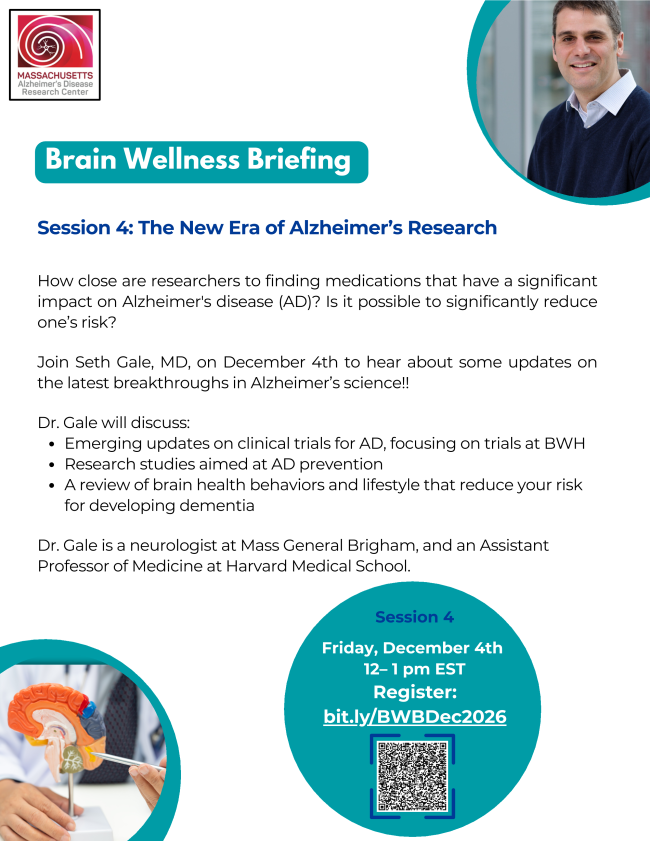
How close are researchers to finding medications that have a significant impact on Alzheimer's disease? Is it possible to significantly reduce one’s risk?


Seth Gale, MD, will discuss these topics and more on December 4th at 12 PM via Zoom when he presents: The New Era of Alzheimer’s Research.


Dr. Gale will discuss:


• Emerging updates on clinical trials for AD, focusing on trials at BWH


• Research studies aimed at AD prevention


• A review of brain health behaviors and lifestyle that reduce your risk for developing dementia


Register here to reserve your spot!


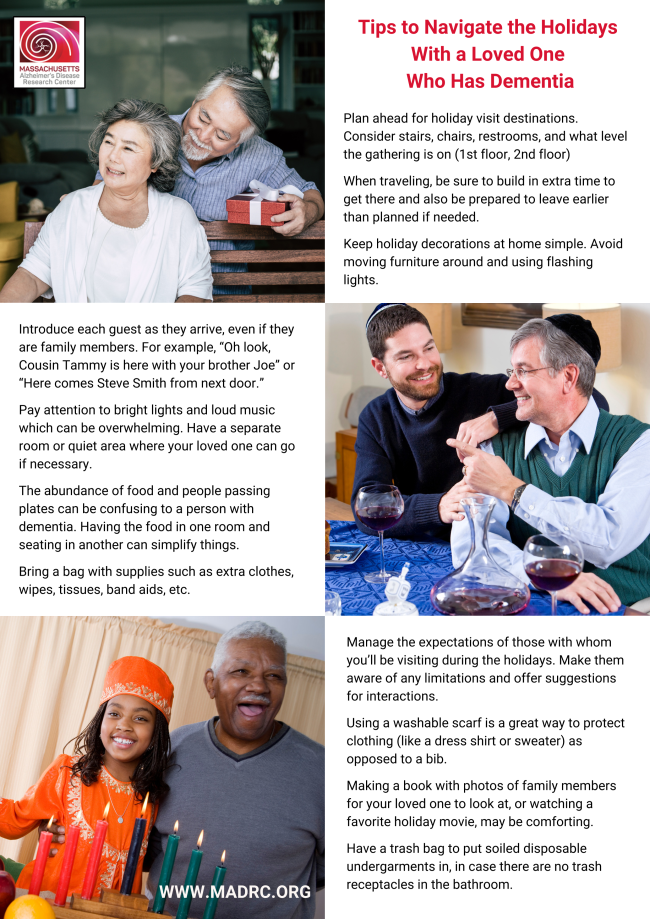
Navigating the Holidays with a Loved One Living with Dementia


The holiday season can be challenging when a family member has dementia. The group gatherings and changes in routine may be overwhelming for both the person with dementia and their caregivers. Here are our tips to help things run more smoothly. 


For the Spanish version, click here.


Make a Year-end Gift to Support Our Work


We are incredibly grateful to all who donated to MADRC in 2026. Your support makes our groundbreaking research and community programs possible.


Making a gift in support of MADRC is a great way to remember a loved one or pay tribute to a dedicated caregiver. Please consider making a year-end donation. Learn more here.


Facebook  X  Instagram  Youtube  Linkedin  

WWW.MADRC.ORG