Independence


February 2023

AOASCC News & Notes

Spotlight on Volunteers


“ Serving my friend Wilfredo, helps me in turn

cope with my difficult moments."


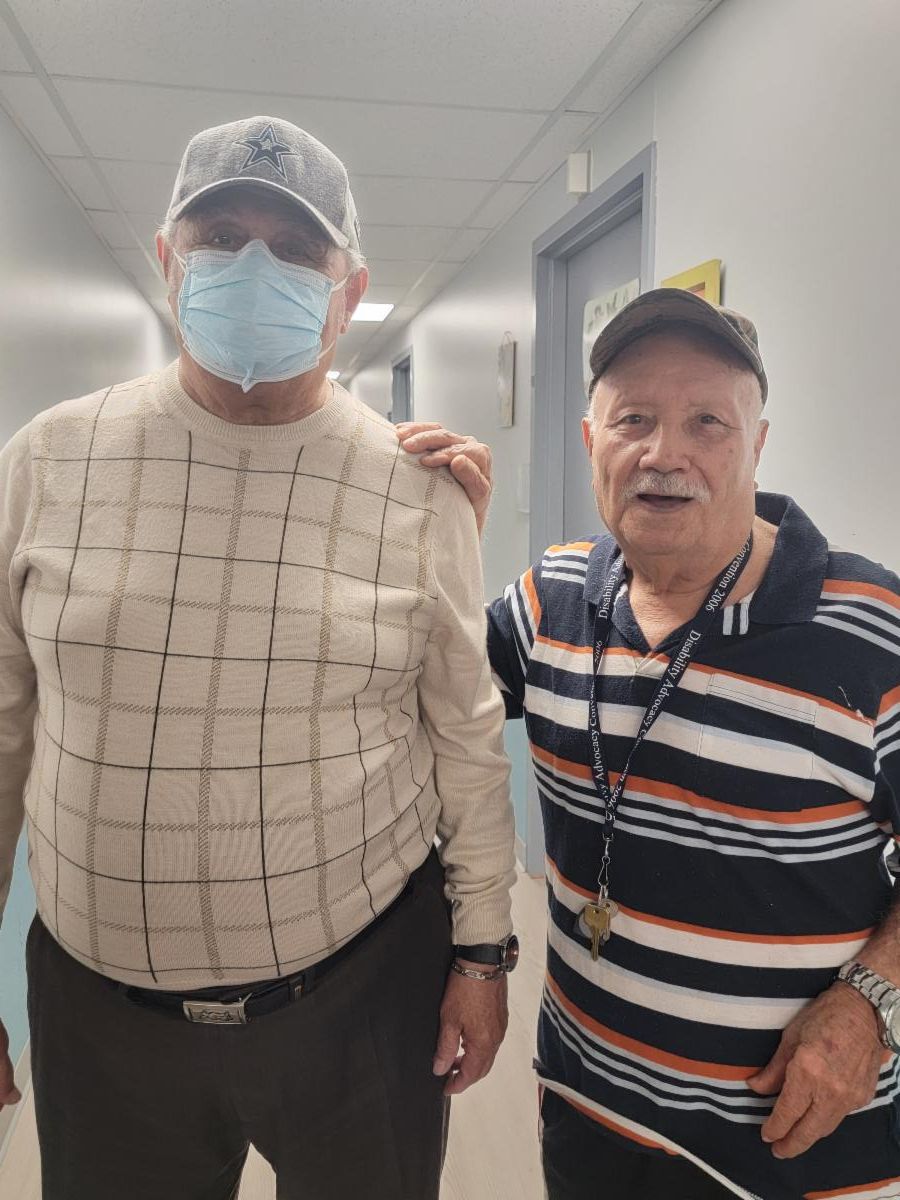
In this picture we have Arturo from Casa Otonal, a Senior Companion for Agency on Aging. We also have Wilfredo a (cancer survivor), beside him, enjoying their usually morning chats. Many times we talk about the what the client receives by having a Senior Companion, but we often forget the other side.


Arturo has a young family member that has cancer and this child is dear to his heart. We all know how difficult it is when it comes to our family’s health - trying to cope and trying to balance the ongoing thoughts of helplessness on a daily basis. Arturo has managed to connect and use his volunteering services with his client Wilfredo to help him cope. Ultimately, he has gained the main component which is hope. His client’s talkative, inspiring and friendship has helped him because it’s a reminder that if he is a cancer survivor then….. well you know the rest.


Find out more about volunteering as a companion and other opportunities through AOASCC.

Program for Family Caregivers


We sponsor this self-care education program for family caregivers, designed to provide you with tools and strategies to better handle the unique challenges you face.


There are a few spots still open for our next session! The free workshop series consists of six sessions, Fridays from 130p-3pm beginning February 24th.


Find out more & register here click here.

Caregiver Corner - Why use a gait belt?


Falls are one of the primary reasons for hospitalizations of older adults. They are also identified as a primary worry for caregivers when trying to assist a loved one in standing and walking. There is a low-tech device that can make standing and walking easier and safer for the care recipient and the care giver. A gait belt or transfer belt is a device put on a patient who has mobility issues, by a caregiver, prior to that caregiver moving the patient. Patients may have problems with balance and a gait belt may be used to aid in the safe movement of an individual from a standing position to a chair, for example. 


Gait belts come in a vast assortment of styles and sizes, and are most often shaped like a regular belt. They loop around the patient's waist and provide handholds for the caregiver to hang on to in order to support patients as they change position or ambulate.  Some patients have contraindications that prevent them from utilizing a gait belt, including: recent chest, abdominal or back surgery, abdominal aneurysm, G-tubes, hernias and severe cardiac or respiratory conditions. However, for most of the chronic conditions family caregivers confront, the gait belt can be a tremendous help to both caregiver and family member. 


When used consistently, gait belts have been demonstrated to significantly reduce falls because the caregiver has something to hold onto when assisting the care recipient. A decrease in the likelihood of injury to the caregiver was also identified since the belt reduces the strain on the back of the caregiver during transfers. 


The primary objection to the use of gait belts has been the risk of infection from germs on the belts being transferred between patients.  However, this problem has been primarily identified in institutional settings where the same belt is used on multiple patients. Initially belts were made from cotton webbing which was difficult to sterilize. Most belts today are made from vinyl which can be sterilized to prevent

infections. 

Did You Know?


  • More than one-fourth of Americans age 65+ falls each year.
  • Falls are the leading cause of fatal and nonfatal injuries among older adults.  
  • The cost of treating injuries caused by falls is projected to increase to over $101 billion by 2030.
  • Falls result in more than 3 million injuries treated in emergency departments annually, including over 800,000 hospitalizations.  
  • People with mild hearing loss are nearly three times as likely to fall, with each 10 decibels of hearing loss increasing fall risk.
  • The majority (60%) of falls happen in the home, 30% in a public setting, and 10% in a health care center.
  • Falls, with or without injury, also carry a heavy quality of life impact. A growing number of older adults fear falling and, as a result, limit their activities and social engagements. This can result in further physical decline, depression, social isolation, and feelings of helplessness. 

National Council on Aging


Visit the NCOA website to check your fall risk. Falls Free CheckUp

CHOICES Corner - Medical Equipment


Do you need a piece of medical equipment? Do you know whether Medicare will pay for the equipment? This may be a difficult question to answer. You may think you need a piece of medical equipment but Medicare may think that the item you need isn’t in the category of medical equipment. Or perhaps you may think you need an item to make life easier for you to manage, considering your physical limitations, but your doctor may not be able to attest that the item is medically necessary to your health. You may need an item and the doctor may agree and it may be a piece of medical equipment, but it may not meet the guidelines of durable medical equipment as covered by your Medicare benefit. It might be covered under a different part of Medicare and perhaps you haven’t enrolled in that part. Or perhaps, the equipment meets all the standards to be covered by Medicare, but the supplier you plan on purchasing the item from isn’t a Medicare approved provider.


The point being that purchase of medical equipment can be confusing and frustrating. The rules regarding coverage by Medicare are complex. 

If you are considering the purchase of medical equipment, call and speak to a CHOICES Team Member who can assist you in determining whether the equipment is a Medicare approved device; whether your doctor is prepared to “prescribe” the item for you; whether your Medicare benefit covers the item and whether the provider is an authorized Medicare provider. call CHOICES at 800 994 9422

The Art of Aging 2023


Well the groundhogs can't agree on when spring will come, but we know it's a sure sign of spring when planning begins for our annual art exhibition, The Art of Aging!


Are you 60 and over and love painting or photography? Submissions of entries will open beginning in April.


Save the date! Support your local artists and plan to attend the Art of Aging opening reception on Thursday May 18.


Bookmark this website!


Are you one of the 52% of older adults age 60+ who are eligible for the Supplemental Nutrition Assistance Program (SNAP) and not yet enrolled?

You can reach our information counselors

at 203-785-8533 - select option 4.

The State of Connecticut has a new program - Bridging the Digital Divide.


The goal is to help bridge the digital divide by providing services to adults with disabilities (18 and older) and aging adults (60 and older).

Services to individuals include:

  • Increase access to technology & technology use
  • Provide tech support, troubleshooting, & teach built in device accessibility features
  • Increase access to the community, virtual programming & telehealth to reduce social isolation
  • Connect Individuals to community resources for ongoing supports
  • Provide tablet technology (with or without hotspot) to individuals 60 & older, if eligible

Why connect with a DDC?

If you or an individual you work with has technology but struggles to use it and would benefit from some training & support, such as

  • Connecting to their Wi Fi
  • Learning to use social media to connect to family and friends
  • Learning to use virtual platforms like Zoom, Teams or virtual community services
  • Learning how to use built in accessibility features in their devices – speech to text, magnification, text to speech, etc.
  • And more …


Find out More

Contact the CT Tech Act Project for more information by sending an email to the CT Tech Act Project or calling 860-803-0588.


You can also the Digital Divide Coordinator - UCP of Eastern CT – serving Fairfield, New Haven, Middlesex & New London Counties. Call 860-288-9520 or email DDC@ucpect.org

Facebook