|
The Leaflet
~ August 2025 ~
| | |
A Visit to Roundstone
by Kathy Doss
| |
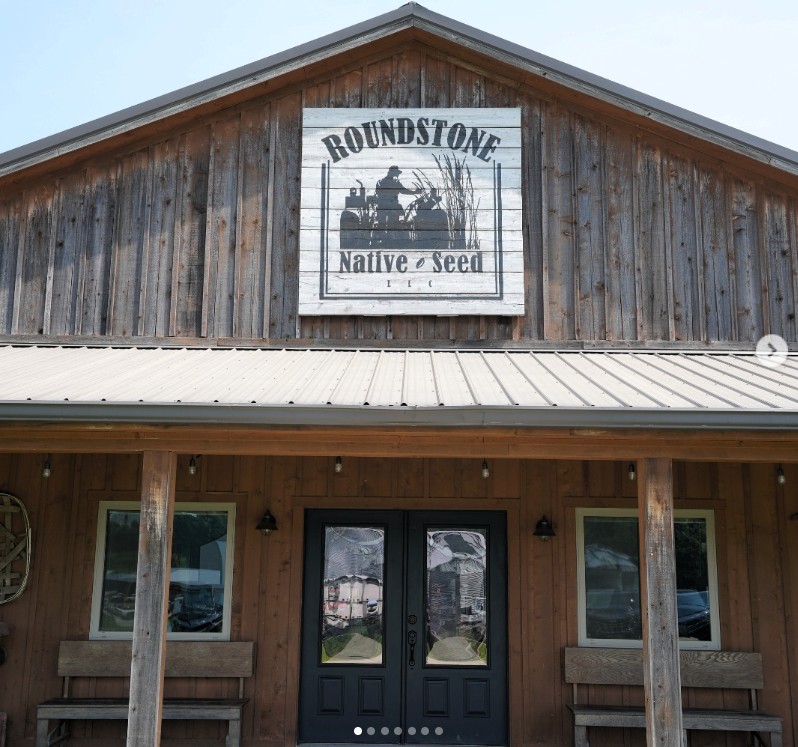
This summer, I had the chance to visit Roundstone Native Seed Company in Upton, Kentucky. What a hidden gem it is! If you’ve ever planted milkweed for monarchs or dreamed of turning your backyard into a pollinator paradise, this is a place you need to know about.
Founded in 1991, Roundstone is a family-run business specializing in native and naturalized seeds. They offer over 300 species of grasses, wildflowers, legumes, and shrubs. They develop and produce seeds that grow well in the eastern United States (what experts call ecotype-specific and regionally adapted). While these seeds are commonly used for erosion control, cover crops and restoring natural habitats, Roundstone also offers a wide selection of mixes perfect for backyard gardens.
From the moment we arrived, it was clear that the folks at Roundstone are on a mission. We were warmly welcomed by staff who shared not just their expertise, but also their passion for restoring healthy ecosystems.
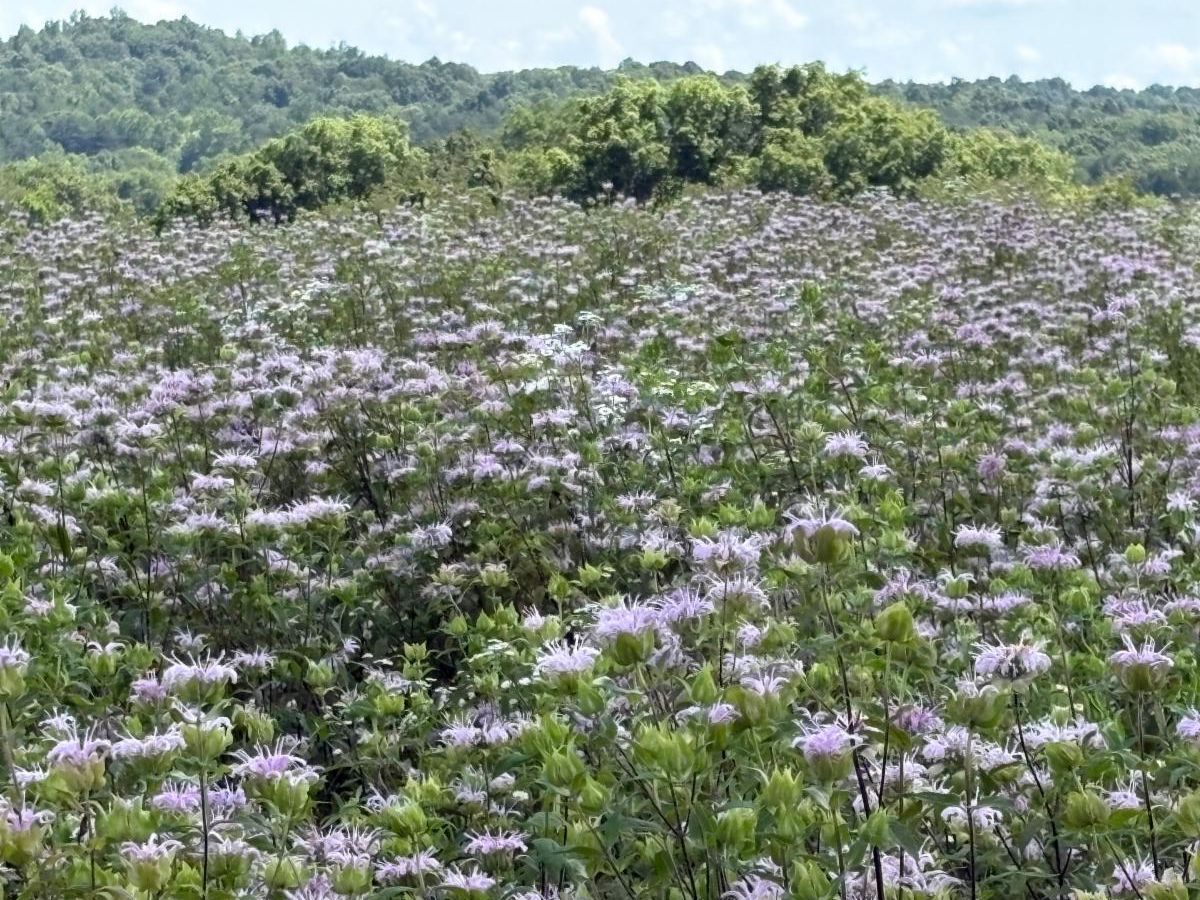
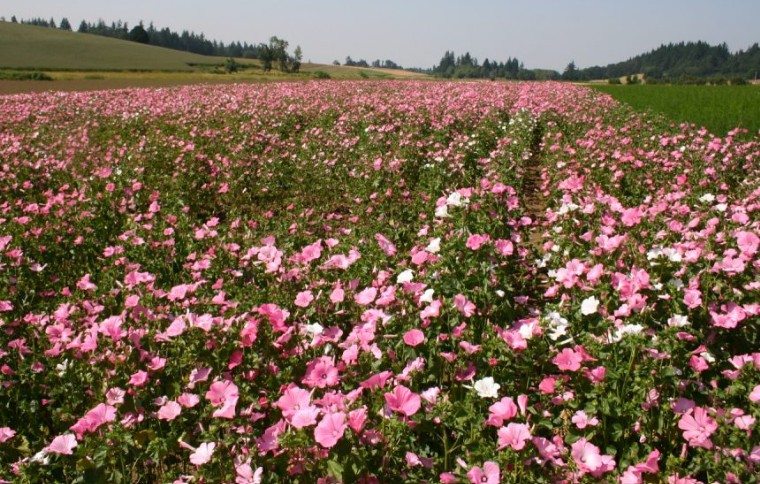
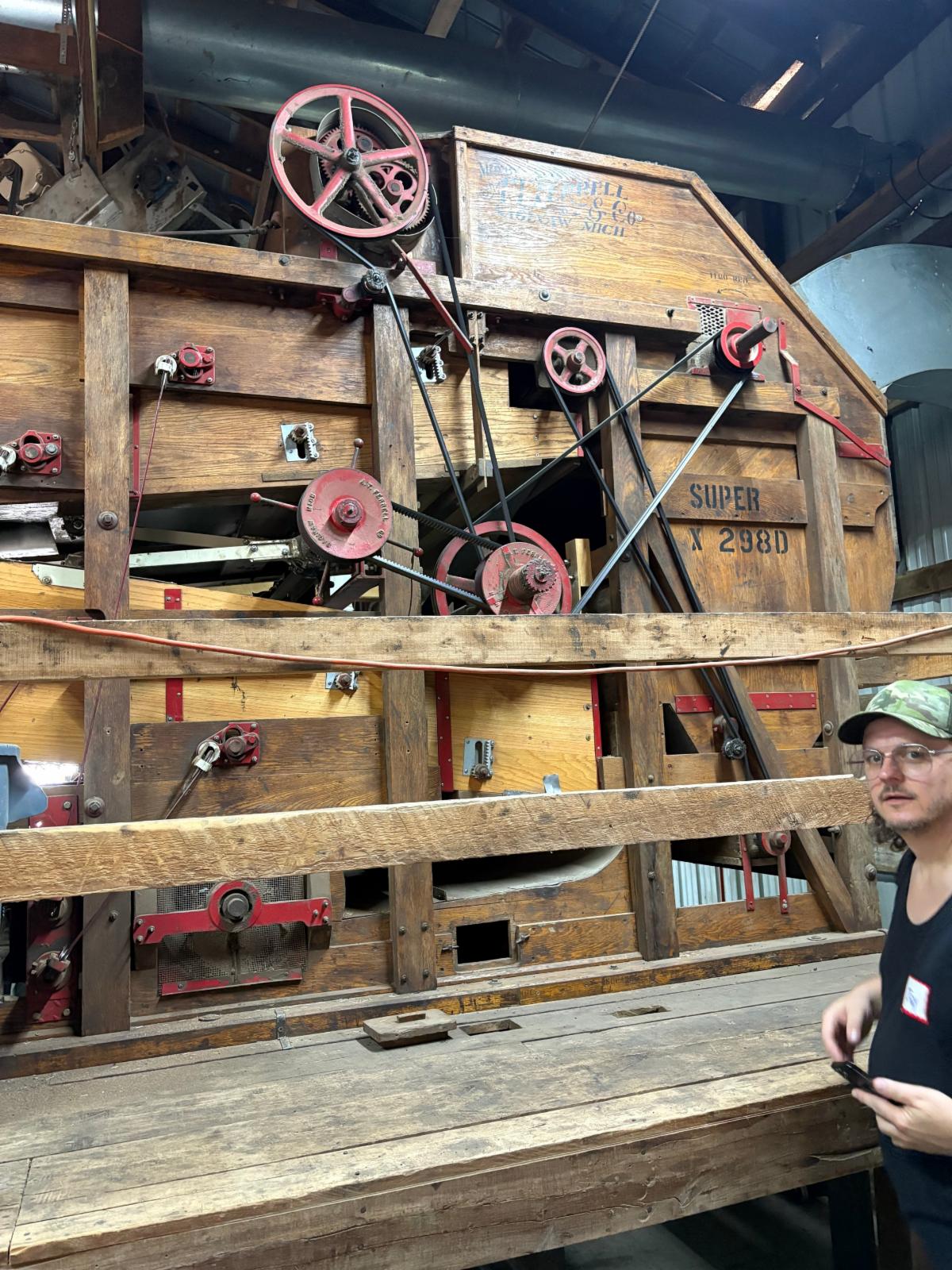
| | Our tour began inside a small showroom where seed mixes were displayed for everything from backyard pollinator gardens to large-scale conservation projects. Then we stepped outside into the fields, where breathtaking waves of bergamot and rose mallow stretched as far as the eye could see. | | Next, we got a behind-the-scenes look at their seed processing operation. Here, harvested seeds are meticulously cleaned, sorted, and tested to ensure purity and viability. Impressively, the seed cleaning machine was designed and built right on-site. | | |
Roundstone also collaborates with nonprofit restoration organizations and publicly funded conservation programs, including NRCS (National Resources Conservation Service) initiatives and groups like the Native Habitat Project and Southeastern Grasslands Institute. Their work supports efforts to bring native plants back to the landscape at every scale.
Visiting Roundstone was a powerful reminder that native plants are not only beautiful but essential. They support the insects, birds, and soils that our ecosystems depend on. They belong here. And thanks to companies like Roundstone, they’re becoming more accessible.
If you’re ever near central Kentucky, I highly recommend a visit. And if not, their website is full of great resources, seed mix suggestions, and tips to get you growing.
Learn more or order seed at: https://www.roundstoneseed.com
| | |
Cascades of Time
by Judy Bryant
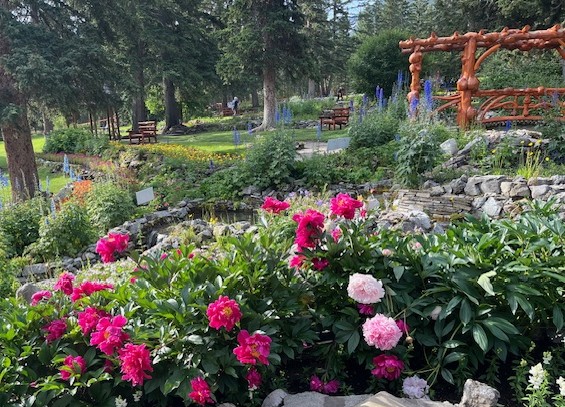
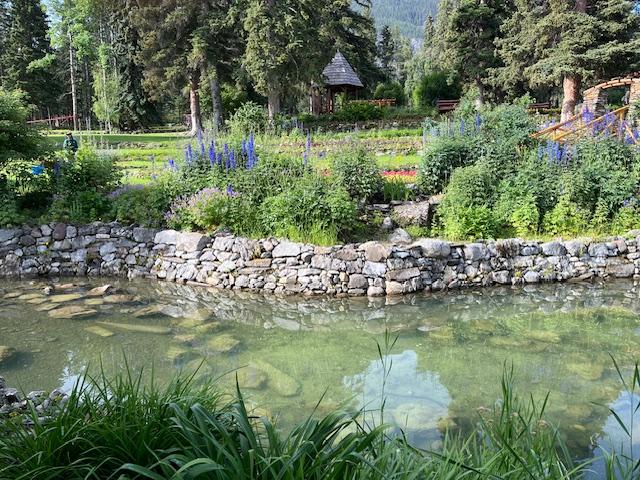
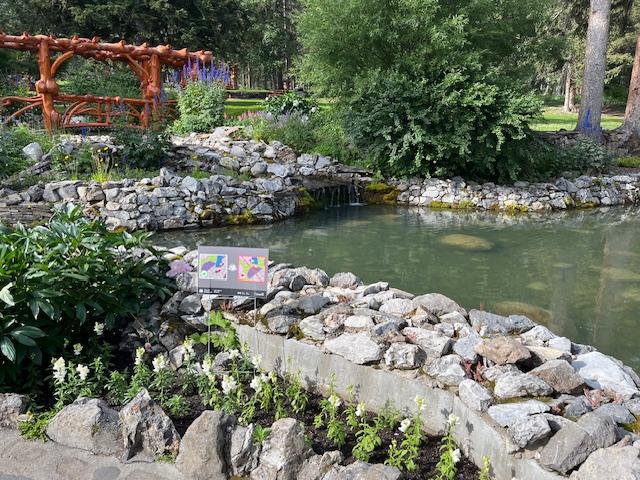
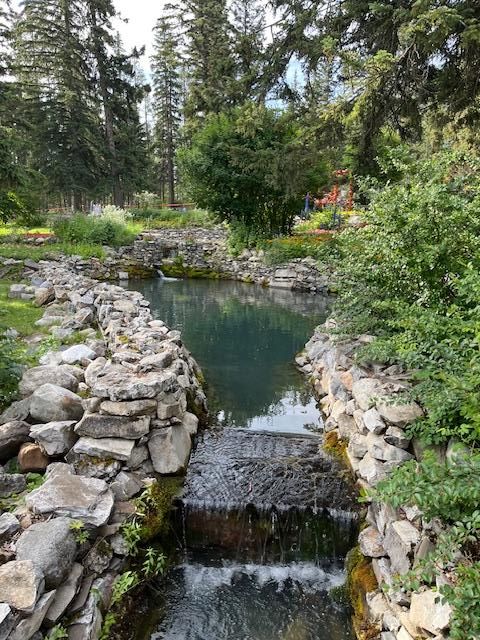
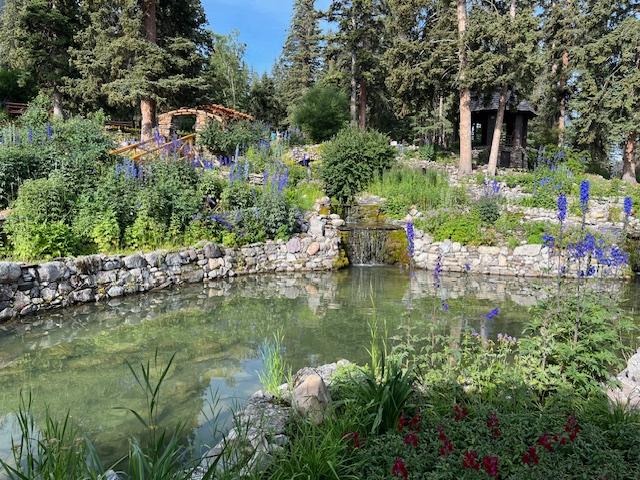
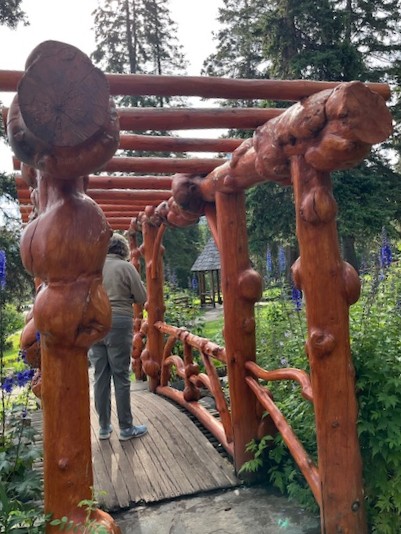
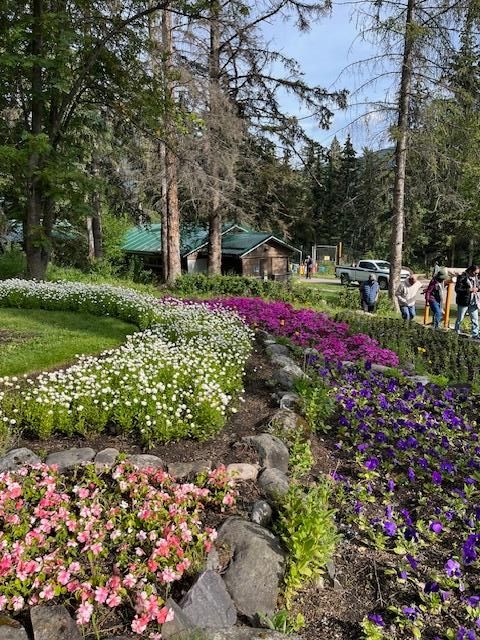
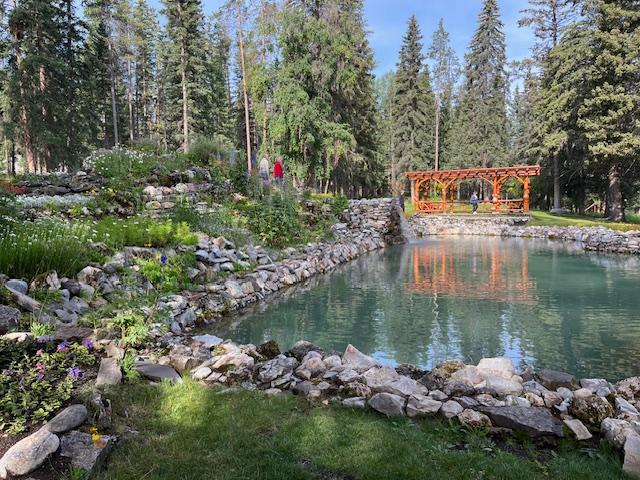
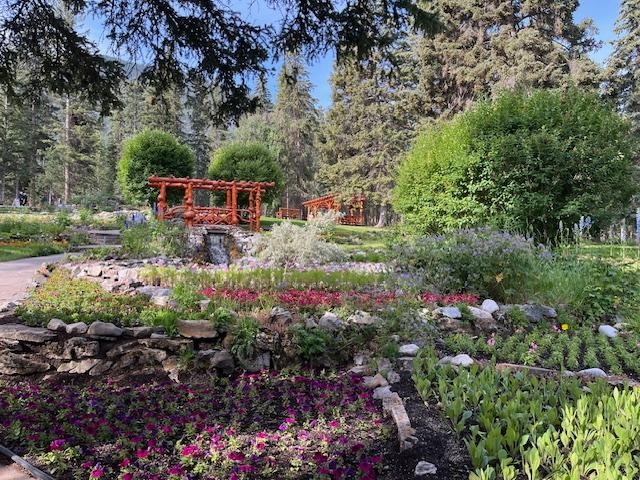
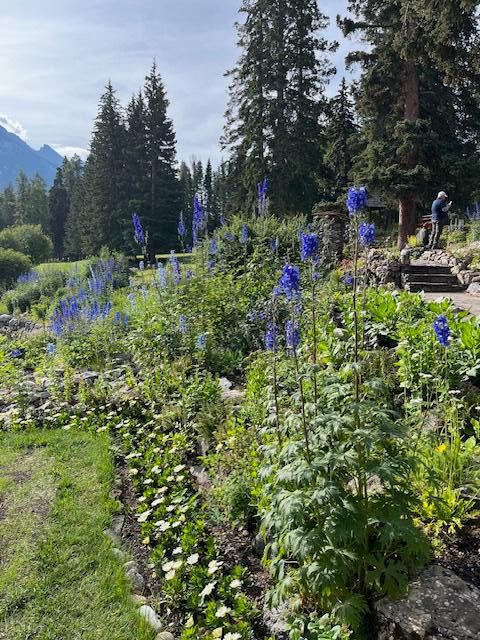
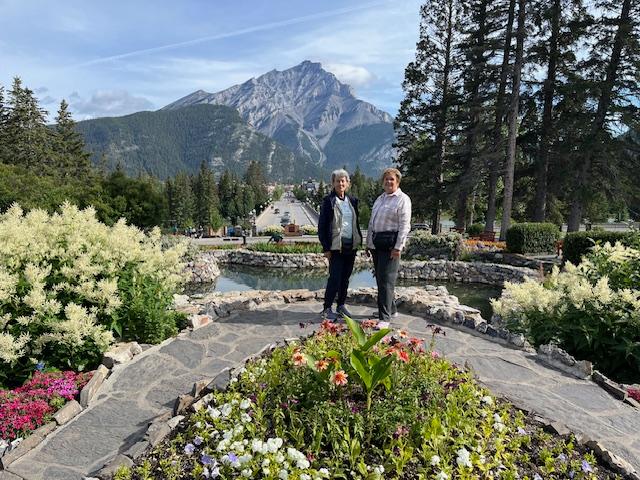
| In July of 2025, I toured the Cascades of Time Gardens in Banff, Alberta, Canada that was completed in 1935. The terraced gardens have many beautiful water features symbolizing how the waters of the Continental Divide flow to the Atlantic, Pacific, and Artic Oceans. Boiled pine trees were used for the arbors and bridges. The garden is in full bloom from July to September with poppies, columbine, peonies, snapdragon, stargazer lilies, delphiniums, and more! You can see Mt. Rundle overlooking Main Street in Banff from the garden. It is free with a National Parks Pass. | | |
A Day at Cheekwood Botanical Garden
by Dawn Chen
| |
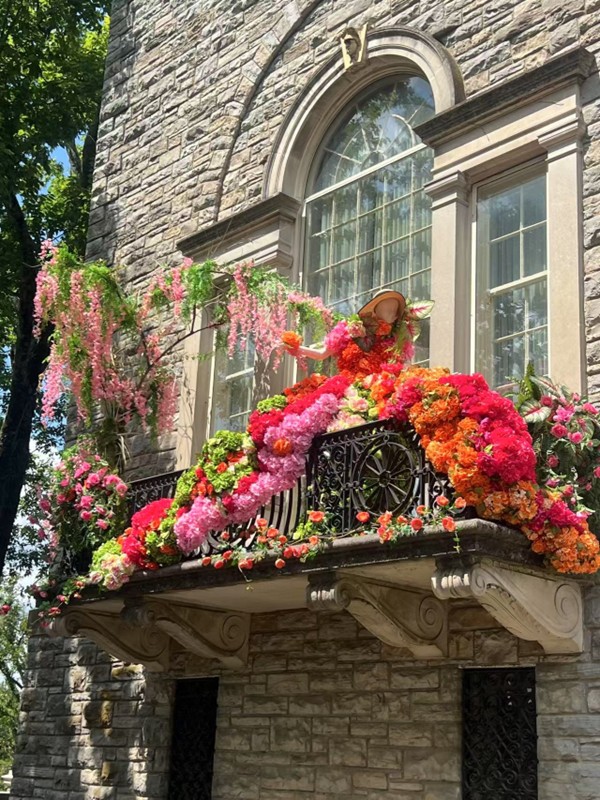
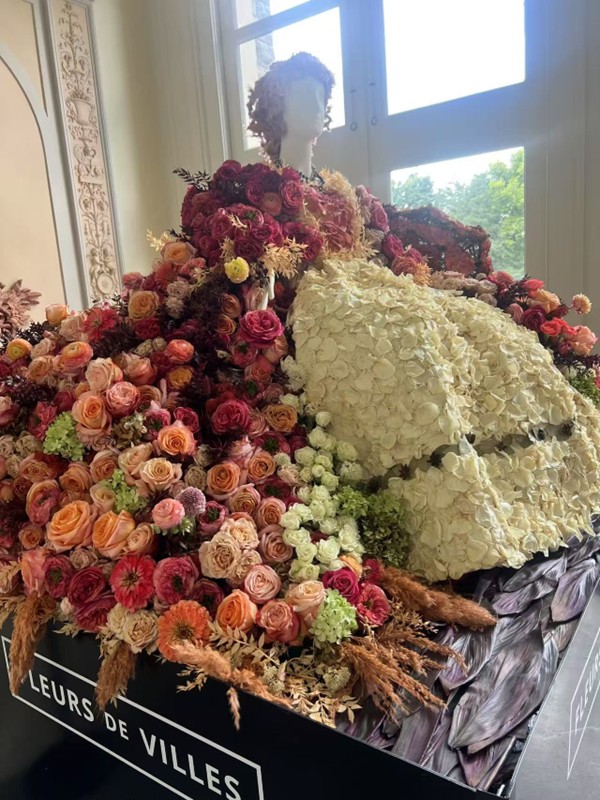
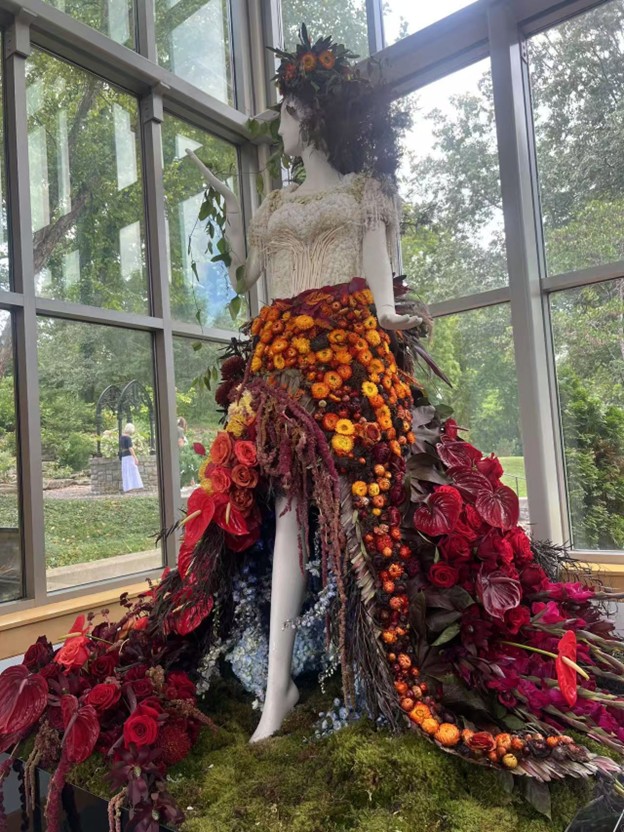
I learned about the Fleurs de Villes exhibition at Cheekwood quite late, virtually three days before it was removed. As I browsed a few photos of the exhibition, I knew it was something I hadn’t seen in the past. The photos looked like mannequins dressed entirely with fresh flowers and botanical elements. My curiosity piqued, I felt compelled to visit.
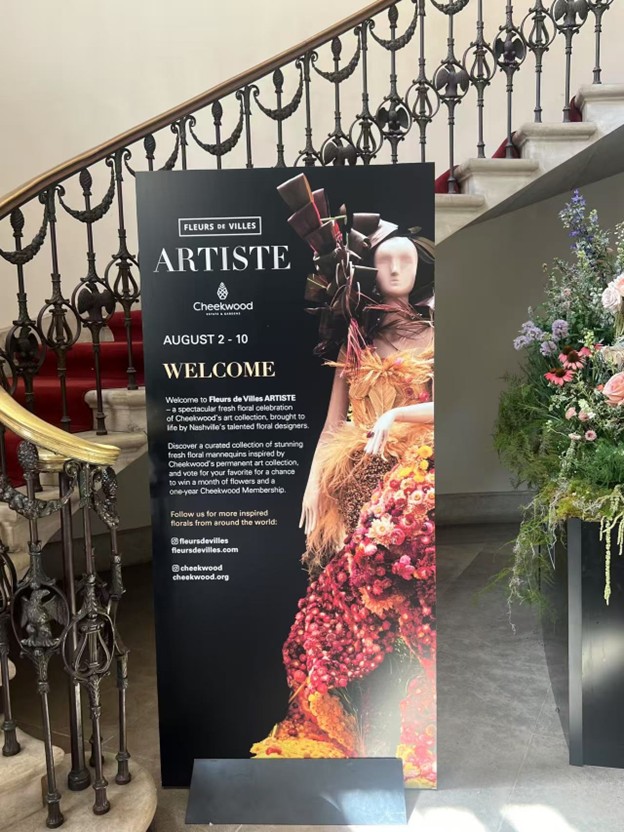
To better appreciate what I was about to see, a quick search was necessary about Fleurs de Villes. As it turned out, this was organized by a company of the namesake Fleurs de Villes, "flowers of the cities." The idea was to connect with selected cities and work with top local florists, designers, growers, and nurseries to showcase world-class, stunning displays of art in the form of plant materials.
Since its inception in 2016, Fleurs de Villes has put on over 130 shows across 5 countries, including Canada, the U.S., the UK, and Australia.
I was so looking forward to it!
At the ticket office, a staff member suggested we stop at the Visitor Center first to view the single display there. He also reminded us to vote for our favorites. So, off we went!
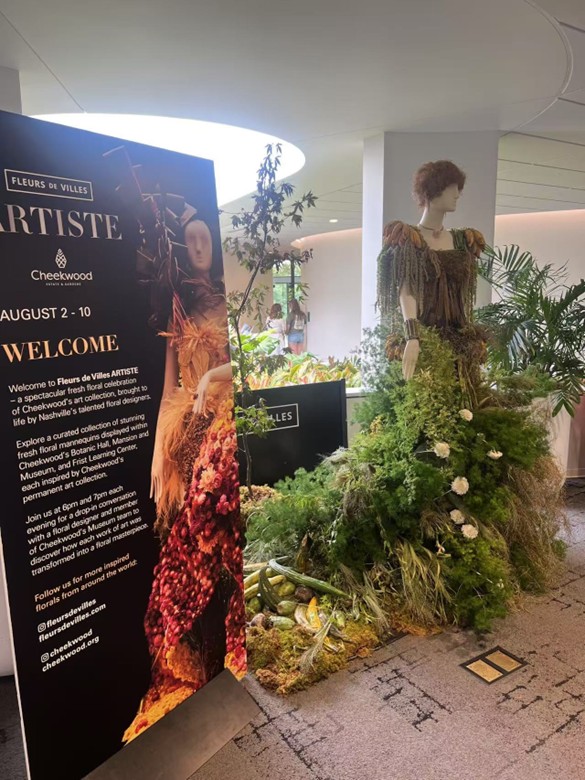
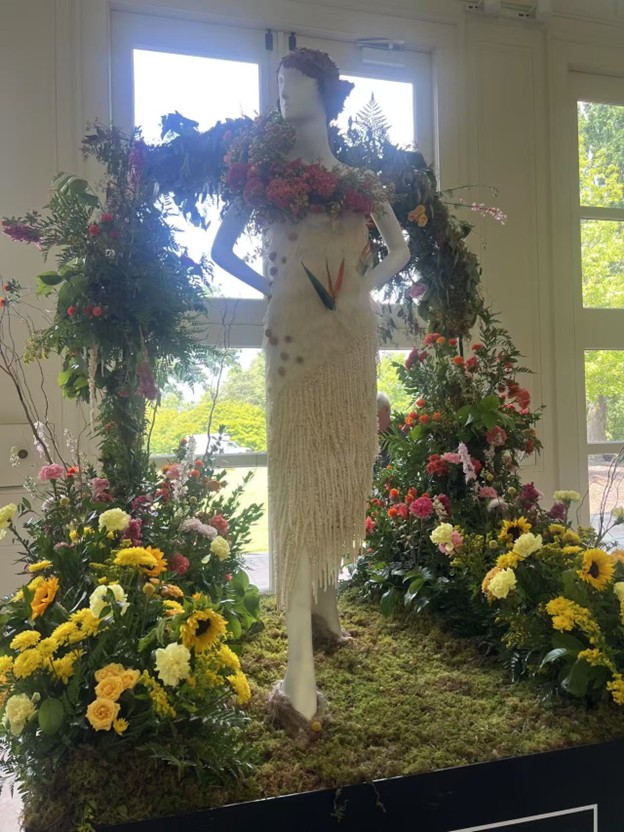
We were greeted by this Goddess of living plants when entering the Visitor Center. From the below photo, can you guess what plant materials were utilized?
| | Next, we moved on to the mansion to see the majority of the works. The last of the installations were housed in the Botanical Hall. We took our time enjoying the displays in both areas. | | |
I was totally dazzled by the scale of each piece of magnificent display and, at the same time, mesmerized by the precise and meticulous arrangement of individual flowers, fresh or dried, at their specific spots, creating vibrant colors and dynamic forms and shapes.
We were lucky to have the opportunity to talk with the designers of these masterpieces. They answered many of my questions. For instance, what plant material made the cream-colored tassels in the flapper dress (below)? The answer – amaranth. It was a labor-intensive process. The florists had to dry it first, then carefully bleach until color completely disappeared. Imagine how much work it involved and how many hours it took to make thousands of these tassels!
| |
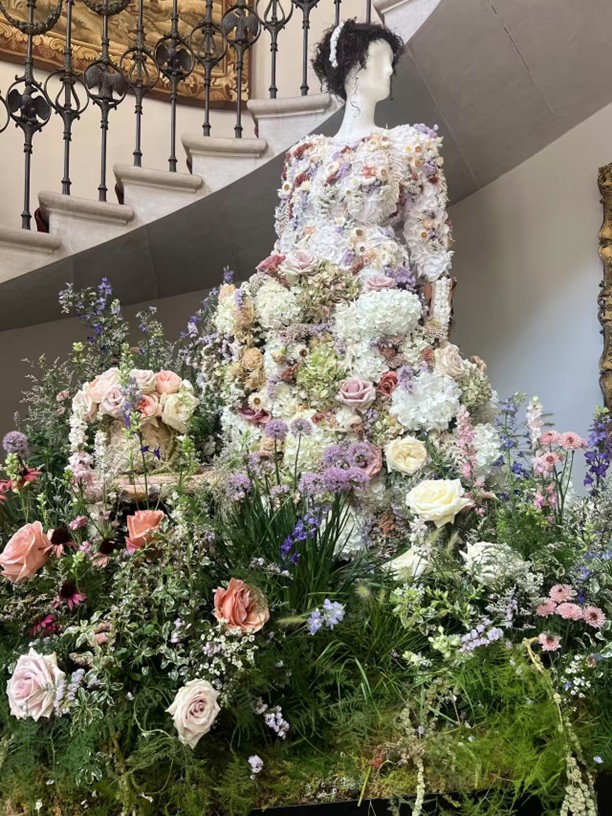
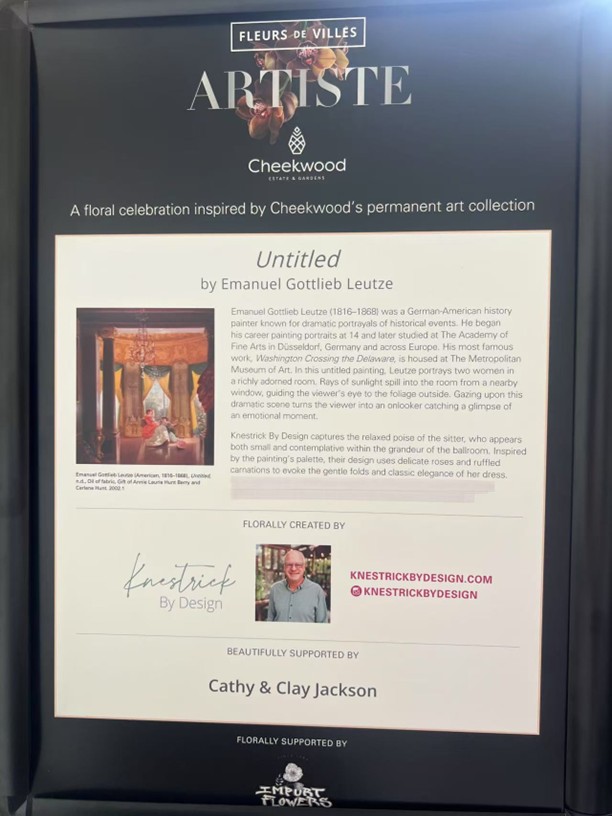
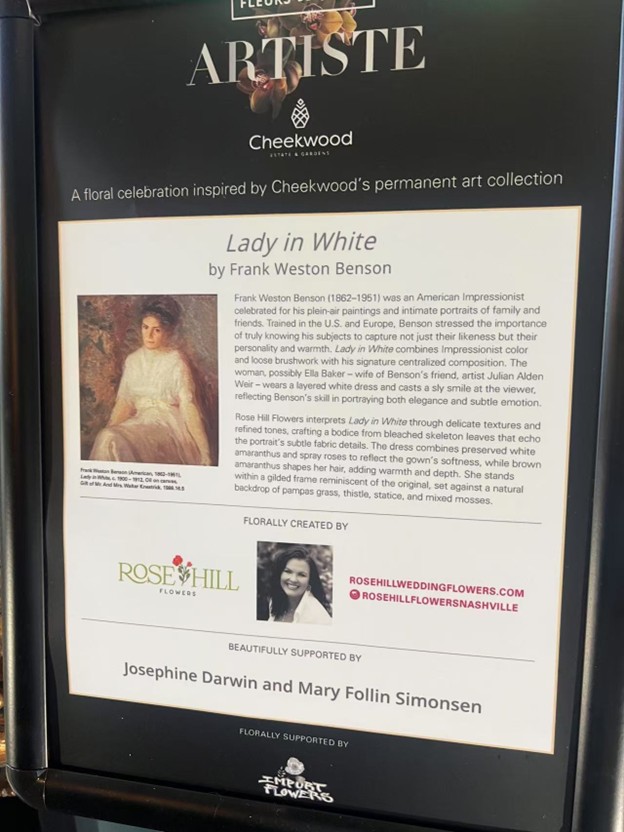
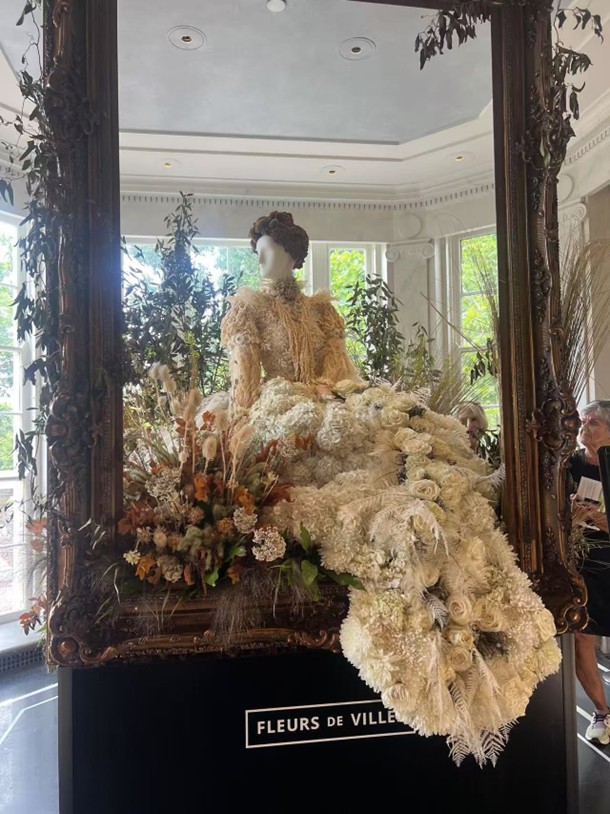
Another aspect that amazed me was that it only took about one month for the floral designers to work from scratch to finished products. Sarah, one of the young artists, told me that they were contacted by Fleurs de Villes in June 2025 to compete among other local florists/floral venders. They were presented photos of oil paintings from the Cheekwood Estate collection and asked to recreate them with fresh flowers and botanical elements. Sarah’s shop was selected as one of the 13 finalists to participate in the August exhibition at Cheekwood Botanical Garden.
What they created was nothing but magical. See Sarah’s work below.
| | |
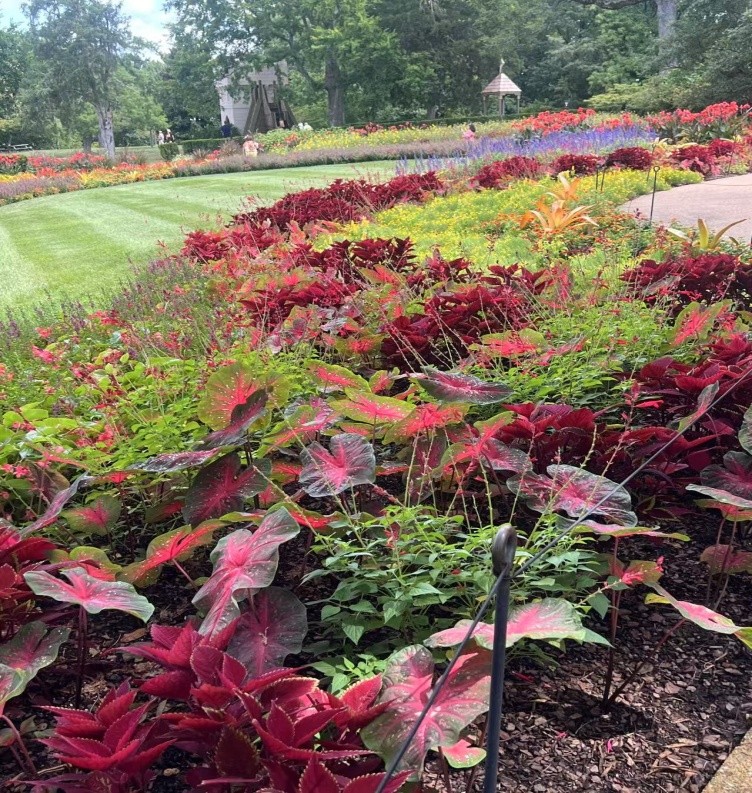
Although a visit to the botanical garden on a hot 95F day with humidity of 70% took some determination, I enjoyed this unforgettable experience. I spent half the day admiring the new level of flower arrangement as well as strolling along the glorious blooming pathways of a Cheekwood summer.
As the organizer put it, such an exhibition is a sensory experience that combines storytelling, fashion, and nature.
| | |
The UT Gardens Annual Membership Drive has begun! Membership is one of the easiest and most effective ways you can show your support for your State Botanical Garden of Tennessee. Membership dollars directly fund operations, programming, and personnel and are vital for continued growth. Whether you choose to affiliate with their Knoxville, Crossville, or Jackson campus, your membership entitles you to terrific benefits. Join today and enjoy the deep satisfaction of supporting the official Botanical Garden of Tennessee!
Learn more about the benefits of membership here.
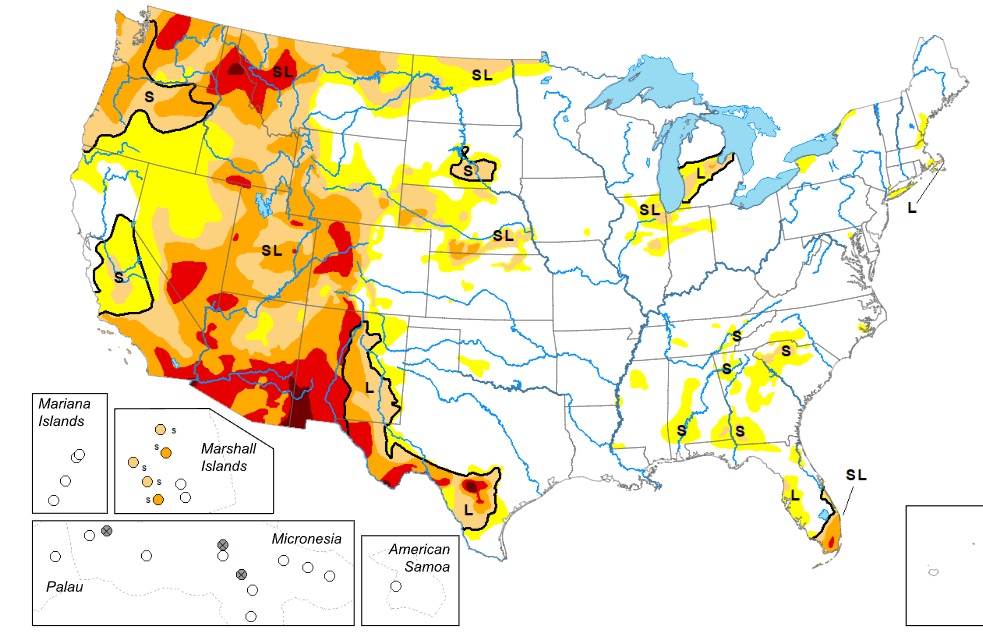
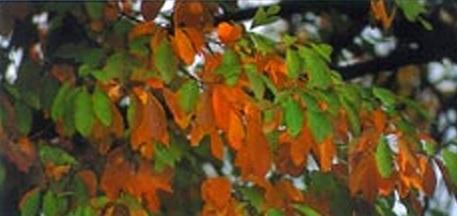
| | Keep your yard and home cooler by planting trees. Learn about drought-tolerant varieties in Publication SP 570. | | |
|
Contact Us
President:
Beth Hannabass
(615) 943-2078
bhannabass@comcast.net
Vice President:
Alison Spackman
(530) 906-3463
alisonspackman@gmail.com
Secretary:
Rachael Ragland
(469) 865-0182
rragland7700@gmail.com
Treasurer:
Amy Burnette
(615) 351-1215
amyb.premier@gmail.com
| |  |
|
Master Gardener Coordinator:
Bob Ary
(615) 384-7936
bobary@utk.edu
Webmaster:
Kathy Doss
(615) 636-5410
toprocktn@gmail.com
Facebook Administrator:
Shawn Herman
(615) 948-4376
buerger48@outlook.com
The Leaflet Editor:
Stacey Haag
(615) 389-4663
binarychick@comcast.net
| | |
Robertson County Master Gardener Association | | | | |