▶▶▶ What's Happening on Beacon Hill ◀◀◀
| | |
Gubernatorial Candidates Address MRA Board
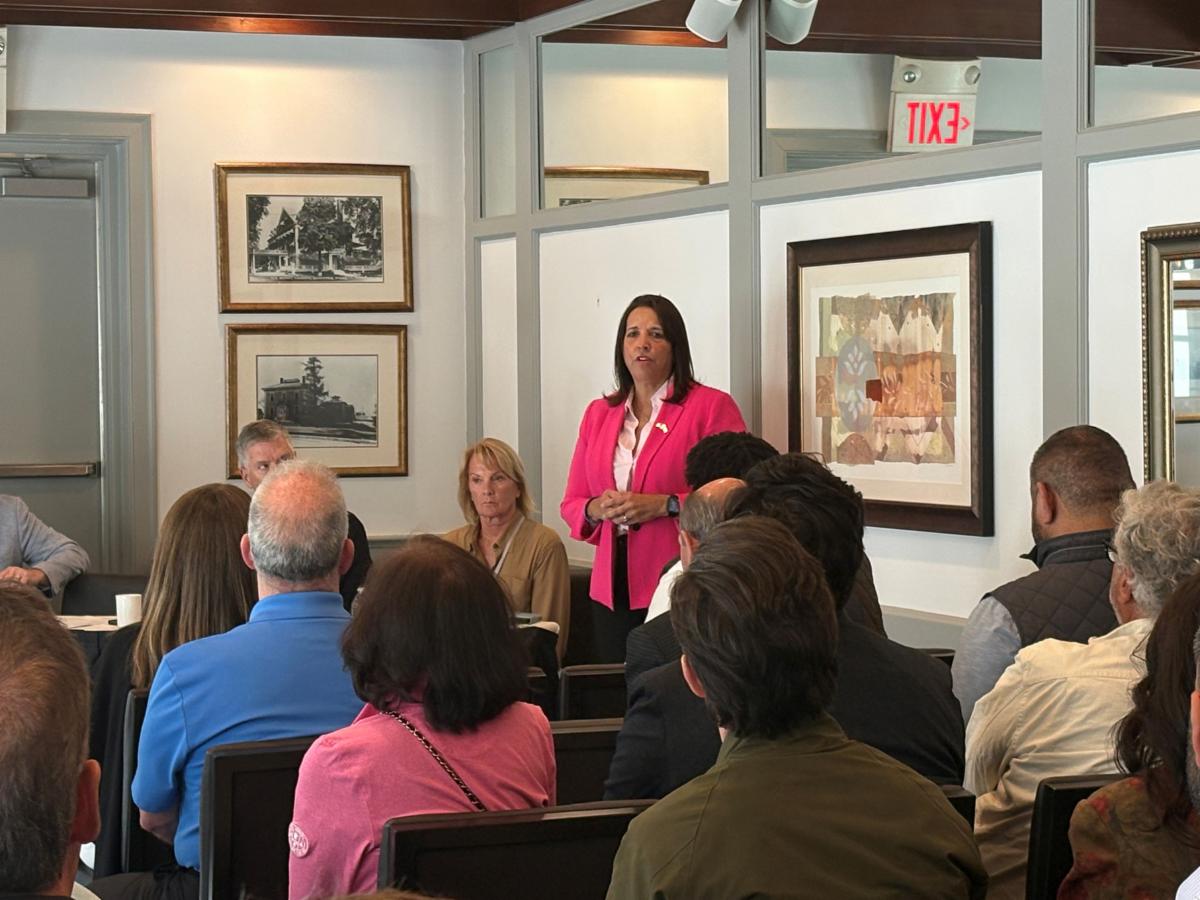
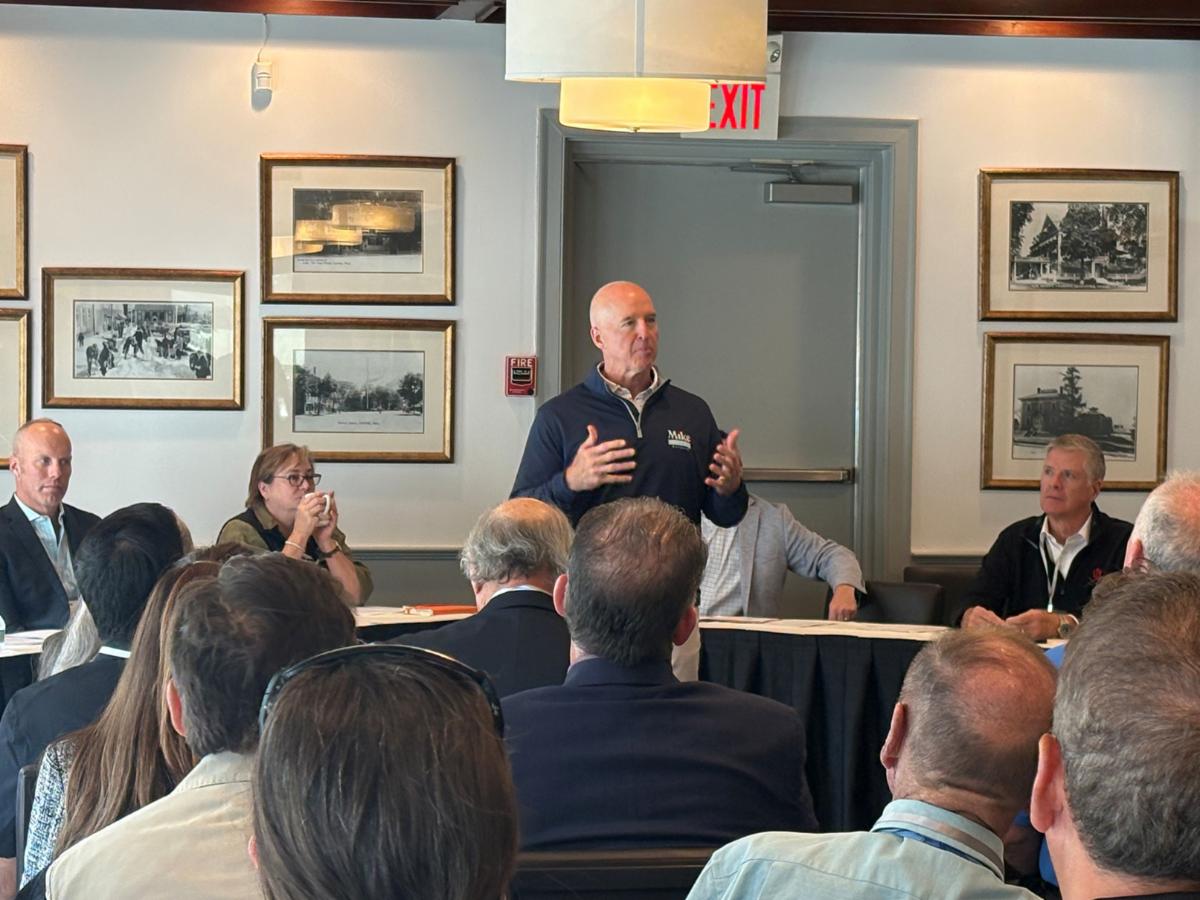
At the MRA Fall Board Meeting, members had the opportunity to hear directly from two candidates: Lieutenant Governor Kimberly Driscoll, the Democratic candidate seeking re-election as Lieutenant Governor, and Republican candidate for Governor Michael Minogue.
Driscoll spoke about several important issues to restaurant owners, including energy costs, credit card processing fees and local options. She discussed the need to address rising energy costs for Massachusetts businesses and highlighted the importance of giving municipalities flexibility to respond to the needs of their communities. For restaurants, local-option policies can have a direct impact on alcohol service, tourism, events and other aspects of business operations.
| | |
Credit card processing fees were also discussed, an issue MRA continues to advocate on, including efforts to prevent processing fees from being charged on sales tax and gratuities.
Minogue discussed his vision for Massachusetts and drew on his experience as a business executive and CEO. He spoke about the challenges of running a business, including the impact of taxes, regulations, energy costs and other rising expenses on employers.
Minogue emphasized that his experience running a company has given him firsthand knowledge of the challenges businesses face and has shaped his approach to leading the Commonwealth. His campaign has focused on affordability, reducing regulations and making it easier for businesses and entrepreneurs to operate in Massachusetts.
| The discussion provided MRA Board members with an opportunity to hear directly from both candidates about their perspectives on issues affecting Massachusetts businesses and the restaurant industry. Energy costs, credit card fees, taxes, regulations and local policies remain important issues for restaurant owners as they plan for the future. | |
Two Critical Bills Head to Conference Committee
As the legislative session moves toward the finish line, two bills are at the top of MRA’s legislative watch list: the Economic Development Bill and the Environmental Bond Bill. Both are currently in conference committee, where House and Senate negotiators are working to resolve differences between the two versions.
Economic Development Bill:
The Economic Development Bill contains several provisions that could directly impact restaurants and bars. MRA is supporting provisions that provide greater flexibility for businesses while monitoring others that could create new costs or regulatory challenges.
| |
MRA supports:
-
Sunday Alcohol Service: Allows alcohol sales beginning at 8:00 a.m. on Sundays, providing greater flexibility for restaurants and supporting brunch businesses.
-
Airport Alcohol Service: Allows airport restaurants to serve alcohol whenever the airport is open, better reflecting modern travel schedules.
-
Social Consumption Districts: Provides municipalities with a local-option tool to establish districts that could support tourism, events, downtown activity and surrounding businesses.
MRA is monitoring:
-
Liquor License Expansion: MRA is concerned that creating additional licenses beyond existing quotas could reduce the value of liquor licenses that restaurant owners have already purchased as significant business assets.
-
Local-Option Happy Hour: MRA is monitoring proposals that would allow municipalities to establish their own happy-hour rules due to concerns about liability, insurance costs, enforcement and creating different alcohol regulations from one community to another.
| |
Environmental Bond Bill:
The House and Senate passed different versions of the Environmental Bond Bill. Several provisions in the Senate version that could affect restaurants were not included in the House version, meaning they are now part of the conference committee negotiations.
Senate provisions we are monitoring include:
-
Rodent Control Restrictions: Would limit the use of certain anticoagulant rodenticides to narrowly defined public health emergencies and short treatment periods. MRA is concerned about limiting restaurants’ ability to effectively manage pests while meeting public health requirements.
-
Utensils Upon Request: Would require single-use utensils, straws and similar items to be provided only when requested by customers, creating potential operational challenges for restaurants and takeout businesses.
-
Black Plastic Ban: Would prohibit the sale and distribution of black plastic food-service ware, requiring affected businesses to identify alternative products.
-
Paper Bag Fee: Would require businesses to charge at least 10 cents for recycled paper bags, with a portion of the fee remitted to the state.
▶ WHAT HAPPENS NEXT? The conference committees will determine the final language of both bills. Provisions included in one chamber’s bill but not the other can be modified, removed or included as negotiations continue. We are actively monitoring both conference committees and advocating for policies that support Massachusetts restaurants, protect existing business investments and recognize the operational realities and costs of running a restaurant. We will continue to provide updates as the conference committees reach agreements and the bills move toward final passage and the Governor’s desk.
| | |
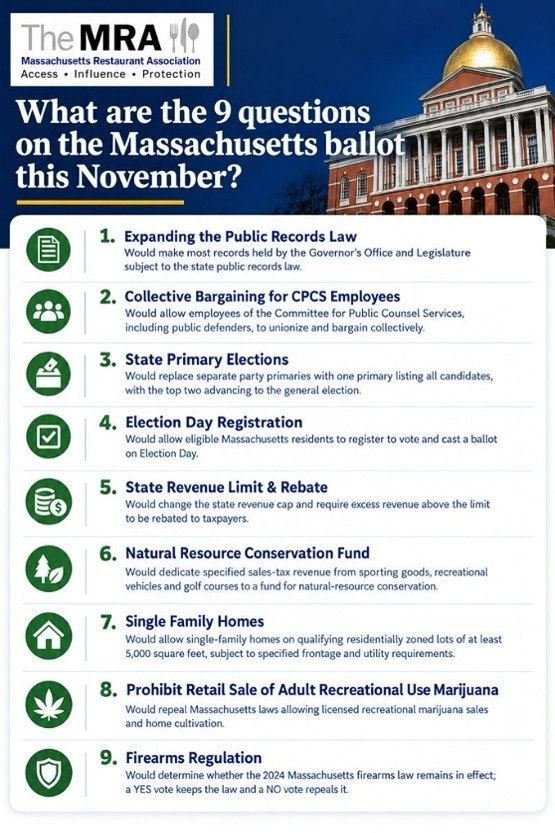
Ballot Questions to Vote on This Fall
Voters have nine statewide ballot questions to consider. Make sure you know what’s on the ballot and are ready to vote this November this fall.
| |
Alpha-gal syndrome - What You Need to Know
Alpha-gal syndrome (AGS) is a serious and potentially life-threatening allergy to alpha-gal, a sugar found in most mammals. AGS can develop after a bite from certain ticks. A person with AGS may react after eating mammal meat or after exposure to other mammal-derived foods or products. Reactions are often delayed and usually begin two to six hours after exposure, which can make the condition difficult to recognize and may lead people to mistake it for food poisoning or another digestive problem.
The Massachusetts Department of Public Health (DPH) has developed two educational documents:
| | |
These materials explain possible triggers and symptoms, why food labels may not provide complete information, how food businesses can respond to customer requests, steps to prevent cross-contact, and what to do during a suspected allergic reaction.
▶DEEPER DIVE: For more information please Click Here.
| |
▶▶▶ What's Happening on Capitol Hill ◀◀◀
| | Penny legislation heads to the White House | |
▶WHAT HAPPENED: The Senate unanimously passed the Common Cents Act, bipartisan legislation the National Restaurant Association helped develop and advance. The bill allows businesses to round cash transactions to the nearest nickel when exact change cannot be provided and protects operators from nuisance lawsuits under federal, state, and local laws when following the new rounding framework.
▶WHAT'S NEXT: With passage in both chambers of Congress, the legislation now heads to the White House for the President's signature before becoming law.
Learn more: Review the National Restaurant Associations Common Cents Act FAQ on cash rounding and the new liability protections.
| |
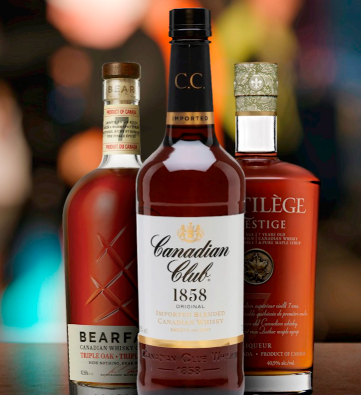
Canada trade dispute escalates as U.S. ban on Canadian beverage alcohol takes effect
▶WHAT'S HAPPENING: The Trump Administrations ban on beverage alcohol took effect earlier this week. Earlier this month, the Toast Not Tariffs coalition, which includes the National Restaurant Association and 58 other organizations representing the beverage alcohol supply chain, urged the Administration to pursue a negotiated resolution that restores market access for American products in Canada and avoids additional trade restrictions.
▶WHY IT MATTERS: The ongoing U.S.-Canada trade dispute is now impacting businesses on both sides of the border. After more than a year of Canadian restrictions on U.S. wine and spirits, a U.S. ban on Canadian spirits and wine further draws restaurants, bars, distributors, and retailers into the conflict. The U.S. wine and spirits sectors generate more than $573 billion in economic activity and support approximately 3.5 million jobs nationwide. Since Canadian provinces removed U.S. wine and spirits from store shelves in March 2025, U.S. spirits exports to Canada have fallen 70%, while U.S. wine exports have dropped 87%.
▶THE BOTTOM LINE: The restaurant industry remains concerned that continued escalation of the dispute will increase costs, complicate supply chains and reduce product availability. The National Restaurant Association and coalition partners are urging both governments to reach a resolution that supports producers, hospitality operators and consumers on both sides of the border.
| United States Senate Confirms New Labor Secretary |
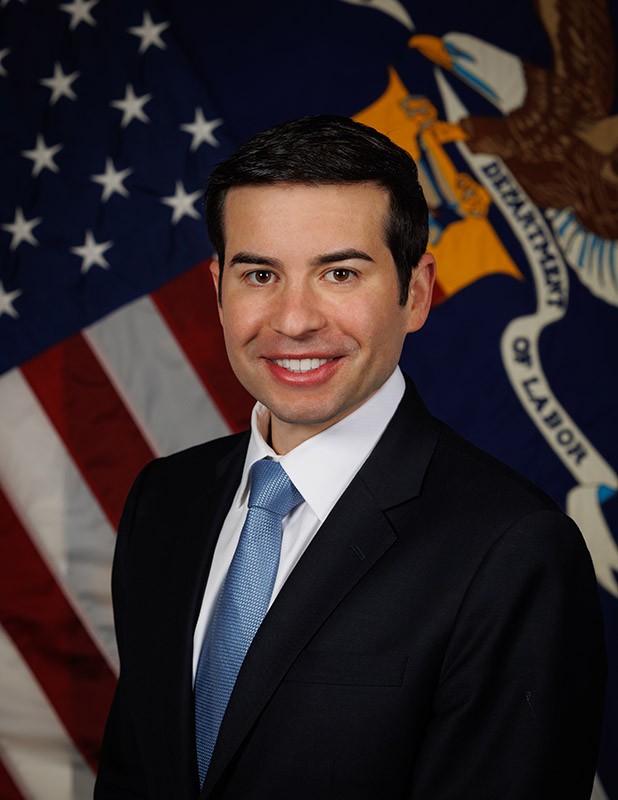
 | | The Senate has confirmed Keith Sonderling as Secretary of Labor on a party-line vote. The National Restaurant Association actively supported his nomination and engaged with Senate offices to underscore the importance of advancing his confirmation before Congress adjourned for the pre-election recess. Secretary Sonderling is widely regarded as a thoughtful and pragmatic labor policymaker, with extensive experience across workforce, employment, and regulatory issues. Throughout his public service, he has developed a reputation for taking a balanced approach that considers both worker protections and employer realities. The Department of Labor plays a significant role in shaping and enforcing policies that directly affect restaurant operators, including wage-and-hour regulations, overtime rules, workforce development, joint employer standards, and other key employment issues. Having a confirmed Secretary in place provides greater certainty and stability as the Department addresses matters that are critical to the restaurant industry.
Click here to learn more about Secretary of Labor Keith Sonderling.
| |
Maximize Your MRA Benefits with MRA's Legal Advice Hotline: Member Access to One-on-One Legal Advice
Remove any uncertainty from the legal and regulatory issues that arise in your hospitality operations. Engage one of our MRA Legal Center law firms that covers all aspects of the issues that arise in your business.
Use your monthly 15-minute complimentary consultation to get guidance from seasoned legal counsel.
To schedule a call with an MRA Legal Partner, please contact Jessica Moore, Director of Government Affairs at 508-573-4191 or email legaladvice@themassrest.org.
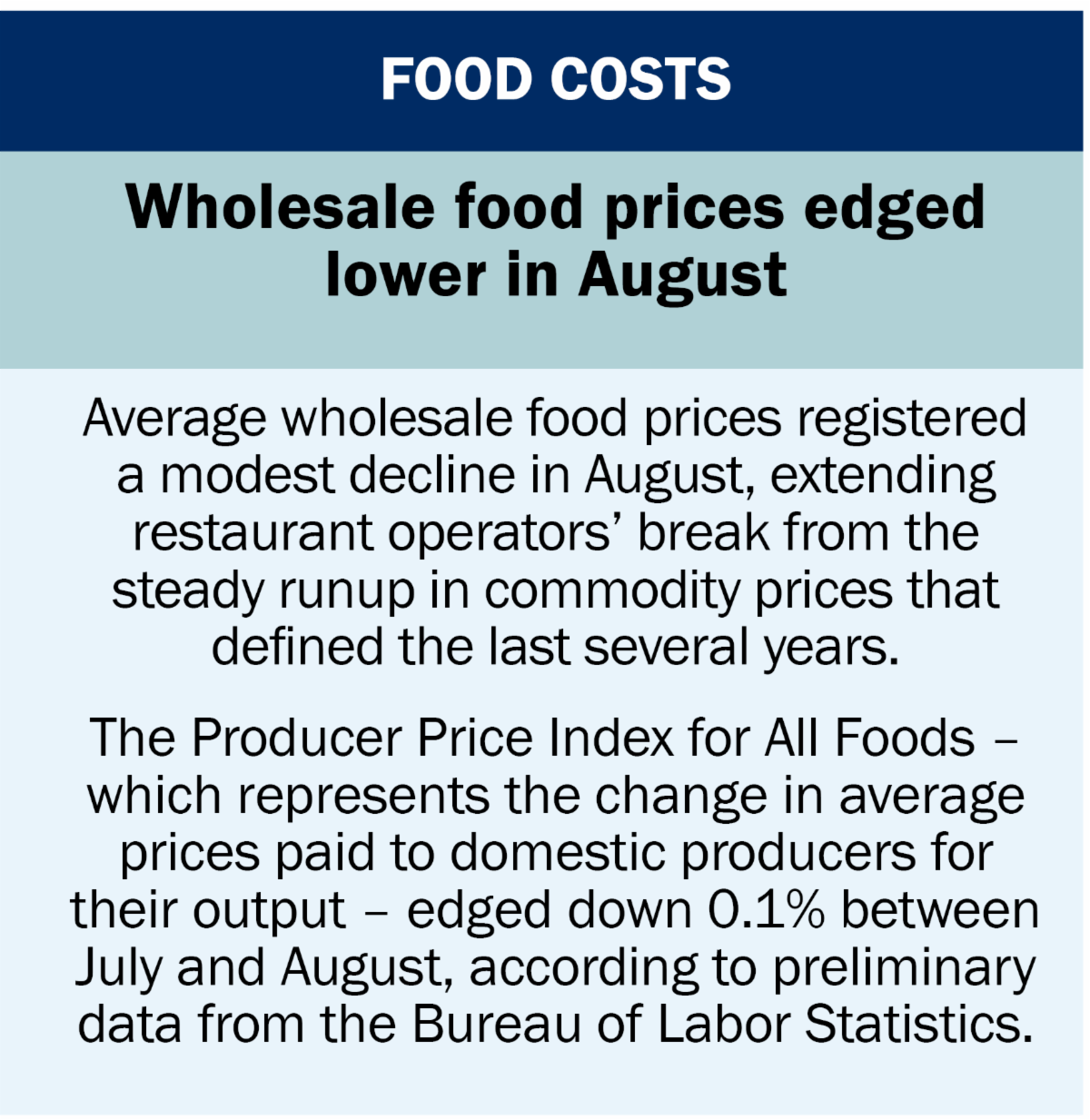
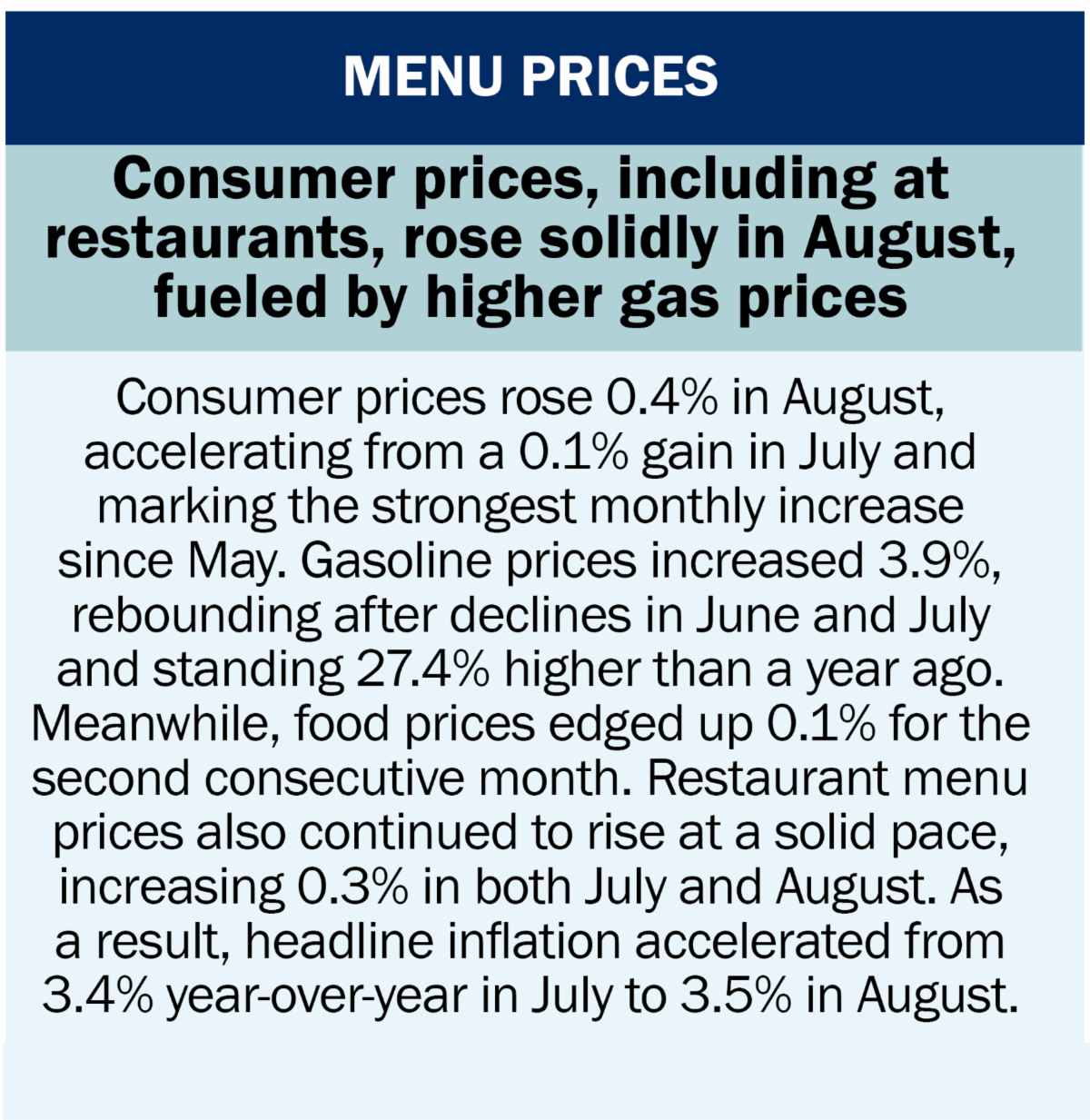
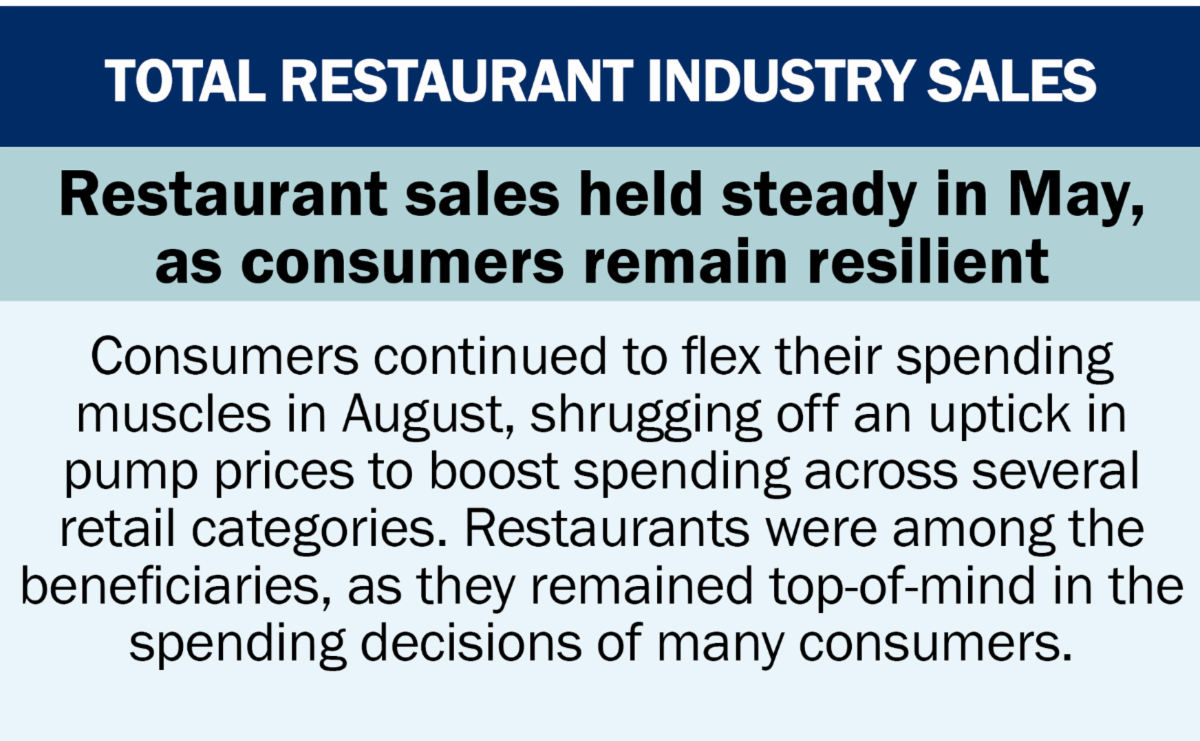
| Current Economic Indicators | | |
Save Your Spot!
Restaurant Leadership Institute Conference: A One-Day Symposium
| | | | |
Join us on
Monday, November 2, 2026
Registration: 8:00AM
Networking Reception: 4:30PM
| | | |
What's Happening on Capitol Hill | |
Massachusetts Restaurant Association
160 East Main Street, Suite 2, Westborough, MA 01581
| | | | |