The Many Identities of Istanbul | | |
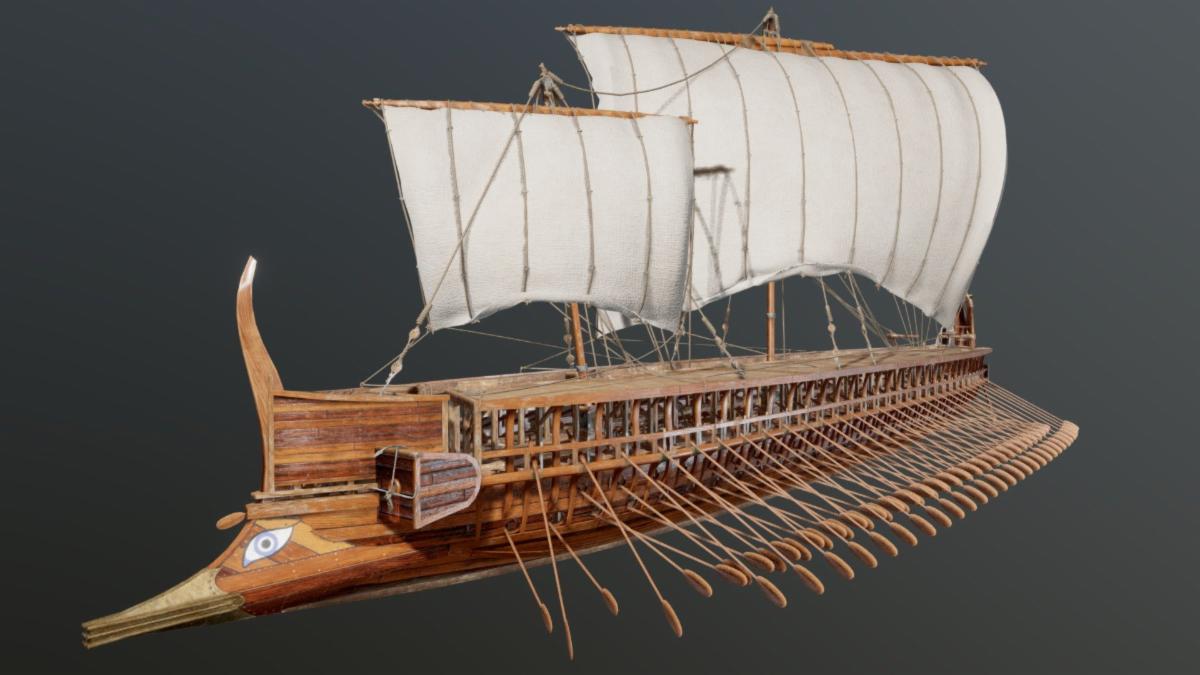
“On the waves of the Sea of Marmara bobbed dozens of Greek triremes. Ahead surged the Bosphorus Straits, famed for dashing vessels against the walls of its rocky cliffs. The sailors shifted their sails and turned to the west into the placid waters of a natural harbor. A short climb up a nearby hill at the tip of the peninsula rewarded them with a breathtaking view of their new home. They stood in Europe, yet just across the strait to the east they could see the shores of Asia.” From the book Istanbul, City of Majesty by Thomas Madden.
They named their settlement Byzantium. The Ancient Greek civilization dominated eastern Europe from 1200 BC until its collapse after the death of Alexander the Great in 323 BC. Greek colonists ventured to nearby lands to establish farms and trade routes to support the empire. In 657 BC, these Greek colonists selected this strategically vital position on the Bosporus Strait for their new home. As narrow as 700 meters, this 30-kilometer-long strait connects Europe and Asia and controls access between the Black Sea and the Mediterranean.
| | |
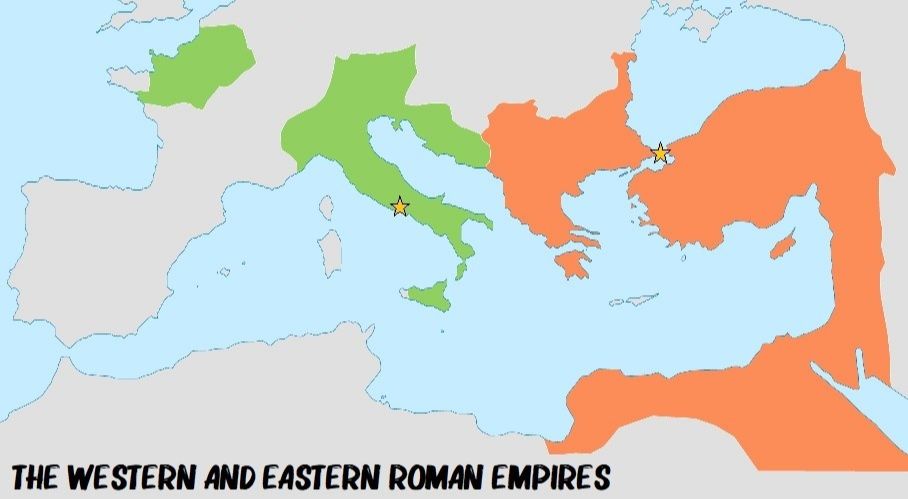
Following the death of Alexander the Great, the Roman Empire began its expansion beyond the Italian Peninsula, eventually claiming Southern Europe, the Middle East, and most of the African territories bordering the Mediterranean Sea. In the third century AD, controlling this empire from Rome became problematic. The emperor Diocletian decided to divide the empire into two sections – east and west – to try to stabilize the empire. The western section collapsed in the fifth century.
| |
The Roman influence on the city was transformative, shaping its political, architectural, and religious foundations. Byzantium, initially a Greek colony, was declared as Nova Roma by Roman Emperor Constantine the Great in 330 AD. It quickly became known as Constantinople, or “City of Constantine.” The emperor intended the city to serve as a "New Rome," a second capital that would embody Roman power and culture in the East. This shift of the imperial center from Rome to Constantinople marked a crucial turning point in the history of the Roman Empire.
As the new capital, Constantinople was designed according to Roman urban models. The city featured wide avenues, forums, monumental columns, aqueducts, public baths, and a hippodrome for chariot races, much like its western predecessor. Notable structures from this period include the Hippodrome of Constantinople, inspired by Rome’s Circus Maximus; the Valens Aqueduct, which brought fresh water to the growing metropolis; and the Column of Constantine, still standing today. These constructions not only served practical purposes but also reinforced the authority and grandeur of the Roman state.
| | |
One of the most significant legacies of Roman rule in Constantinople was the promotion of Christianity. Constantine’s reign marked a major turning point in the Roman Empire’s religious orientation. In 325 AD, Constantine convened the First Council of Nicaea, held in the nearby city of Nicaea (modern İznik, in Turkey).
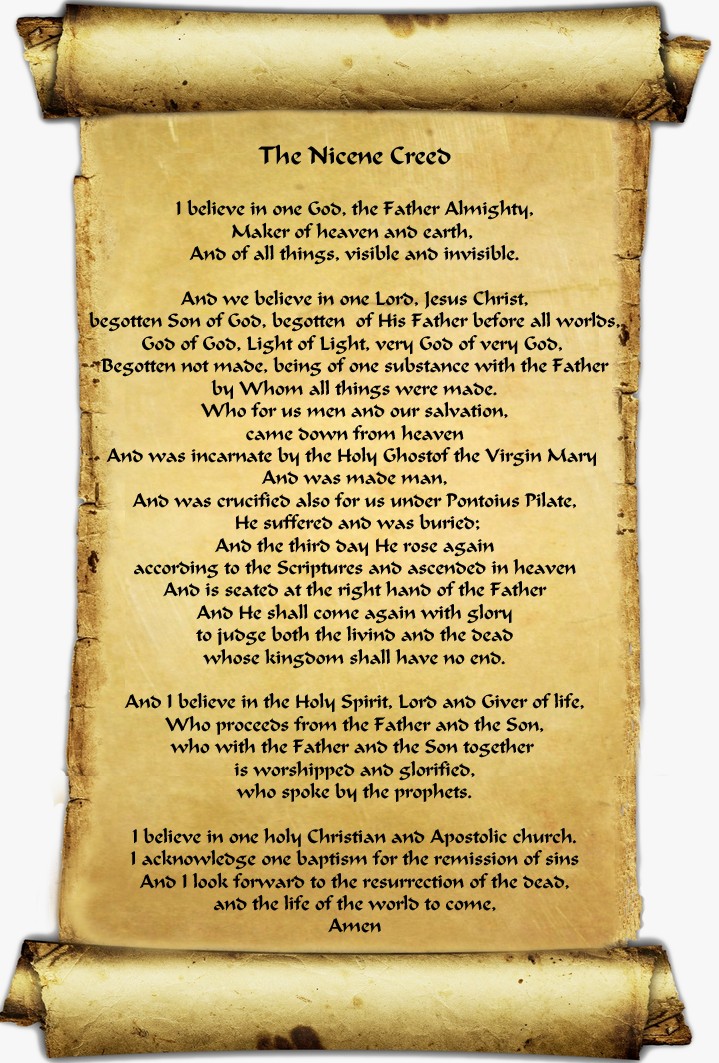
This council was the first ecumenical gathering of Christian bishops and aimed to unify Christian doctrine across the empire. The Nicene Creed, a foundational statement of Christian belief, was established at this council. While the council itself did not take place in Constantinople, it underscored the city’s growing importance as a Christian center and the emperor’s role in church affairs. Constantine also commissioned the construction of churches within the city, including the original Hagia Sophia, solidifying Constantinople’s status as a religious as well as political capital.
| |
The administrative and legal traditions of Rome were preserved and further developed in Constantinople. Latin remained the official language of governance for several centuries, and Roman law and imperial titles such as Caesar and Augustus continued to be used. Over time, these Roman systems evolved into what is now known as the Byzantine Empire, but the inhabitants continued to call themselves Romans (Romaioi) well into the Middle Ages.
Even after the fall of the Western Roman Empire in 476 AD, Constantinople endured as the capital of the Eastern Roman Empire, maintaining a continuous Roman legacy for one-thousand years. Many of Istanbul’s ancient monuments and city planning principles still reflect this deep Roman heritage. The Roman foundation of the city not only established its prominence for over a millennium but also laid the groundwork for its ongoing historical and cultural significance.
In 1453, the Ottoman Turks, led by Sultan Mehmed II, conquered the city, marking the end of the Byzantine Empire. Renamed Istanbul, it became the capital of the Ottoman Empire and underwent significant transformation. The Ottomans built grand mosques, palaces, and bazaars, blending Islamic and Byzantine influences. The city's population grew, and it remained a major center of trade, culture, and governance until the collapse of the Ottoman Empire in the early 20th century.
With the founding of the Republic of Turkey in 1923, the capital was moved to Ankara, and Constantinople was renamed Istanbul. That name, developed in Turkish in the 1700’s, was widely used by the Turks. It is a corruption of the Greek phrase eis tan polu meaning "in the city.” Despite the movement of the capital, Istanbul continued to thrive as the country's economic and cultural heart. Today, it is one of the world’s most vibrant cities, bridging East and West with its rich history, diverse heritage, and dynamic modern development. Istanbul is larger than every major city in Europe with nearly 15 million citizens.
| |
Tours By Locals
I’ve mentioned in other adventure tales that whenever I plan a visit to a new city, I use the website ToursByLocals.com to find a local guide. ToursByLocals has a rigorous recruiting and selection process for the guides on their website. I have never been disappointed. All communication and payments are made through their website. There are more than 130 guides for Istanbul. The website search feature was very helpful in narrowing the number to a handful of guides who were available on my dates and were willing to create a custom itinerary. I sent an email to each, asking for suggestions on how they would use my limited time in the city.
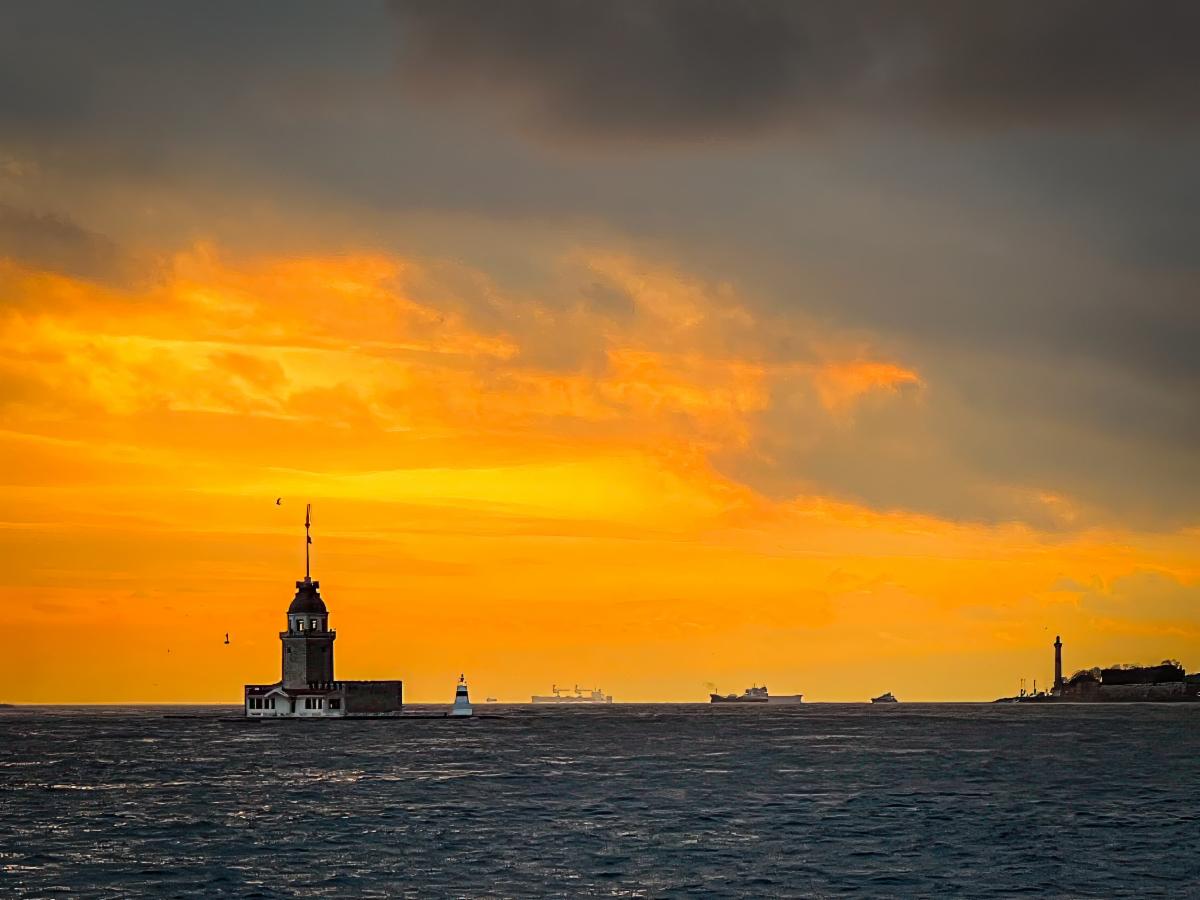
I selected Çiçek (pronounced chee-check) after several back-and-forth exchanges of ideas. We settled on two half-day tours. One in the late afternoon and evening as I wanted to photograph the Maiden’s Tower at sunset. The next day we toured the mosques and grand bazaar. Along the way, Çiçek explained the public transit system, gave me lessons in history, culture, politics and the finer points of bartering for the best price. You can find her guide page here:
Çiçek H.
| | | | |
The Maiden’s Tower is one of Istanbul’s most iconic landmarks, perched on a small islet at the southern entrance of the Bosphorus Strait. Its rich history spans over two millennia, serving various roles from a military outpost to a lighthouse, and it's enveloped in a captivating legend that contributes to its mystique.
-
Ancient Beginnings: The earliest known structure on the islet was built in 408 BC, when Athenian general Alcibiades is believed to have established a customs station to control naval traffic from the Black Sea.
-
Byzantine Era: In 1110 AD, Byzantine Emperor Alexius Comnenus constructed a wooden tower protected by a stone wall. An iron chain was extended from this tower to another on the European shore, controlling passage through the Bosphorus.
-
Ottoman Period: During the Ottoman conquest of Constantinople in 1453, the tower housed a Byzantine garrison. Post-conquest, it served various purposes, including as a watchtower, lighthouse, and quarantine station.
-
Modern Era: The tower underwent several restorations over the centuries, with significant reconstructions in 1725 and the 19th century. After the 1999 earthquake, steel supports were added for reinforcement. Most recently, it was restored and reopened to the public in May 2023.
-
The legend of the Princess and the Snake. A Byzantine emperor, warned by an oracle that his daughter would die from a snakebite on her 18th birthday, built the tower to protect her. Despite his efforts, a snake hidden in a fruit basket brought to the tower bit and killed her, fulfilling the prophecy.
The ferry ride to the Asian side as the sun set in the west was the perfect vantage point for photographing the tower. After the ferry ride, we walked along the promenade as Çiçek pointed out royal palaces and government buildings on the opposite shore. We took the ferry back to the European side as it was dinnertime!
| |
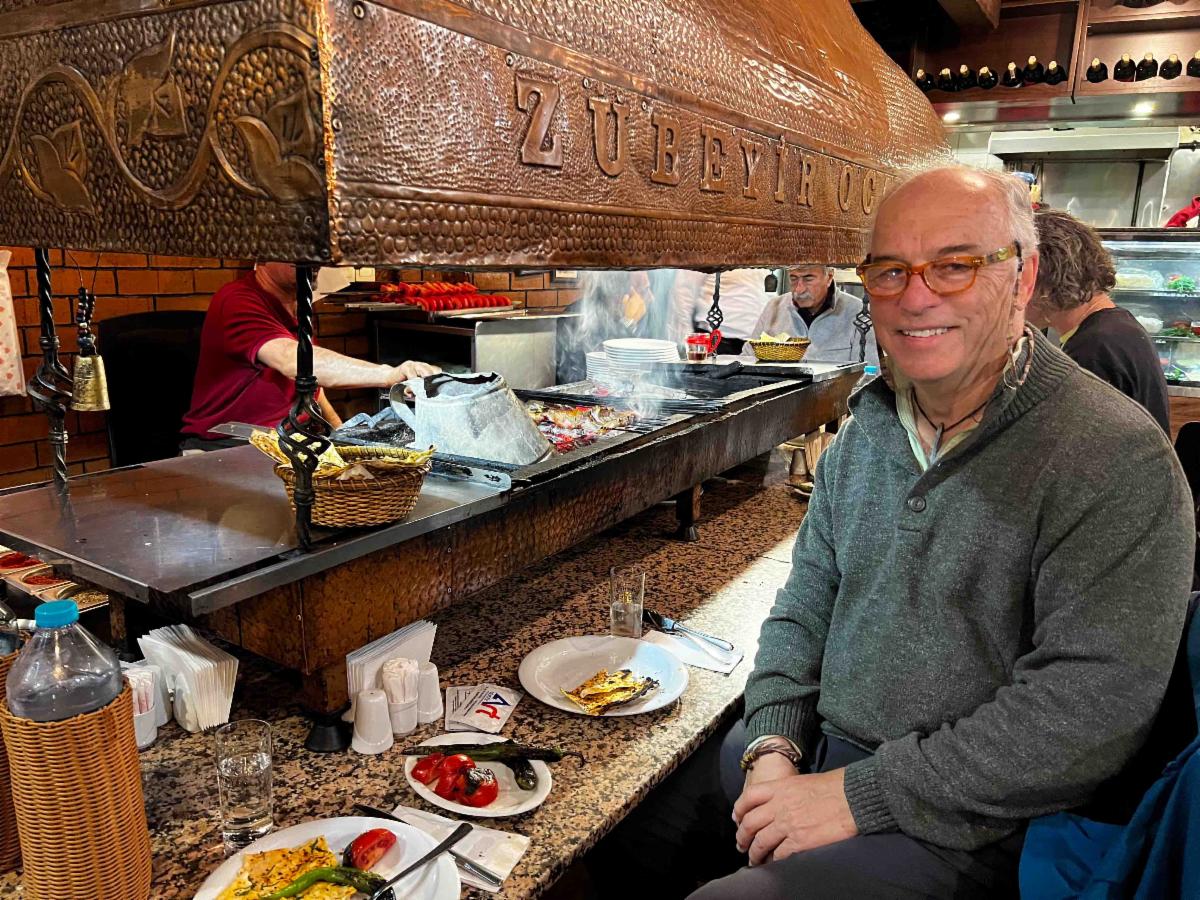
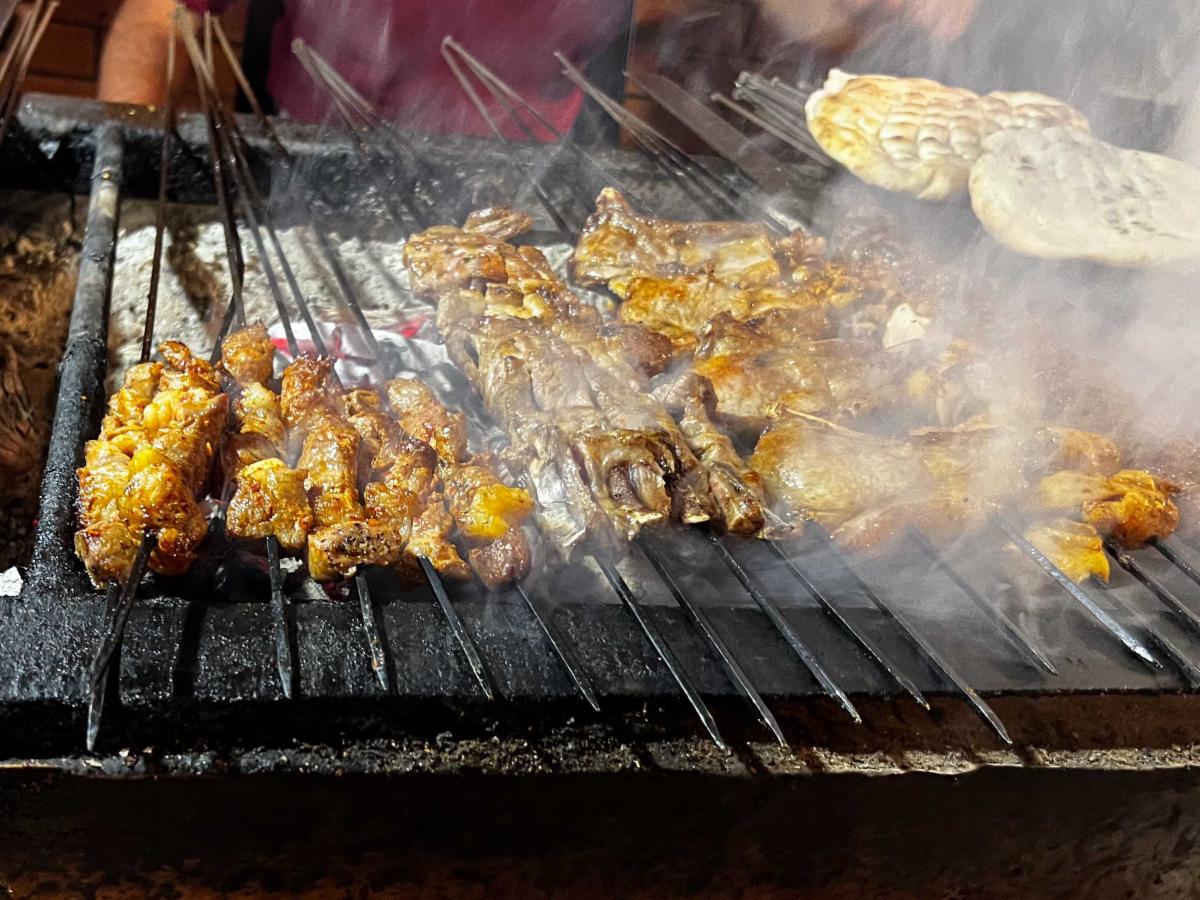
The ocakbaşı style restaurant (literally meaning "fireside" or "grill-side" in Turkish) is a traditional Turkish restaurant concept centered around an open charcoal grill. These restaurants have a deep-rooted history Turkish culinary culture, evolving from simple community grills to popular dining establishments.
| | The concept of ocakbaşı dates back centuries to the time when cooking over an open fire was a daily practice. In villages and towns, communal grilling areas were common, where people gathered around a fire to cook meat, often sharing food and conversation. This practice laid the foundation for modern ocakbaşı restaurants, which emphasize social dining and a direct connection between the chef and guests. | |
During the Ottoman Empire, grilling meat, particularly kebabs, became a refined culinary tradition. By the mid-20th century, ocakbaşı restaurants emerged in major Turkish cities offering a more intimate and interactive dining experience. Unlike standard restaurants, where food is prepared in a separate kitchen, ocakbaşı allows diners to watch the usta (master chef) skillfully grill skewered vegetables and meats like shish kebab and lamb chops while engaging in conversation.
Despite modernization, ocakbaşı restaurants maintain their traditional essence: a lively, fire-lit ambiance; expertly grilled meats and vegetables; and a strong sense of hospitality. They are a cherished part of the Turkish culinary culture.
| |
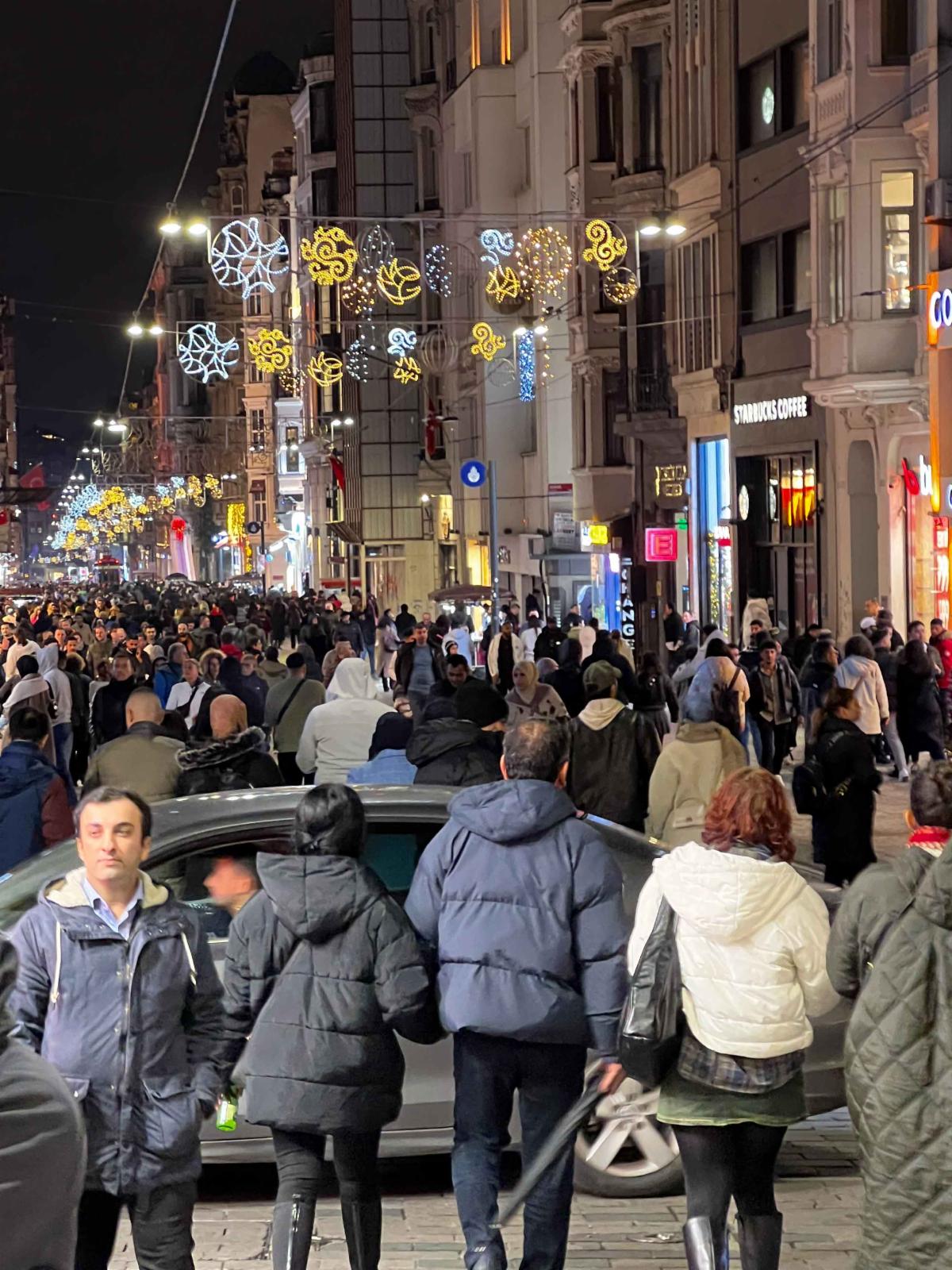
Istiklal Street is one of Istanbul’s most famous and historic avenues. It has been a vibrant cultural and commercial hub for centuries. Located in the Beyoğlu district, it stretches about 1.4 kilometers (0.87 miles) from Taksim Square to Galata, reflecting Istanbul’s diverse history, from the Ottoman era to modern Turkey.
During the Byzantine period, the area around İstiklal Street was relatively undeveloped compared to the walled city of Constantinople. However, with the rise of the Ottoman Empire, the district became a key part of Istanbul’s international and diplomatic scene. In the late 19th century, it was known as "Grand Rue de Péra", a European-style boulevard filled with embassies, churches, theaters, and luxury shops. This period saw a significant European and Levantine influence, as the street became home to French, Italian, and Greek communities, as well as Ottoman intellectuals. Western-style cafés, bookstores, and hotels flourished, making it the cultural heart of the city.
| |
Following the collapse of the Ottoman Empire and the establishment of the Turkish Republic in 1923, the street was renamed İstiklal Caddesi ("Independence Avenue") to commemorate Turkey’s victory in the War of Independence. Despite political and social changes, the avenue remained an important center for shopping, arts, and entertainment.
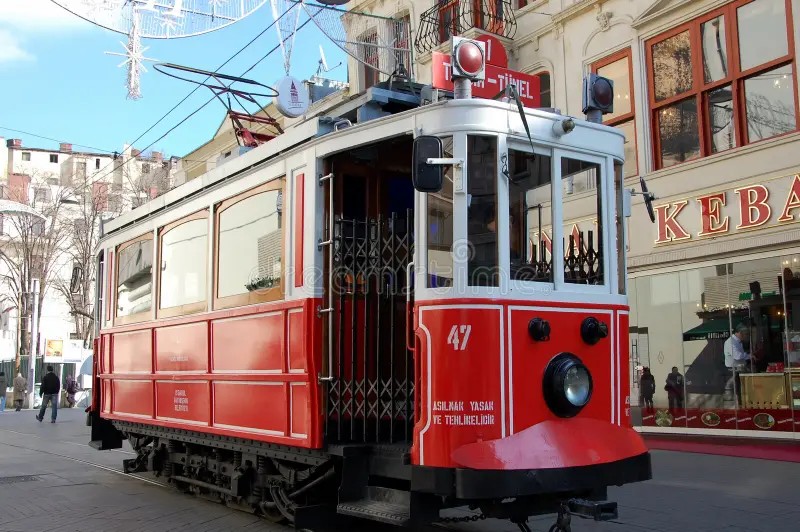
From the 1950s to the 1980s, İstiklal Street faced a period of decline, as rapid urbanization and socio-political unrest affected the area. Many historic buildings were neglected, and once-thriving theaters and cafés began to close. However, in the 1990s and early 2000s, a massive restoration project revitalized the avenue, restoring historical buildings, repaving the street, and reintroducing the red tram, which had originally operated from 1914 to 1961.
| |
Today, İstiklal Street is one of Istanbul’s busiest pedestrian avenues, attracting millions of visitors annually. It is lined with historic buildings, global brands, Turkish boutiques, bookstores, art galleries, cafés, and nightclubs. Landmarks such as the Galatasaray High School, Çiçek Pasajı (Flower Passage), and St. Anthony of Padua Church remain cultural icons. Despite occasional political protests and urban development challenges, İstiklal Street continues to symbolize Istanbul’s fusion of tradition and modernity.
| |
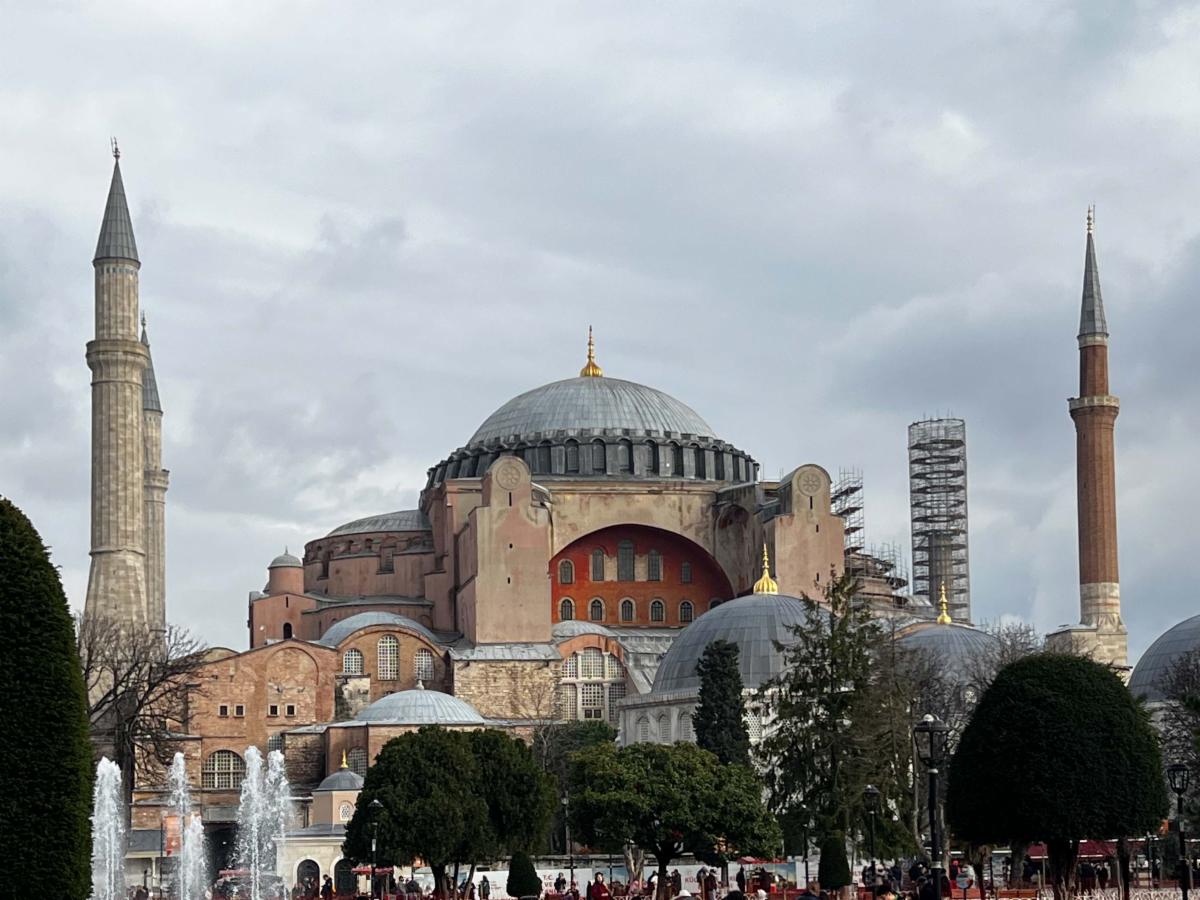
Hagia Sophia in Istanbul is one of the most iconic and historically significant buildings in the world, with a history spanning nearly 1,500 years. It has served as a cathedral, mosque, and a public museum, reflecting the city's dynamic cultural and religious transformations.
The original church on the site was built in 360 AD under Emperor Constantius II, but it was destroyed during riots. A second church, constructed by Emperor Theodosius II, also burned down in the Nika Revolt of 532 AD. In response, Emperor Justinian I ordered the construction of a grand new basilica, which was completed in 537 AD. Designed by the architects Anthemius of Tralles and Isidore of Miletus, it became the largest church in Christendom and a marvel of Byzantine architecture, featuring a massive dome, intricate mosaics, and towering columns. It was the world’s largest interior space and among the first to employ a pendentive dome. For nearly 900 years, Hagia Sophia was the center of the Eastern Orthodox Church and the seat of the Ecumenical Patriarch of Constantinople.
| |
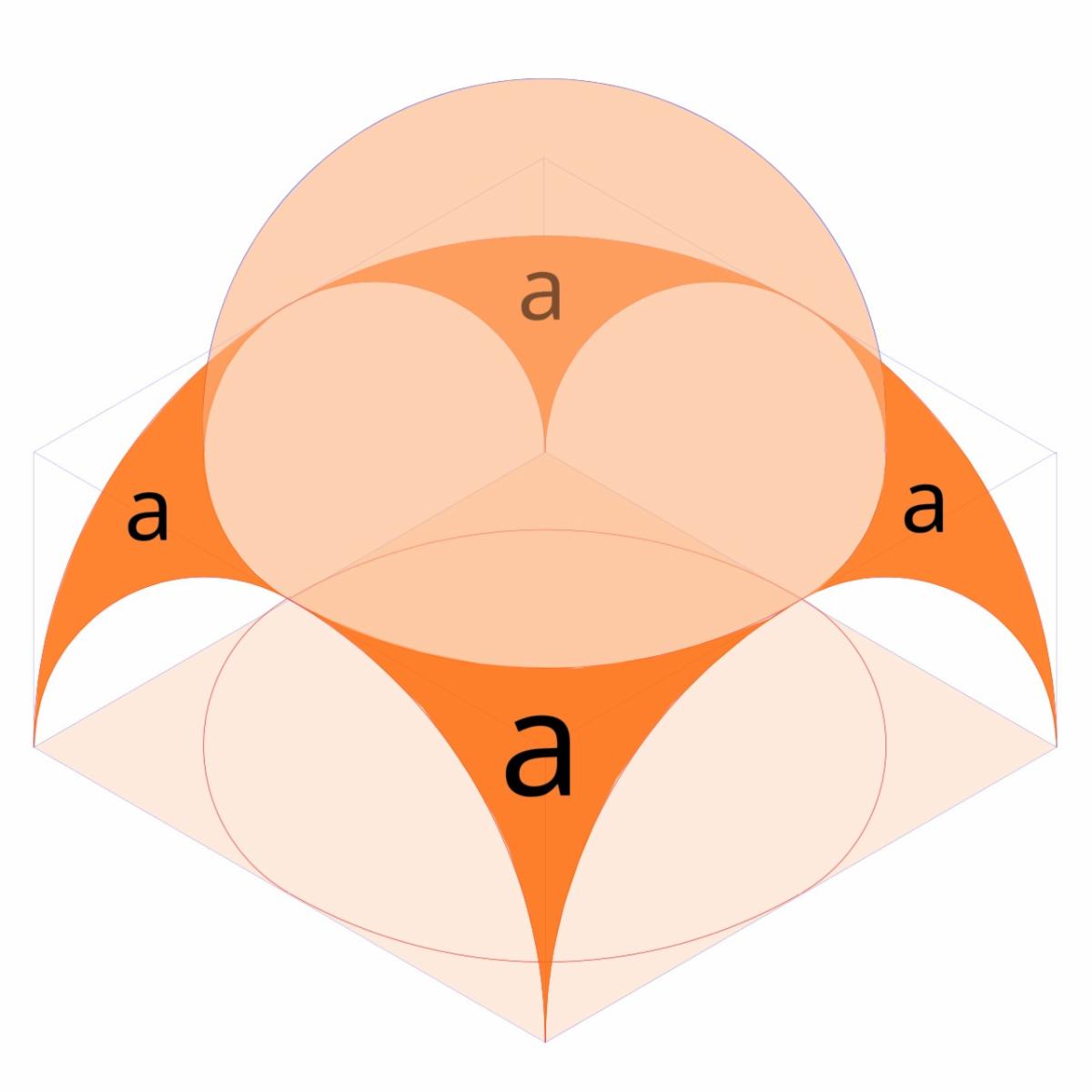
Pendentive Dome
A constructional device permitting the placement of a circular dome over a rectangular room. The pendentives (a) receive the weight of the dome, concentrating the weight at the four corners where it is supported by piers. This method of construction eliminates the need for external buttresses and internal columns, creating a vast interior space.
| | | | |
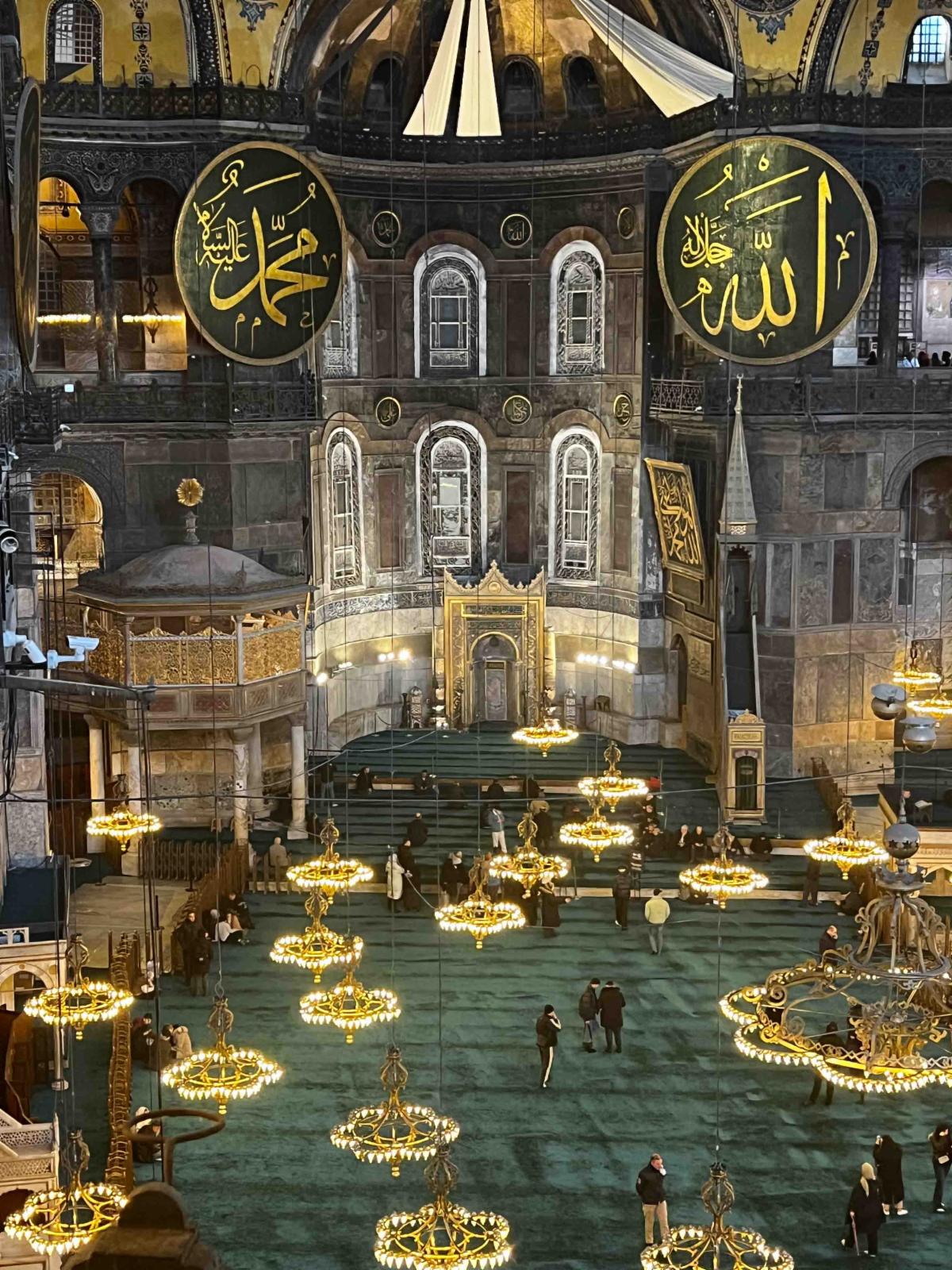
In 1453, when the Ottoman Empire, led by Sultan Mehmed II (Mehmed the Conqueror), captured Constantinople, Hagia Sophia was converted into a mosque. Islamic elements such as minarets, a mihrab (prayer niche), and a minbar (pulpit) were added, while many of the Christian mosaics were either removed or covered. The center of worship was moved a few degrees to the right for proper orientation to Mecca. The building remained one of the most important mosques in the Islamic world and inspired the architectural style of many later Ottoman mosques, including the Blue Mosque and Süleymaniye Mosque.
Following the fall of the Ottoman Empire and the establishment of the Republic of Turkey in 1923, Mustafa Kemal Atatürk transformed Hagia Sophia into a museum in 1935 as part of a secularization effort. This allowed visitors to appreciate both its Byzantine and Ottoman heritage, with restoration efforts uncovering some of the original Christian mosaics.
In July 2020, the Turkish government, under President Recep Tayyip Erdoğan, reconverted Hagia Sophia into a mosque. While it remains open for visitors, it now functions as an active place of Muslim worship, with Christian mosaics covered during prayer times.
Today, Hagia Sophia stands as a symbol of Istanbul’s layered history, embodying the city’s unique blend of Byzantine, Ottoman, and modern Turkish influences. It continues to be a major cultural and religious landmark, drawing millions of visitors each year.
| |
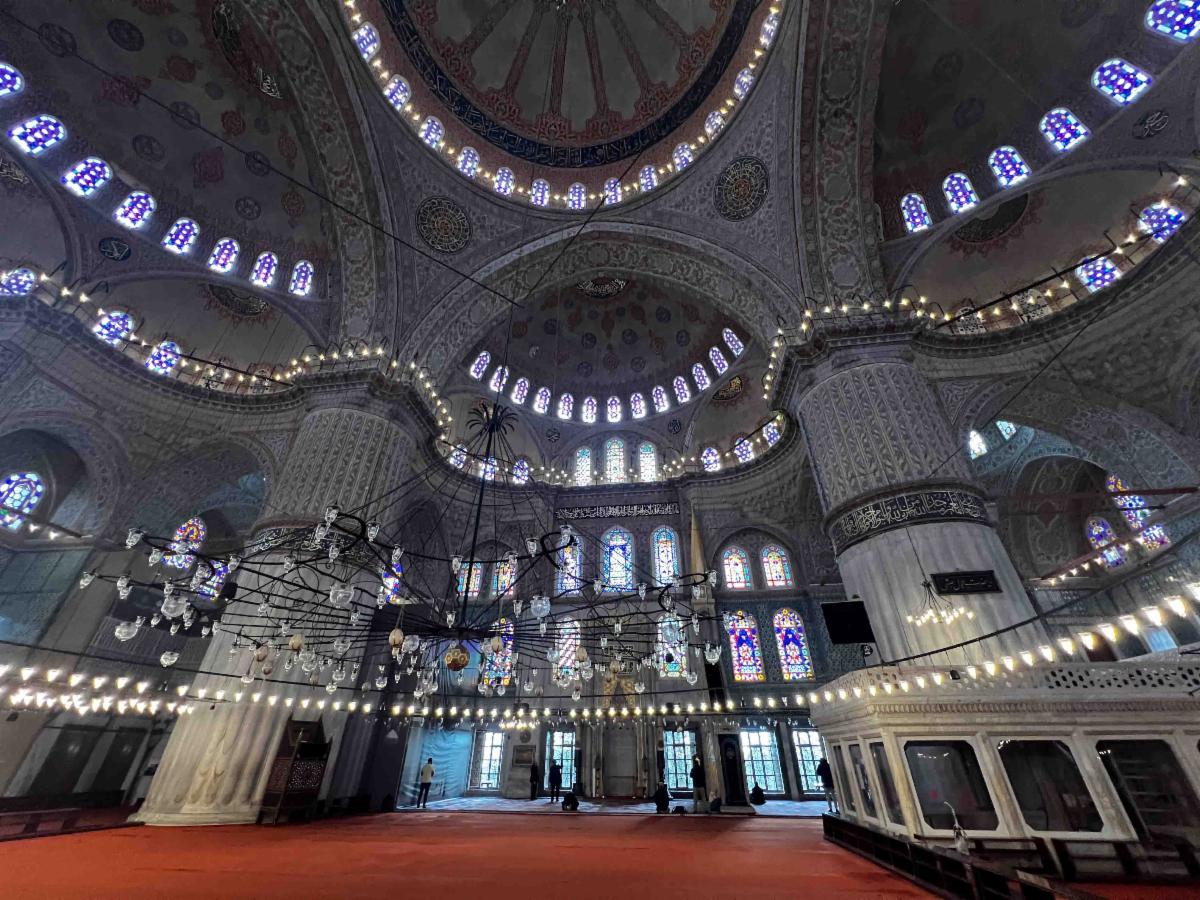
The Blue Mosque, officially known as the Sultan Ahmed Mosque, is one of Istanbul’s most famous landmarks and a masterpiece of Ottoman architecture. Built in the early 17th century, it remains an active place of worship and a major tourist attraction.
The Blue Mosque was commissioned by Sultan Ahmed I, who wanted to build a grand imperial mosque to rival the Hagia Sophia and reinforce Ottoman power. Construction began in 1609 and was completed in 1616.
| | |
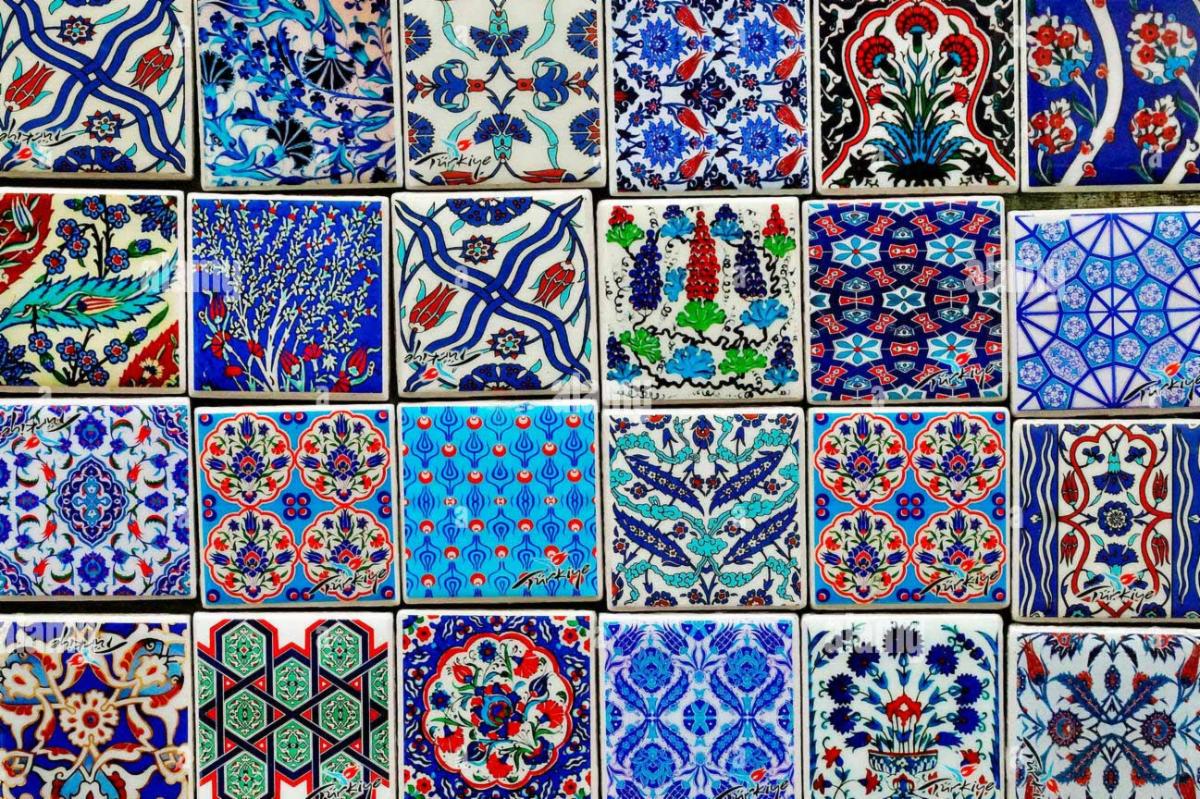
The mosque is renowned for its six minarets, an unusual feature at the time, as most had four or fewer. The interior is adorned with over 20,000 İznik tiles, primarily in shades of blue, which give the mosque its popular name, the "Blue Mosque." These hand-crafted ceramic tiles are manufactured in the city of Iznik and feature intricate floral and geometric designs, reflecting classic Ottoman artistry. The mosque’s huge dome (43 meters high and 23.5 meters in diameter) is supported by four massive pillars known as "elephant feet", creating a sense of grandeur. Stained-glass windows, Arabic calligraphy, and an elegant mihrab (prayer niche) further enhance its beauty.
The Blue Mosque was not just a place of worship but also part of a larger complex which included a school, hospital, market, and tomb of Sultan Ahmed I, who died at the age of 27, shortly after its completion.
Today, the Blue Mosque remains an active mosque, requiring visitors to respect prayer times. Despite being damaged in earthquakes and undergoing multiple restorations, it continues to be a symbol of Istanbul’s Islamic heritage, attracting millions of visitors annually. Its location, opposite Hagia Sophia, represents Istanbul’s unique blend of Byzantine and Ottoman influences.
| |
| |
Casa Foscolo Hotel
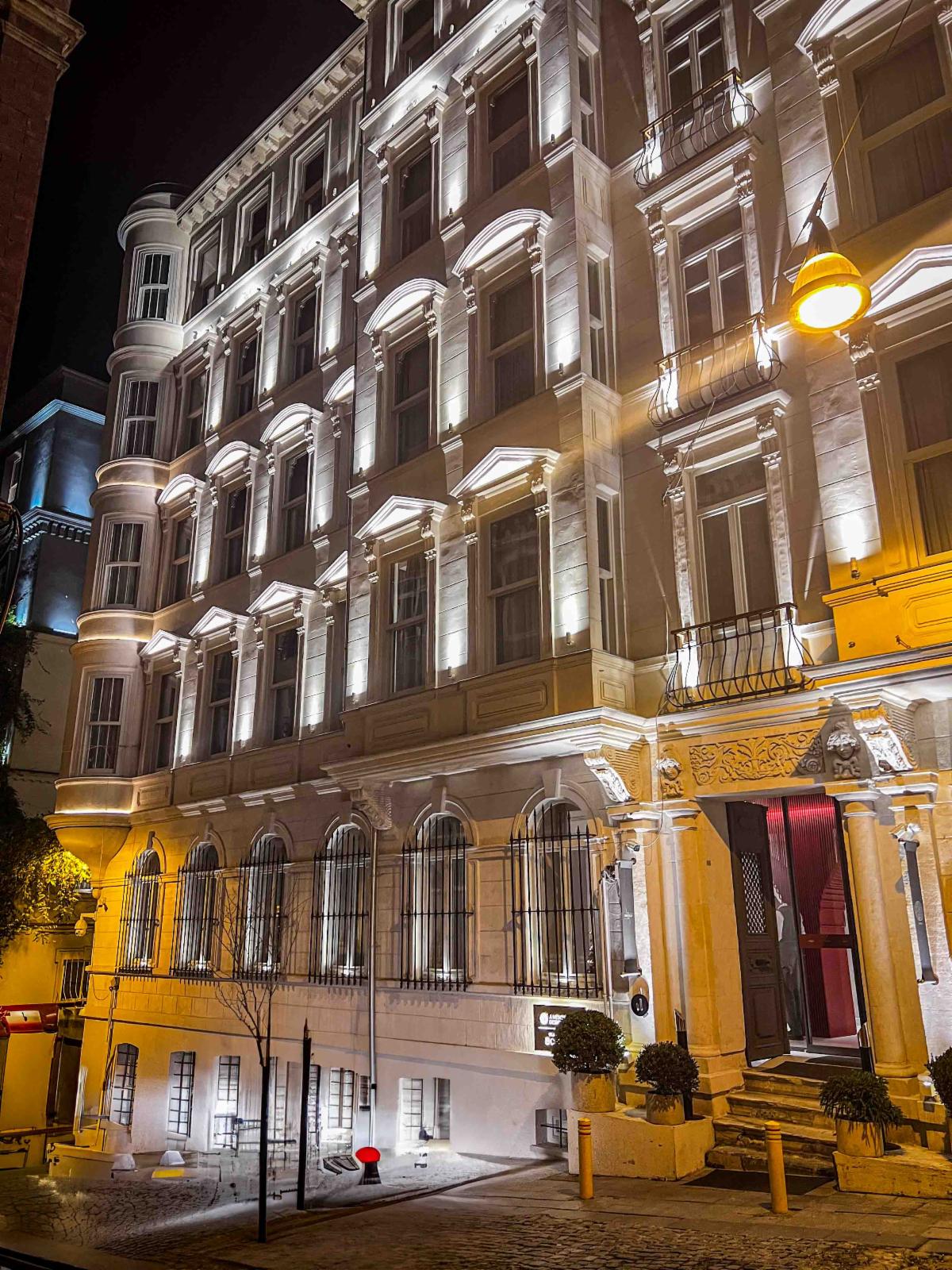
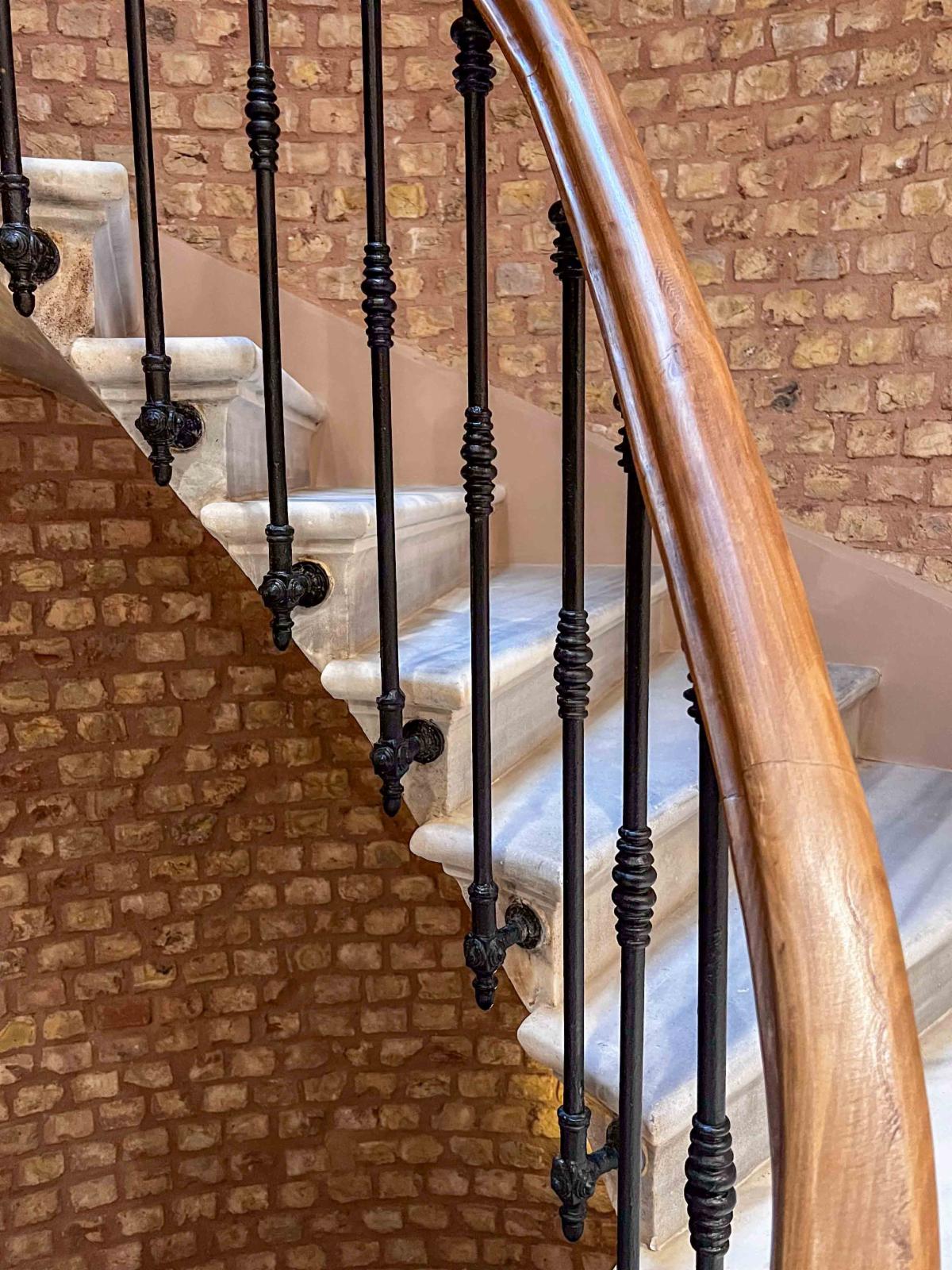
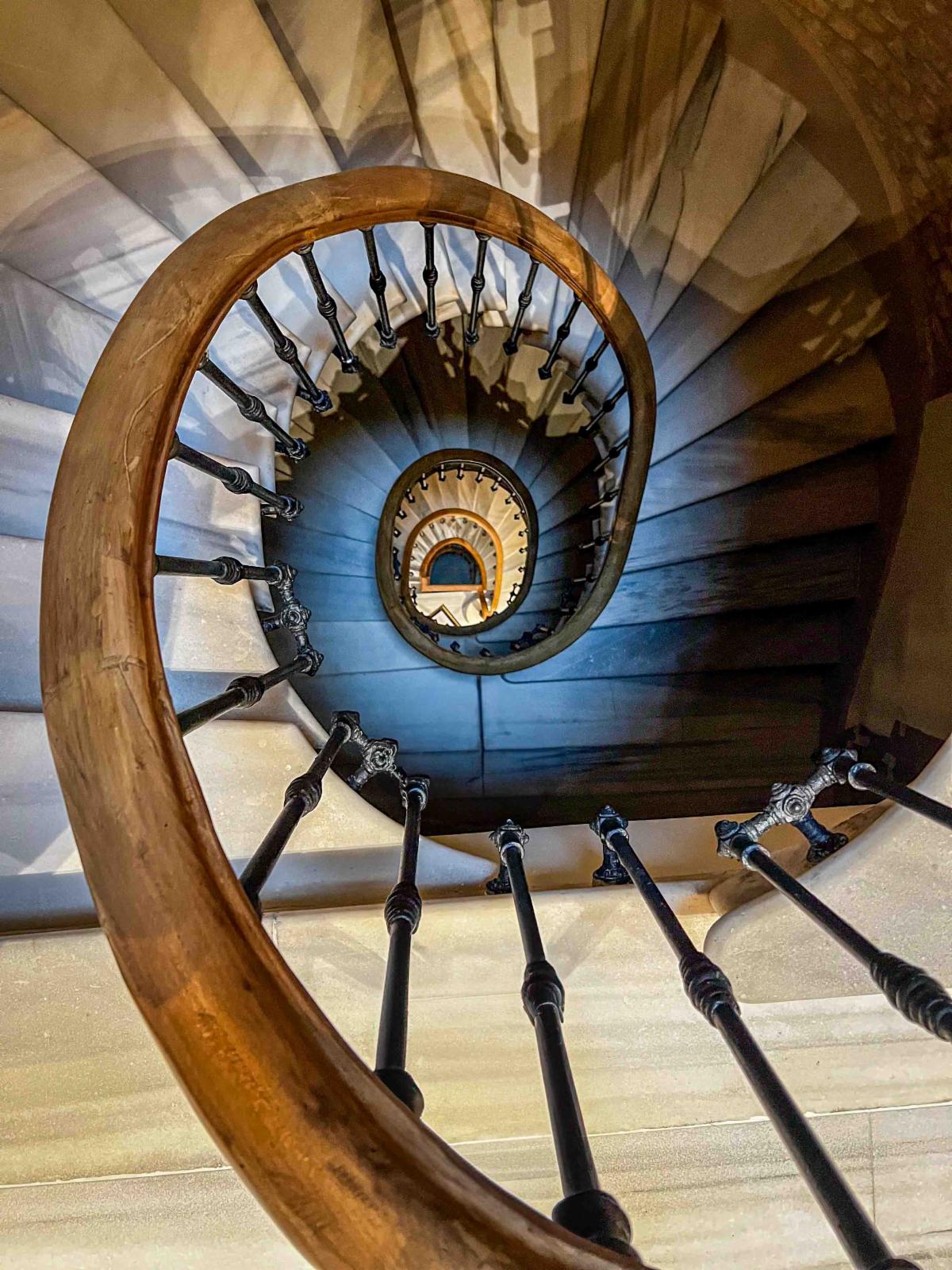
I stayed at this small boutique hotel located in Beyoğlu, one of Istanbul’s oldest and most central neighborhoods. Built in the early 1900s by the Venetian Foscolo family for their maritime business, it still retains its neoclassical architecture, which has been thoughtfully restored. Inside, the mix of brick, travertine, pastel colors, marble, and ceramic details gives the place a calm, historic feel without being overly polished.
Link
| | | | |
The hotel also displays artwork throughout the space, which adds a gallery-like touch. It’s now part of the Marriott Bonvoy collection of boutique hotels.
Each of the eighteen rooms is tastefully decorated with artwork, comfortable linens, and the luxury amenities found in Bonvoy properties.
| | The hotel had only been open for a few weeks when I arrived. The taxi driver hadn’t heard of it, and the address I gave him was a bit confusing. He pulled over a couple of times and asked local pedestrians for directions. The last helper simply turned around and pointed, “It’s there,” he said. We both laughed. The desk and service staff were delightful and very obliging throughout my stay. | | |
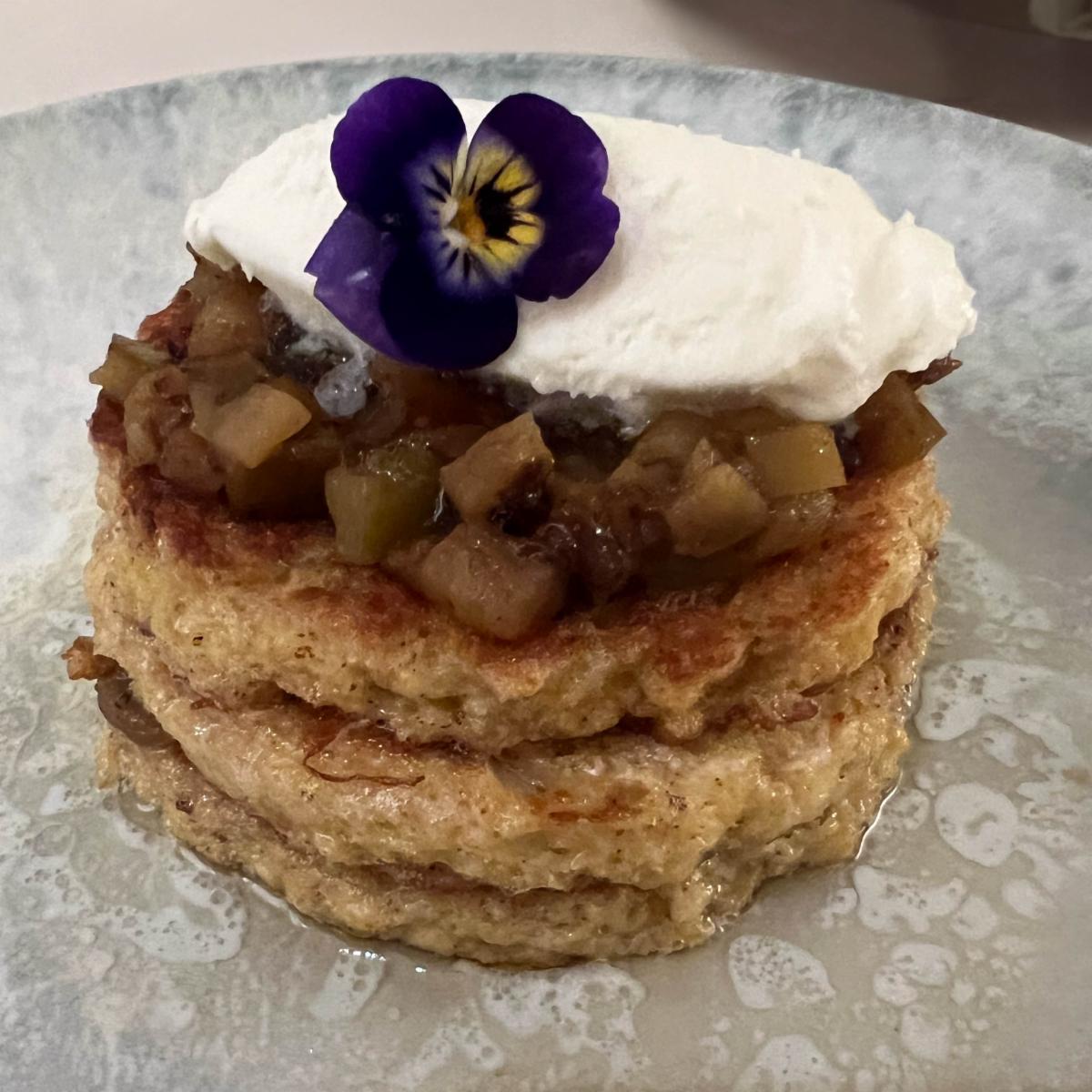
The al-a-carte breakfast menu included this delicious French toast.
I enjoyed it every morning along with several cups of the rich Turkish coffee.
Fully sugared and caffeinated, I set out primed for the adventures of the day.
| | |
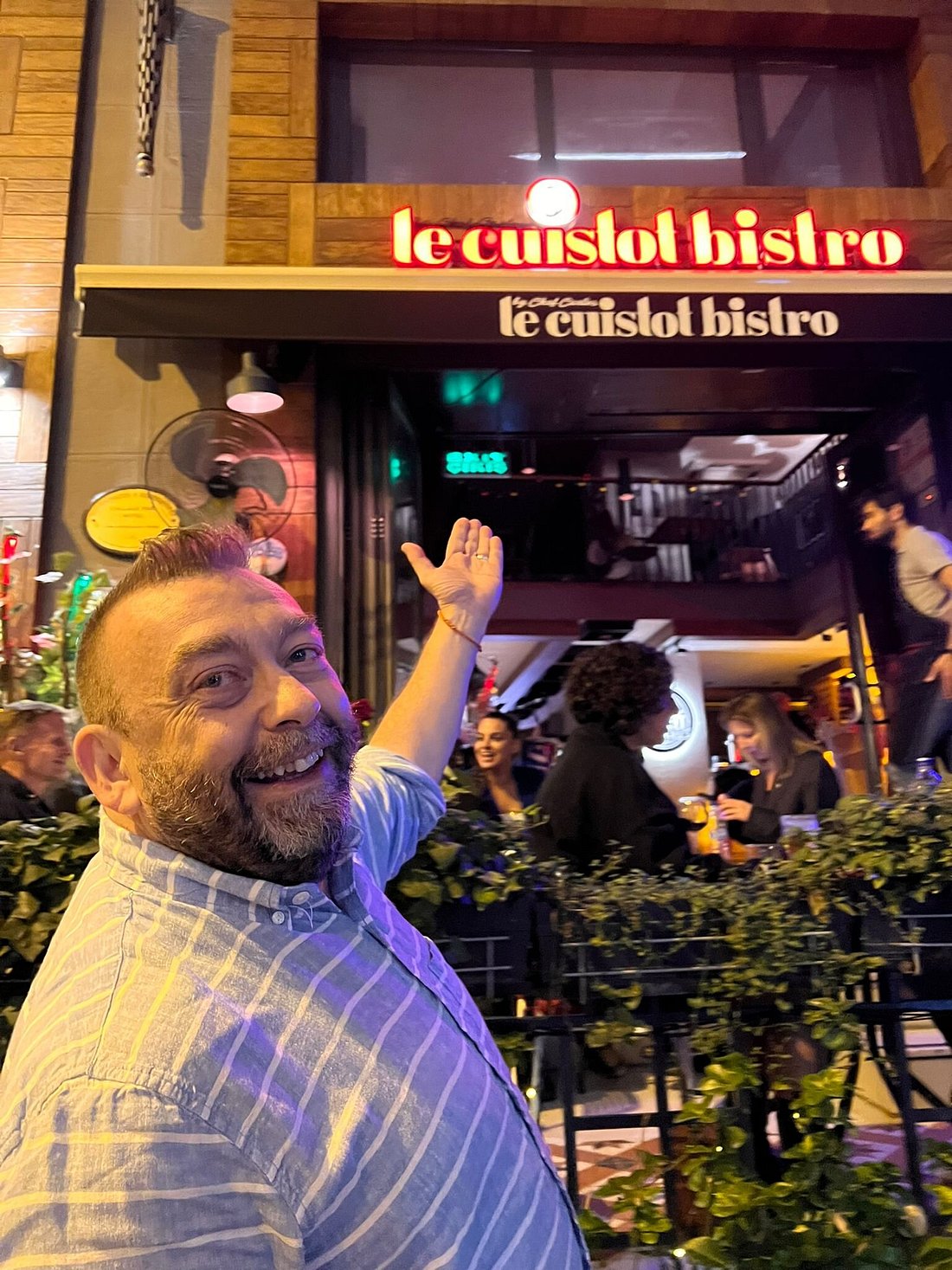
Le Cuistot Bistro by Chef Carlos is just down the block from the hotel. On my last night in Istanbul, I feasted on Osso Buco served over pureed potatoes with Crème Brulé for dessert.
The meal was as delightful as Chef Carlos who spent several minutes speakinig with each guest. I promised I'd mention his restaurant. When you visit Istanbul, be sure to say hi for me.
| | |
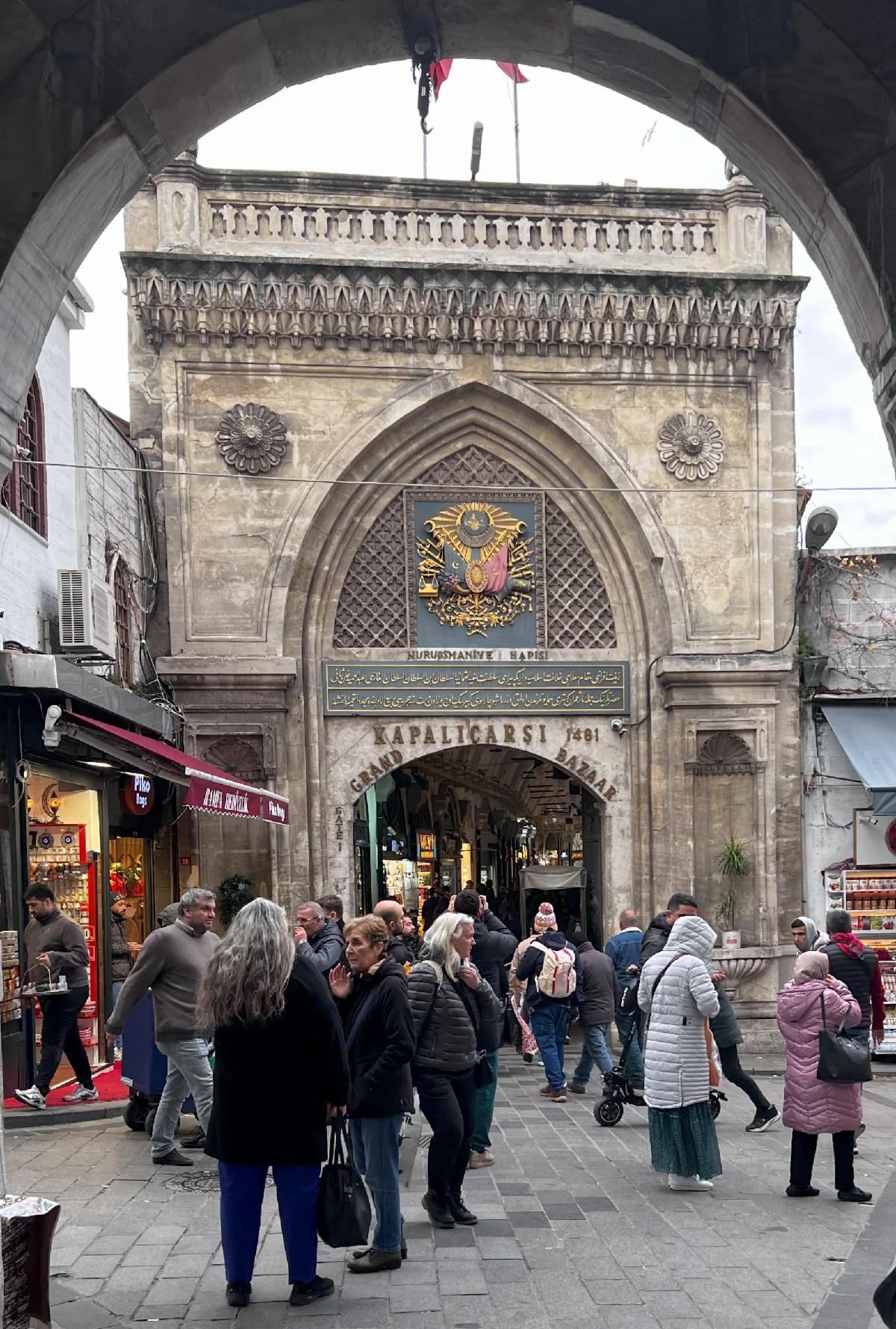
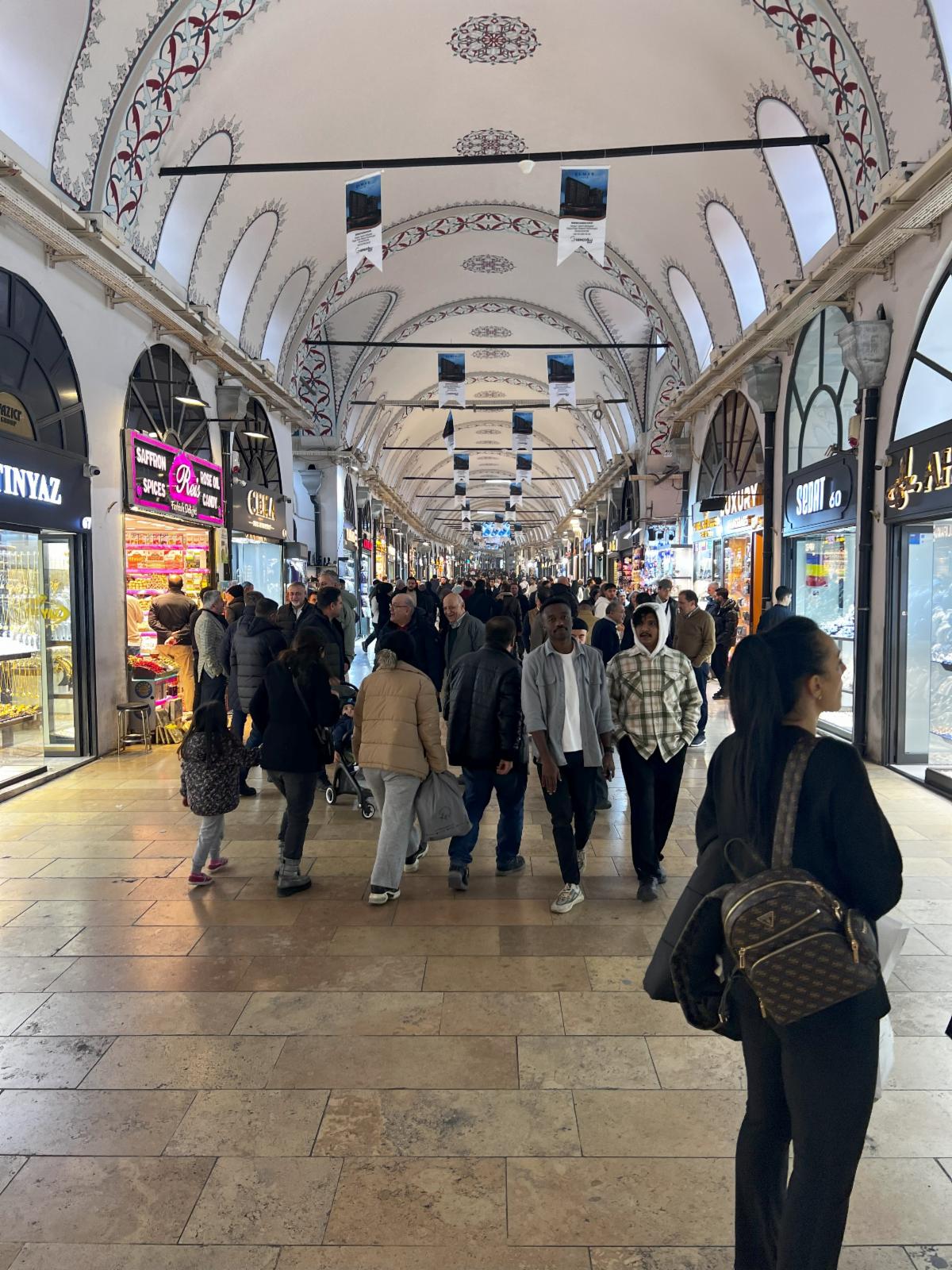
The Grand Bazaar is one of the oldest and largest covered markets in the world, with a history spanning over five centuries. A symbol of Istanbul’s commercial and cultural heritage, it has been a bustling center of trade since the 15th century.
The rooftop of the bazaar was featured in a dramatic motorcycle chase scene in the James Bond thriller SkyFall in 2012. However, when I visited the bazaar, I didn’t hear any motorcycles racing on the roof.
The Grand Bazaar’s origins trace back to 1455, shortly after the Ottoman conquest of Constantinople. Sultan Mehmed II (Mehmed the Conqueror) ordered the construction of a covered market near Hagia Sophia to stimulate economic growth. Initially, it was a small trade center where merchants sold textiles, jewels, and valuable goods. Over time, additional buildings and shops were added, expanding the marketplace into a massive commercial hub.
| | |
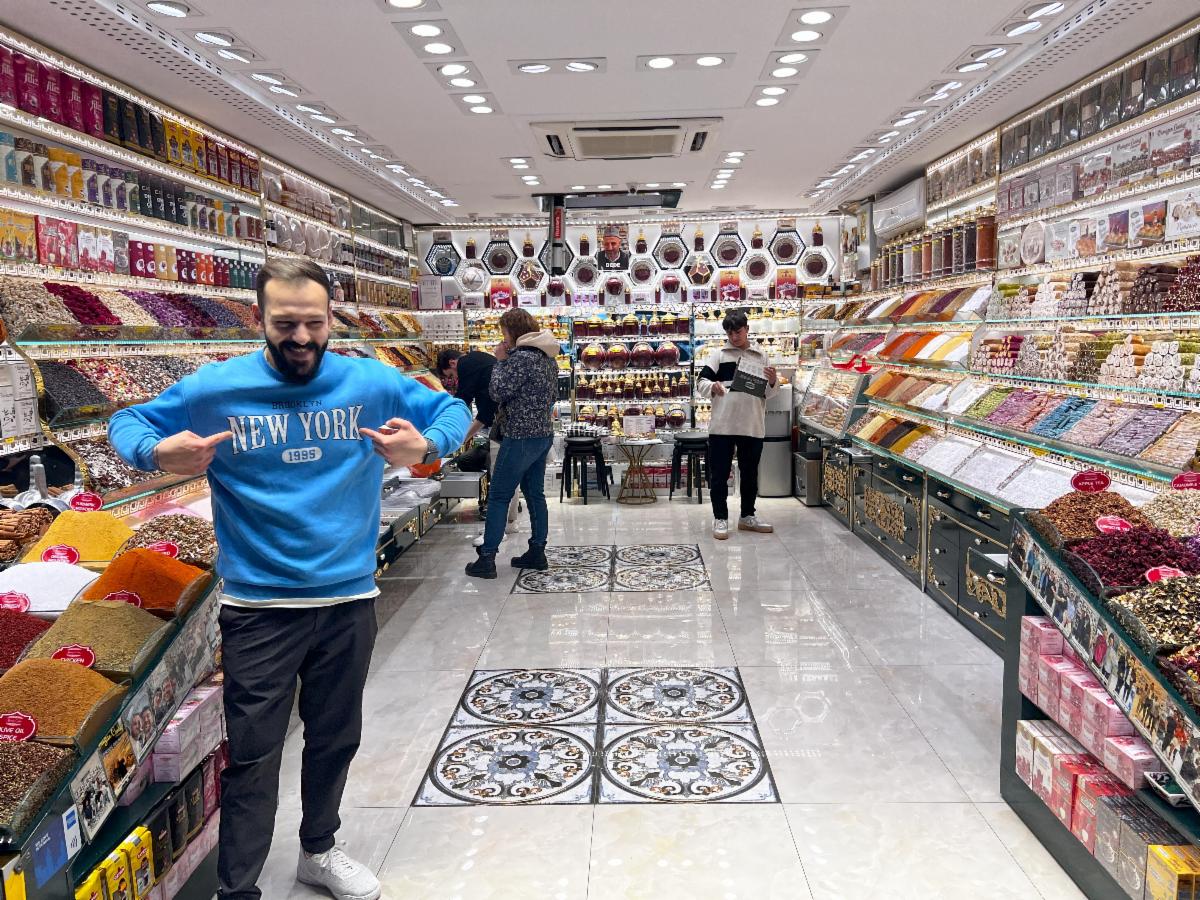
I visited this spice merchant’s store. The shelves were full of loose spices with intoxicating aromas. My son and son-in-law are expert grill masters and happily added the 4 different spices I purchased to their arsenal.
| By the 16th century, during the reign of Suleiman the Magnificent, the Grand Bazaar had reached its peak as a center of international trade, dealing in silk, spices, carpets, ceramics, and precious metals. It became the heart of the Ottoman economy, attracting merchants from Europe, the Middle East, and Asia. | |
As Istanbul grew, the Grand Bazaar continued to expand, covering over 30,000 square meters with over 60 streets and 4,000 shops. The Ottoman state controlled the market through a guild system, regulating trade and ensuring high-quality craftsmanship. Many of the market’s Hans (inns) and caravanserais provided lodging for merchants and traders traveling along the Silk Road.
With the decline of the Ottoman Empire and the rise of modern trade routes, the Grand Bazaar lost some of its global commercial importance. Today, the Grand Bazaar remains one of Istanbul’s top tourist destinations, drawing millions of visitors each year. It continues to be a hub for traditional Turkish crafts, jewelry, carpets, antiques, ceramics, and spices. Despite modernization, the bazaar retains its historic charm, with narrow alleyways, domed ceilings, and vibrant atmosphere, making it a living relic of Istanbul’s rich commercial history.
| | |
Istanbul is one of the most culturally diverse cities in the world, shaped by centuries of migration, trade, and empire-building. The city’s diversity is deeply rooted in its history, from the Greek, Roman, Byzantine and Ottoman Empires to modern-day Turkey.
Geographical Position
- Istanbul’s unique geographical position, spanning both Europe and Asia, has made it a melting pot of civilizations, religions, and ethnicities.
- It has been a natural hub for trade, diplomacy, and cultural exchange for centuries.
Historical Tolerance and Trade
- The Byzantines and Ottomans encouraged multiculturalism for economic and administrative reasons, allowing different groups to practice their traditions while contributing to the city's economy.
- Even today, Istanbul remains a global trade center, welcoming entrepreneurs, students, and immigrants from around the world.
Shared Urban Identity
- Despite religious, ethnic, and cultural differences, Istanbulites share a deep connection to their city, rooted in a common love for food, history, art, and daily life rituals, such as gathering at tea houses or enjoying street markets.
Tourism and Globalization
- As one of the world’s most visited cities, Istanbul thrives on its cultural heritage, with international tourism fostering appreciation and coexistence among different groups.
| | |
Istanbul is no ancient city of ruins. Through twenty-five centuries it has reinvented itself to serve that version of the world. It historically embraced its pluralistic identity, creating a unique blend of East and West; Catholic, Muslim and Jew; Europeans and Asians; old and new; tradition and modernity. This cultural coexistence continues to define Istanbul as a vibrant, global metropolis where people from all backgrounds contribute to its dynamic character.
For months I have tried to find the words to properly convey the feelings conjured as I explored Istanbul. The adjectives captivated, charmed, and amazed fell short. Twenty -five centuries ago the Greeks came ashore here, looked around and likely said, “This is a great place for a town.” From those humble beginnings, a megapolis evolved. I feel this quote written 500 years ago is a proper conclusion. In its time, it was prescient and remains true today.
| | |
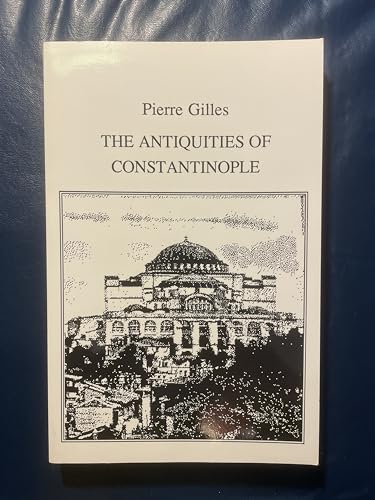
“Though all other cities have their periods of government and are subject to the decays of time, Constantinople alone seems to claim a kind of immortality and will continue to be a city as long as humanity shall live either to inhabit it or rebuild it.” Pierre Gilles 1548.
| | |
I couldn’t have said it better.
Stay well and travel often.
Bobby
| |
Click the logo to visit my new
photography website.
| | | | |