|
|
August 16, 2022
Summer Issue #9
|
Weekly activities and lessons to keep your child thinking and progressing throughout the school year and summer. |
|
“All our dreams can come true – if we have the courage to pursue them.”
|
|
Hello,
Well, the end of summer is here. I always think of the back-to-school commercial playing the song "It's the most wonderful time of the year" while parents skip through the store shopping ;-) That ad still makes me laugh. I look at this time of the year as a time to make changes. Unlike New Year's resolutions, the start of a new school year is a chance to reinvent one's self. It is a wonderful time of the year. You should see my room. There is really going to be a fresh start in there. It has been rewarding writing these Summer flyers. I hope they have provided some thought provoking and challenging activities for you and your child this summer. Since next week is the start of school, I'm going to take the week off, but I will return in two weeks with fresh Fall issues of The McManus Files.
If you know anybody who you think would benefit from the weekly learning activities in this flyer, please share it with your friends and encourage them to join The McManus Files mailing list by following the links on this page.
Be active, stay happy,
Mr. McManus :-)
|
|
Children acquire skills throughout the school year, but they can lose ground if learning stops during the summer break. Fortunately, learning never has to stop. Children who read throughout the summer gain skills, can start the new school year with a better understanding of language and the world around them, and discover the joy of reading. The more they like to read, the more they will read.
It's not hard to help your children keep their interest in reading and learning. Children learn through a variety of activities, and almost everything we do presents an opportunity to read. Here are weekly activities that involve reading and related skills. There's no special order, and you don't have to do everything listed in a particular week. Just pick the ones that look interesting and fun!
|
|
Week 9: Honor summer's end
• Remember the wildflowers you pressed between the pages of a heavy book? Remove them, and put them in your summer scrapbook or paste them on heavy paper to make a bookmark.
• Review the chart you made to track the books you read this summer. Pick new books to read.
• Notice what time the sun sets today. Compare it to the time the sun set during week one.
• Make a list of the supplies you need for school. Start shopping.
• Plan an end-of-summer celebration. Write a list of the 10 best things you did this summer. Design a menu of your favorite summer treats.
• Word game! Summer days are the longest days of the year. List the longest words you know.
|
|
Habits of Mind
Habits of Mind are thinking habits that push us far past simple answer retrieval. They change our pattern of thinking to help us gain success when we don’t know the answer to a question or problem.
|
|
The 16 Habits of Mind include:
• Persisting
• Thinking and communicating with clarity and precision
• Managing impulsivity
• Gathering data through all senses
• Listening with understanding and empathy
• Creating, imagining, innovating
• Thinking flexibly
• Responding with wonderment and awe
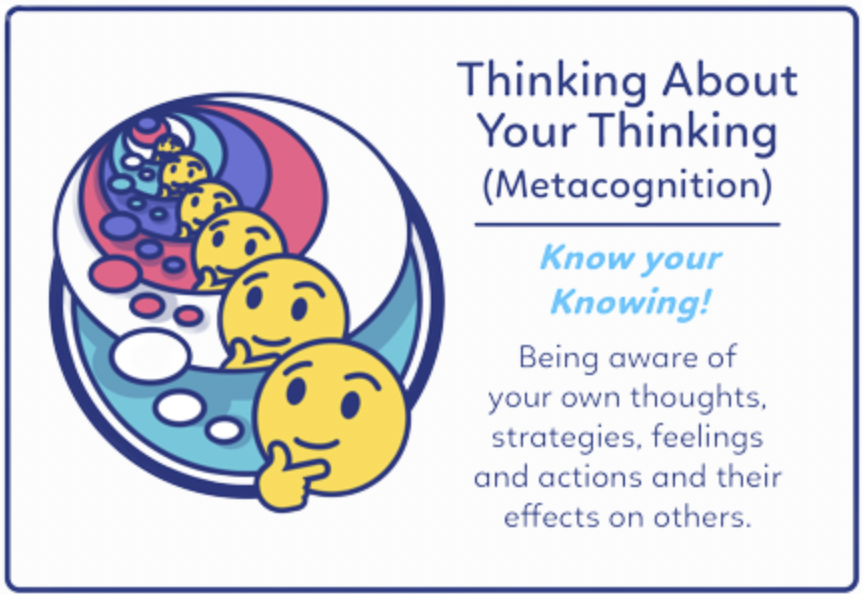
• Thinking about thinking (metacognition)
• Taking responsible risks
• Striving for accuracy
• Finding humor
• Questioning and posing problems
• Thinking interdependently
• Applying past knowledge to new situations
• Remaining open to continuous learning
|
|
Metacognition -- Thinking about Thinking
What is it? – Thinking about your own thinking. Knowing what you know and what you don’t know. Self evaluation.
Sounds like – “Right now I’m wondering….”. “My strategy is….”, “I know this, but I don’t know this”. “Because I know this…I’m going to try this…..”
Looks like – Attending. Staying on focus. Asking questions. Analyzing. Reflecting. Trying new ways.
Feels like – “Ah-ha!” “I know that”. “I don’t know that.” “I know, I’ll try this.”
Occurring in the neocortex, metacognition, or thinking about thinking, is our ability to plan a strategy for producing what information is needed, to be conscience or our own steps and strategies during the act of problem solving. The major components of metacognition are developing a plan of action, maintaining that plan in mind over a period of time, and then reflection on and evaluating the plan upon its completion. Intelligent people plan for, reflect on, and evaluate the quality of their own thinking skills and strategies. We want students to perform well on complex cognitive tasks. We want students to connect their learning to what they know and what they do not know. This inner awareness and the strategy of, thinking about your thinking, helps students solve complex tasks.
“When the mind is thinking it is talking to itself.” Plato
|
|
The Whole Story About Half a Girl
by Veera Hiranandani
|
|
|
|
This is such a refreshing book. It tackles big social issues with wonderful dialogue in an upbeat and light tone . This book is very fast-paced, easy to read, and hard to put down. The language is very authentic and approachable by many reading levels. The main character, Sonia, is believable and likable. She deals as best she can with her father's depression. It address many relevant Middle School topics like fitting in while also remaining true to one's self, but with a new and refreshing light. Sonia, deals with her own identity as well as confronting some more mature topics such being forced to change schools after her father loses his job. It was great to read a book with such a realistic main character who has a multi-ethnic and multi-cultural background. It prompted some thoughtful conversations at our dinner table. Overall... A very refreshing and impactful read.
Enjoy!
|
|
|
|
|
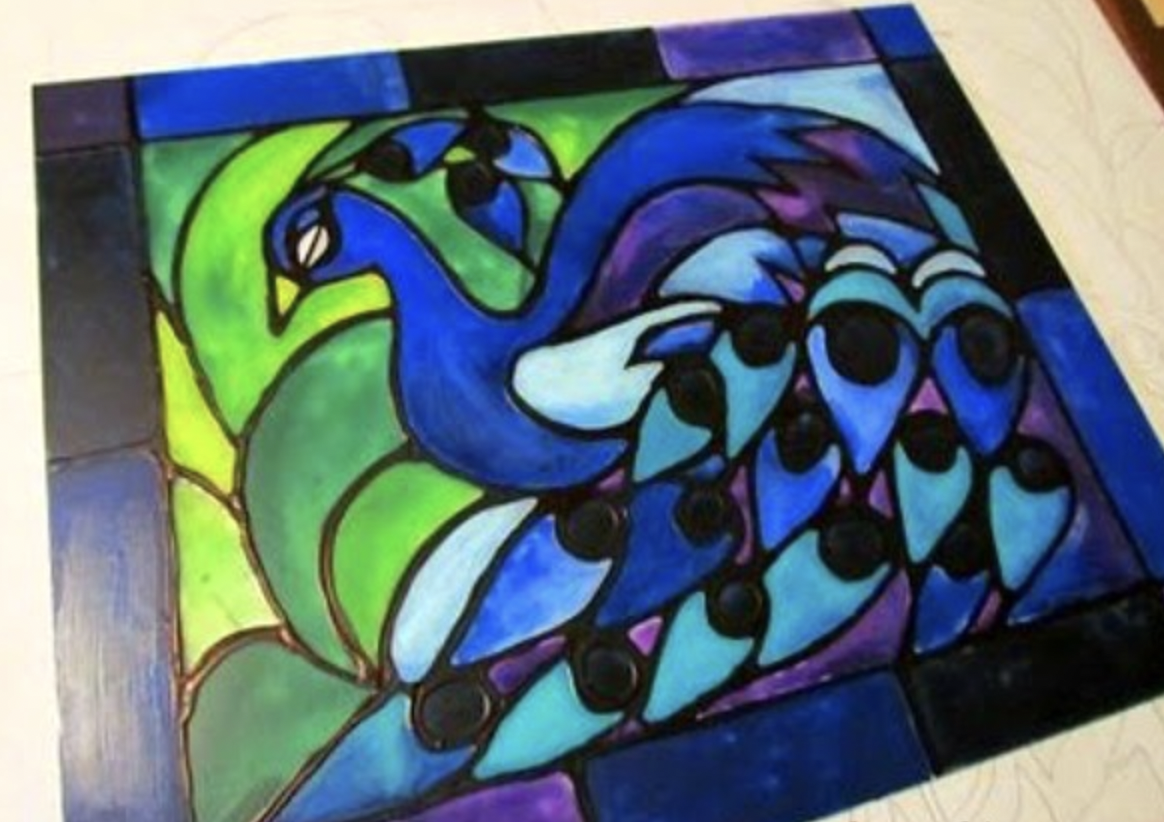
Want to know how to make Faux Stained Glass?
|
|
Faux Stained Glass
For this project you need:
- One recycled picture frame with glass
-
One bottle of white glue
- One bottle of clear glue
- Acrylic paints
- Black Sharpie pen
- Craft Blade
- Super Glue
-
Peacock pattern (or a page from a coloring book. Even better, an original drawing of a summer memory)
- Clear acrylic spray sealant
|
|
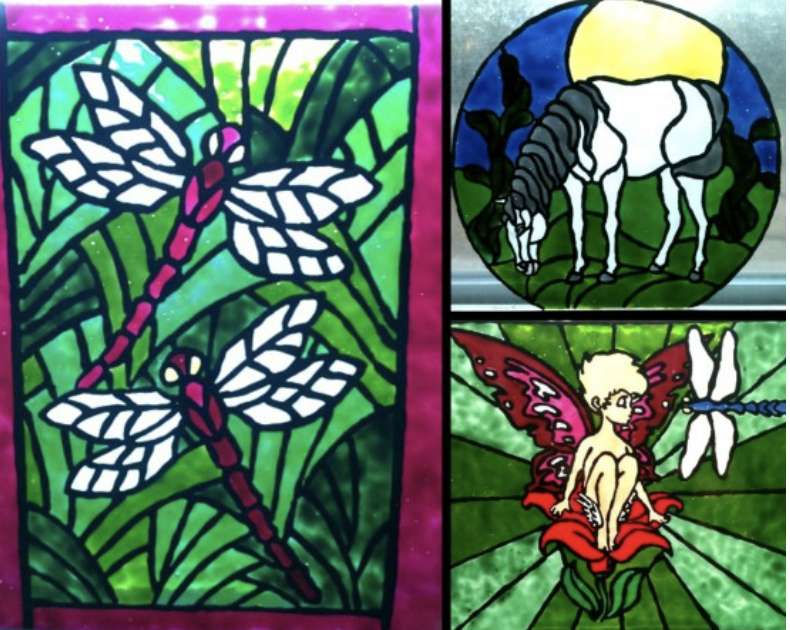
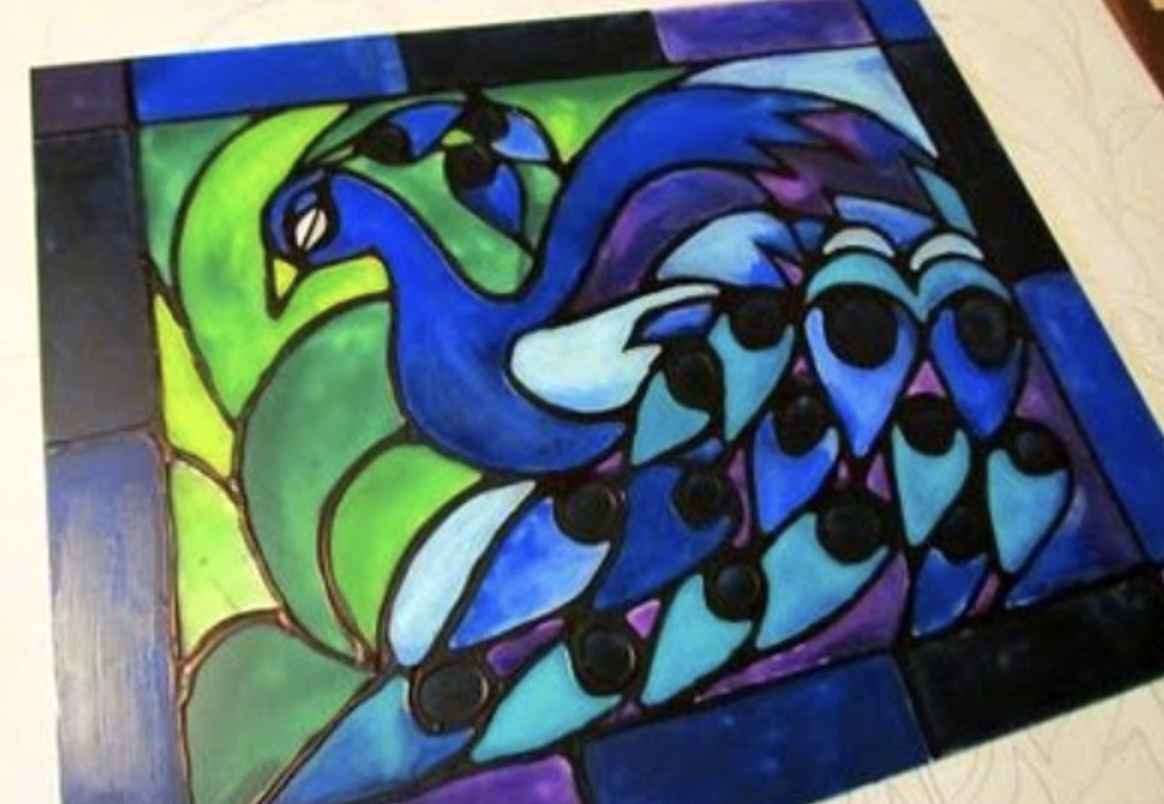
These stained glass projects were made using coloring book pages! |
|
Start by enlarging your pattern to the same size as your sheet of glass.
Take your frame apart and set aside the frame for later. Spray the glass with clear acrylic spray. This is important as it gives the paint and glue something to adhere .
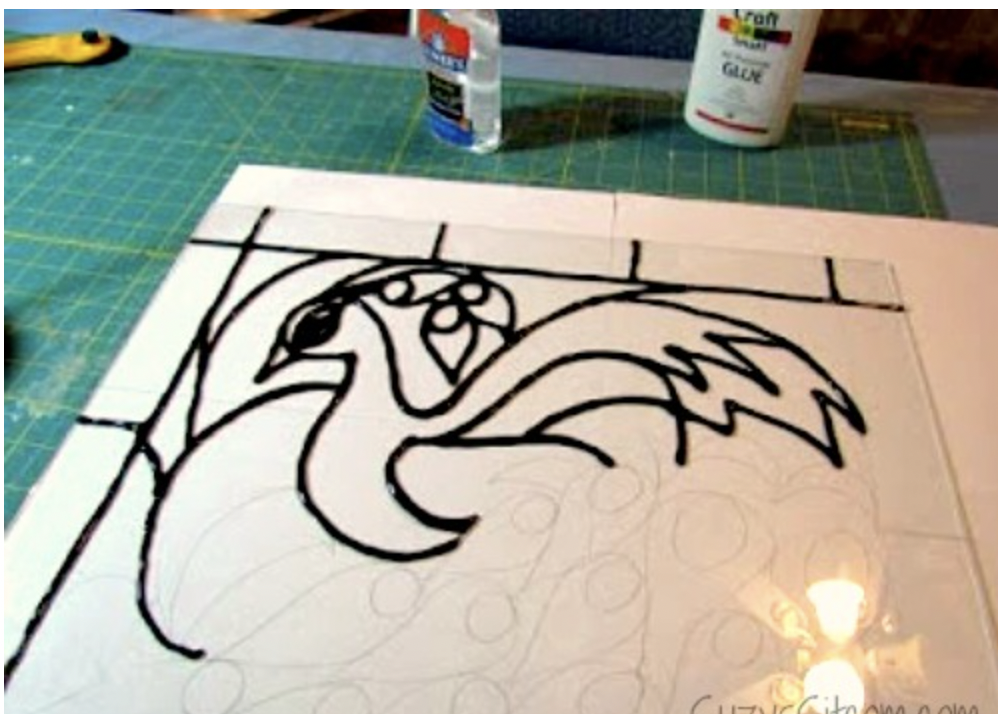
Lay the sheet of glass over your pattern.
How to make the leading!
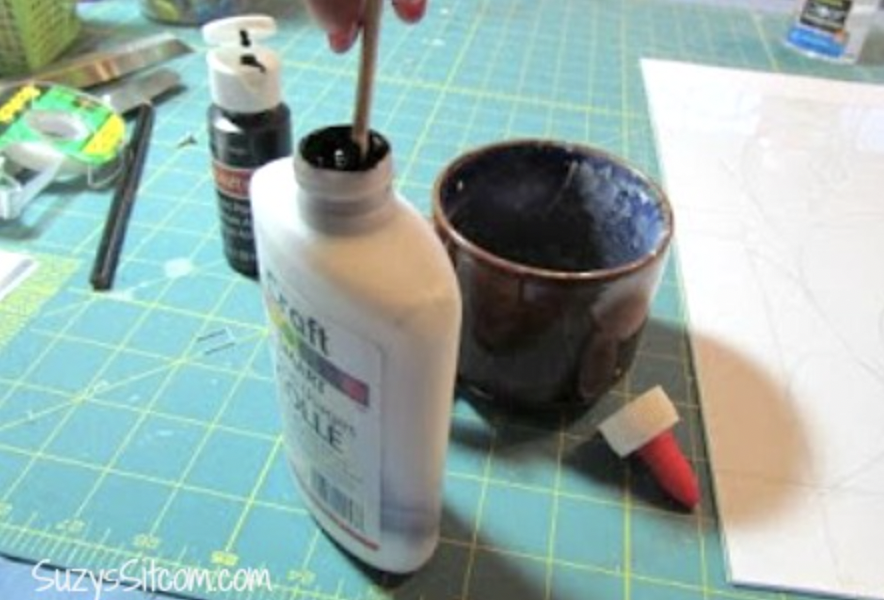
Take the bottle of white glue and dump just a small bit out so that there is room to add color to it. Add about a teaspoon of black acrylic paint and shake and stir it until evenly mixed. Add enough black paint to make a solid color. You will be surprised, but it doesn’t take a ton of paint to change your white glue to black. Put the glue nozzle back on.
|
|
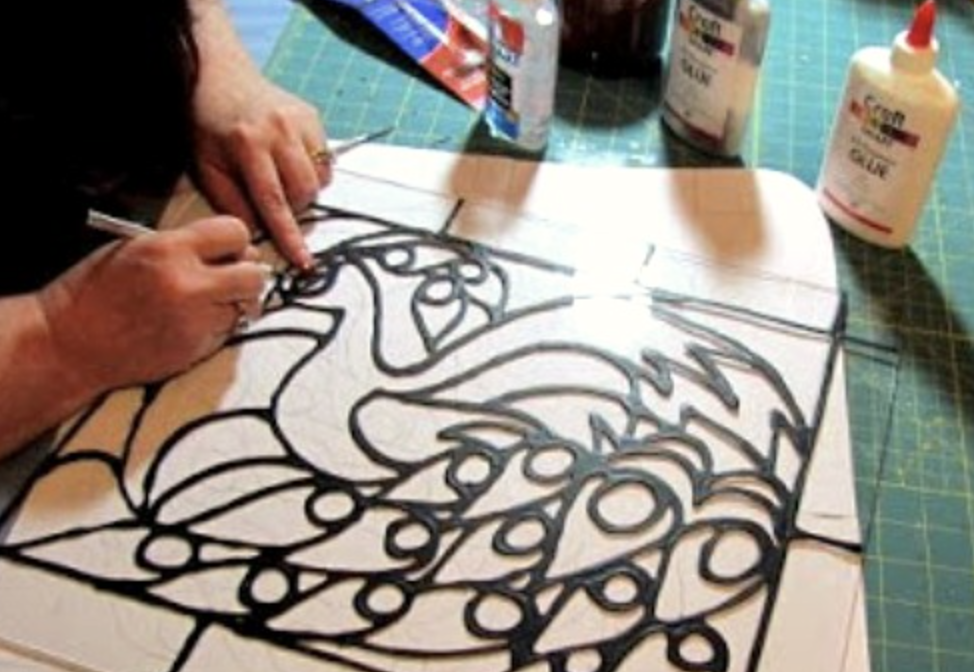
Carefully squeeze the glue onto the glass, following the lines of your pattern. Try not to have shaky hand syndrome, but if you do, it can be fixed.
Once all of the lines have been drawn in, allow it to sit overnight to dry completely.
Once it is dry, you can go over it with a craft blade and correct any shaky lines or errors.
|
|
Adding color to your Faux Stained Glass project:
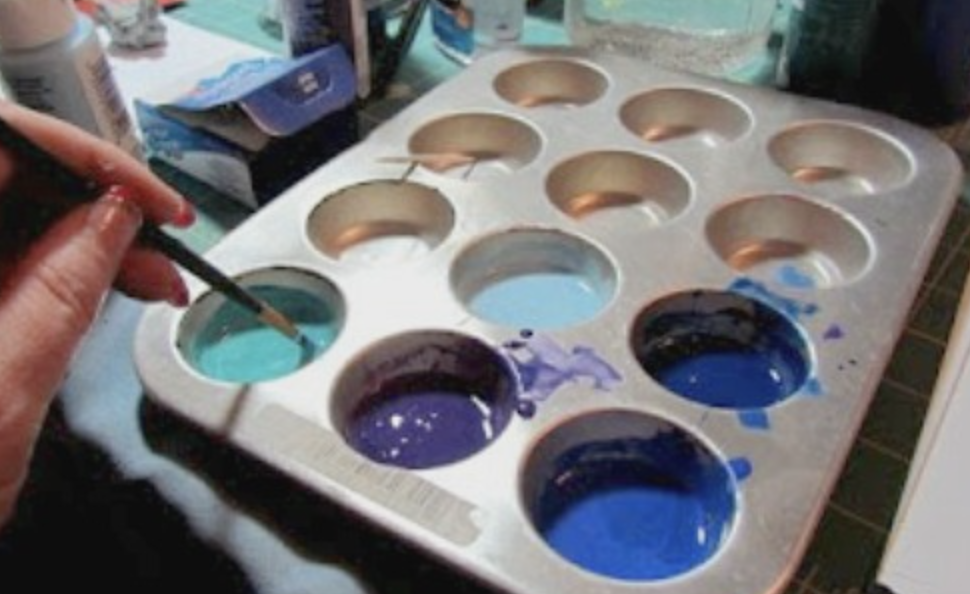
For the next step, use a small muffin tin to mix up your colors. Use about a tablespoon of clear glue to one or two drops of acrylic paint. You will be surprised at how easy it is to add pigment to clear glue.
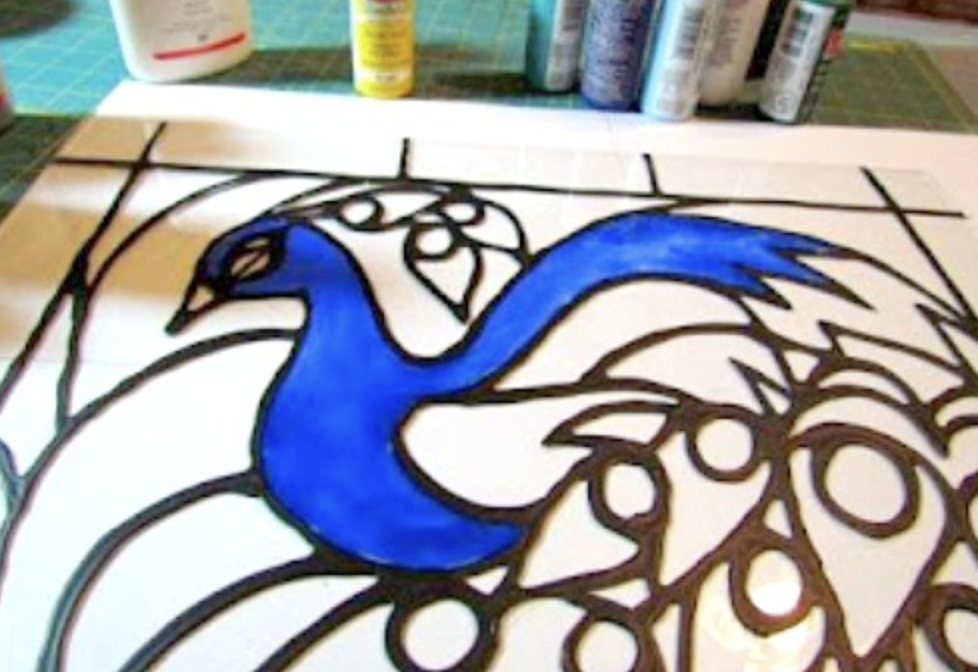
Use a blunt paintbrush and add your colors where you want them. Put it on thickly and be sure to get your colored glue all the way up to the edges of the black lines. Take your time and if you see any air bubbles in the glue, use a toothpick to pop them.
For a variegated marbled look, add a color to each side of a section and push them together with your brush, mixing them in the middle. Allow the entire project to dry overnight.
The final step is to do some touch-up with the sharpie pen on the leading where paint may be overlapped. If you are neat to begin with, you might be able to skip this step. I’m not neat. So my friend, the sharpie, was put to use.
You can also paint the frame a matching color before you reframe the glass. This can sit in a windowsill and the sunlight will shine through, or you can hang it on a wall. Either way, it turns out pretty decent and costs just pennies. And, it looks just as good as those expensive stained glass paints that you can buy at the craft store. One suggestion is to finish the painting with a coat of clear acrylic spray sealant to protect it.
|
|
If you feel your child might benefit from a group or individual tutoring program to prepare them for the next phase of their education, please contact McManus Tutoring.
Programs are structured so that students learn independence, accountability, and self-possession. They will develop a repeatable structure that can be used to build success in the future.
|
|
Three Writing Prompts and an Essay Topic
These prompts and questions will help jump-start your daily writing. Just as it's important to read for at least 30 minutes each day, you should also write for 30 minutes a day. Don't worry about your organization or spelling, just write!
"The velcro tore from the ceiling and down fell the..."
"I used the paperclip to pick the lock and found..."
"My pet penguin was poached by a..."
|
|
Tunes
Some studies have shown that listening to music can help students concentrate. Should students be allowed to listen to music using headphones during independent work times at school? Persuade the reader of your answer.
|
|
How can you express the number 100 using six nines and no other digits? |
|
Last week's answer...
The man lived 1/12 of his life as a teenager. There are seven teen years.
7 × 12 = 84.
|
|
|
|
|
|
|
|
|
|