|
|
August 9, 2022
Summer Issue #8
|
Weekly activities and lessons to keep your child thinking and progressing throughout the school year and summer. |
|
“Don’t just teach your children to read. Teach them to question what they read. Teach them to question everything.”
|
|
Hello,
I hope you are enjoying your last few weeks of summer. The weather has been beautiful and these long days are my favorites. In this weeks flyer I think you will enjoy the variety of learning activities. The Inquiry Quest describes the steps to extract the DNA from a strawberry. How cool is that? I've done this once before. It is super easy and truly memorable. This weeks book recommendation is a hidden gem! I'm so glad I stumbled upon it and can share it with you. If your child likes survivor stories - like Hatchet - then they will love this book with all the elements of surviving in the wilderness along with deeply developed characters and a believable plot. The writing prompts and math problems are great ways to get back into the swing of daily academic work.
If you know anybody who you think would benefit from the weekly learning activities in this flyer, please share it with your friends and encourage them to join The McManus Files mailing list by following the links on this page.
Always have fun,
Mr. McManus :-)
|
|
Children acquire skills throughout the school year, but they can lose ground if learning stops during the summer break. Fortunately, learning never has to stop. Children who read throughout the summer gain skills, can start the new school year with a better understanding of language and the world around them, and discover the joy of reading. The more they like to read, the more they will read.
It's not hard to help your children keep their interest in reading and learning. Children learn through a variety of activities, and almost everything we do presents an opportunity to read. Here are weekly activities that involve reading and related skills. There's no special order, and you don't have to do everything listed in a particular week. Just pick the ones that look interesting and fun!
|
|
Week 8: Watch the skies
• Learn what birds live in your area. (Birds are described in books called Field Guides.) Wake up early to go bird watching and list the birds you see.
• Which constellations can you see on a clear summer night? Look at the sky using a star guide to help you find the constellations.
•.People have been looking at the skies for generations. Ask a grandparent or a much older friend to tell you a story about his or her childhood.
• The first UFO was reported in 1947. Read a science fiction book in honor of it.
• Word game! Baseballs also fly through the sky in summer. Find a list of baseball teams in the sports section of the newspaper. Put them in A-B-C order.
|
|
Habits of Mind
Habits of Mind are thinking habits that push us far past simple answer retrieval. They change our pattern of thinking to help us gain success when we don’t know the answer to a question or problem.
|
|
The 16 Habits of Mind include:
• Persisting
• Thinking and communicating with clarity and precision
• Managing impulsivity
• Gathering data through all senses
• Listening with understanding and empathy
• Creating, imagining, innovating
• Thinking flexibly
• Responding with wonderment and awe
• Thinking about thinking (metacognition)
• Taking responsible risks
• Striving for accuracy
• Finding humor
• Questioning and posing problems
• Thinking interdependently
• Applying past knowledge to new situations
• Remaining open to continuous learning
|
|
Responding With Wonderment and Awe
What is it? – Being curious about the world. Finding beauty and joy in our lives and in learning.
Sounds like – “I wonder what makes a rainbow…” The geometric shapes in this are intriguing….” “The simplicity of this….. is amazing”
Looks like – Observing the beauty of the world around us. Finding joy in learning new and difficult things. Accepting challenge because of what could be learned.
Feels like – The world around me is a joy to be discovered. Learning is fun and enjoyable. Being curious makes be happy and feel connected and alive.
Some people think of learning as hard work and they try to remove themselves from demanding situations. We want students that are curious, to commune with the world around them, to reflect on a changing cloud formation, to feel charmed by the opening of a bud, to enjoy the beauty and grace of the little (and big) things in our lives. We want them to feel compelled, enthusiastic, and passionate about learning, inquiring, and mastering.
“The most beautiful experience in the world is the experience of the mysterious.” Albert Einstein
|
|
|
|
It was an absolute treat to discover and read this brilliant book. Alabama Moon is essential reading for lovers of the outdoors, free thinkers, and adventure seekers. Best book I've read this summer! Utterly competent living in the forest, Moon Blake experiences the height of culture shock when his survivalist father dies and he runs smack into the outside world. Moon is unfamiliar with things like fatty food (or enough food), television, and clothes made out of things other than animals skins, let alone the wrongheadedness and lies of certain supposed representatives of the law. Trying to fulfill his father's last instructions to go to Alaska and live with other people who hate the government, Moon soon escapes from the locked boys' home where he's been dumped, taking two other boys with him. But Moon is starting to change, realizing that, unlike his father, he's not happy being alone. When things go wrong out in the forest, Moon begins making new kinds of decisions. Of course, it doesn't help that the wacked-out small-town constable is after him. Moon is the most real, intriguing protagonist I've read about since Maniac Magee. I had to catch my breath when I finished this book, it was that good. I then ran to my computer to write this review: please read this book. It's one of the best things to hit children's literature in years! Enjoy!
|
|
|
|
|
HOW TO EXTRACT DNA FROM A STRAWBERRY
|
|
Anytime we can pop into the kitchen for cool kitchen science experiments, I am all for it. Have you ever seen DNA up close? My guess is no! This strawberry DNA extraction lab is perfect for budding scientist to experiment with in the kitchen. Smashed strawberries, DNA you can see, and an AMAZING new learning experience! Who could ask for anything more?
STRAWBERRY DNA
DNA is a fascinating subject. Kids love learning about the “map” that helps build organisms. But usually, we can’t see DNA except with a high-powered microscope. But with this strawberry DNA extraction science experiment, you can encourage the DNA strands to release from their cells and bind together into a format that’s visible with the naked eye.
You can do this experiment with any fruit or vegetable, but strawberries are one of the best fruits to use due to their high number of DNA strands per cell (8 versus an ordinary 4)!
EXTRACTING STRAWBERRY DNA
Each individual cell in an organism has a copy of the DNA pattern used to reproduce that cell. Usually, the DNA is combined within the cell, so you can’t see it. But when you create a mixture of dish soap and salt and mix it with the strawberry pulp, it helps break down the strawberry cells into individual parts.
Once the alcohol is added to the pulp, it encourages the DNA strands to rise to the top and bind together, where you can see them together in one long, clear strand. It’s fascinating to see the DNA strands up close and personal! It doesn’t take long to extract DNA from strawberries. Just follow the simple instructions below.
HOW IS STRAWBERRY DNA DIFFERENT FROM HUMAN DNA?
Our cells have two copies of their DNA while strawberry cells have eight! This makes it easier for us to extract enough DNA to be able to see it with the naked eye.
Every living thing has DNA or deoxyribonucleic acid and it is the blueprint for what makes you a human, a cat, a tree or a type of flower etc. DNA is a molecule that is like a little recipe for life and holds all the information your body needs to function. Pretty crazy! Plus, it’s just a teeny, tiny percent of our DNA that actually makes us all unique from one another. You may also be surprised to know that some of the DNA in strawberries is also present in humans.
|
|
STRAWBERRY DNA EXTRACTION
A well-stocked pantry allows you to conduct countless simple but fascinating science experiments and activities all month long!
MATERIALS NEEDED
- Coffee filters
- Pipette
- Test tube
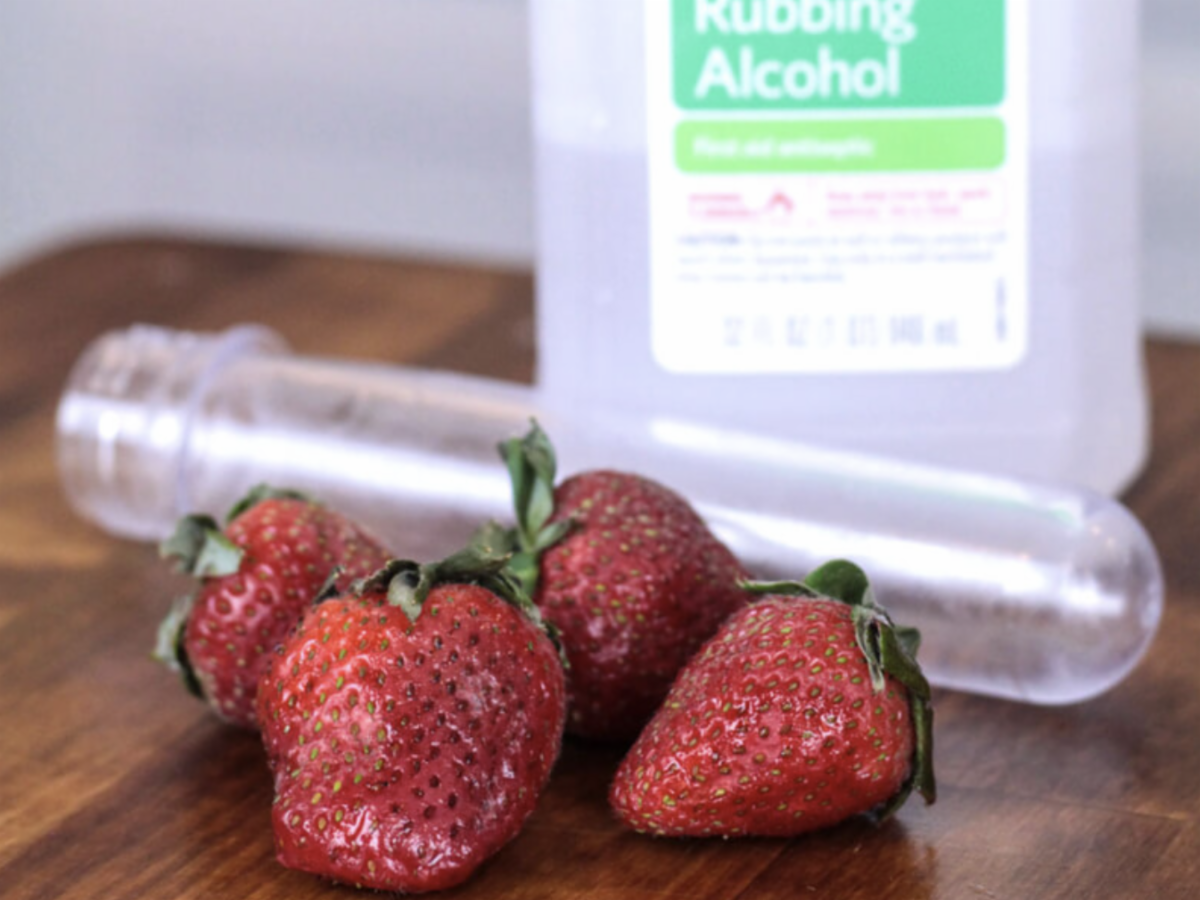
- Strawberries
- Dish Soap
- Salt
- Plastic Zipper Baggies
- Rubbing Alcohol
HOW TO EXTRACT STRAWBERRY DNA
STEP 1 Chill the alcohol in the freezer.
STEP 2 Remove the green stems from the strawberries and add the strawberries to a zip lock bag. Make sure to seal the bag well and then squish the strawberries into a pulp.
STEP 3 Add 1 tablespoon of dish soap, a teaspoon of salt, and 1/3 of a cup of water to the bag. Shake the bag to mix well.
STEP 4 Line the test tube with the coffee filter.
STEP 5 Pour the strawberry liquid onto the coffee filter and then wait for the liquid to filter into the test tube.
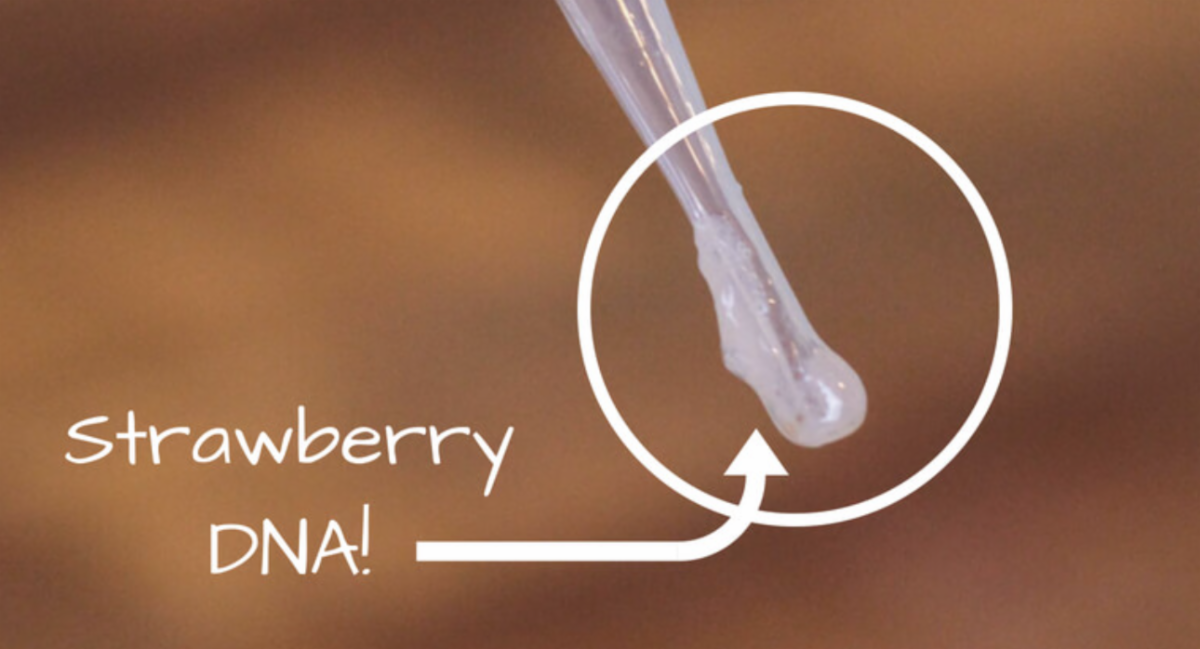
STEP 6 Now add a one inch layer of chilled alcohol to the test tube. Watch as a clear viscous material rises to the top of the alcohol. This is the strawberry DNA!
Now you can have an up close look at strawberry DNA! How cool is that! Grab a magnifying glass and check it out. Strawberries are perfect for isolating, extracting, and observing DNA!
|
|
If you feel your child might benefit from a group or individual tutoring program to prepare them for the next phase of their education, please contact McManus Tutoring.
Programs are structured so that students learn independence, accountability, and self-possession. They will develop a repeatable structure that can be used to build success in the future.
|
|
Three Writing Prompts and an Essay Topic
These prompts and questions will help jump-start your daily writing. Just as it's important to read for at least 30 minutes each day, you should also write for 30 minutes a day. Don't worry about your organization or spelling, just write!
"I couldn't believe my teacher used to be..."
"The last time I spoke to them..."
"While camping, the troubles began as soon as we..."
|
|
Listen to this...
Have you ever been talked into something? How did it work out?
|
|
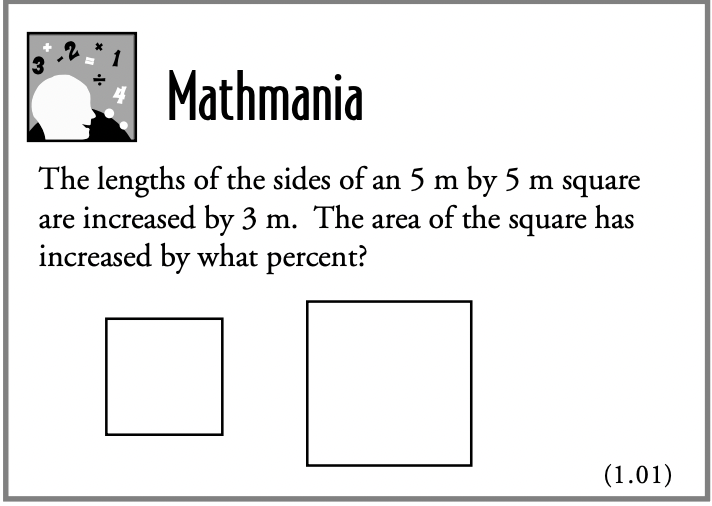
On a man's tombstone, it is said that one sixth of his life was spent in childhood and one twelfth as a teenager. One seventh of his life passed between the time he became an adult and the time he married; five years later, his son was born. Alas, the son died four years before he did. He lived to be twice as old as his son did. How old did the man live to be? |
|
Last week's answer...
One red squeegee must be bought for $6.00, 29 yellow squeegees must be bought for $87.00, and 70 blue squeegees must be bought for $7.00.
|
|
|
|
|
|
|
|
|
|