|
|
December 13, 2022
Winter Issue #3
|
Weekly activities and lessons to keep your child thinking and progressing all year long. |
|
“Nothing is impossible, the word itself says ‘I’m possible!’’ |
|
Hello and Happy Holidays,
I told you this season would fly. Here we are. Holidays are approaching quickly, but there still is a lot of learning going on in the classroom. This is a hectic time in the classroom; student's minds aren't totally focused on learning with all the excitement of the holidays and teachers are pushing the students to complete all their projects before the long winter break comes. I hope you have some fun and enjoyable plans for the holidays.
This week's flyer introduces a wonderful and exciting novel. The twists and turns of this book kept me laughing with and rooting for the characters. I love books which take place in a world different from ours, but similar in so many ways. The Inquiry Quest I recently saw on the internet filmed in an auditorium with about 10,000 popsicle sticks. It was a blast! This might be a great activity to save for a rainy day over break. I hope you enjoy the writing prompts and the math challenges.
If you know anybody who you think would benefit from the weekly learning activities in this flyer, please share it with your friends and encourage them to join The McManus Files mailing list by following the links on this page.
Be positive,
Mr. McManus
|
|
If you feel your child might benefit from a group or individual tutoring program to prepare them for the next phase of their education, please contact McManus Tutoring.
Programs are structured so that students learn independence, accountability, and self-possession. They will develop a repeatable structure that can be used to build success in the future.
|
|
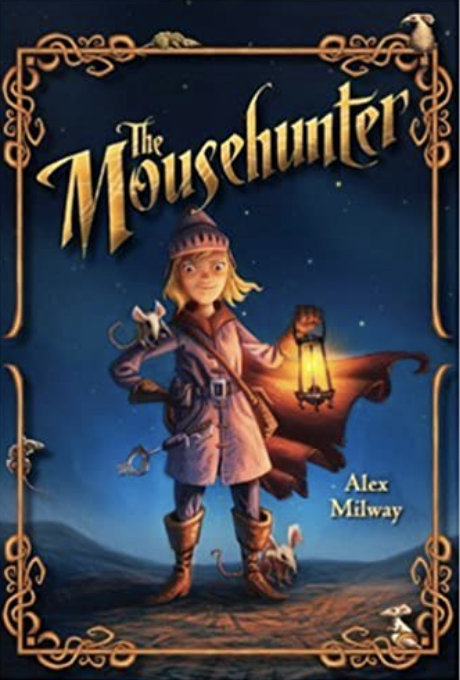
The Mousehunter
by Alex Milway
|
|
|
|
Mice may not be too popular in our world, but in Emiline's world, people don't run from them screaming: they collect them! Mousehunters roam to the far reaches of the earth, seeking out the most unique breeds - from the fearsome Sharpclaw to the rope weaving Rigger mouse. Twelve-year-old Emiline dreams of becoming a famous mousehunter, and one day, fate intervenes when she's given the chance to join the crew of Captain Devlin Drewshank and hunt down the infamous pirate Mousebeard. What follows is a high sea adventure full of mythical sea creatures, double-crossing pirates, mysterious islands, and of course, incredibly interesting mice. With an eclectic group of human characters, all readers will enjoy discovering some of the many mice that live all across the Seventeen Seas. A witty, strange and suspenseful pirate-fantasy adventure, Enjoy!
|
|
|
|
|
Popsicle Sticks Chain Reaction
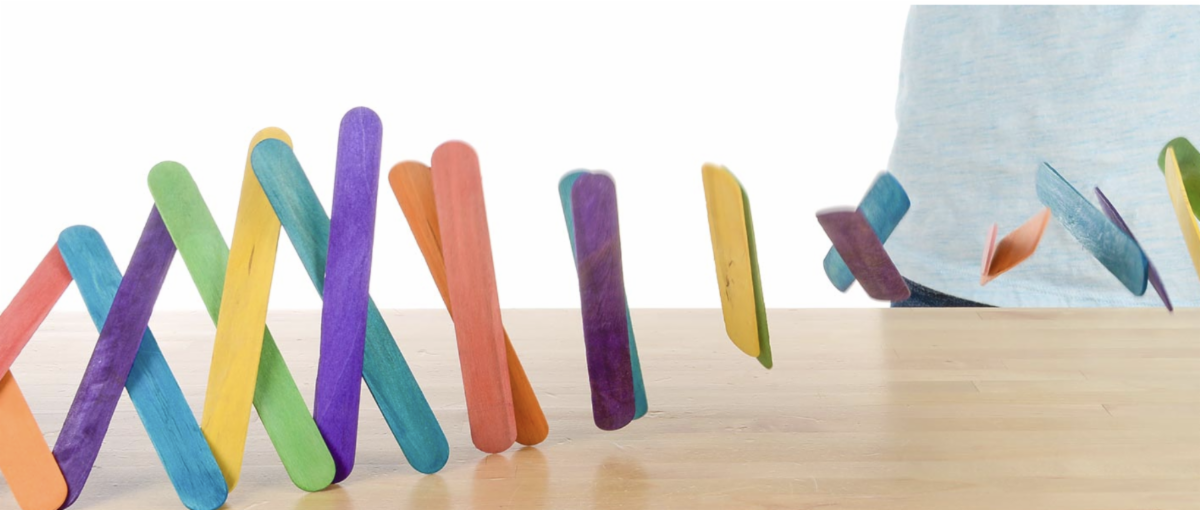
Popsicle sticks are great for holding frozen treats, but did you know they’re also excellent for demonstrating potential and kinetic energy? If you weave popsicle sticks together in just the right way, you can create a dazzling chain reaction of flying popsicle sticks. It sounds complicated, but the Popsicle Stick Chain Reaction experiment is a super easy and fun way to see potential energy transform into kinetic energy before your eyes. This exciting experiment can be enjoyed alone or conducted with a team.
|
|
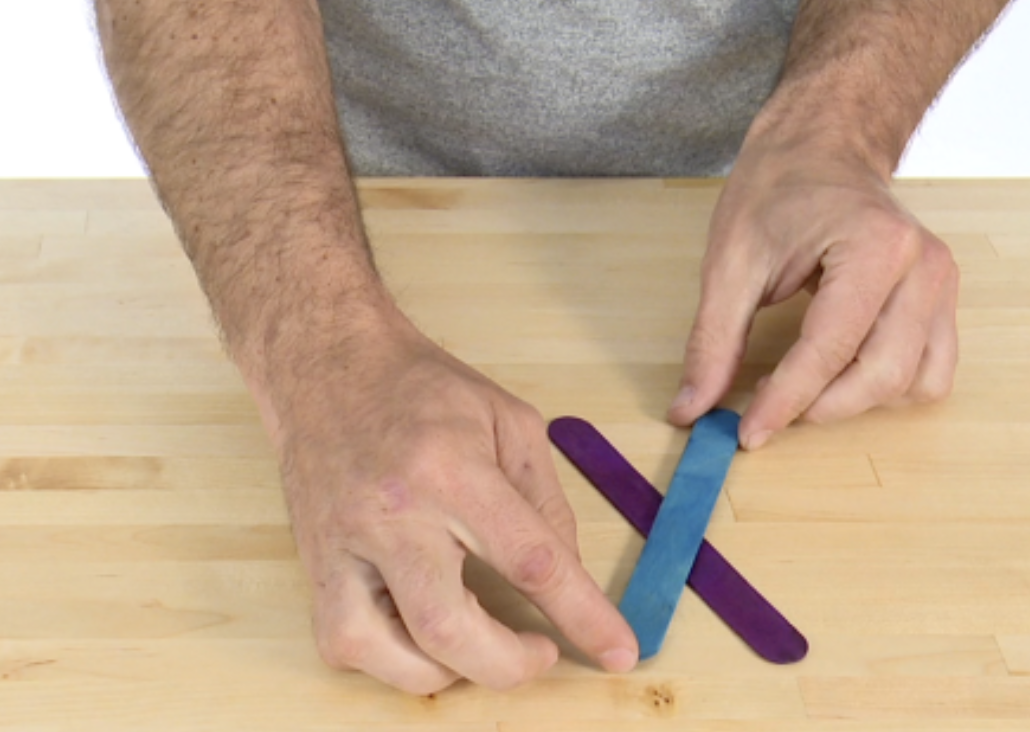
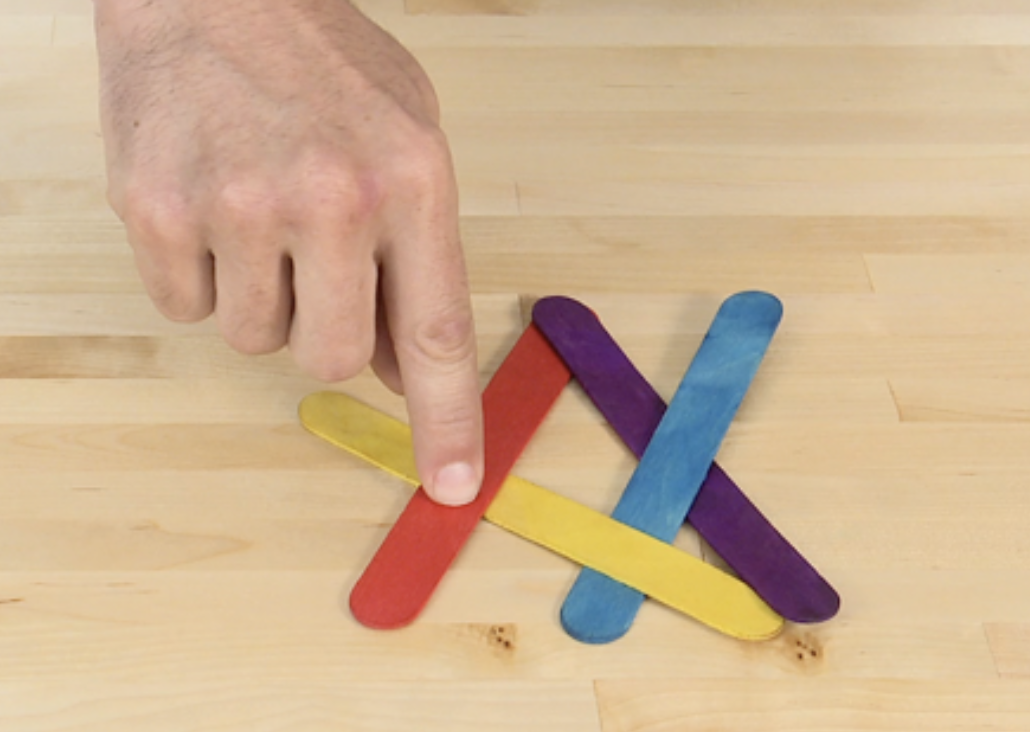
Begin with any two popsicle sticks. Lay them in an X shape on a hard, flat surface that has a lot of working room. Tables and countertops are best, but make sure they’re clear before you begin. You can graduate to the floor later for bigger reactions.
NOTE: You can buy popsicle sticks at any craft store.
|
|
|
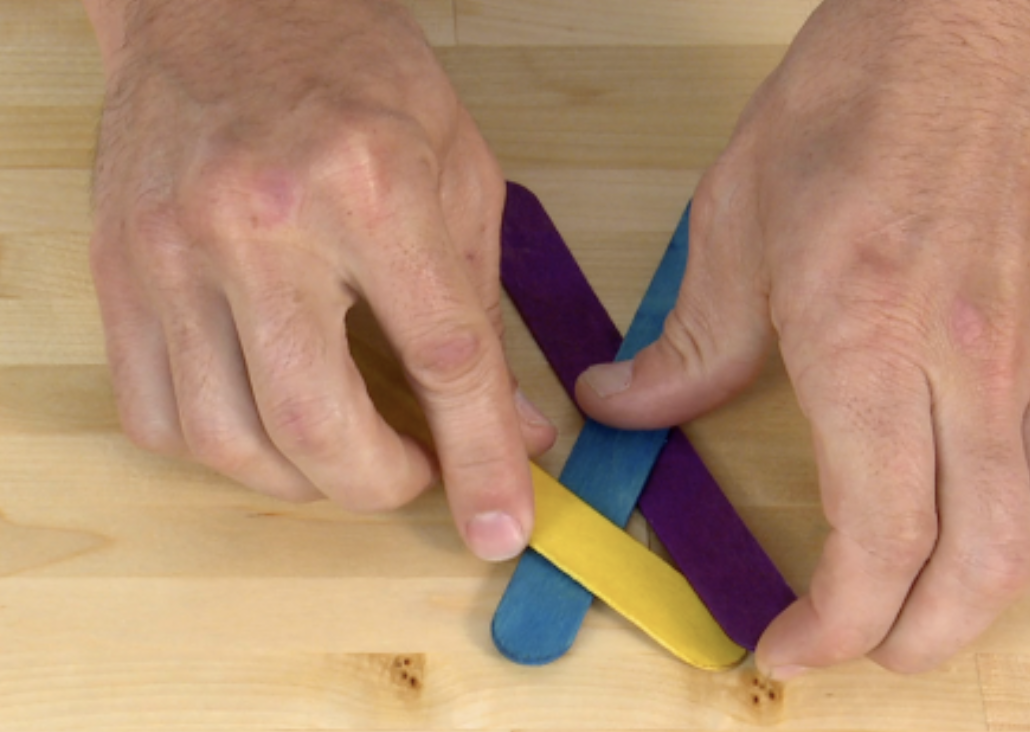
Place one end of a third popsicle stick below one end of the stick on the bottom of the X and then over the stick on top of the X. Make sure to keep pressure on the center of the X as you work. You can do this by having a partner press down on the center of the X or you can use a clamp if you’re working alone.
|
|
Repeat Step 2 with a fourth popsicle stick, but place it under the open end of the bottom stick and over the third stick. The second and the fourth popsicle stick should be parallel to each other. Potential energy is building already and you can probably feel it. Keep that pressure applied. The first X is now locked in place unless your helper or clamp let go. |
|
|
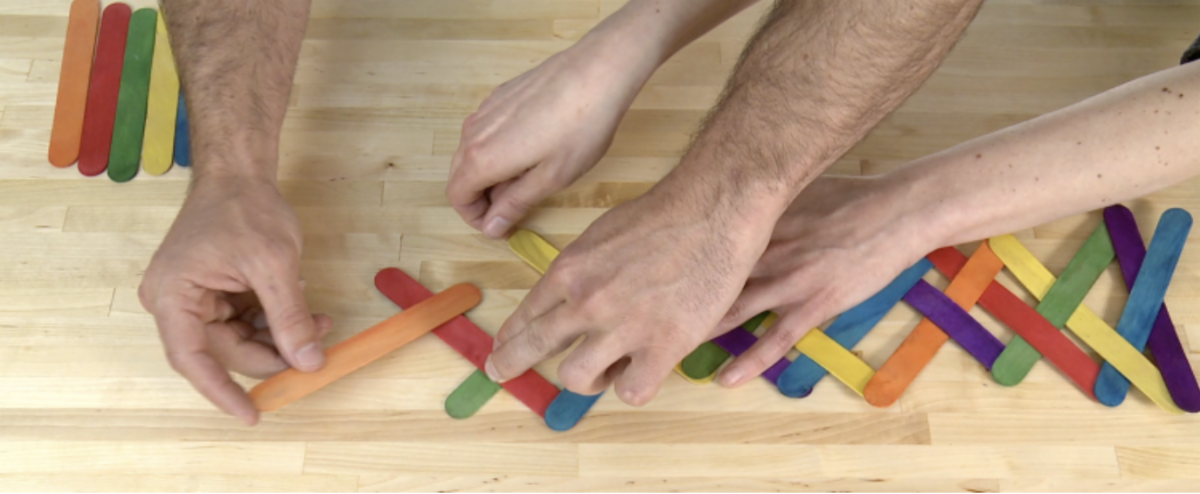
Continue adding popsicle sticks in this fashion until you have about 10 to 15 arranged in a chain on your surface. Remember that it’s a simple over-and-under design that holds it all together, building energy. This pattern is necessary for the experiment to work. Take your time and to build up the popsicle stick tension for the best reaction. |
|
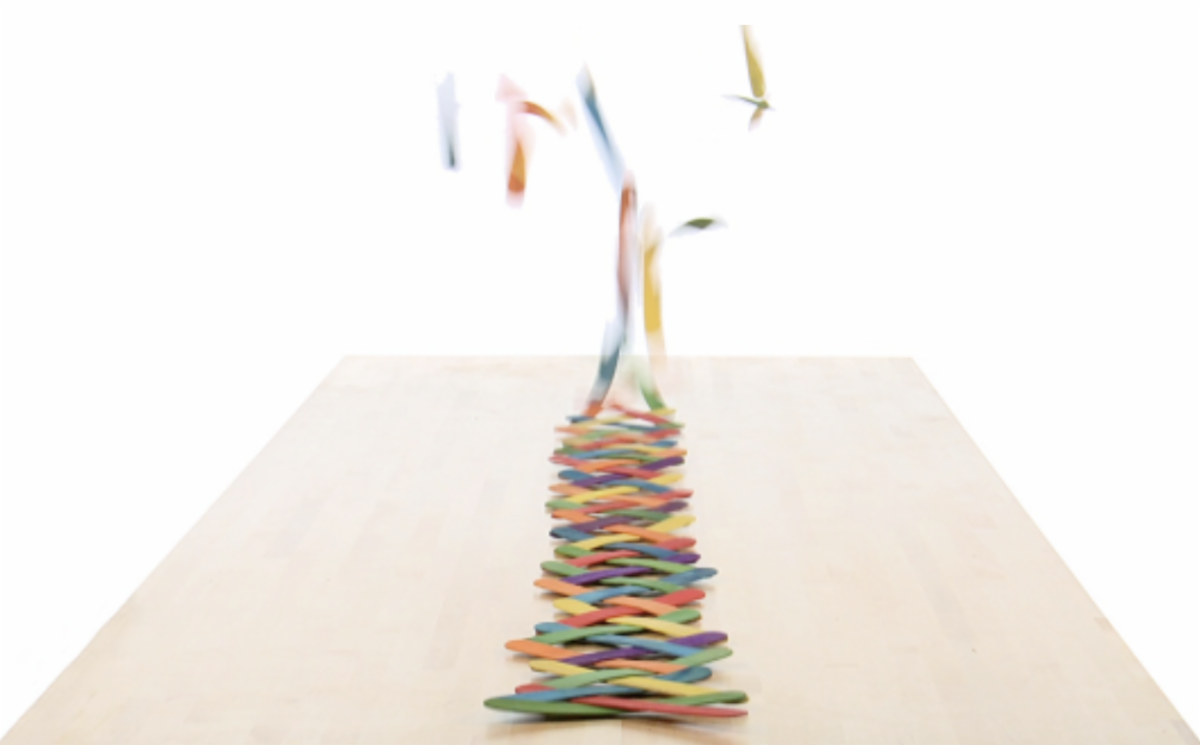
Once the chain is as long as you’d like it to be, let go of the clamped end. The popsicle sticks will explode down the line in a colorful chain reaction. |
|
|
How It Works
The key to the popsicle stick chain reaction comes from potential, or stored, energy built through weaving and the kinetic, or moving, energy in the release. As you weave the popsicle sticks together, you’re gradually building potential energy in the popsicle sticks. The twisting and bending of popsicle sticks creates lots of potential energy in the wood fibers because it’s not a normal, relaxed position for the stick to be in. The popsicle sticks want to return to a natural position and release the added energy, but they can’t because they’re being clamped down. When you let go, all of the potential energy is quickly converted down the line in a chain reaction of kinetic energy.
|
|
Take It Further
Now that you have mastered the method of building potential energy, it’s time to see just how long of a chain you can build. Keep practicing this experiment. As your skills improve, move your popsicle stick chain to the floor so you can builder longer, more impressive chains. How long of a chain can you build? Could you build a chain that spans the entire length of your kitchen or classroom? Give it a try. Work in teams and see which team can build the longest chain in a set amount of time.
|
|
Three Writing Prompts and an Essay Topic
These prompts and questions will help jump-start your daily writing. Just as it's important to read for at least 30 minutes each day, you should also write for 30 minutes a day. Don't worry about your organization or spelling, just write!
"I discovered a stack of letters describing the location of a buried treasure in..."
"We were laughing when the Uber driver arrived in a hot air balloon..."
“My new invention will revolutionize...”
|
|
December 6th
Today is Santa Lucia Day in Sweden where people are having a nationwide celebration of light to honor St. Lucia. Hotels and inns have their own "Lucias," young girls dressed in long, flowing white gowns, to serve guests coffee and buns early in the morning.
Prompt: Do you take part in a holiday tradition at your house? Describe your tradition.
|
|
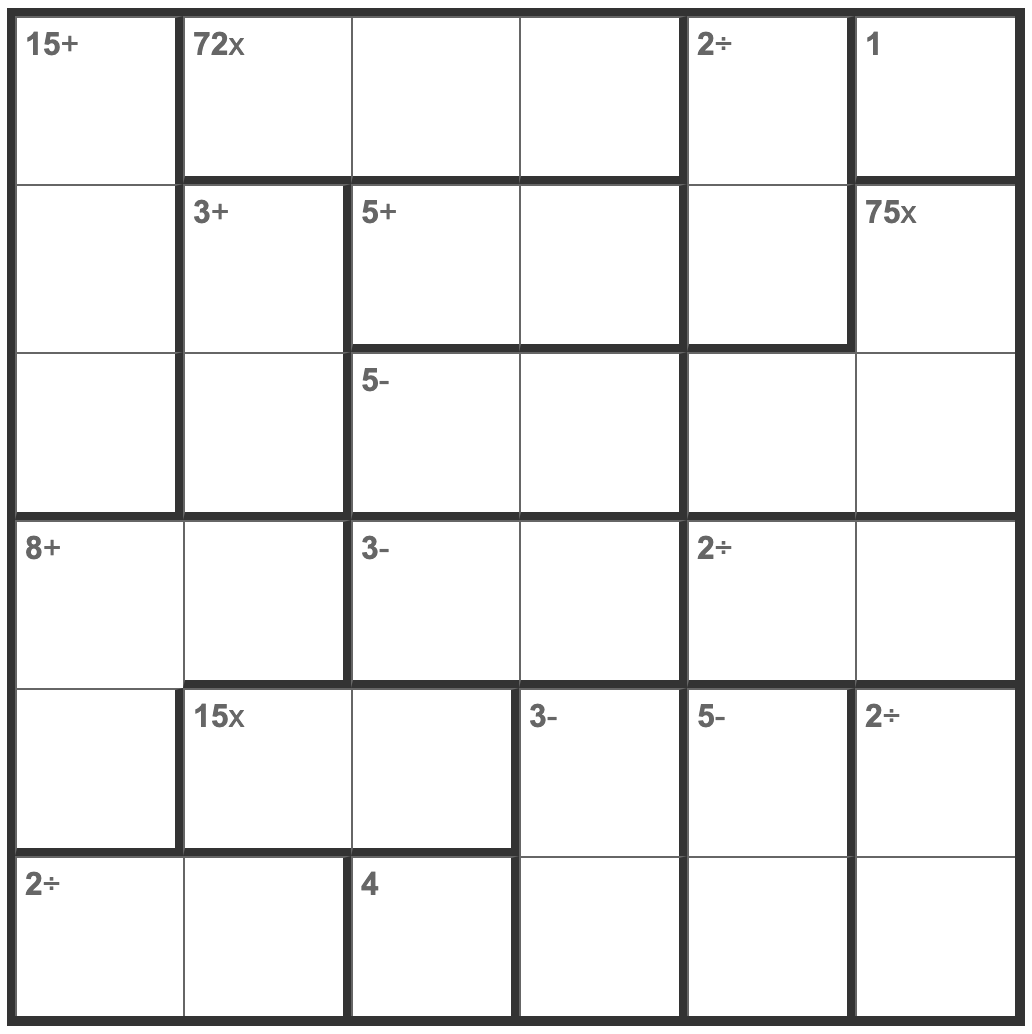
Try a KenKen
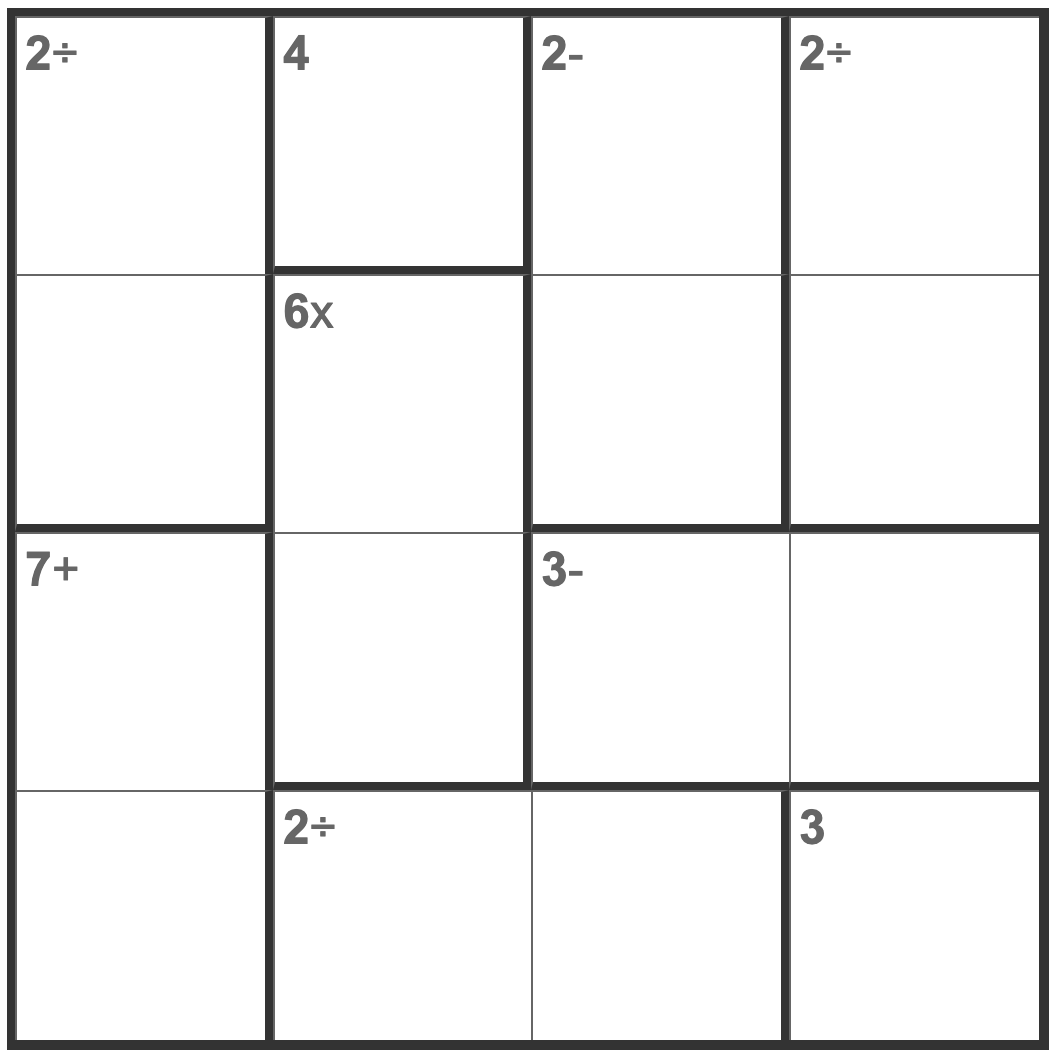
Sudoko is too busy for me, and I get overwhelmed with all the tiny boxes. About 15 years ago, I discovered KenKen puzzles which use the same logic as Sudoko but with a math twist. With practice they get easier. Give KenKen a try... Here is a medium and an easy puzzle
|
|
Rules For Playing KenKen
The numbers you use in a KenKen puzzle depend on the size of the grid you choose. A 3 x 3 grid (3 squares across, 3 squares down) means you use the numbers 1, 2, and 3. In a 4 x 4 grid, use numbers 1 to 4. A 5x5 grid requires you use the numbers 1 to 5, and so on.
The numbers in each heavily outlined set of squares, called cages, must combine (in any order) to produce the target number in the top corner using the mathematic operation indicated (+, -, ×, ÷).
Here's how you play:
- Use each number only once per row, once per column.
- Cages with just one square should be filled in with the target number in the top corner.
- A number can be repeated within a cage as long as it is not in the same row or column.
|
|
|
|
|
|
|