December 20, 2022
Winter Issue #4
Weekly activities and lessons to keep your child thinking and progressing all year long.
"The task of leadership is not to put greatness into humanity, but to elicit it, for the greatness is already there."
Happy Holidays,
Tis the night before winter break and all is well. We successfully made it through the fall semester! I hope all of you have a restful holiday with family and friends.

This week's flyer is full of challenging and thought provoking activities to help keep your child(ren) active and bust over the vacation. This week's book would make a great present and winter read-a-loud. I just loved reading it.

If you know anybody who you think would benefit from the weekly learning activities in this flyer, please share it with your friends and encourage them to join The McManus Files mailing list by following the links on this page.

Peace and Joy,
Mr. McManus
If you feel your child might benefit from a group or individual tutoring program to prepare them for the next phase of their education, please contact McManus Tutoring.

Programs are structured so that students learn independence, accountability, and self-possession. They will develop a repeatable structure that can be used to build success in the future.
Book of the Week
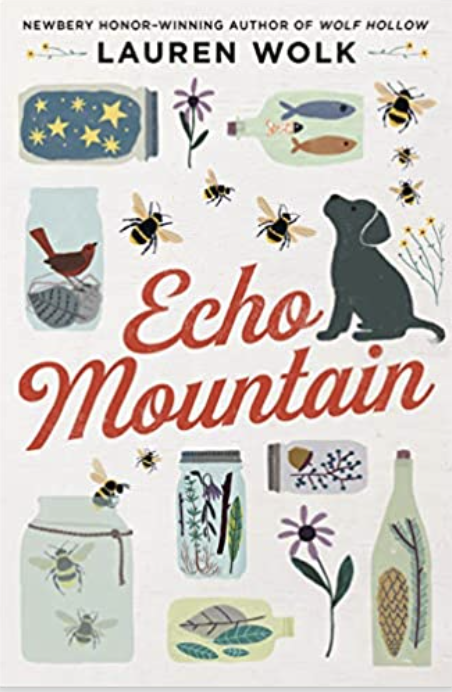
Echo Mountain
by Lauren Wolk
This is a book that I hope will be considered a classic someday. It reminds me of so many other classics I've read, but it is wholly it's own. I felt echos of "The Witch of Blackbird Pond" and "Where the Red Fern Grows". Wolk weaves an engrossing story with the Great Depression as a backdrop and tells how a family adjusts from living in the town to living in the mountains. The protagonist is 12 year old Ellie who finds herself embracing the change in pace and simply. She is delighted by being enveloped by all of nature. When the family suffers a setback, Ellie must step up to fill the void and finds herself... finding herself in the woods of Echo Mountain. She pushes her mother's limits; she pushes her father to come back to them; in the absence of her father, she pushes her younger brother to grow; and most importantly, she pushes herself. This is a great story for a young girl trying to find themselves and still growing to meet the expectations of those around them while also setting their own expectations. This book is pleasantly readable and serves as a great canvas for understanding how one can face adversity with grit. Enjoy!
Inquiry Quest
Apple Oxidation Science Experiment

Learn what keeps apples from browning in this apple oxidation science experiment. Put apple slices in different solutions to find out which one is the best at preventing the apples from turning brown.
Materials:
  • Apple slices
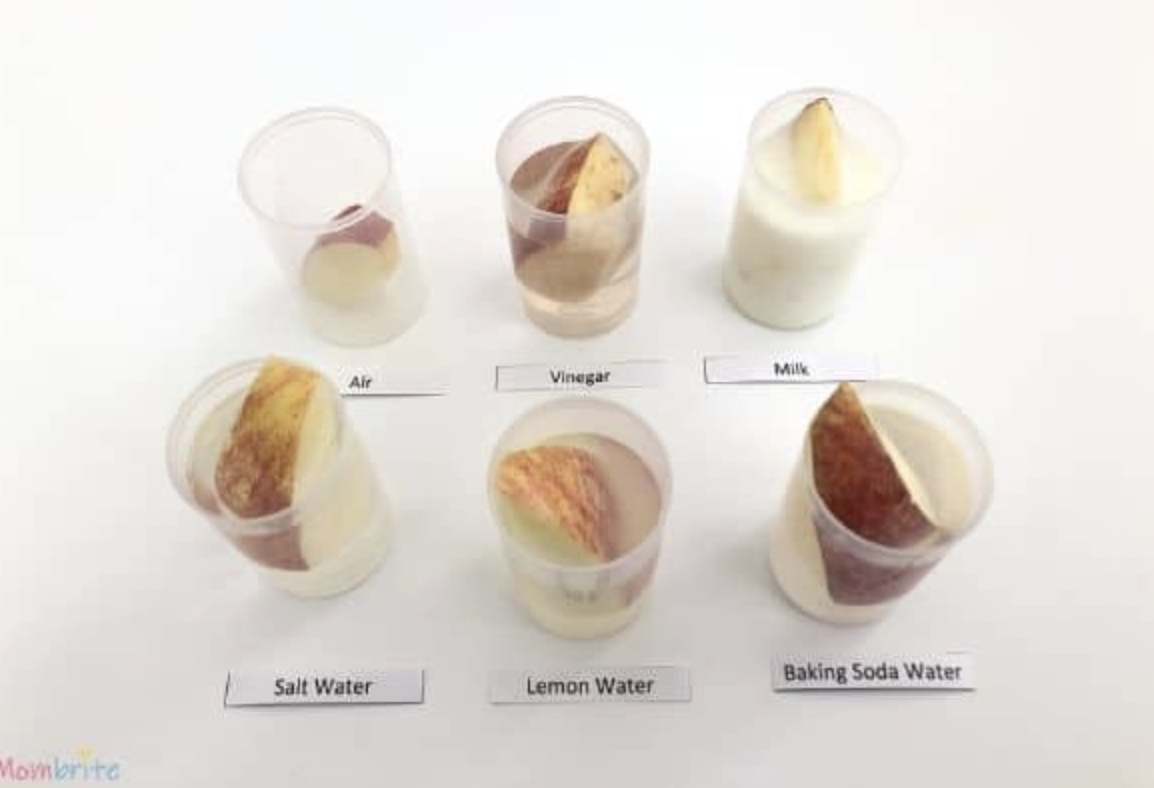
  • A variety of liquids. Here are what we used, but feel free to use whatever you have around the house:
  • Diluted lemon juice
  • Salt water
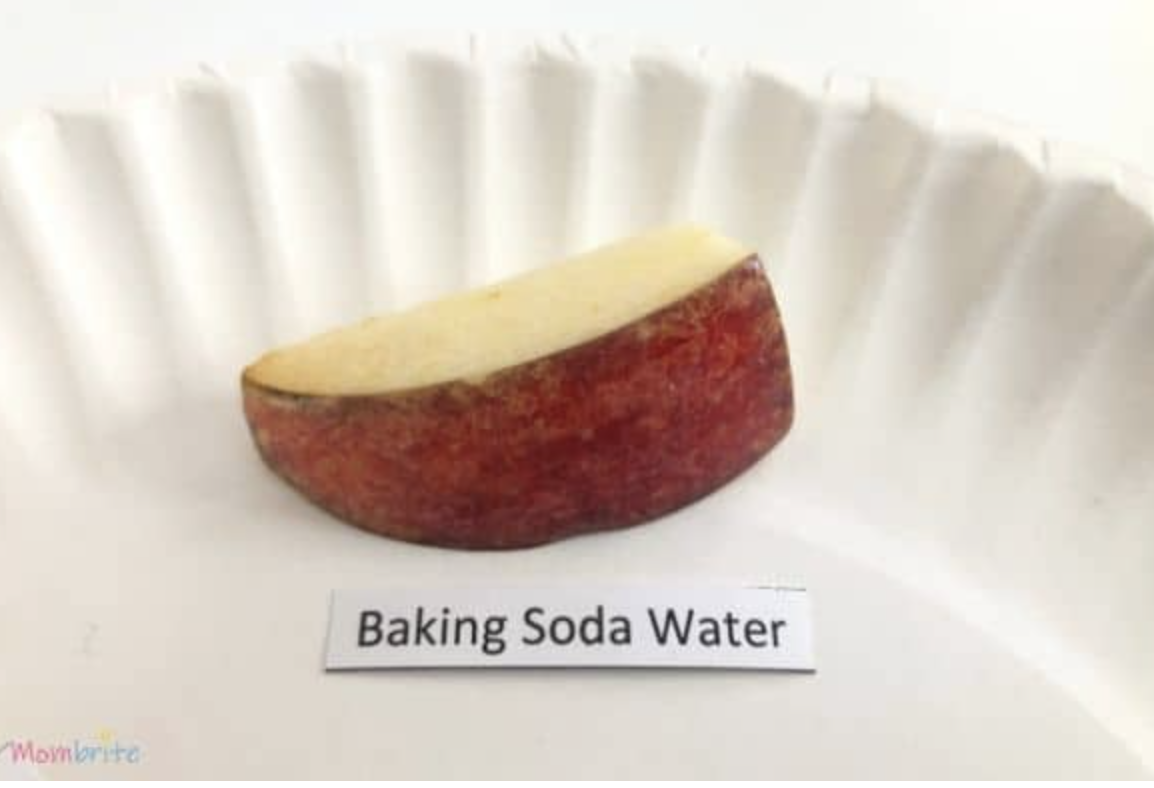
  • Baking soda water
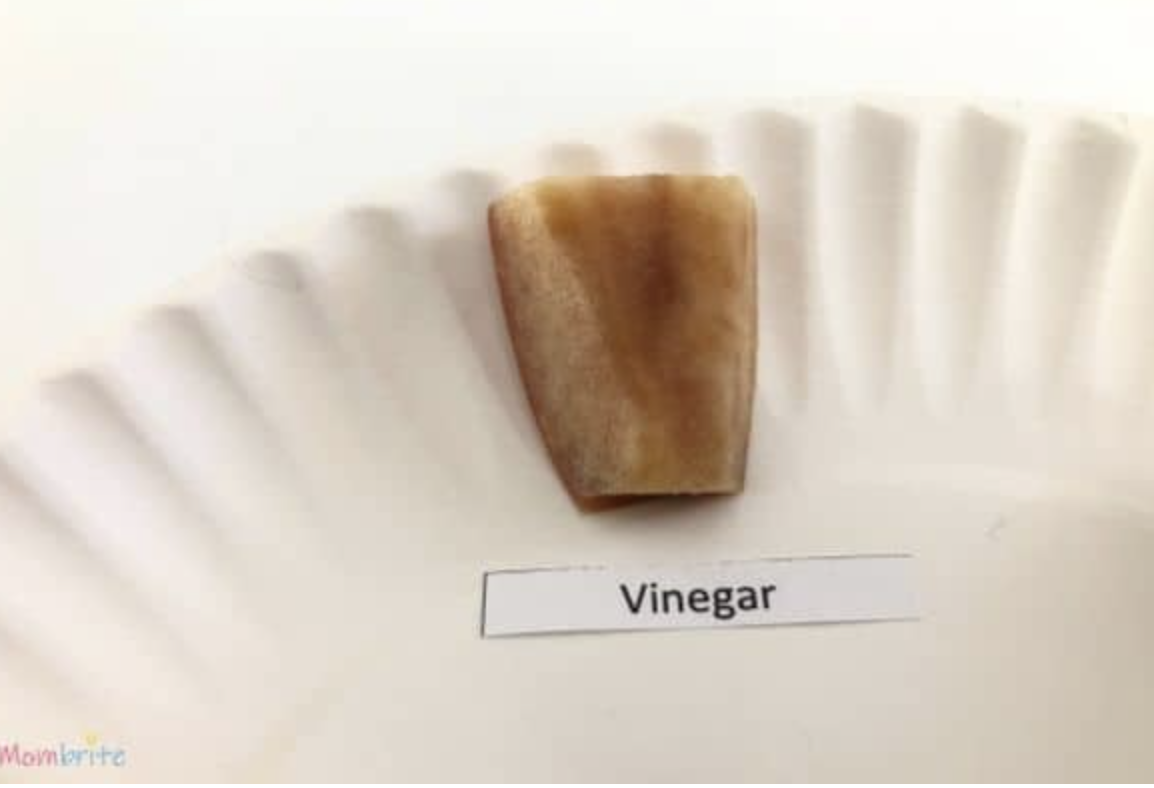
  • Vinegar
  • Milk
  • Small containers
  • Paper and pen for labeling

Directions:
1. Cut out small pieces of paper and write the name of the liquids you are going to test. One of them should be “air” for your control variable.
Having a control variable is necessary so that you can compare it to the other apples that have been submerged in various liquids.
2. Pour the other liquids into separate containers. 
3. Place the labels next to the corresponding containers. You don’t want to wait to do this and forget what the liquids are later. 
4. Place an apple slice in each container so that it’s submerged in the liquid. 
5. Wait a few minutes and take out the apple slices.
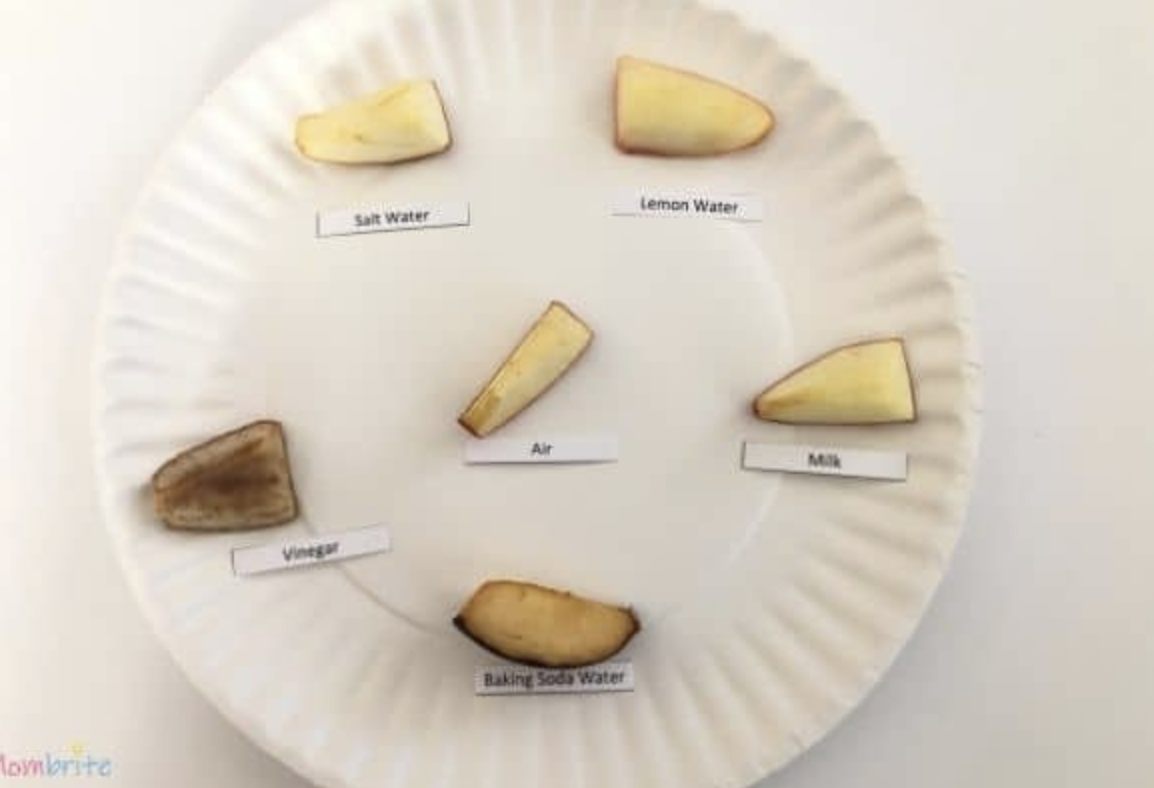
6. Place the apple slices on a plate and put the corresponding labels next to them.
7. Wait an hour and check on the apples. Discuss the progress of the oxidation.
8. Wait a couple more hours and check on the apples. Discuss any new observations.
9. Leave your apple slices for a total of 5 hours.
Check how brown the apple slices are and record observations and draw the oxidized apple slices in your science journal.
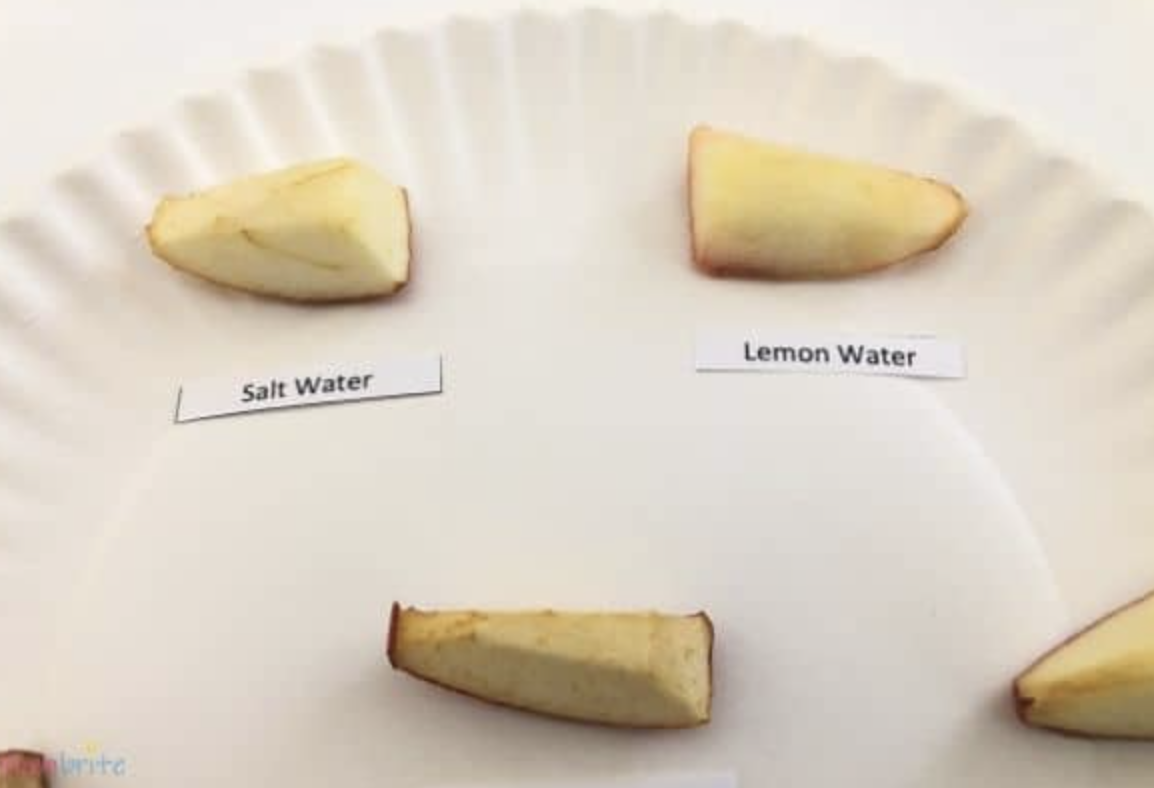
10. Which apple slice browned the fastest? Slowest? Did any of them turn brown really fast but then stayed the same color by the end of 5 hours? Or did any of them turn brown slowly and ended up the darkest brown by the end of the experiment?
You can also lightly squish the apple slices to feel the difference in texture. The apple slice in salt water felt like a sponge. The lemon juice made the apple mushy. And last but not least, the apple slice in milk is rock hard. So interesting!
Science Behind Why Apples Turn Brown
Apples contain an enzyme called polyphenol oxidase (PPO). When you slice open an apple, the PPO reacts with the oxygen in the air and enzymatic browning occurs. The chemical reaction between the PPO and oxygen produces melanin, which is what gives the apple flesh the brown color.  
  
You can slow down oxidation by not allowing oxygen to react with the PPO in the fruit.

Since lemon juice worked so well, we at first thought acidic liquids, or liquids with a low pH level, would prevent the apple from browning. However, vinegar has a low pH level as well and it seemed to have accelerated the browning. So either we made an error in the experiment, or something else is at play here.

Lemon juice contains ascorbic acid or Vitamin C. Ascorbic acid will react with the oxygen before the oxygen reacts with the enzyme in the apple. Therefore, ascorbic acid will prevent the apple from browning until all the acid is used up. Vinegar does not have ascorbic acid, and therefore it did not work.

It is inconclusive why vinegar seemed to have sped up the browning. Vinegar is essentially acetic acid and water. Perhaps we need to dilute the vinegar with water? Is pure white vinegar too strong and started deteriorating the apple flesh? That’s an experiment for another day.

As for baking soda and milk, they are on the other end of the pH spectrum since they are bases.

Interestingly, milk did fairly well in preventing the apple from oxidizing. A future experiment can be designed to see if the fat content in the milk matters when it comes to blocking oxygen from reacting with the enzymes in the apple. 

Baking soda, however, made the apple brown faster. Alkaline (high pH level) liquids contain higher amounts of oxygen. Therefore, covering the apple with baking soda solution actually brought more oxygen to the surface of the apple, accelerating the browning.

Salt water prevented the oxidation of the apple slice because it surrounded the apple cells with a saltier environment than the inside of the cells. As a result, water moves outside of the cells through osmosis in an attempt to equalize the concentration of salt and water inside and outside of the cell.

The water and salt on the surface of the apple slice interfere with oxygen reaching the fruit’s surface and therefore slowing down oxidation.

Final Words on the Apple Oxidation Experiment
There seem to be many ways to prevent apples from browning. Salt water seems to be the best solution, but you would need to wash the salt off the apple afterward if you don’t want the salty taste.

Otherwise, lemon juice works well, but it is more expensive to use lemon juice than salt. And your apple might taste a little zesty and sour, but that might be a good thing!

As you can see, there are many more experiments you can perform after this one. For example, what other fruits turn brown when exposed to air? Will salt work as well on those fruits in preventing them from browning?
Three Writing Prompts and an Essay Topic

These prompts and questions will help jump-start your daily writing. Just as it's important to read for at least 30 minutes each day, you should also write for 30 minutes a day. Don't worry about your organization or spelling, just write!

"The most surprising thing I found in the old house was..."


"I had never seen a dragon before that day in the forest."


“I had the biggest surprise of my life when my cat....”

December 20th
A Shoshone Indian woman named Sacagawea died on this day in 1812. Few other women have been honored with statues and memorials as often as Sacagawea . Why? With her two-month-old son, she traveled with explorers Lewis and Clark, who were traveling west across the country. Sacagawea translated between Native Americans and the two white men. It is said the expedition would never have made it without her.

Prompt: Can you think of any other strong women in history who rose above the crowd? Research them. Design a memorial to honor them and then write a descriptive biography to be placed on your memorial.
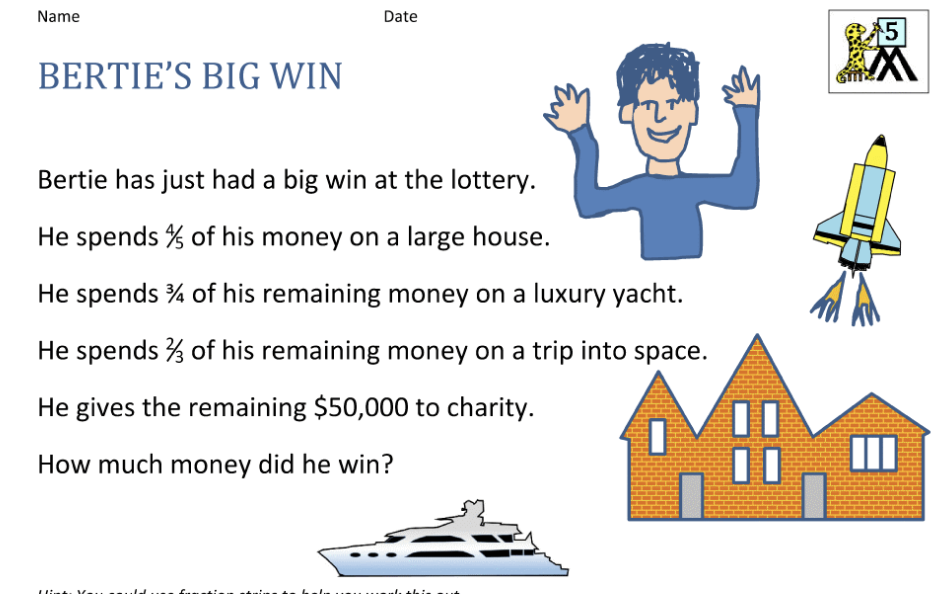
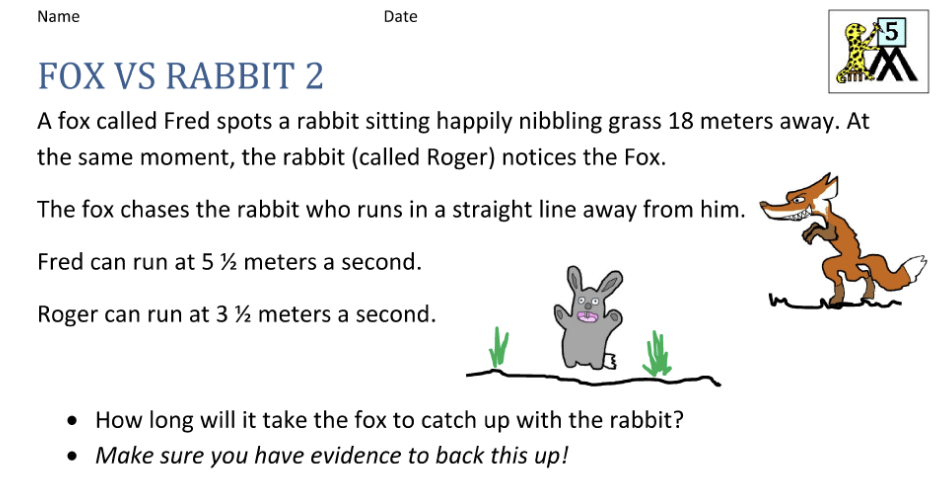
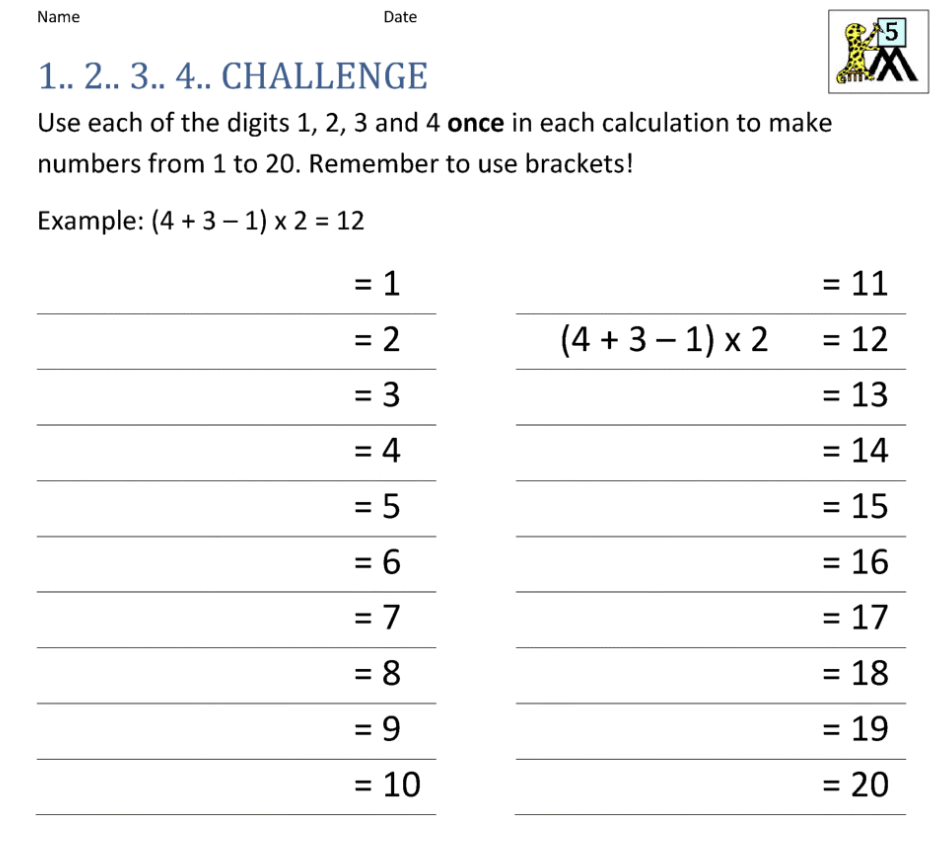
Problems of the Week
To receive your own copy of The McManus Files, join the mailing list
mcmanustutoring.com has all previous issues of The McManus Files posted in its library.
Visit the site by clicking mcmanustutoring.com
Try a KenKen
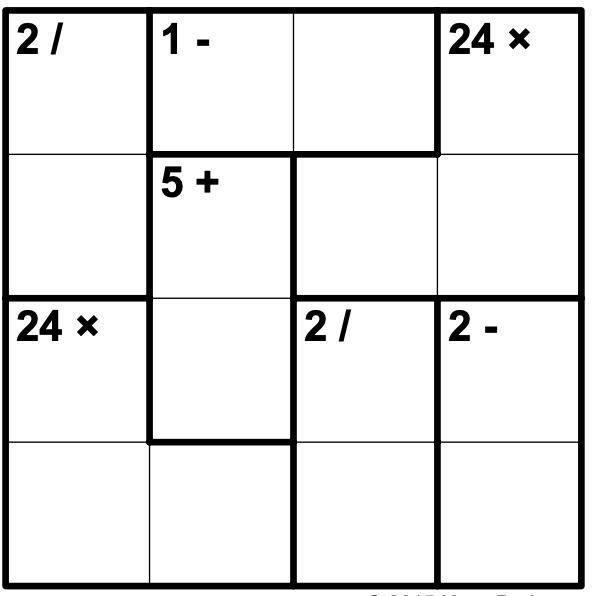
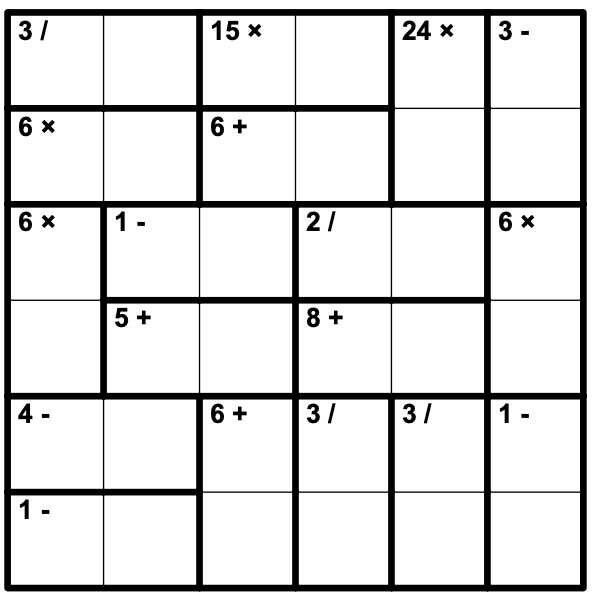
Sudoko is too busy for me, and I get overwhelmed with all the tiny boxes. About 15 years ago, I discovered KenKen puzzles which use the same logic as Sudoko but with a math twist. With practice they get easier. Give KenKen a try... Here is a medium and an easy puzzle
Rules For Playing KenKen
The numbers you use in a KenKen puzzle depend on the size of the grid you choose. A 3 x 3 grid (3 squares across, 3 squares down) means you use the numbers 1, 2, and 3. In a 4 x 4 grid, use numbers 1 to 4. A 5x5 grid requires you use the numbers 1 to 5, and so on.
The numbers in each heavily outlined set of squares, called cages, must combine (in any order) to produce the target number in the top corner using the mathematic operation indicated (+, -, ×, ÷).
Here's how you play:
  1. Use each number only once per row, once per column.
  2. Cages with just one square should be filled in with the target number in the top corner.
  3. A number can be repeated within a cage as long as it is not in the same row or column.