|
|
January 24, 2023
Winter Issue #9
|
Weekly activities and lessons to keep your child thinking and progressing all year long. |
|
“Optimism is a happiness magnet. If you stay positive good things and good people will be drawn to you.”
|
|
Hello and Happy Tuesday,
I hope you are all well and enjoying this outbreak of Forty Niners Fever. The weekends have never been so exciting. I only wish that the rain was falling again to justify my sacrificing four hours to TV on a beautiful day. Ha Ha... If only all our problems were this easy.
Enjoy this week's flyer. Science lovers are going to really enjoy the book recommendation. This was such a fun book to read and it caused me to think a lot about my perceptions of science and space exploration. The Science Inquiry was a joy to write. I love this experiments like this where the outcomes can be turned into an art project. Talk about STEAM. Give it a try. Who knows maybe you'll be making cheese next week :-) Have a great week!
If you know anybody who you think would benefit from the weekly learning activities in this flyer, please share it with your friends and encourage them to join The McManus Files mailing list by following the links on this page.
Stay frosty,
Mr. McManus
|
|
If you feel your child might benefit from a group or individual tutoring program to prepare them for the next phase of their education, please contact McManus Tutoring.
Programs are structured so that students learn independence, accountability, and self-possession. They will develop a repeatable structure that can be used to build success in the future.
|
|
A Rover's Story
by Jasmine Warga
|
|
|
|
Can readers fall for inanimate objects? I certainly did for Res (short for Resilience), a Mars rover readying for his mission. Getting Res ready for his job is no ordinary undertaking. Two scientists, Xander and Rania, equipped with hazmat suits, put their hearts and souls into preparing Res and an accompanying drone (Fly) for the task of going to Mars and recovering a previous rover. Though Xander and Rania talk to Res, he can't answer, despite having a strong desire to communicate with them. This book is so beautifully written and will make readers want to learn more about space, rovers, and Mars! As an adult, I loved it. When they say this is for fans of Wall-E, they are right. Perfect for kids who are enamored with space or robotics, but also a really great story about empathy and emotional connections. I loved the main story, told by the perspective of the robot. But I also loved the letters written by the daughter of one of the main JPL engineers. Seeing her age through the letters really helps readers understand the passage of time when it comes to space exploration. I think this is great for upper elementary/middle school, but also would make a great family read aloud or audio book choice.
Enjoy!
|
|
|
|
|
You can conduct a simple milk-transforming experiment to explore how plastics can be derived from a natural resource such as milk. You can even create a product from you organic casein polymer. |
|
Background
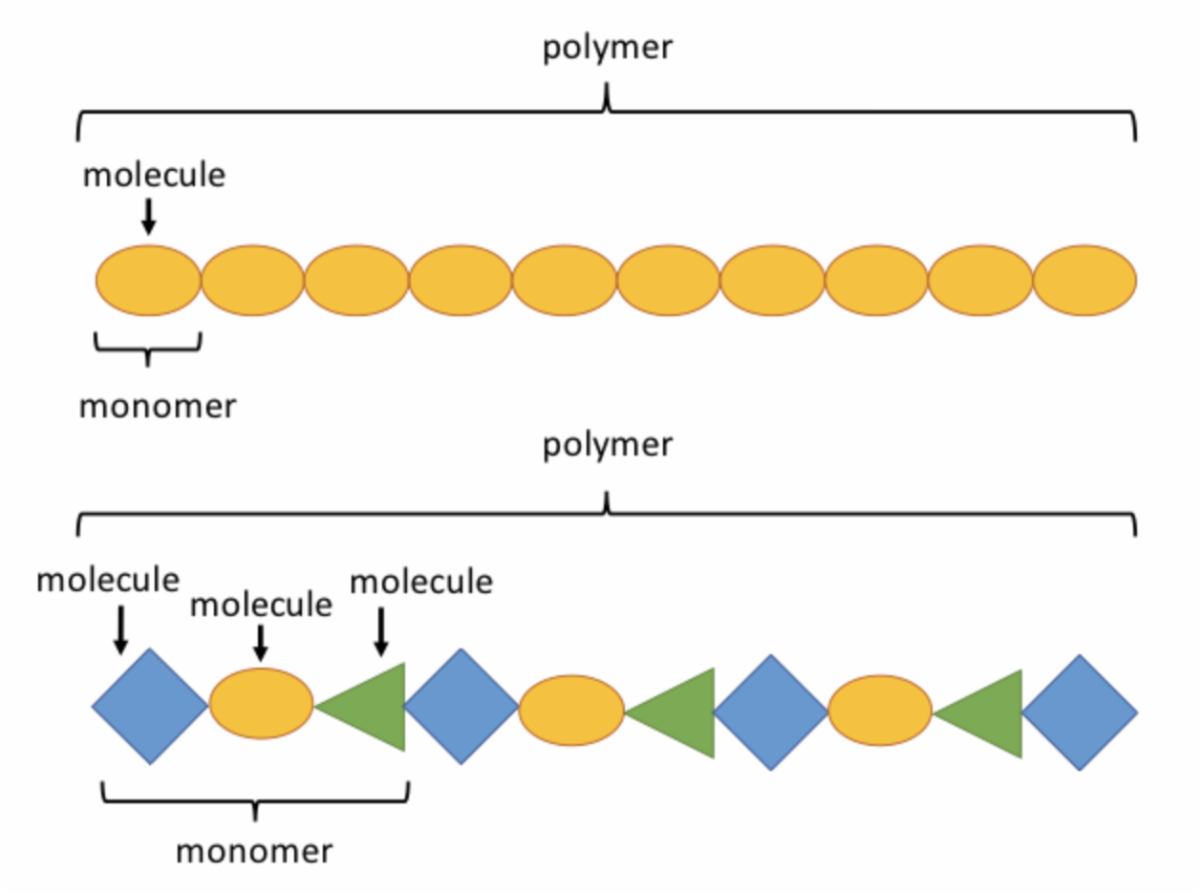
Plastic products are all around us. They are all similar in that they are made up of molecules that are repeated over and over again in a chain called a polymer. Polymers can be chains of one type of molecule, or chains of different types of molecules linked together in a regular pattern as shown in below. In a polymer, a single repetition of the pattern of molecules is called a monomer (even if the polymer is made up of only one type of molecule). The process of making a polymer is called polymerization, which describes the transformation of many individual monomer molecules into large chains or three-dimensional networks. There are many types of polymers, each having a different look or feel depending on what they are made of. Synthetic polymers are man-made and derived from materials such as oil, whereas natural polymers occur in nature and are made of renewable materials such as cellulose from wood or starch. A collective key property of all plastics is that they can be molded into many shapes. How different plastics behave and which products they are used for depends on the molecules they are made of. The name of the plastic also gives information about its chemical structure. For example, the name "polystyrene" (which Styrofoam® is made of) means many ("poly") of "styrene", which is the monomer of this polymer. Polypropylene (PP), on the other hand, is made of many repeat units of propylene.
|
|
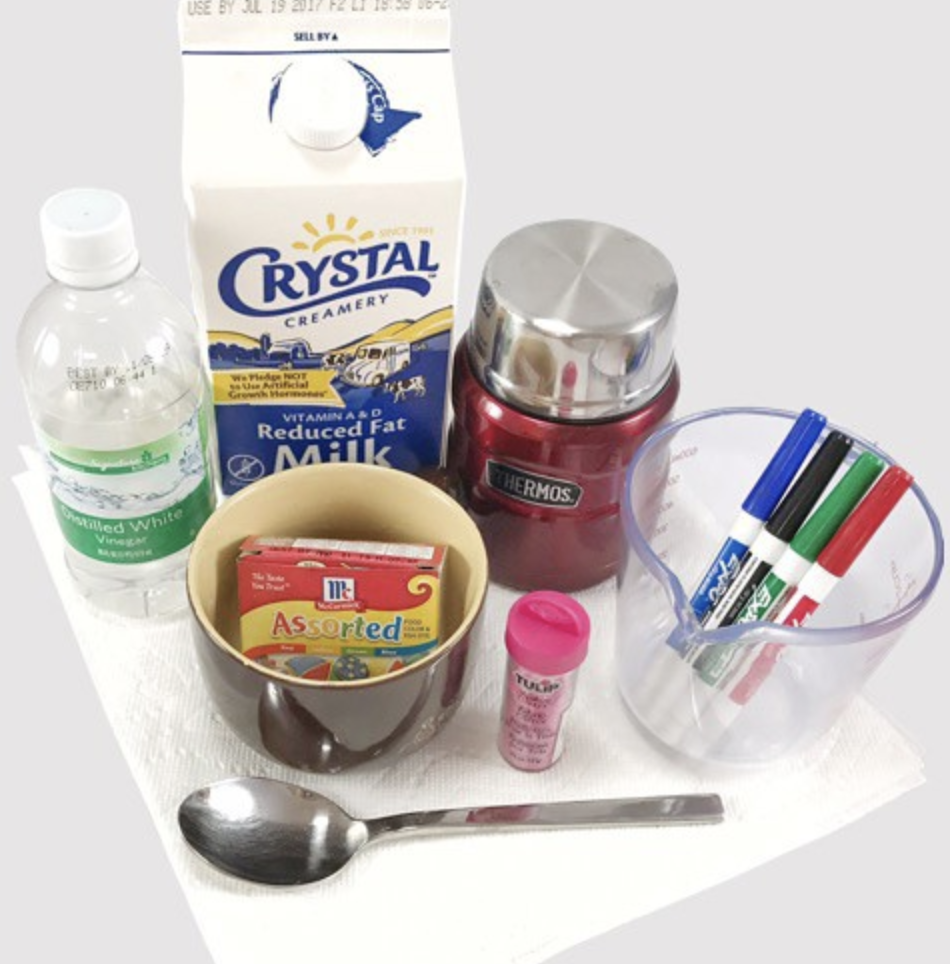
- Measuring cup
- 1 cup milk
- Stovetop oven and pan
- Thermos or insulated container big enough to hold all the hot milk
- 4 tsp. white vinegar
- Coffee mug
- Paper towel stack - about 6
- Spoon
- Optional: food coloring, glitter, or markers
|
|
|
What does milk have to do with polymers? Besides water, fat, and lactose, milk contains many proteins, called casein. Normally, the caseins form spherical shapes to stay in solution, but these spheres can easily be changed, and once changed, cannot re-form into spheres. For example, when milk is heated and combined with an acid, such as vinegar, the casein molecules undergo polymerization and unfold into long chains, forming curd. Each casein molecule is a monomer and the chain of casein monomers is a polymer—a natural plastic is created! The polymer can be scooped up and molded, which is why plastic made from milk is called casein plastic. From the early 1900s until about 1945, galalith, a casein plastic made with the chemical formaldehyde, was quite common. It has been used to make buttons, decorative buckles, beads and other jewelry, fountain pens, the backings for hand-held mirrors, and fancy comb and brush sets. |
|
Procedure
• Heat 1 cup of milk in a pan on a stovetop until the milk is steaming. It should be about the same temperature as you would want milk to be for making hot cocoa. Pour the milk into a coffee cup.
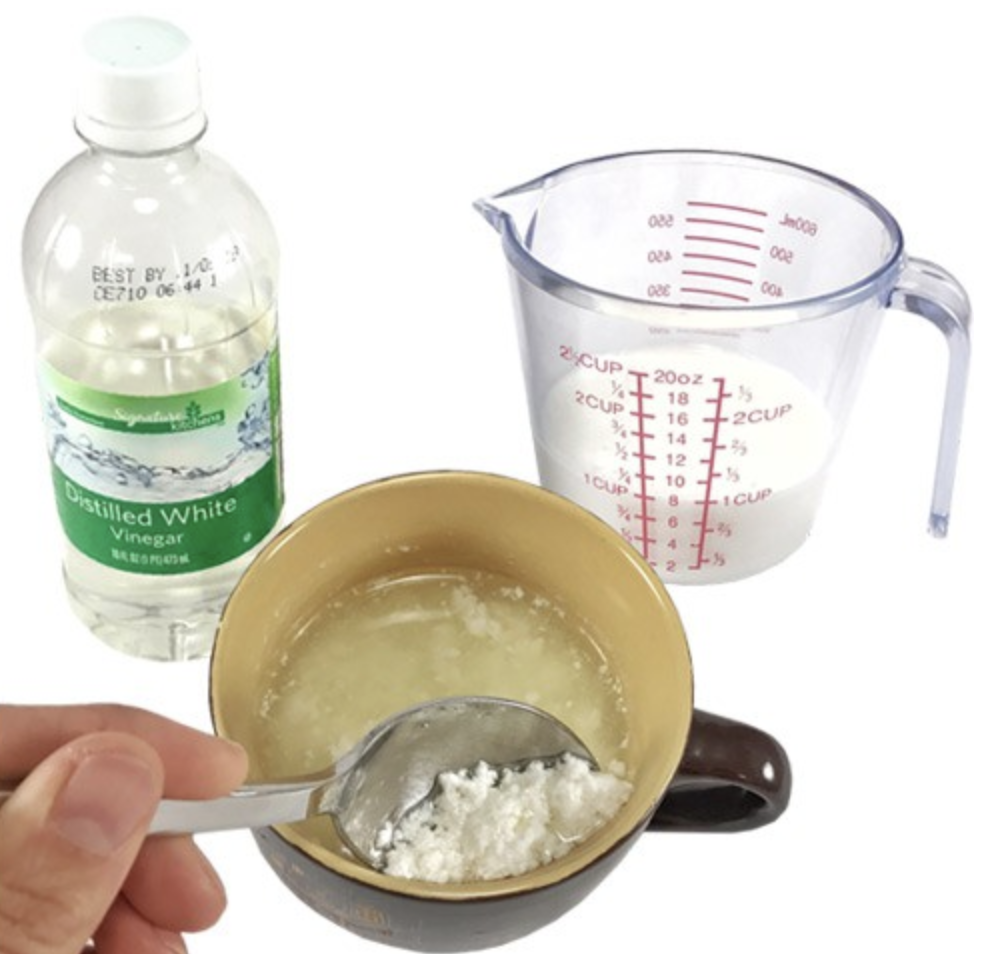
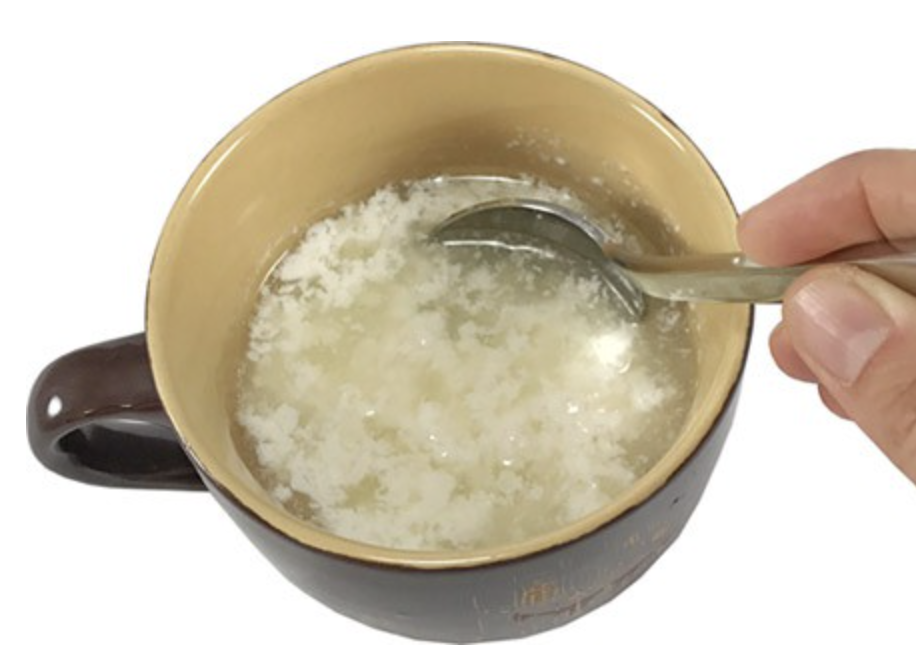
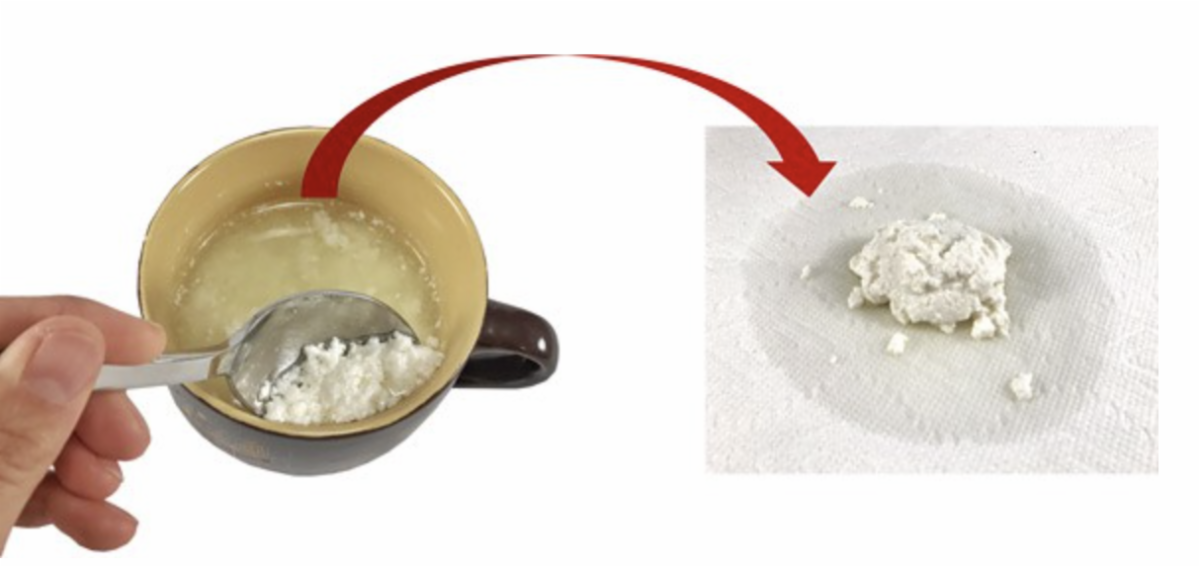
• Add the 4 teaspoons white vinegar to the steaming milk. When the hot milk and vinegar are mixed, the milk should form white clumps (curds) as shown below. Mix the mug of hot milk and vinegar slowly with a spoon for a few seconds.
|
• Once the milk and vinegar mixture has cooled a bit, use a spoon to scoop out the curds. Tilt the spoon against the inside of the mug to let excess liquid drain out while retaining the curds in the spoon. Collect as much of the curds as you can.
• Put the curds on top of the paper towel stack.
• Fold the edges of the paper towel stack over the curds and press down on them to absorb excess liquid from the curds. Two more paper towels can be pressed down on top of the curds to soak up the rest of the extra liquid.
|
|
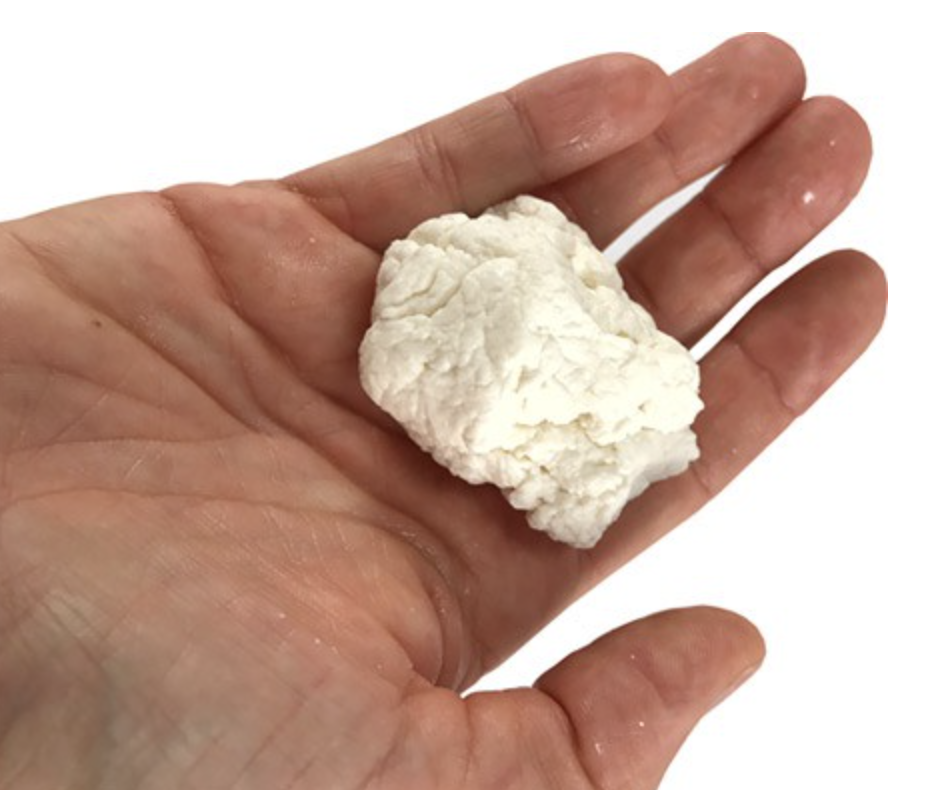
• Knead all of the curds together in a ball of dough. This is the casein polymer.
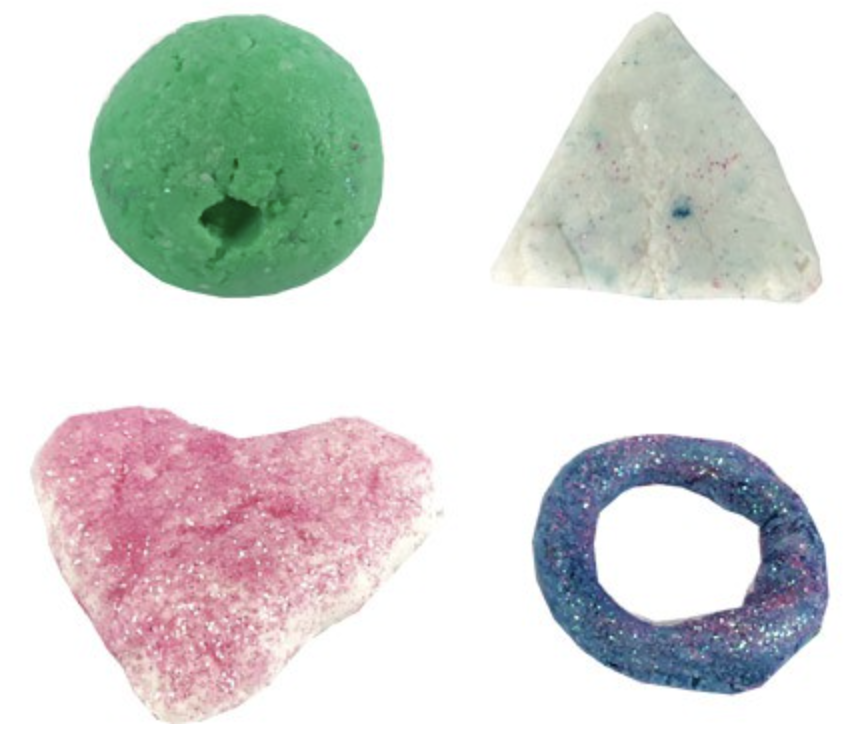
• You make the casein plastic into something. You can color, shape, or mold it now (within an hour of making the plastic dough) and leave it to dry on paper towels for at least 48 hours. To shape the plastic, you must knead the dough well before shaping it. Molds and cookie cutters work well, or, with more patience, the dough can be sculpted. Food coloring, glitter, or other decorative bits can be added to the wet casein plastic dough, and dried casein plastic can be painted or colored with markers. Once it has dried, the casein plastic will be hard. Drying time varies depending on the thickness of the final item (thicker pieces take longer), but plan on at least two days.
The word plastic is derived from the Greek word plastikos which means "capable of being shaped or molded."
|
|
|
Three Writing Prompts and an Essay Topic
These prompts and questions will help jump-start your daily writing. Just as it's important to read for at least 30 minutes each day, you should also write for 30 minutes a day. Don't worry about your organization or spelling, just write!
"Yesterday, I saw an old man walking down the street not wearing any shoes."
"The little boy looked at me and said, “The choice is yours. What will you decide?”
"I thought it was my new puppy making that strange noise, but it was actually…"
|
|
January 24th
Today is the anniversary of the California Gold Discovery of 1848, when James Marshall (an employee of sawmill owner John Sutter) first saw gold in the tributary of the Sacramento Ricer near Coloma, California.Although efforts to keep the discovery a secret, the famous Gold Rush soon followed. More than 200,000 gold seekers appeared at Sutter's Mill, hoping to find their fortunes.
Prompt:
Think about all those people suddenly appearing in one spot! What would it take (if anything!) to cause you to drop everything and go to another part of the country?
|
|
Try a KenKen
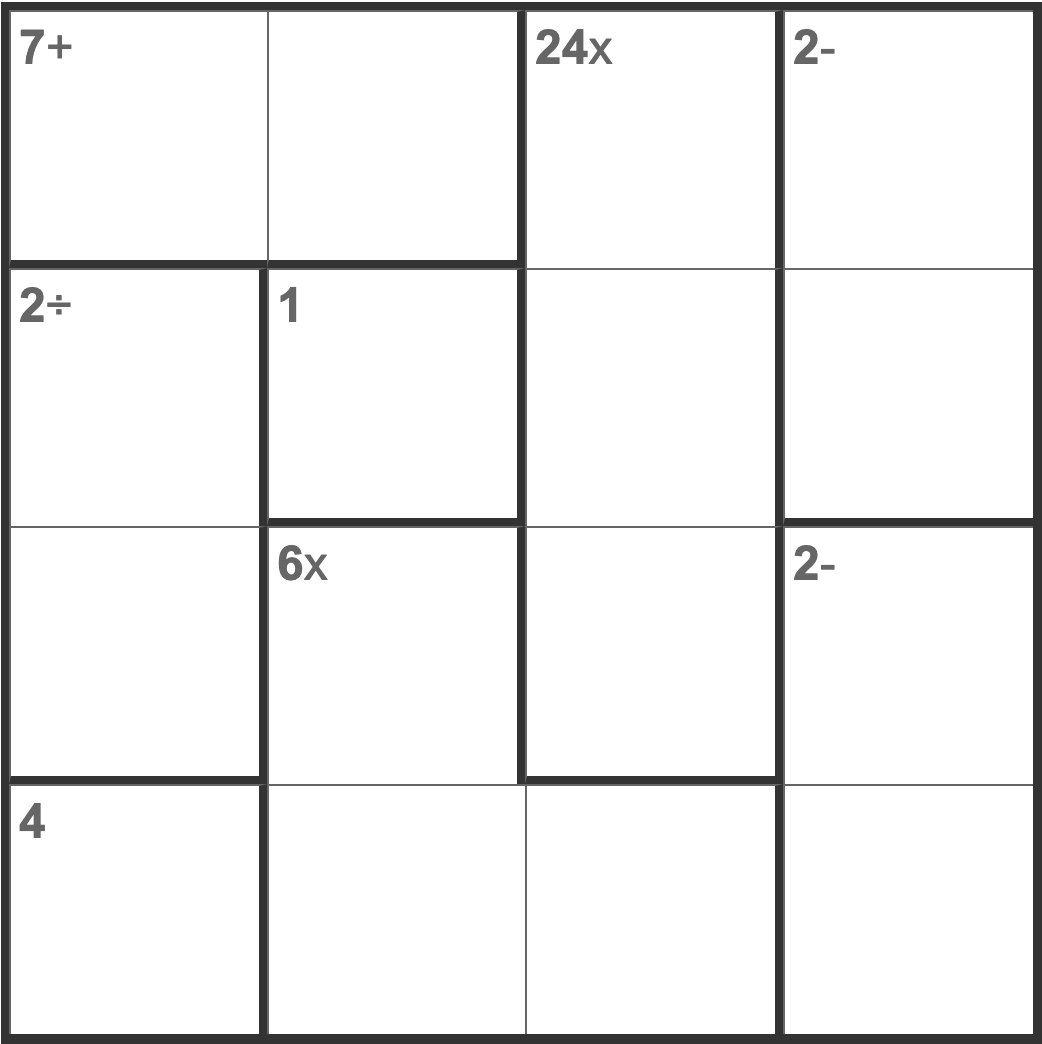
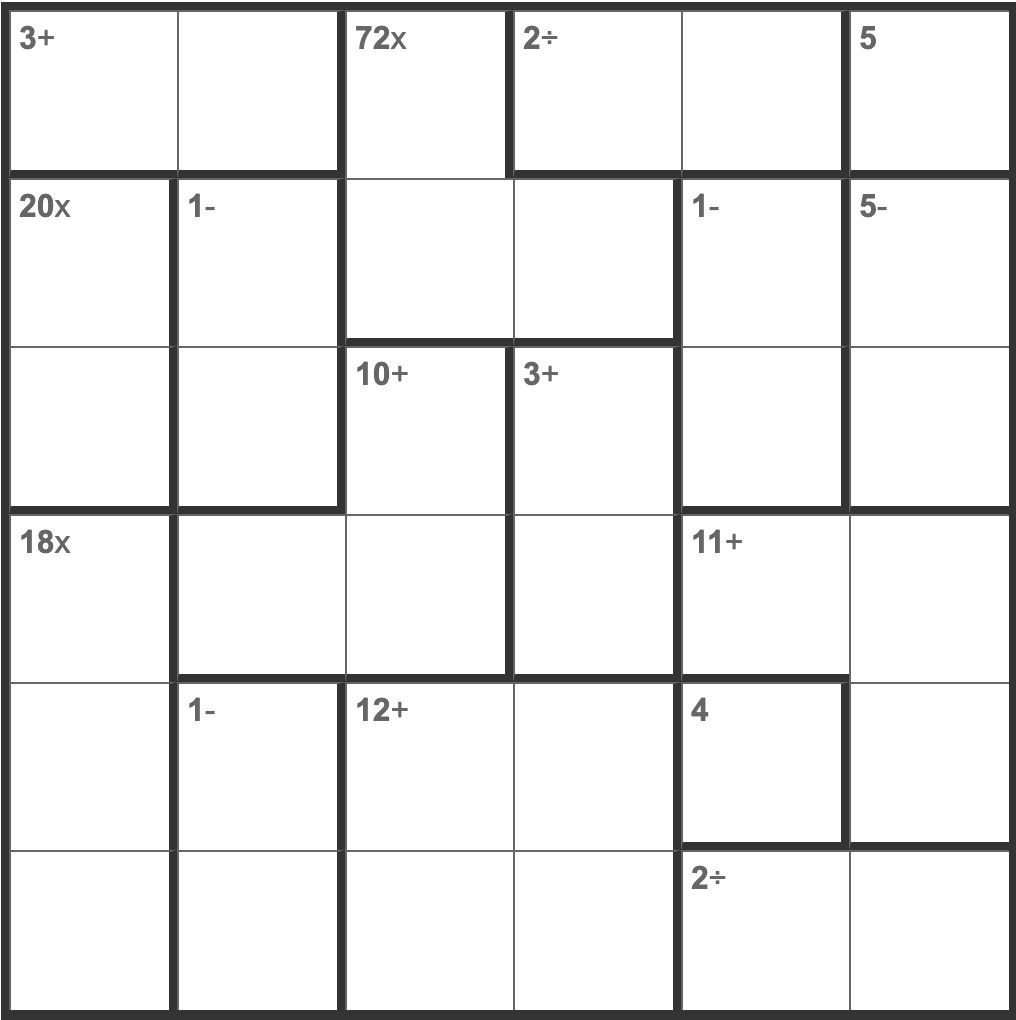
Sudoko is too busy for me, and I get overwhelmed with all the tiny boxes. About 15 years ago, I discovered KenKen puzzles which use the same logic as Sudoko but with a math twist. With practice they get easier. Give KenKen a try... Here is a medium and an easy puzzle
|
|
Rules For Playing KenKen
The numbers you use in a KenKen puzzle depend on the size of the grid you choose. A 3 x 3 grid (3 squares across, 3 squares down) means you use the numbers 1, 2, and 3. In a 4 x 4 grid, use numbers 1 to 4. A 5x5 grid requires you use the numbers 1 to 5, and so on.
The numbers in each heavily outlined set of squares, called cages, must combine (in any order) to produce the target number in the top corner using the mathematic operation indicated (+, -, ×, ÷).
Here's how you play:
- Use each number only once per row, once per column.
- Cages with just one square should be filled in with the target number in the top corner.
- A number can be repeated within a cage as long as it is not in the same row or column.
|
|
|
|
|
|
|