|
|
January 3, 2023
Winter Issue #6
|
Weekly activities and lessons to keep your child thinking and progressing all year long. |
|
“You've got to get up every morning with determination if you're going to go to bed with satisfaction.” |
|
It's 2023!
Raise you hand if you remember all the hype with Y2K. What a nice long break this has been. Except for the constant stream of storms - I'm not complaining; we need every drop, but this barrage of atmospheric rivers has been intense. I like to be outdoors, but these rain storms have turned my rain suit into a sopping mess.
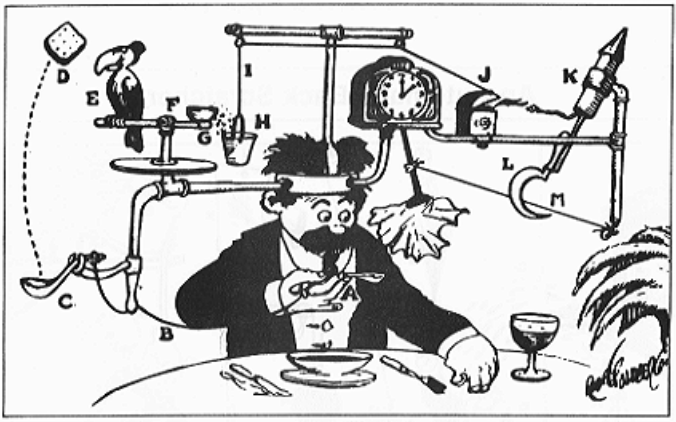
This week's issue has the perfect activities for the indoors. I'm posting the directions to make a Rube Goldberg Machine. This is a fun project that may take a few days of planning and building and testing. Make sure to check out some of the examples of Rube Goldberg Machines on Youtube. They are fun to watch and will spark innovation. I've found another fantastic book that I know your child(ren) will enjoy. This special coming of age story, about an immigrant girl who is finding it difficult to fit in at her new school, is like an instruction guide for surviving middle school. Being written in verse just adds to the fun of reading and sharing the book. Check it out. I know it will become a household favorite. This week's flyer also has five new writing prompts and slew of math activities and problems to solve. Have fun!
If you know anybody who you think would benefit from the weekly learning activities in this flyer, please share it with your friends and encourage them to join The McManus Files mailing list by following the links on this page.
Stay dry and drive safe,
Mr. McManus
|
|
If you feel your child might benefit from a group or individual tutoring program to prepare them for the next phase of their education, please contact McManus Tutoring.
Programs are structured so that students learn independence, accountability, and self-possession. They will develop a repeatable structure that can be used to build success in the future.
|
|
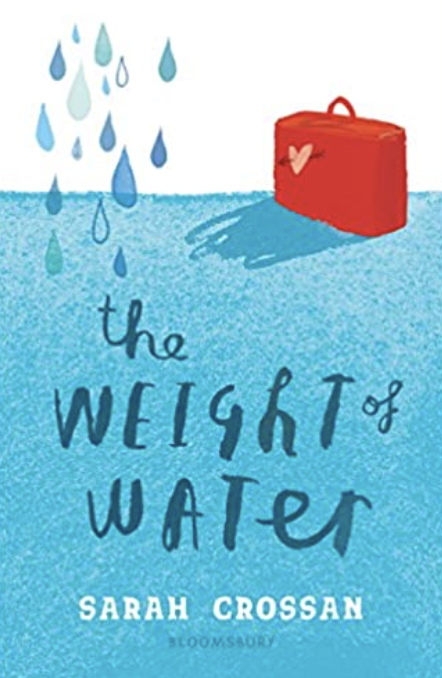
The Weight of Water
by Sarah Crossan
|
|
|
|
This relatively short book is written in beautiful verse and tells the story of a young Polish girl attempting to fit in after a move to England to find her father. The writing is rich and delicious, and the combination of Kasienka's alienation and her passion for swimming make her such a compelling character who propels the reader through the well-chosen words. She's a character who is easy to love and hard to leave when her story closes. Don't let the fact that the book is all in verse put you off; that is exactly why it is so marvelous. With the lightest touch the author sketches out exactly what it feels like to be teenaged and different, but it is also a story of quiet courage. I wish I had a class set of the texts; I could teach a majority of my curriculum with this book alone. Plus, there is no better way to introduce poetry to young readers. It is a magical book in an unexpected format. Enjoy!
|
|
|
|
|
Design Challenge:
Make a Rube Goldberg Machine
In this design challenge, your will make your very own Rube Goldberg Machine! You will use household reusable materials to make a complex machine that completes a simple task. This activity allows you to be creative with your ideas while following the design thinking process of brainstorming,
|
|
|
|
Any materials found around
the house, such as:
Cardboard
Popsicle sticks
Cotton balls
Dominoes
Legos
Paper cups
Toy cars
Duct tape
Marbles
String
Paper towel tubes
Pencil and paper for note taking and brainstorming
Scissors
Tape and/or glue
|
|
|
|
What You Do:
1. Rather than simplifying a complicated task, Rube Goldberg Machines perform a simple task in a complicated way. Watch the video of the Rube Goldberg Machine above. (There are many more really fun and creative examples of Rube Goldberg Machines on youtube.) What makes these machines different from others you have seen.
2. Brainstorm tasks for your machine to complete. Some of these could be:
- Turning on or off a light switch
- Turning off an alarm clock
- Squeezing toothpaste on a toothbrush
- Turning on a faucet
- Opening a phone app
- Popping a balloon
3. Choose which task you would like to use for your machine.
4. Collect various materials that you think might be useful in creating a machine to complete your chosen task. Remember you will not have to use all of the items in yopur machine.
5. After collecting materials, brainstorm different ways you can use your materials to complete your task. Write or draw several ideas on a piece of paper, and remember the purpose of your machine: completing a simple task in a complicated and creative way. Design your machine backwards, working from the completion of the task itself and adding on more elements to the beginning of the machine.
6. After you have finished brainstorming, choose the design you think will work best. Once again, remember the purpose of their Rube Goldberg Machine: to complete a simple task using a complicated machine. This is an important step of the design thinking process because it teaches you to prioritize the functionality of your design over personal preferences, and it prevents you from getting too emotionally attached to one design.
7. Once you have decided on your design, start building.
8. After you have finished building your machine, it’s time to test it! If your machine works, congratulations on creating a functioning Rube Goldberg machine. Ask yourself which parts they could change to make a more complex machine. Can you create another one of your designs and compare the two machines. If your machine does not work, what do you think you need to do to make it work?
|
|
Three Writing Prompts and an Essay Topic
These prompts and questions will help jump-start your daily writing. Just as it's important to read for at least 30 minutes each day, you should also write for 30 minutes a day. Don't worry about your organization or spelling, just write!
"The air turned black as icy fingers grasped my arm and..."
"As the bedroom door handle turned slowly, a shrill cry echoed from..."
“Grey and foreboding, the castle stood atop the hill looking down across the...”
|
|
January 3rd
J.R.R. Tolkien was born on January 3, 1892 in Bloemfontein, South Africa. J.R.R. Tolkien is best known as the author of The Hobbit and The Lord of the Rings trilogy. These books have been recreated into amazing movies. It is always fun to watch the movie after reading a book. A popular activity is comparing the original book to the movie. Should people read the book or see the movie first? What do you think? Why do you think this way?
On January 3, 1959, Alaska became the forty-ninth state. Is Alaska a state that you would like to visit? Why or why not. If not, which state would you like to visit? Why do you want to visit this state instead of Alaska?
|
|
Try a KenKen
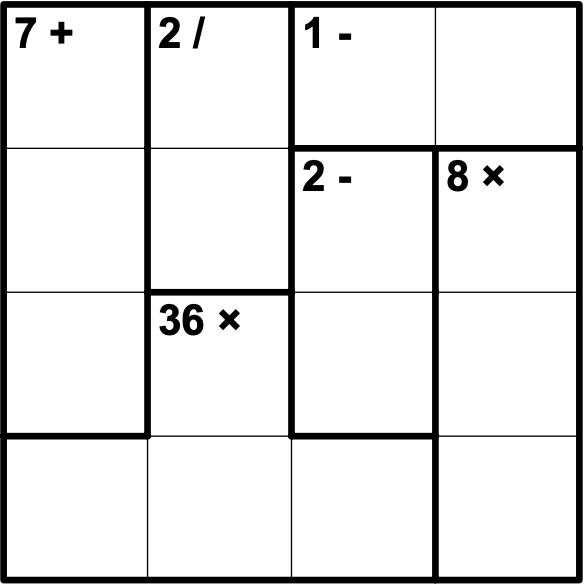
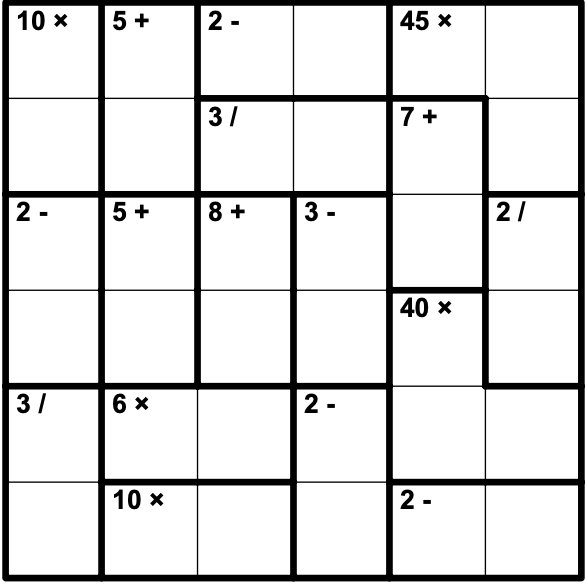
Sudoko is too busy for me, and I get overwhelmed with all the tiny boxes. About 15 years ago, I discovered KenKen puzzles which use the same logic as Sudoko but with a math twist. With practice they get easier. Give KenKen a try... Here is a medium and an easy puzzle
|
|
Rules For Playing KenKen
The numbers you use in a KenKen puzzle depend on the size of the grid you choose. A 3 x 3 grid (3 squares across, 3 squares down) means you use the numbers 1, 2, and 3. In a 4 x 4 grid, use numbers 1 to 4. A 5x5 grid requires you use the numbers 1 to 5, and so on.
The numbers in each heavily outlined set of squares, called cages, must combine (in any order) to produce the target number in the top corner using the mathematic operation indicated (+, -, ×, ÷).
Here's how you play:
- Use each number only once per row, once per column.
- Cages with just one square should be filled in with the target number in the top corner.
- A number can be repeated within a cage as long as it is not in the same row or column.
|
|
|
|
|
|
|