|
|
July 11, 2023
Summer Issue #3
|
Weekly activities and lessons to keep your child thinking and progressing all year long. |
|
“Learn from yesterday, live for today, look to tomorrow, rest this afternoon.”
|
|
Hello,
What is your favorite part of summer? Mine has always been the twilight period between sunset and darkness. I love those last minutes of a long, productive day as stars and planets start to appear in the deep purple sky. And, it is the perfect time to play hide-and-seek. I hope you are taking full advantage of and enjoying your favorite parts of summer.
This week's flyer has 6 fresh writing prompts, 3 challenging math problems, 1 multi-cultural art project, 1 Windy Hill Preserve hiking suggestion, 1 link to the Burlingame Public Library, 1 computer game that involves problem solving, 1 book recommendation that is sure to encourage independent reading, 1 very active STEAM Challenge exploring Newton's three laws of movement, and 1 great quote from Snoopy... Basically, this week's flyer adds up to a ton of fun and learning. I hope you enjoy it.
If you know anybody who you think would benefit from the weekly learning activities in this flyer, please share it with your friends and encourage them to join The McManus Files mailing list by following the links on this page.
Peace,
Mr. McManus
|
|
If you feel your child might benefit from an individual group or tutoring program to prepare them for the next phase of their education, please contact McManus Tutoring.
Programs are structured so that students learn independence, accountability, and self-reliance. They will develop a repeatable structure that can be used to build success in the future.
|
|
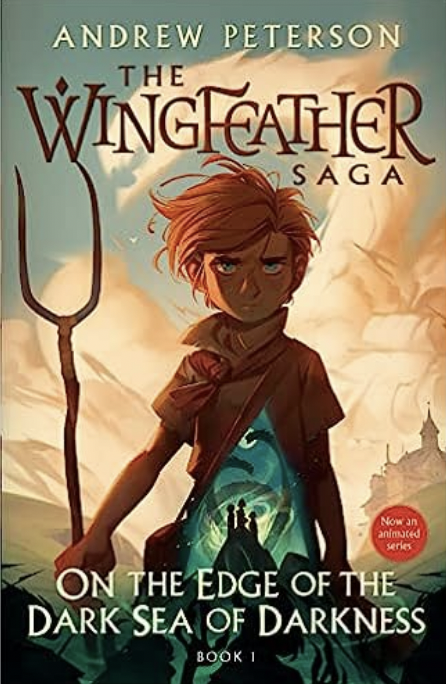
On the Edge of the Dark Sea of Darkness: Book 1 of the Wingfeather Saga
•••
by Andrew Peterson
|
|
|
|
If your child is a lover of fantasy and adventure novels, this series will keep them busy for the rest of the summer. Full of characters rich in heart, smarts, and courage, On the Edge of the Dark Sea of Darkness (I love the intentional redundancy. It struck me as pretty funny, but it’s really funny. It’s my kind of funny; a bit dry at times, but witty and clever. Within a few pages, I felt like Peterson, and I had a few inside jokes together) presents a world of wonder and a tale children of all ages will cherish, families can read aloud, and readers’ groups are sure to discuss for its layers of meaning about life’s true treasure and tangle of the beautiful and horrible, temporal and eternal, and good and bad. This story is beautifully written and illustrated. It is a witty and quirky, exciting tale with plenty of page turning, edge-of-your-seat mystery that will keep the most reluctant reader spellbound and asking for more. Enjoy!
|
|
|
|
|
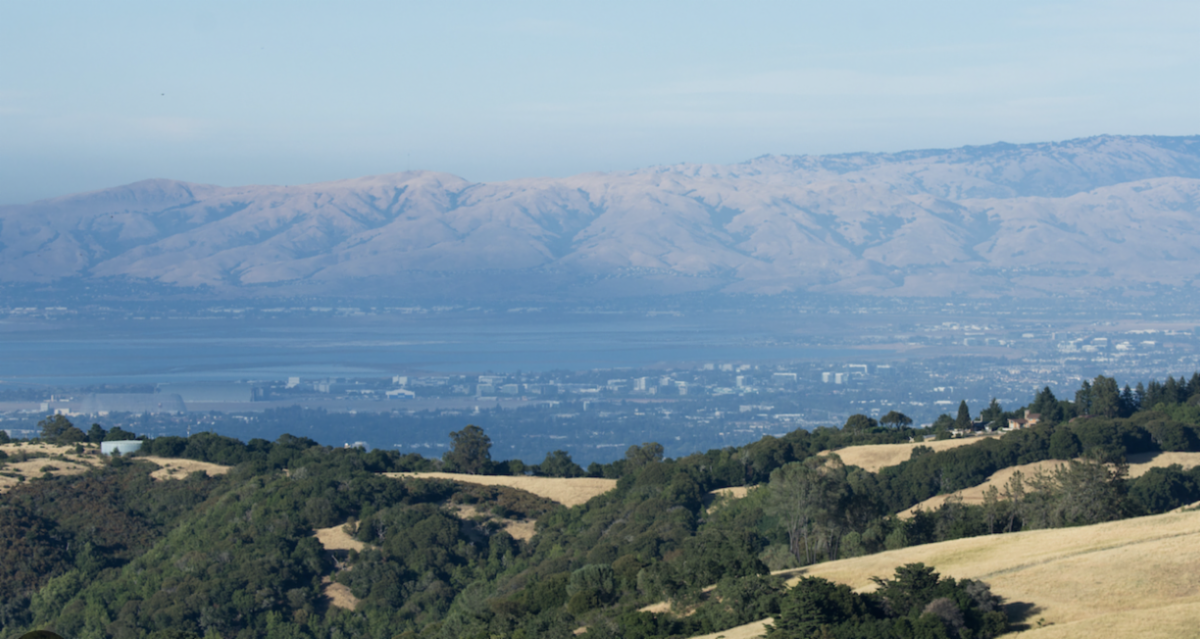
Windy Hill is a popular and very enjoyable preserve that stretches from Portola Valley, at the base of the Santa Cruz Mountains, to Skyline Boulevard, at the crest. In between is some of the most attractive woodland on the bay side of the ridge, including a few pretty impressive old-growth Douglas-Fir trees, plus the distinctively bald ridge that rises up to Windy Hill itself.
Windy Hill has a relatively low elevation, so its views of the Bay Area aren’t as spectacular as, say, the view from nearby Black Mountain Trail in Rancho San Antonio County Park, but the views are still pretty nice and, combined with the exceptionally nice trails, make a hike that’s hard to beat.
In fact, Windy Hill’s low elevation is part of what makes the park so attractive. Since it’s below a saddle in Skyline Ridge, summertime fog often spills over the ridge into the park, resulting in forests that are much more lush than those just a few miles to the south. If at the beginning of this hike you see a bank of fog spilling over Skyline Ridge and down the hills above Portola Valley, Skyline Ridge is going to be cold, damp, and windy, even if it’s warm and sunny at the bottom. Temperatures can drop into the 50s even in July.
|
|
Balloon Physics STEM Challenge – Exploring Newton’s Laws
I am a lover of inquiry based problem solving, here is a free form exploration of Newton’s Laws of Motion using some really fun physics activities.
The Science Behind Balloon Physics Activities
Let’s chat about the science behind these balloon races. When you blow up a balloon you are filling it up with air that is under pressure. When the air escapes from the balloon the escaping air exerts thrust or force on the balloon which propels it forward. The air escapes backward – the balloon races forward. Action – reaction. Or more formally known as Newton’s Third Law of Motion. For every action, there is an opposite and equal reaction. But that’s the third law. For this week's Inquiry Quest we are looking at Newton's First and Second Law of Motion.
Are there certain variables that can have an impact on this reaction? This question move us into exploring Newton’s Second Law of Motion.
Newton’s Second Law of Motion: The acceleration of an object as produced by a net force is directly proportional to the magnitude of the net force, in the same direction as the net force, and inversely proportional to the mass of the object.
Sadly, simply saying this law probably caused your eyes to glaze over, but wait! This exploration is just as much fun as regular balloon races. Simply put, the second law states that the acceleration of an object is dependent upon two variables – the net force acting upon the object and the mass of the object. More force means it moves faster. More weight means it moves slower and needs more force to get it moving.
|
|
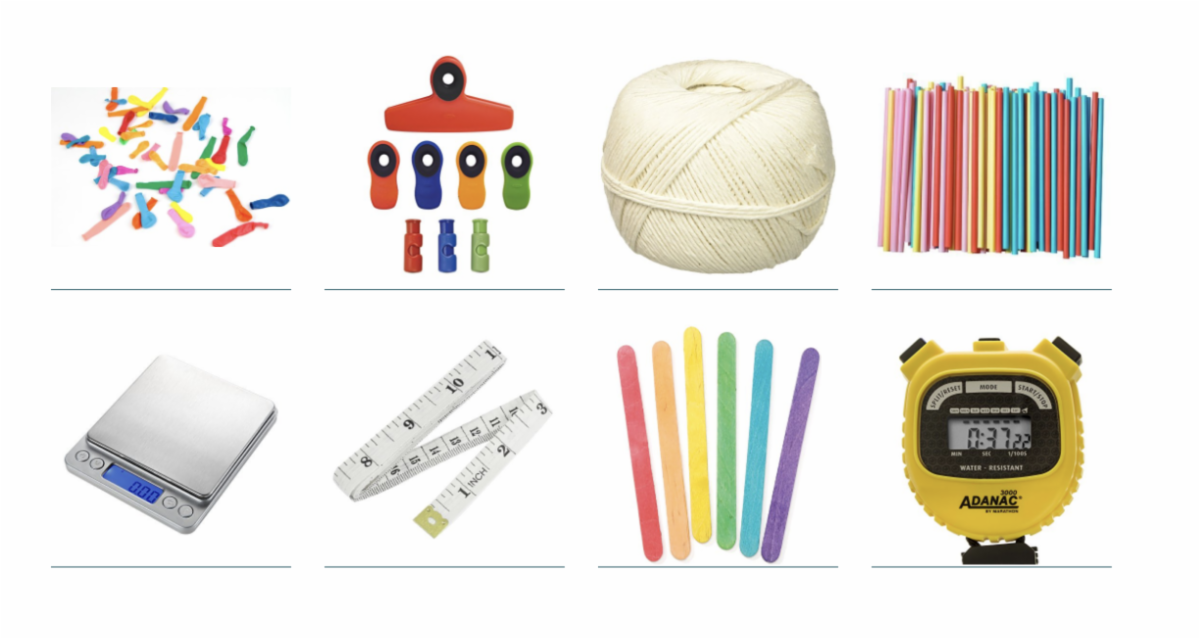
Supplies for Exploring Newton’s Laws of Motion
Balloons of various shapes and sizes
Construction paper
String
Straws
Tape
Scissors
Kitchen clips
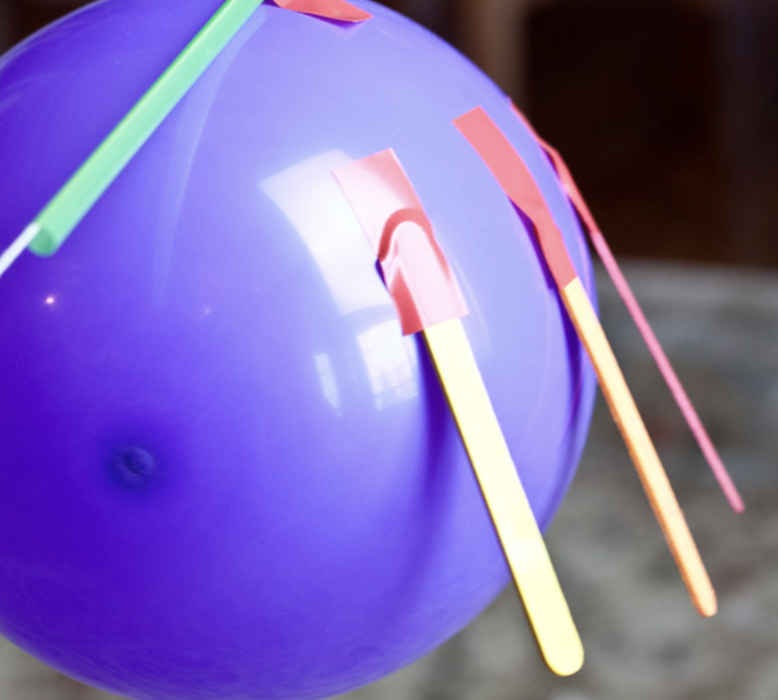
Normal paperclips, crafting sticks or other items that can be used as weights on the balloons
Anchor points – could be chairs, tables or even people holding the string
Stop watch
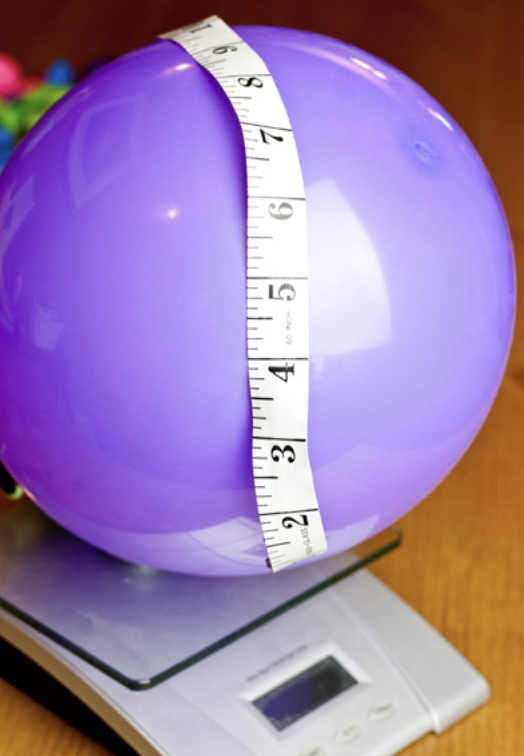
Fabric tape measure or you can use string and measure the string
Kitchen Scale
Science notebook or other way of recording data
|
|
Directions
This activity is inquiry based, you should be prepared for lots of playing and exploring. The goal is to really explore and understand how variables impact Newton’s third law.
First, set up the anchor points about 10 feet apart. When selecting your anchor points, choose ones that can be easily moved.
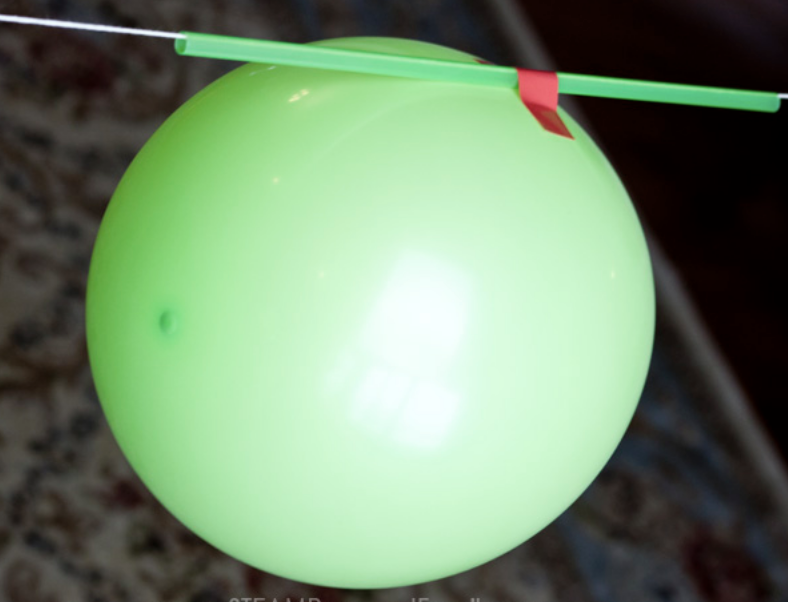
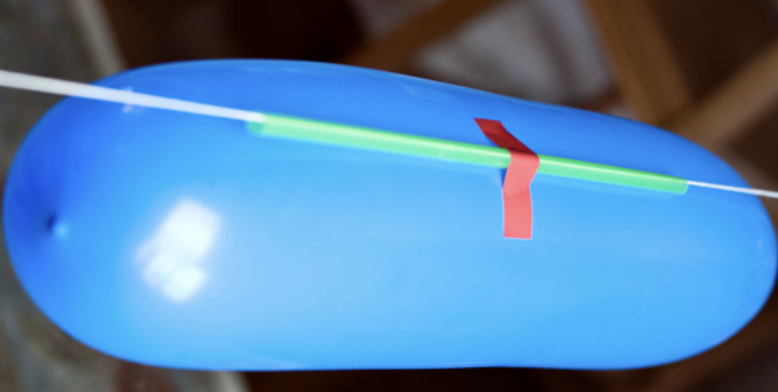
Thread your string through a straw, then secure the string to the two anchor points. Leave lots of slack so you can change the distance as required.
Attach your balloon to the straw using tape. For each challenge simply release the balloon to start it racing.
|
|
Balloon Physics Challenges – Newton’s Second Law of Motion
Challenge #1
How does volume impact distance?
Change the distance between the anchor points until the balloon no longer reaches the end. What is the farthest the balloon will travel? Mark that point or record the distance.
Using a fabric tape measure or a string, measure the circumference of the inflated balloon. Now race it and record the distance it traveled. For the next race change the circumference making it smaller or larger. How does it affect the distance traveled? Record the results.
|
|
Challenge #2
How does volume impact speed?
Set your distance to the minimum the balloon travels. Now vary the circumference and use a stop watch to measure how fast the balloon travels the distance. Does varying the circumference, and therefore volume and pressure in the balloon, affect the speed? Record the results.
|
|
Challenge #3
How does mass impact distance traveled?
In this challenge we are exploring how mass affects Newton’s Third Law. From earlier tests we know how far our balloons will travel. Keeping the circumference consistent, change the mass by adding paperclips, tape, paper, etc. to the balloon. Then race the balloon and measure the distance. How does it compare with greater mass? Record the results.
Challenge #4
How does mass impact speed?
Repeat the experiment but measure the speed of the balloon. Does mass affect the speed the balloon travels? Record the results.
|
|
Challenge #5
Does shape of the balloon impact speed or distance?
If you have different shaped balloons test how the shape of the balloon affects the results. Does a long skinny one work better than the traditional oval balloons? Try to keep the number of breaths used to blow up the balloons consistent to ensure the volume of air in the balloons does not change. Measure distance and speed to see how the results differ.
Newton’s First Law of Motion
So we’ve explored Newton’s Second Law of Motion and Newton’s Third Law of Motion, but there is a first law, too.
Newton’s First Law of Motion states: An object at rest stays at rest and an object in motion stays in motion with the same speed and in the same direction unless acted upon by an unbalanced force.
In a way, we explored that law in this exercise, too. The balloons required a force to be exerted on them before they would move along the string. As long as that clamp was left in place, the balloon was stationary.
Challenge #6
How can we apply force?
To explore this law find ways to apply force to start the balloon moving beyond the obvious one we have been using (releasing the pressure/air). Perhaps you can change the angle of the string so gravity applies it’s force. Or, maybe you can blow on it. Explore how you can apply force to change the speed and direction of the balloon.
Newton’s Laws of Motion
This activity is a wonderful way to practice your critical thinking skills and explore concepts that may seem challenging when simply read about in a book. Physics can be so intimidating, but this physics project presents the concepts in logical ways to help facilitate deep understanding. It also gets you up and moving and many studies have shown how moving can help in the learning and retention of information. Perhaps Newton should have had a law of motion as it applied to learning!
|
|
Three Writing Prompts and an Essay Topic
These prompts and questions will help jump-start your daily writing. Just as it's important to read for at least 30 minutes each day, you should also write for 30 minutes a day. Don't worry about your organization or spelling, just write!
'"Pick a number, any number,” she said, her voice a taunt, “And I’ll show you your future..."'
"The return address on the gold envelope is in Greenland — had they really tracked me down from the other side of the world?"
"I always thought good historical fiction should transport you to another time and place, but when a man in a waistcoat and a top hat enters my room, I realize the book I’m reading has taken that to a whole new level..."
|
|
Three Thrilling July 11th Writing Prompts
On this day in 1899, author E.B. White was born. White is the author of Charlotte’s Web. This book was made into a movie. Do you think it’s better to read a book before seeing the movie? Why or why not?
July 11th is “Cheer up the Lonely Day.” When someone you know is feeing lonely or sad, what do you do to help them feel better?
On this day in 1767 our 6th President, John Quincy Adams was born. Using resources from the internet, learn five (5) facts about Adams and summarize them in your own words.
|
|
Creativity Corner
Set your art free
|
|
|
|
This art project focuses on positive and negative space and looks best on black paper. You will also need a 6 x 6 piece of colored paper, scissors, and glue to complete this Japanese art project. The video provides you with step-by-step directions for completing this fun project. |
|
|
|
|
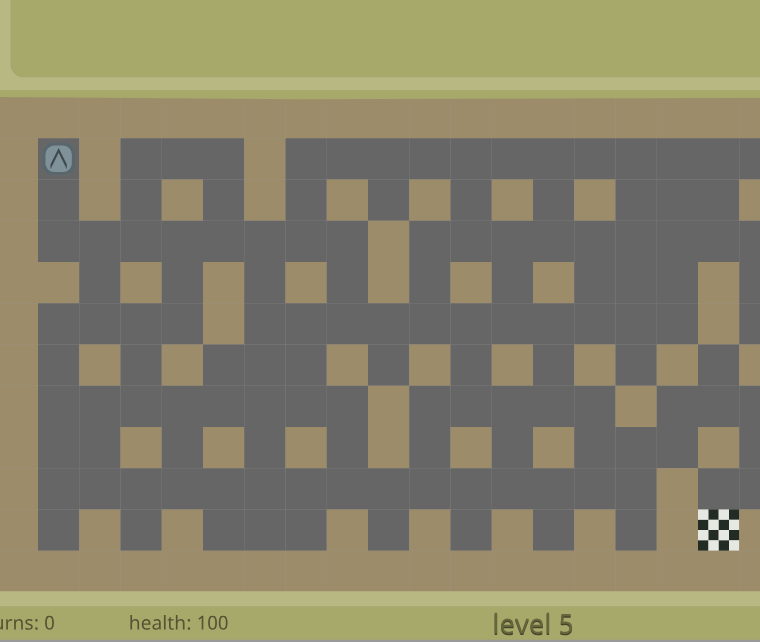
Play Labyrinth Puzzle
Click this link to solve these tricky labyrinth puzzles. They are not as easy as they look and take some real problem solving skills.
|
|
|
|
|
|
|
|