|
|
July 19, 2022
Summer Issue #5
|
Weekly activities and lessons to keep your child thinking and progressing throughout the school year and summer. |
|
"Courage doesn't always roar. Sometimes courage is the quiet voice at the end of the day saying 'I will try again tomorrow.”
|
|
Hello and Happy Tuesday,
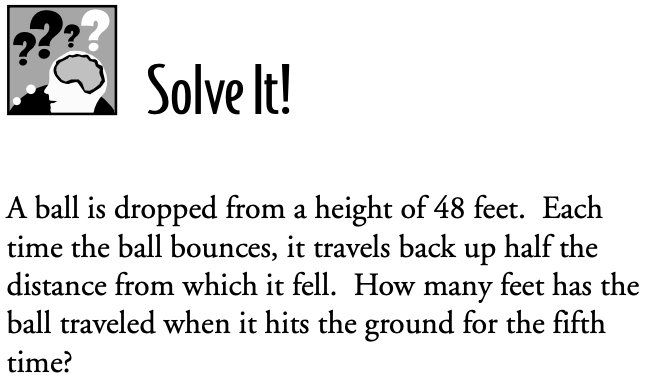
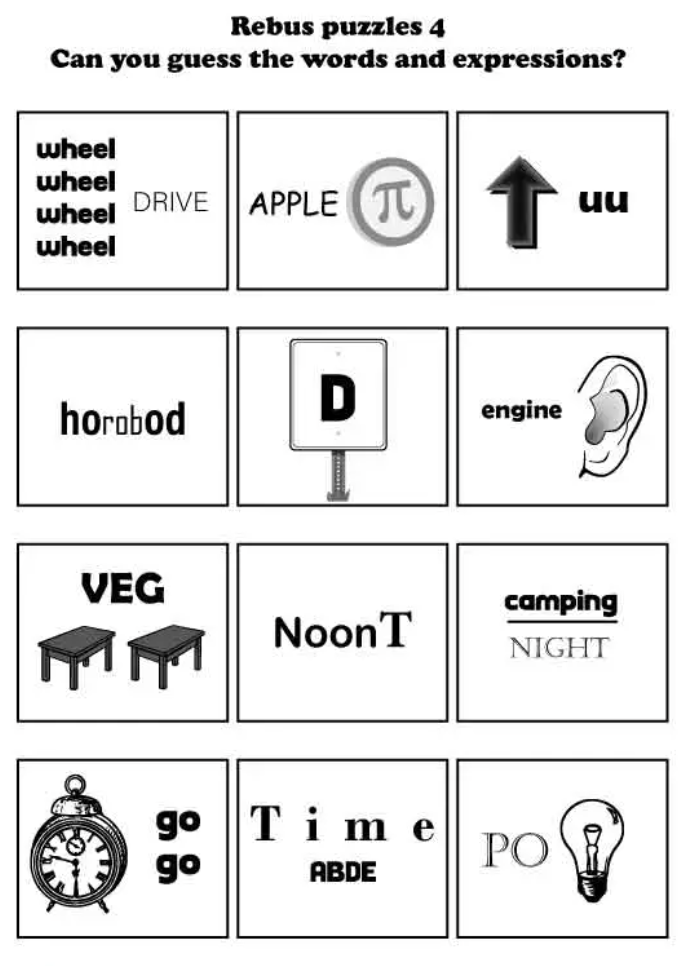
I hope you are well and still enjoying your summer :-) This week's flyer is packed with tons of fun learning activities. The writing activities and the math problems will be enjoyable challenges to keep all children busy and thinking. My book recommendation is a treasure that all the family will enjoy. This would make a great family read aloud. Well, I could say that about any of Jason Reynolds's beautifully written and thought provoking books. I hope some of you are able to try the ice cream in a bag investigation. It is a tasty experiment . Have a great week!
If you know anybody who you think would benefit from the weekly learning activities in this flyer, please share it with your friends and encourage them to join The McManus Files mailing list by following the links on this page.
Have a great week. Stay Curious.
Mr. McManus :-)
|
|
Children acquire skills throughout the school year, but they can lose ground if learning stops during the summer break. Fortunately, learning never has to stop. Children who read throughout the summer gain skills, can start the new school year with a better understanding of language and the world around them, and discover the joy of reading. The more they like to read, the more they will read.
It's not hard to help your children keep their interest in reading and learning. Children learn through a variety of activities, and almost everything we do presents an opportunity to read. Here are weekly activities that involve reading and related skills. There's no special order, and you don't have to do everything listed in a particular week. Just pick the ones that look interesting and fun!
|
|
Week 5:
Enjoy the great outdoors
• Pick wildflowers and press them between the pages of a heavy book until the end of summer.
• Plan a backyard camping trip with a friend. List all the things you will need to survive.
• Plan a family 'booknic' at your favorite outdoor spot, such as the beach, a park, or the woods. Pack lunch and plenty to read.
• Collect shells at the beach or rocks along a trail. Use a nature guide to identify them.
• Find something small enough to put in your pocket. Write or tell a story about it.
• Look for shapes and designs in the clouds. Draw them.
• Word game! Make a list of words to describe fireworks.
|
|
Habits of Mind
Habits of Mind are thinking habits that push us far past simple answer retrieval. They change our pattern of thinking to help us gain success when we don’t know the answer to a question or problem.
|
|
The 16 Habits of Mind include:
• Persisting
• Thinking and communicating with clarity and precision
• Managing impulsivity
• Gathering data through all senses
• Listening with understanding and empathy
• Creating, imagining, innovating
• Thinking flexibly
• Responding with wonderment and awe
• Thinking about thinking (metacognition)
• Taking responsible risks
• Striving for accuracy
• Finding humor
• Questioning and posing problems
• Thinking interdependently
• Applying past knowledge to new situations
• Remaining open to continuous learning
|
|
GATHERING DATA THROUGH ALL SENSES
What is it? – Allowing information into our brains from many senses and not just one or two.
Sounds like – “I connected that to a color or smell.” That image helps me to…..” “ I can understand that better if I use my senses to….” “That smell reminds me of….” The picture I have in my brain is….”
Looks like – Touching, Observing, Listening, Feeling, Tasting, Smelling
Feels like – I can understand this better because I used my senses to explore it further.
Intelligent people know that all information goes into the brain through sensory pathways: gustatory, olfactory, tactile, kinesthetic, auditory and visual. Most linguistic, cultural, and physical learning is derived from the environment by observing or taking it in through the senses. To know a dance it must be moved, to know a role it must be acted, to know a goal it must be envisioned. Those whose sensory pathways are open, alert, and acute will absorb more information from the environment than those who do not realize how to use their senses fully. We are learning more and more about the impact of art and music on improved mental functioning. Forming mental images is essential in mathematics and engineering. Other fields use a variety of senses to improve their work. Some students do not fully become aware of how to use their senses to gather data. These students benefit from learning about gathering data from all senses and in turn experience and enjoy life in a new way.
“Observe perpetually”. Henry James
|
|
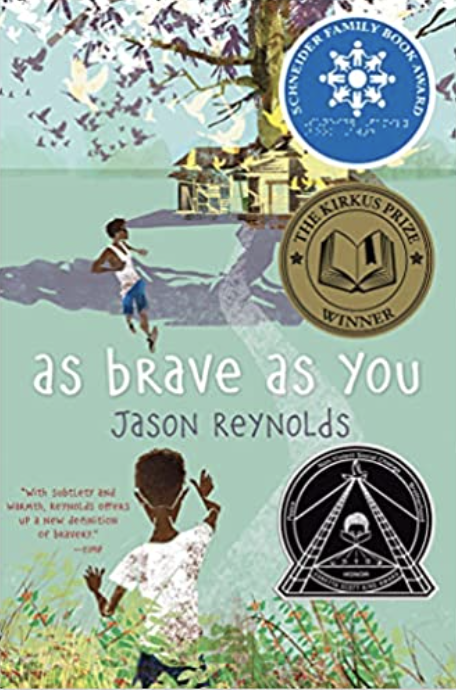
As Brave As You
by Jason Reynolds
|
|
|
|
This is another Jason Reynolds winner. Genie and Ernie, brothers from Brooklyn, go to spend the summer with their Grandparents in rural Virginia. They're in for a lot of changes. No cell phone reception, chores, and getting to know their grandparents who they only know from phone calls. Ernie, the elder, is brave, confident, and cool. Genie is intellectual, perpetually anxious, and afraid. The biggest change is perhaps dealing with their grandfather, who is (to their surprise) totally blind, and perhaps a little crazy. But Genie quickly makes a close bond with his Grandfather, while Ernie is bonding with the pretty girl down the hill.
The plot explores fear and bravery, guilt and forgiveness. Every little element of the book has meaning. Jason Reynolds crafts a beautiful story, perfectly paced, with likable and believable characters. Though written for young adults, I would think most adults who enjoy good fiction would love it as well. I certainly did. Enjoy!
|
|
|
|
|
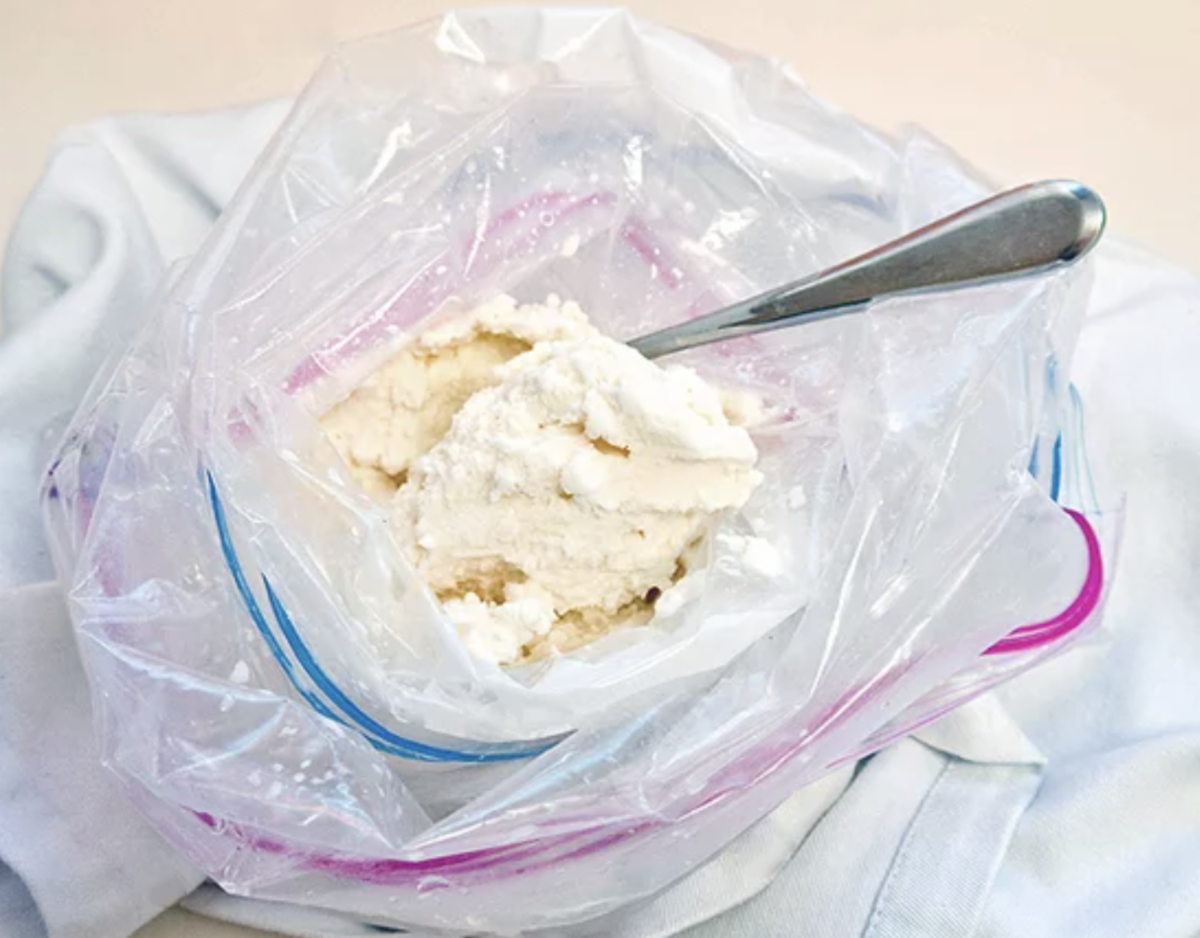
HOW TO MAKE ICE CREAM IN A BAG |
|
It’s summer, and I love ice cream. Instead of heading to the local dairy bar, grab a few simple ingredients and head outdoors. You can learn just how ice cream is made… with chemistry!
Yes, making homemade ice cream in a bag really does work! Whether you make it inside or outdoors, make sure to have a pair of warm gloves ready. This homemade ice cream in a bag experiment is chilly chemistry you can eat!
ICE CREAM IN A BAG RECIPE
INGREDIENTS:
- 1/2 cup half and half (cream and milk)
- ¼ tsp vanilla
- 1 TBSP sugar
- 3 cups ice
- ⅓ cup kosher or rock salt
- Gallon size zip top bag(s)
- Quart size zip top bag(s)
- Sprinkles, chocolate sauce, fruit (optional but really “the best part” ingredients!)
HOW TO MAKE ICE CREAM IN A BAG
STEP 1. Place the ice and salt in a gallon size bag; set aside.
STEP 2. In a smaller bag mix together half and half, vanilla and sugar. Make sure to seal the bag tightly.
STEP 3. Place the smaller bag inside the gallon size bag. Shake the bags for about 5 minutes until your milk is solid.
Make sure to use gloves as the bag gets very cold. And if you find your ice cream in a bag not working, try it with more ice cubes and salt, and then shake for a further 5 minutes.
Time to enjoy your yummy homemade ice cream!
Store any uneaten ice cream in the zip top bag. Place it in the freezer and enjoy for next time!
TURN IT INTO AN ICE CREAM SCIENCE PROJECT
If you want to make this truly a science experiment where you are using the scientific method, you need to change one variable.
Take this easy ice cream in a bag recipe and turn it into a science project, with one of these suggestions:
- What happens if you don’t use salt? Set up two bags for making ice cream but leave the salt out of one bag.
- What happens if you use a different type of salt? Set up two or more bags for making ice cream and choose different types of salt to test!
- What happens if you swap out the milk for the heavy cream? Or what happens if you try another type of milk like almond milk. Set up two or more bags for making ice cream and choose different types of milk to test!
ICE CREAM SCIENCE
What’s the chemistry behind ice cream because it’s pretty sweet! The magic is in the salt and ice mixture in the bag!
In order to make your homemade ice cream, your ingredients need to get very cold and actually freeze. Instead of placing the ingredients for ice cream in the freezer, you mix together salt and ice to make a solution.
Adding salt to the ice lowers the temperature at which water freezes. You will actually notice your ice melting as your ice cream ingredients start to freeze. You can also see this with our ice melting experiments.
Shaking the bag allows the warm cream mixture to move around to allow for better freezing. Plus it also creates a little air that makes the ice cream a bit fluffier.
Is ice cream a liquid or a solid? Homemade ice cream changes states of matter. Also more chemistry!
It starts out as a liquid but changes to a solid in its frozen form, but it can go back to a liquid when it melts. This is a good example of reversible change as it’s not permanent.
You will definitely notice that the bag becomes much too cold to handle without gloves, so please make sure you have a good pair of gloves to shake it with.
|
|
If you feel your child might benefit from a group or individual tutoring program to prepare them for the next phase of their education, please contact McManus Tutoring.
Programs are structured so that students learn independence, accountability, and self-possession. They will develop a repeatable structure that can be used to build success in the future.
|
|
Three Writing Prompts and an Essay Topic
These prompts and questions will help jump-start your daily writing. Just as it's important to read for at least 30 minutes each day, you should also write for 30 minutes a day. Don't worry about your organization or spelling, just write!
"Your grandma came to town and had an unexpected surprise..."
"At the beach, you find a special seashell..."
"At summer camp, the boys and girls wage a prank war against one another..."
|
|
Je m’appelle Dr. Doolittle
Would you rather be able to speak 10 foreign languages or talk to animals? What would you do with your extraordinary skills?
|
|
A drove of sheep and chickens have a total of 99 heads and feet. There are twice as many chickens as sheep. How many of each are there? |
|
Last week's answer...
Alternate Solution #1
A half dollar, 39 dimes, and 60 pennies.
Alternate Solution #2
A dollar coin, a half dollar, 28 dimes, and 70 pennies.
Alternate Solution #3
Two dollar coins, a half dollar, 17 dimes, and 80 pennies.
|
|
|
|
|
|
|
|
|
|