|
|
July 25, 2023
Summer Issue #5
|
Weekly activities and lessons to keep your child thinking and progressing all year long. |
|
"Winning is great, sure, but if you are really going to do something in life, the secret is learning how to lose. Nobody goes undefeated all the time. If you can pick up after a crushing defeat, and go on to win again, you are going to be a champion someday."
|
|
Hello,
I hope your summer is going well. We are about half way through and I'm starting to see those sad ads for school supplies on TV and in the paper. There is so much more time. If you are gearing up for a successful return to school, this week's flyer has a multitude of activities to clear away the cobwebs and begin to set the thinking right. I hope you enjoy the learning activities.
Big match tomorrow... USA Women's Team against The Netherlands. The team's toughest match to advance out of the first round. Check it out 6:00pm Wednesday. Have a great week.
If you know anybody who you think would benefit from the weekly learning activities in this flyer, please share it with your friends and encourage them to join The McManus Files mailing list by following the links on this page.
Peace,
Mr. McManus
|
|
If you feel your child might benefit from an individual group or tutoring program to prepare them for the next phase of their education, please contact McManus Tutoring.
Programs are structured so that students learn independence, accountability, and self-reliance. They will develop a repeatable structure that can be used to build success in the future.
|
|
How to (ALMOST) Ruin Your Summer
•••
by Taryn Souders
|
|
|
|
Packed with humor and heart, I loved this book. Chloe's voice is authentic to her age, and she's relatable to middle grade kids. Chloe is willing to work hard for what she wants (a new bike), resourceful, witty, and sensitive. From an unpredictable goat (named King Arthur), to bugs, a crush, a bully, and new friends, Chloe faces every summer camp challenge head on, while staying true to herself throughout. Her summer camp experiences brought me right back to my own childhood summers at sleepaway camp. I especially enjoyed the friendship between Chloe and Pogo, as well as the drama taking place inside the bunk. The author clearly understands the dynamics of how girls function when they all live together. Souders's writing style is easy-to-read and smooth with many laugh-out-loud moments, making this book a great choice for both reluctant and avid readers. Enjoy!
|
|
|
|
|
Castle Rock State Park is a land of sculpted sandstone, lush forests and sweeping vistas. From one of the highest ridges in the Santa Cruz Mountains, park visitors enjoy hiking, backpacking and horseback riding. Rock climbers explore the park’s caverns and rocks, including the namesake Castle Rock. Plant-lovers come for California black oaks, knob cone pines and high-elevation coast redwoods.
The park features more than 35 miles of rugged trails. Please review the trail map prior to visiting to plan your route.
The Castle Rock parking lot, which opened in 2019, features solar-powered pay stations, flush toilets, electric vehicle charging stations, a water bottle refill station and new trailhead signs.
|
|
Build a Solar Updraft Tower
Have you ever had a sunburn? If so, you know how powerful the Sun's heat can be! Did you know that this heat can also be turned into electrical energy? You may have heard about solar cells, but what about a solar updraft tower? This very simple structure uses the sun to heat up air, which then powers a turbine within a large tower. In this activity, you will build one of these towers yourself. Do you think you can make a propeller spin with just hot air?
|
|
Materials and Equipment
- Black construction paper (about 20 x 20 inches)
- Smaller piece of construction paper (any color)
- Pencil
- Scissors
- Tape
- Piece of modeling clay
- Wooden skewer
- Needle
- Thermometer
- Lamp with incandescent light bulb or heat lamp
- Paper
- Optional: sunshine, and a wind protected area outside
- Optional: timer
- Optional: white construction paper
|
|
Prep Work
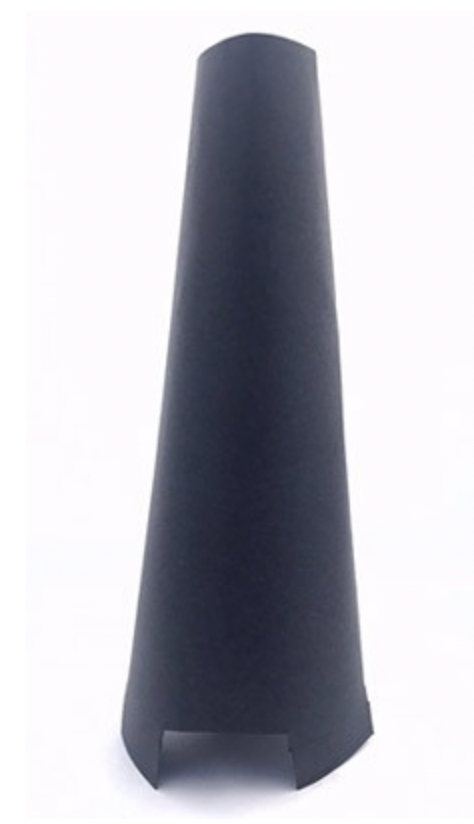
1.Roll the black construction paper into a cone with a smaller opening at the top (2-inch diameter) and a larger opening at the bottom (4-inch diameter).
2.Use tape to hold the cone in place. Then, cut the top and bottom ends off to make them straight. The cone should be about 10-15 inches high and able to stand up by itself.
|
|
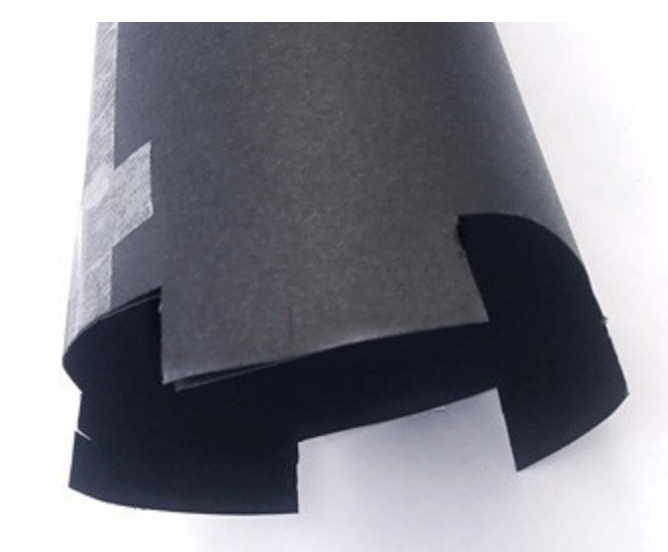
3.At the bottom of the cone, cut three equally distanced 2-inch by 0.5-inch arches out. These will be your air inlets. Make sure, the cone can still stand on the remaining rim. |
|
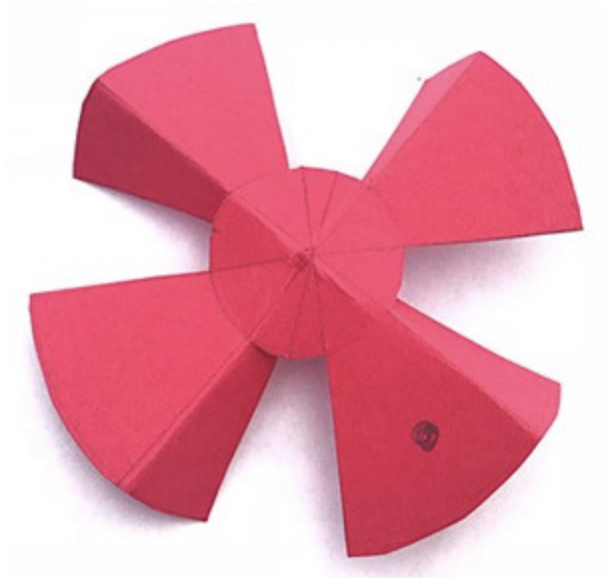
4.Cut an about 3-inch diameter propeller out of the construction paper. Bend the blades of the propellers about a 45-degree angle downwards. |
|
5.With tape, attach the needle to the top of the wooden skewer with the pointy end facing upwards. |
|
6.Make a ball out of modeling clay and place it on your workspace.
Instructions
1.Look for a wind-protected space indoors to set up your solar updraft tower. It is important that there is no external airflow happening during your experiment.
2.Place the black paper cone over the clay so that it is located in the center of the cone.
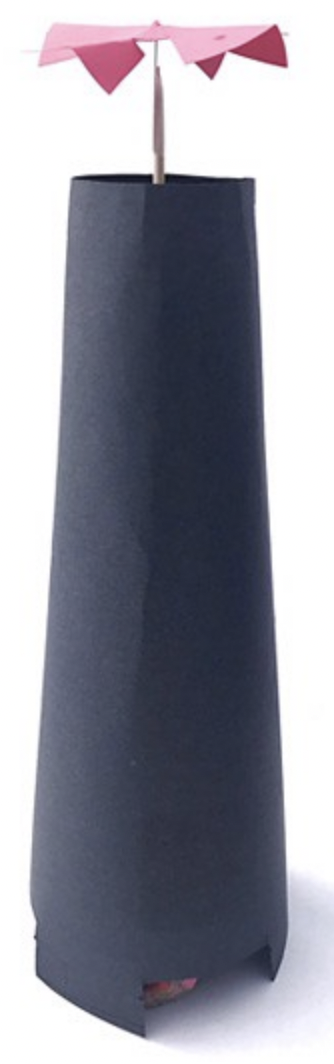
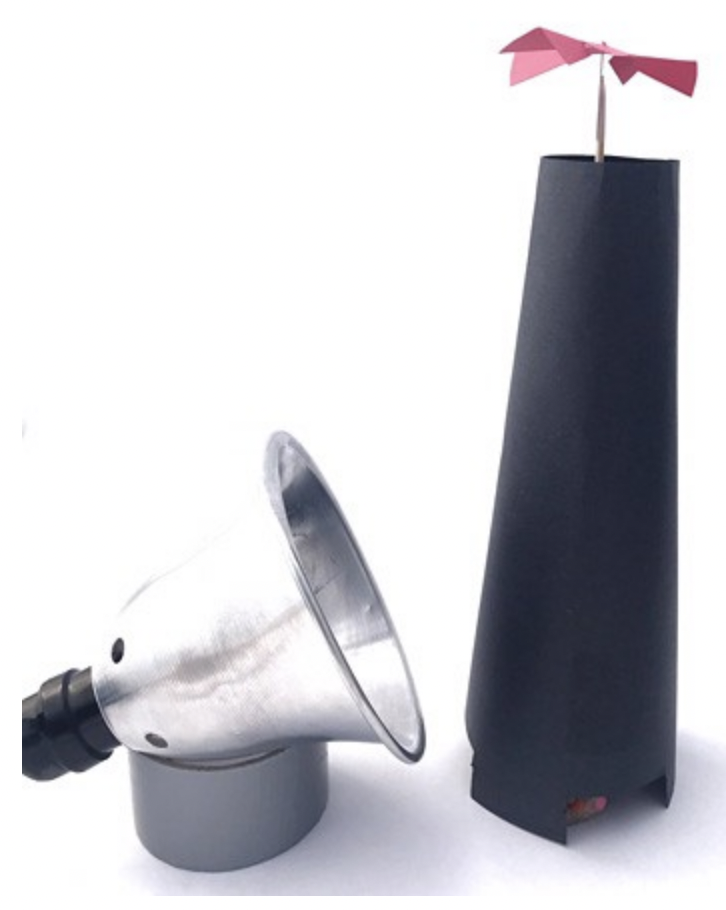
3.Stick the wooden skewer into the clay through the top opening of the tower, so that the skewer sticks out in the middle of the cone. The needle on top of the skewer should stick about 1.5-2 inches out of the cone as shown in the picture below.
4.Take the propeller and place it on top of the needle. It should be balanced and able to turn freely. It might need some practice to make sure the propeller is resting on the needle correctly.
What happens to the propeller resting on top of the needle? Does it move?
5.Measure the air temperature inside the tower and outside. Record the measured air temperatures on a piece of paper.
6.Place the lamp next to the tower and direct it towards the base of the tower as shown in the picture below. Make sure you don't leave the lamp unattended during the experiment.
|
|
7.Switch the lamp on and observe the updraft tower for about two to five minutes.
What happens when you switch on the lamp?
8.After about five minutes, measure the air temperature inside and outside of the cone again. Record both temperatures.
What do you notice about the temperatures? Did they change? If yes, how? Can you explain why?
9.Switch the lamp off and continue to observe your updraft tower for five to 10 minutes.
What happens when you switch off the lamp? How are your observations different than before?
10.After another five minutes, measure the temperature inside and outside the cone one more time.
How are the temperatures different now?
|
|
Cleanup
Carefully remove the needle from the skewer. You can reuse all the parts of your construction.
What Happened?
Did you get your propeller to spin? In the beginning, the propeller shouldn't have moved. If it did, an external airflow from a door or wind was moving the propeller. The air temperatures inside and outside the tower should have been pretty similar. However, this should have changed when you switched on the lamp. The incandescent lamp emits light and heat, just like the Sun. You will notice this when holding your hand close to the light bulb. When the light shines onto the black construction paper, it absorbs most of the light and starts to heat up. The heat is trapped inside the cone, which increases the air temperature inside. As warm air is less dense than cold air, it starts to rise up the paper cone. This updraft makes the propeller on top of the cone spin, which you should have observed after a while.
The rising air reduces the air pressure inside the cone, which is why fresh air is sucked into the paper cone through the air inlets that you cut out at the bottom. This air is warmed up again, and a continuous updraft is created that keeps the propeller spinning. The cycle is only interrupted when you switch off the lamp. As there is no heat source, the air inside the cone slowly starts to cool down and after a while returns to the same temperature as the outside air. At that point, the propeller should have stopped spinning as there is no longer an updraft. You might have noticed that it took longer for the propeller to spin and that the propeller didn't spin as fast with the white construction paper. This is because white paper cannot absorb the heat from the lamp as well as the black paper can.
Digging Deeper
The Sun is a very powerful source of heat and energy. In fact, in less than 15 seconds, it can provide as much energy to Earth as humans use in one day! Most of this energy reaches Earth in the form of light and heat. It's no wonder people have long considered how this energy can be harvested and put to good use! Over the last two centuries, scientists researched and developed technologies to convert the Sun's energy directly into electrical energy. Today, many different methods of solar power generation exist, such as solar cells, solar thermal collectors, and solar concentration systems.
One of these systems, called the solar updraft tower, is a solar thermal collector technology. A solar updraft tower can generate electricity from low-temperature solar heat. The science concepts behind this idea are based on the greenhouse effect and the chimney or stack effect. These power plants consist of a large collector structure and a very tall and slender tower. The collector structure resembles a gigantic greenhouse and consists of a massive, transparent canopy that is suspended 6 to 65 feet (2 to 20 meters) off the ground. The tower is located in the middle of the canopy structure and has large air inlets at its base. Inside the tower are big wind turbines to produce electricity.
When the sun shines onto the collector structure, the heat of the sun gets trapped underneath like in a greenhouse, which heats the air and ground underneath the canopy structure. As hot air is less dense than cold air, it starts to rise, causing an air flow also called thermal convection. The air has no other way to escape than through the tower. The rising air in the tower creates low pressure at the bottom of the tower, and more hot air from the collector is sucked inside the tower through its air inlets at its base. As a result, solar radiation causes a constant updraft in the tower. The wind turbines installed inside the tower convert the energy contained in the updraft into mechanical energy by moving its blades. In the next step, this energy is converted into electrical energy by generators. Although the technology seems pretty simple and can generate lots of energy, no full-scale units are in operation, yet. However, several prototype models have been built and studied.
|
|
Three Creative Writing Prompts
These prompts and questions will help jump-start your daily writing. Just as it's important to read for at least 30 minutes each day, you should also write for 30 minutes a day. Don't worry about your organization or spelling, just write!
"'Does this purple shirt make me stand out?' asked the giant one-eyed cat."
"I wish I could tell you that everything went as planned, and no one got hurt, but that would be a lie."
"She’d eaten a lot of pie during her career as a restaurant critic, but never before had she tasted one quite like this."
|
|
July 25th Writing Prompts
July is “National Recreation Month.” After you have looked up the word “recreation” in the dictionary, describe your favorite recreational activity.
|
|
Creativity Corner
Set your art free
|
|
|
|
You will have a blast creating this op art hand project. The video also includes information about the important elements of art line and color. This is a great lesson about the principle of pattern, design, and movement. |
|
|
|
|
Play Magic Square Game
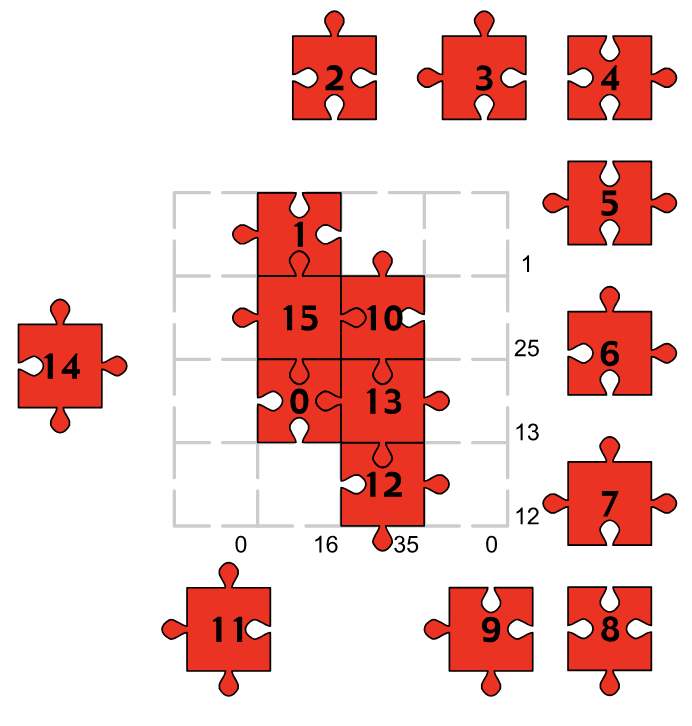
Click this link to solve these Magic Square puzzles. This are one of my favorite math activities ;-)
|
|
|
|
|
|
|
|