|
|
June 20, 2023
Spring Issue #13
|
Weekly activities and lessons to keep your child thinking and progressing all year long. |
|
"And so with the sunshine and the great bursts of leaves growing on the trees, just as things grow in fast movies, I had that familiar conviction that life was beginning over again with the summer."
|
|
Happy Tuesday and happy first week of summer,
We did it! We made it to summer and completed another school year. Congratulations to all the parents and families for the outstanding efforts of your children. I hope you are able to relax and enjoy this summer break from the rigors of school. I'm expanding the Flyer for the summer season. I hope you enjoy the upcoming additions. Keep your eyes peeled for future changes in the Files :-)
If you know anybody who you think would benefit from the weekly learning activities in this flyer, please share it with your friends and encourage them to join The McManus Files mailing list by following the links on this page.
Peace,
Mr. McManus
|
|
If you feel your child might benefit from an individual group or tutoring program to prepare them for the next phase of their education, please contact McManus Tutoring.
Programs are structured so that students learn independence, accountability, and self-possession. They will develop a repeatable structure that can be used to build success in the future.
|
|
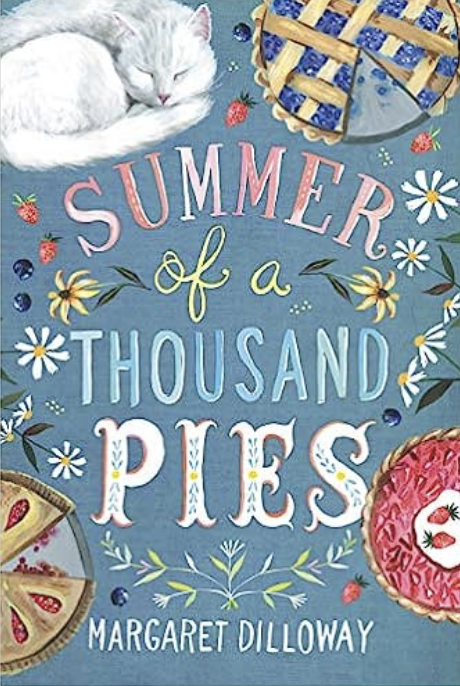
Summer of a Thousand Pies
by Margaret Dilloway
|
|
|
|
A heartfelt contemporary middle grade novel about a girl who must try to save her aunt’s failing pie shop. When Cady Bennett is sent to live with the aunt she didn’t even know she had in the quaint mountain town of Julian, she isn’t sure what to expect. Cady isn’t used to stability, after growing up homeless in San Diego with her dad.
Now she’s staying in her mother’s old room, exploring the countryside filled with apple orchards and pie shops, making friends, and working in Aunt Shell’s own pie shop — and soon, Cady starts to feel like she belongs. Until, she finds out that Aunt Shell’s shop is failing. Saving the business and protecting the first place she’s ever really felt safe will take everything she's learned and the help of all her new friends. But are there some things even the perfect pie just can’t fix?
Summer of a Thousand Pies is a sweet and satisfying treat of a novel full of friendship, family, and, of course, pie. Enjoy!
|
|
|
|
|
Featuring an open ridge top with panoramic views of the Santa Cruz Mountains, Russian Ridge offers the best hiking of all the preserves atop Skyline Ridge. Even though the other parks, like Skyline Ridge, are actually more scenic, Russian Ridge is better overall because the park feels less developed and offers longer hikes than the other parks. |
|
Domino Effect
Falling dominoes model signal transmission in a neuron.
Your nervous system transmits information as electrical impulses that move through the long bodies of individual nerve cells. In this Snack, falling dominoes simulate many aspects of the process.
|
|
Tools and Materials
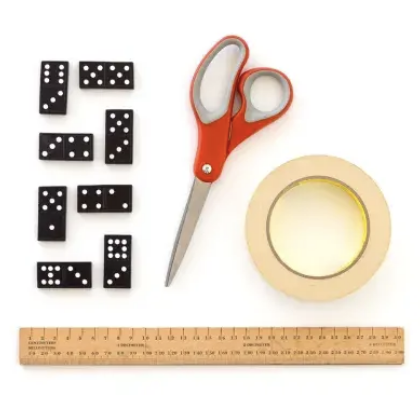
- Flat wooden or plastic ruler about 1.5 inches (4 cm) wide and at least 12 inches (30 cm) long
- Eight standard wood or lightweight plastic dominoes
- Masking tape
- Scissors
|
|
Assembly
- Use the ruler to measure the length of one of your dominoes. Record the measurement.
- Cut sixteen pieces of masking tape, each about the same length as a domino. (They don’t need to be exact.)
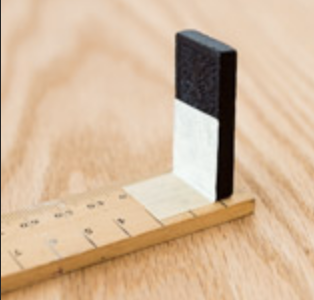
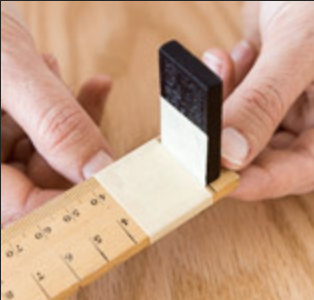
- Place the first domino near the end of the ruler. Use a piece of masking tape to make a hinge connecting the back of the domino to the ruler (see photo below).
|
|
|
4.Use another piece of tape to reinforce the hinge. Wrap the piece of tape around the ruler and the base of the tape hinge, securing the domino in place (see photo below). |
|
|
5.Place the second domino on the ruler about three-quarters of a domino’s length from the first domino. Connect the second domino to the ruler with a hinge of tape, as you did in Step 3, and reinforce the hinge as you did in Step 4.
6.Attach the remaining six dominoes in the same way.
|
|
|
To Do and Notice
Place the ruler flat on a table and set all the dominoes upright.
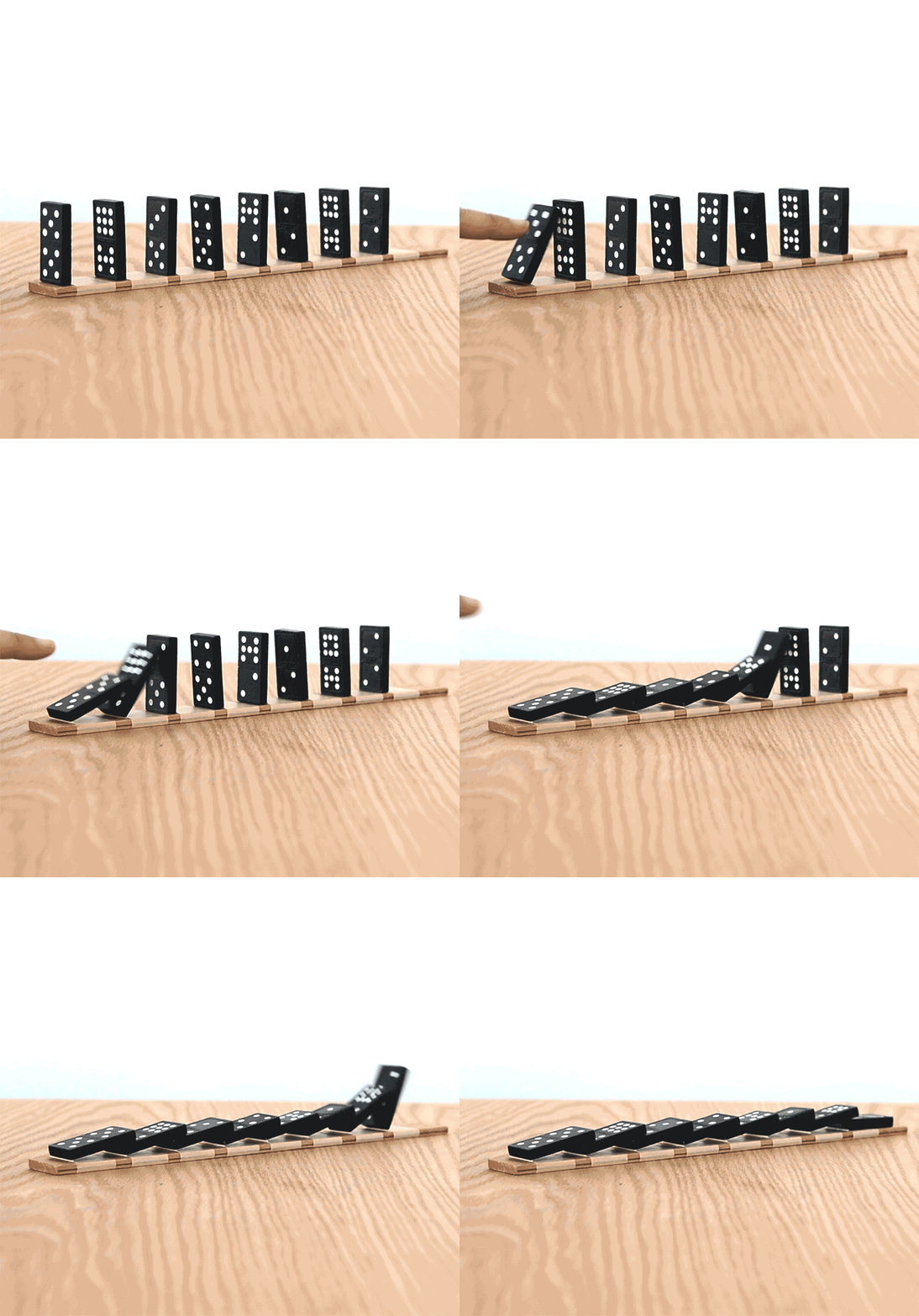
Flick the first domino with your finger to make it fall. What happens?
What do you have to do before you can make the dominoes fall again?
Make the dominoes fall several more times and closely observe them as you do. Do they all fall at the same speed? Can you make them fall in the reverse direction?
Reset the dominoes so they’re upright. Barely touch the first domino with your finger and notice what happens. Do this again several times, using slowly increasing amounts of force, pushing it slightly farther forward each time until you get the dominos to fall.
Remove one domino from the middle of the ruler. Reset the remaining dominoes so they’re upright. Flick the first domino. What happens?
|
|
What's Going On?
Your domino model is a simple but useful tool for understanding the function of nerve cells, or neurons.
Neurons make up the information highways of the body. Their job is to pick up signals from neighboring neurons and transmit them either to other neurons or to target cells. Signals are transmitted along the length of a neuron’s axon (a long projection from the cell body) in the form of charged ions moving across the cell membrane. Axons can be quite lengthy: The neuron that reaches from your big toe to the base of your spinal cord, for instance, is a single cell about a meter long.
In a neuron at rest, there’s a higher concentration of negative ions inside the cell than outside. This difference in charge creates a small voltage, known as the membrane potential. A sufficiently strong stimulus to the neuron initiates a nerve impulse. The impulse begins as an exchange of ions across a localized area of the axon’s plasma membrane, which reverses the polarity of the membrane potential there.
This polarity reversal is an all-or-nothing response, meaning it doesn’t vary in intensity as it cascades down the length of the membrane. The impulse doesn’t lose energy as it travels because it’s continually regenerated at each new site along the membrane. When the impulse reaches the end of the neuron’s axon, it releases chemicals, called neurotransmitters, which pass along the signal to other neurons or target cells.
Your domino model has a lot of similarities with a firing neuron. For starters, the first domino will not fall until it is pushed beyond a critical angle. In a similar way, a nerve impulse will not be triggered until the nerve is excited beyond its firing threshold. The threshold phenomenon can be seen in the operation of our sensory nerves. We can’t hear very faint sounds, for example, because the stimulus is not strong enough to excite the auditory nerve.
Once the first domino is toppled, it begins a chain reaction that travels down the line. Just like a firing neuron, the pulse of falling dominoes is an all-or-nothing event. The pulse moves at a constant speed without losing energy as it travels, and it travels in one direction only. In the same way, the speed of a nerve impulse in your body is independent of the size of the triggering signal, and nerve impulses can travel only one way—from the cell body to the end of the axon.
It takes energy to reset the dominoes between each trial. In the same way, the nerve cell requires energy to redistribute ions and reestablish the resting state after a nerve impulse has propagated down the axon. The nerve cannot fire again until this ionic reset occurs.
The removal of a domino mimics the effects of a severe nerve or spinal-cord injury. A nerve impulse cannot propagate past the site of the injury, just as the pulse of falling dominoes is stopped by the missing domino.
|
|
Going Further
There are sounds you can’t hear because they aren’t strong enough to trigger the neurons in your inner ear. In the same way, there are tastes you can’t taste, aromas you can’t smell, and touches you can’t feel. How strong does a stimulus have to be to trigger the neurons that allow you to experience touch, sight, sound, taste, and smell? Design some experiments to test the threshold level of the stimuli for one or more of your senses.
|
|
Three Writing Prompts and an Essay Topic
These prompts and questions will help jump-start your daily writing. Just as it's important to read for at least 30 minutes each day, you should also write for 30 minutes a day. Don't worry about your organization or spelling, just write!
"Late for work, I throw open the front door and find myself face-to-face with a UPS driver standing next to the biggest box I’ve ever seen addressed to..."
"The house shook with a violent surge like a hurricane had whipped right through but it was..."
“We danced until the sun went down and the floor gave way beneath our feet and...”
|
|
June 20th
Today is “National Ice Cream Soda” day. If you were asked to create a new soda and ice cream combination of your own, what flavors would you use and why?
|
|
Creativity Corner
Set your art free
|
|
|
|
The dot tree is a Kandinsky-inspired art project that you will have a blast making. This is very inexpensive to make and only requires construction paper, glue, and scissors. This video includes detailed art lesson plans for this bold piece. |
|
|
|
|
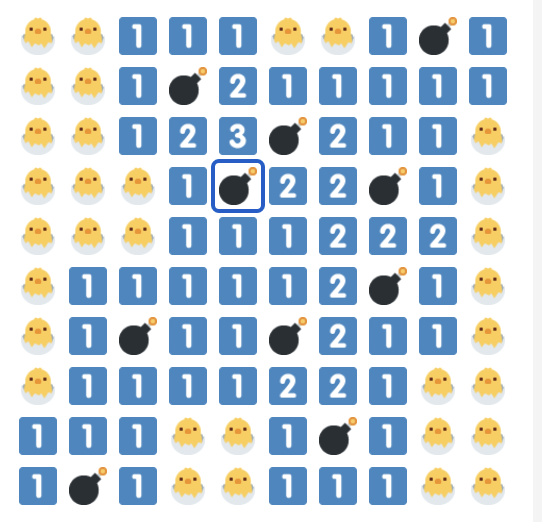
Click this link to try to solve this classic, oldie but goodie, strategy game with an emoji twist
|
|
|
|
|
|
|
|