|
|
May 30, 2023
Spring Issue #10
|
Weekly activities and lessons to keep your child thinking and progressing all year long. |
|
“I think of life as a good book. The further you get into it, the more it begins to make sense." |
|
Happy Tuesday,
We are on the doorstep of June. The best month of all in my opinion. Yes, because the school year is ending, but more for how during this month the students completely gel into a cohesive, productive group. I think this is because they recognize that the school year is ending when June arrives and they see how pointless disagreement is (at least in the classroom). I wish they would learn this lesson in October or November.
I know I say this a lot, but this week's book recommendation is amazing. This is because the quality of literature children have access to today is amazing. Remember when we were kids. The number of high quality books and novels was very limited and most of those "classics" wouldn't even crack my top ten list. Thank you J.K. Rowling for making writing for young, developing readers profitable. Enjoy the flyer. Enjoy the activities and stay positive :-)
If you know anybody who you think would benefit from the weekly learning activities in this flyer, please share it with your friends and encourage them to join The McManus Files mailing list by following the links on this page.
Peace,
Mr. McManus
|
|
If you feel your child might benefit from an individual group or tutoring program to prepare them for the next phase of their education, please contact McManus Tutoring.
Programs are structured so that students learn independence, accountability, and self-possession. They will develop a repeatable structure that can be used to build success in the future.
|
|
Freewater
by Amina Luqman-Dawson
|
|
|
|
Sometimes you read a book and you realize very early into it that you are experiencing something special. This is that book. From the beginning of Freewater, I was fully immersed in the world and completely invested in these characters. I realize it's too early to call, but I can't imagine another middle grade book topping this one for me this year. The characters, the story, the community, the heart, gah! A book that pulled all my heartstrings and that will stay with me for a long time.The book humanizes enslaved persons and particularly enslaved children. As the dedication says, it gives voice to generations of enslaved children. How fitting. It’s also an adventure book sprinkled with historical facts. While it doesn’t shy away from the realities of slavery, it weaves a magical tale that draws you in and you will fall in love with the children who have escaped enslavement. This emotional and beautifully written story of resistance is a must read. Highly recommend! Enjoy!
|
|
|
|
|
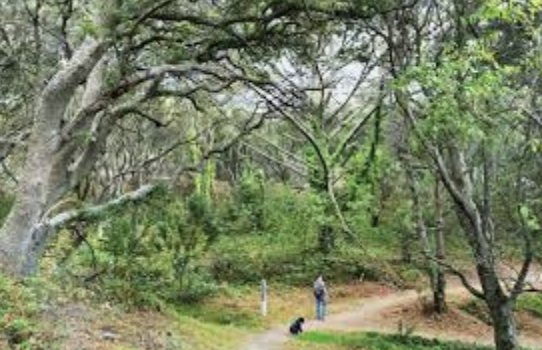
Nestled behind the cities of Millbrae and San Bruno, Junipero Serra Park affords a spectacular panorama of the Bay Area with unequaled views to San Bruno Mountain, San Francisco Airport, San Francisco Bay and Mount Diablo. Visitors are drawn to the Oak Foothill plant community, spring wildflowers, El Zanjon Creek, and the peaceful retreat the area affords from surrounding urban development. |
|
This park has a fun playground with a HUGE slide!
|
|
|
|
|
Balloon Magic with Bernoulli's Principle |
|
|
|
Introduction
Have you ever seen pictures or videos of a roof being blown off a house during a hurricane or tornado? You might be surprised to hear that the roof is actually not pushed off by the strong winds but instead by the air inside the house! This can be explained by Bernoulli's principle, which states that fast-moving fluids or air, such as strong winds, have lower pressure than slow-moving air. In this activity you will demonstrate how balloons can be moved in a similar way. It is not quite as impressive as blowing the roof of a house, but still pretty magical!
|
|
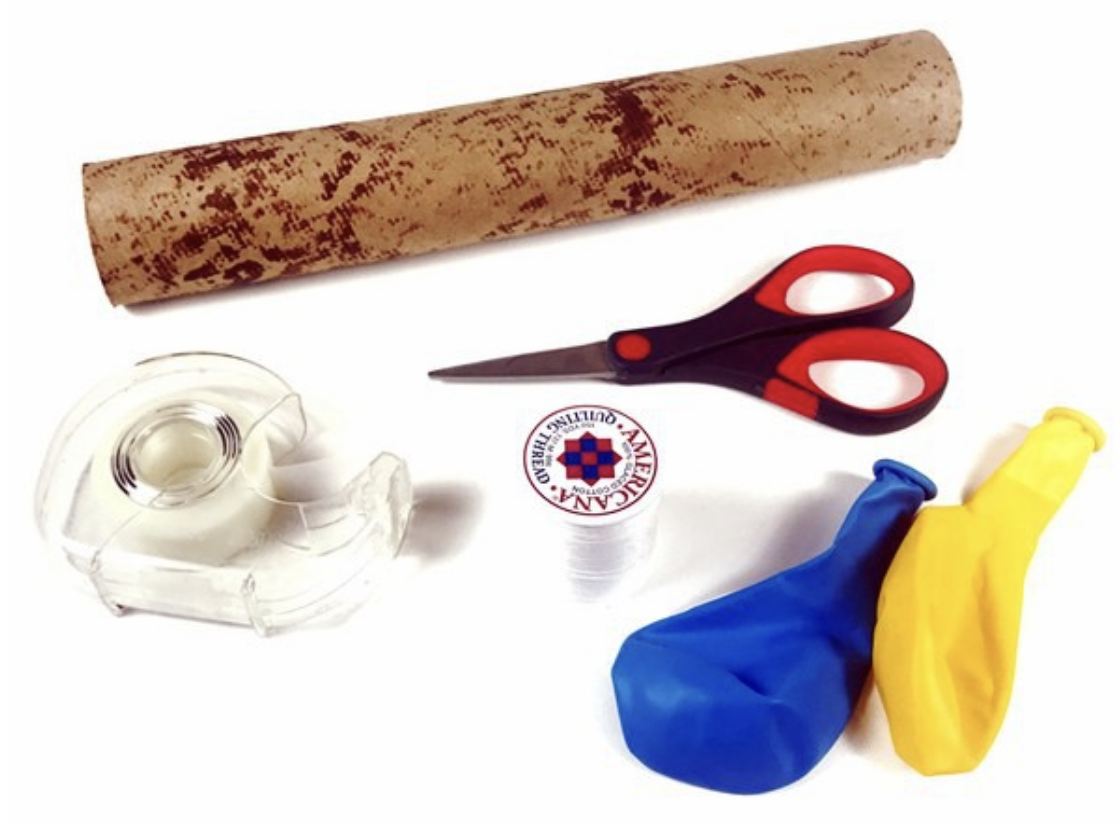
Tools and Materials
- Two balloons of the same size
- String (about 60 cm length)
- Scissors
- Tape
- A door frame
- Paper towel tube
|
|
|
Prep Work
- Inflate both balloons and tie them off at their ends. Both balloons should be the same size.
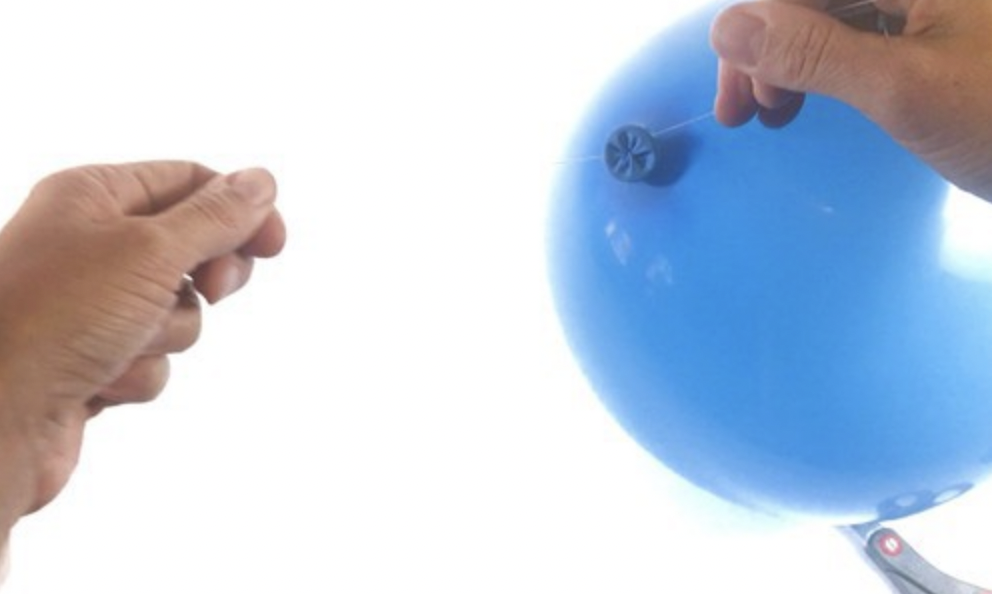
- Cut two pieces of string, each about 30 cm in length.
- Tie the end of one string to one of the balloons.
- Tie the end of the other string to the second balloon.
- Use tape to attach the loose end of each of the strings to the underside of a door frame. Space both balloons so that there is a gap of about 10-15 cm between them.
- Make sure to keep the balloons away from significant air flow.
|
|
Instructions
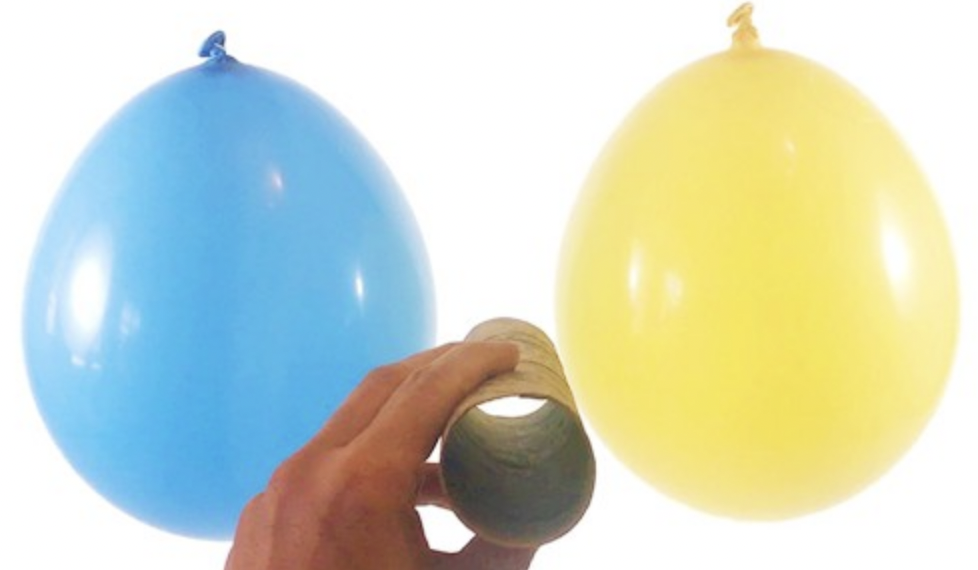
Step in front of the balloons and hold the paper towel tube so that you can blow air into the space between the two balloons.
What do you expect to happen to the balloons if you blow air in between them?
Make sure that the balloons are still. Then blow into the paper towel tube very slowly. Try to produce a steady air flow.
What do you notice? Are the balloons moving?
If the balloons moved, stop their movement and then blow in between them again using the paper towel tube. This time try to blow through the tube harder than before but still try to maintain a steady air flow.
What happens to the balloons this time? Can you explain your observations?
Finally, repeat step 3, but this time blow through the tube as hard as you can, producing a steady air flow.
Do your results change with increasing air flow? Why or why not?
|
|
Cleanup
You can reuse all of the materials or dispose of them in the regular trash.
What Happened?
Did you notice that both balloons magically moved towards each other without being touched at all? The effect which you observed is a great demonstration of Bernoulli's principle. As long as both balloons just dangle from the door frame, the air around them in each direction is static. This means the air exerts the same amount of pressure onto each side of the balloon and both balloons are still. When you slowly blew air in between the balloons, they probably did not move much. This is because a very slow air flow does not greatly change the pressure conditions around the balloons.
However, when you blew through the paper tube more forcefully, you should have noticed that the balloons magically came together. By blowing air forcefully between the balloons, you created an area of low pressure in between the balloons. This is because fast-moving air produces less pressure. The air pressure between the balloons decreased in comparison to the air pressure around the rest of the balloons. Because higher pressure pushes towards lower pressure, the balloons were pushed towards each other. You could have made the same observations using ping pong balls instead of balloons. With heavier objects, however, the generated air pressure difference might not be enough to make them move. The spacing between the balloons matters as well. If the gap between the balloons is too wide, the low air pressure area produced by blowing between them will no longer have an effect.
|
|
Digging Deeper
Daniel Bernoulli was a Swiss scientist who in the 18th century studied how fluids behave when they are in motion. When experimenting with fluids flowing through an hour-glass shaped tube, he made a discovery. He realized that fast-moving fluids produce less pressure and slow-moving fluids produce greater pressure. His discovery became known as the Bernoulli principle. It is not only true for fluids but also for air because gases, just like fluids, are able to flow and take on different shapes. A simple demonstration of Bernoulli's principle requires floating a ping pong ball in a moving stream of air, for example on top of a fan or hairdryer. Why does the ball not fly off the fan? It is because of Bernoulli's principle. The fast-moving air, which carries the ball into the air, is at a lower pressure than the air surrounding the ball. As the ball is trying to fall off the fan, this surrounding higher-pressure air pushes the ball back into the area of lower pressure above the fan. As a result, the ball stays afloat on top of the fan.
Bernoulli's principle can also explain how lift is generated under an airplane wing. Airplane wings are designed to let the air flowing over the top move faster than the air flowing underneath. According to Bernoulli, this creates a pressure difference in which the pressure on the surface of the wing is lower than below. This higher-pressure air pushes up on the wing and thus creates an upward lifting force—the airplane takes off!
|
|
Three Writing Prompts and an Essay Topic
These prompts and questions will help jump-start your daily writing. Just as it's important to read for at least 30 minutes each day, you should also write for 30 minutes a day. Don't worry about your organization or spelling, just write!
"Just when I thought my life couldn’t get any more complicated, my mother decided to open a coffee shop in our living room..."
"I’ve walked by that old house hundreds of times, but today was the first time I caught the little girl watching me from the window..."
"The message inside the fortune cookie, which contained only four words, has become my fate..."
|
|
May 30th
On this day in 1848, the ice cream freezer was patented. Choose one of the following to write about:
- My favorite flavor of ice cream is…
- Ice cream should be served at school because…
- If I could create a new flavor of ice cream it…
- I don’t like ice cream because…
|
|
Try a
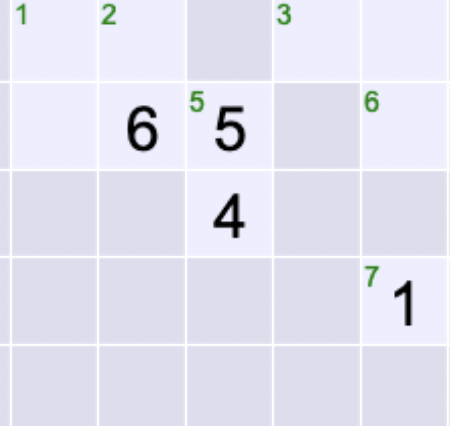
Cross Number Puzzle
Click this link to solve a cross number puzzle.
|
|
|
|
|
|
|
|