|
|
October 18, 2022
Fall Issue #8
|
Weekly activities and lessons to keep your child thinking and progressing all year long. |
|
“An education isn't how much you have committed to memory, or even how much you know. It's being able to differentiate between what you know and what you don't."
|
|
Hello,
Whew. We did it. We made it through all 16 Habits of Mind. I hope this brief summary has been helpful. Personally, it has been nice to revisit the thinking habits. I've found myself challenging my own thinking quite often these past weeks. I hope you enjoy this week's book recommendation. Lynda Hunt is such a talented writer and story teller. She has a very unique way of tapping into so many different human emotions. The Inquiry Quest is an oldie, but a goodie. It may bring back some memories.
I know you know that reading independently for at least 30 minutes a night is very important as well as required homework; however, writing independently for at least 20 minutes a day will boost not only your child's confidence in writing but, also, their reading comprehension. Try writing to this week's prompts as a family. It will be a great few minutes off screen and the benefits will be priceless.
Have a wonderful week.
If you know anybody who you think would benefit from the weekly learning activities in this flyer, please share it with your friends and encourage them to join The McManus Files mailing list by following the links on this page.
Discover something new today,
Mr. McManus
|
|
Habits of Mind
Habits of Mind are thinking habits that push us far past simple answer retrieval. They change our pattern of thinking to help us gain success when we don’t know the answer to a question or problem.
Information on Habits of Mind are taken from the book Habits of Mind by Costa and Kallick.
|
|
The 16 Habits of Mind include:
• Persisting
• Thinking and communicating with clarity and precision
• Managing impulsivity
• Gathering data through all senses
• Listening with understanding and empathy
• Creating, imagining, innovating
• Thinking flexibly
• Responding with wonderment and awe
• Thinking about thinking (metacognition)
• Taking responsible risks
• Striving for accuracy
• Finding humor
• Questioning and posing problems
• Thinking interdependently
• Applying past knowledge to new situations
• Remaining open to continuous learning
|
|
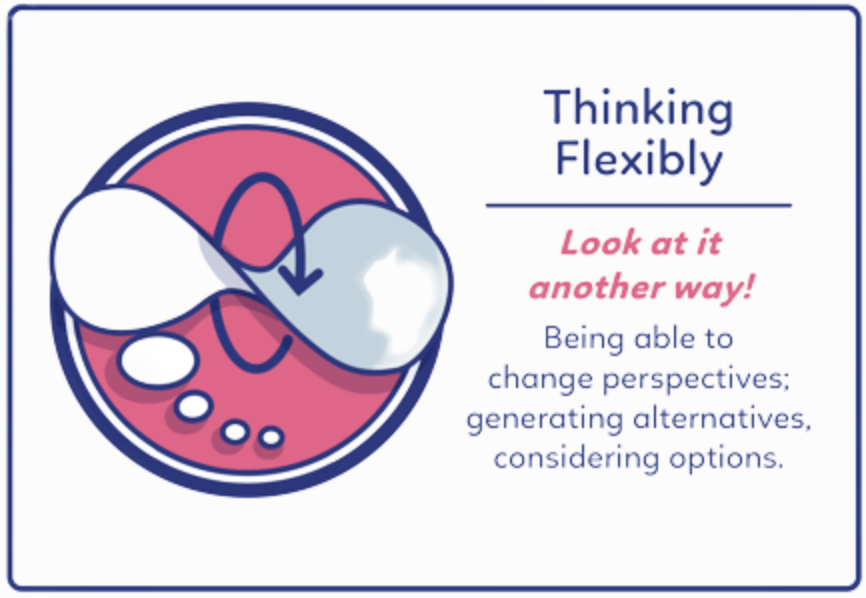
Thinking Flexibly
We are living through a rapidly changing environment and it is likely to continue to be the case for our children. As parents, we recognize the need for our children to learn how to think flexibly, adapt to new situations, and build their capacity to change their minds when they receive new or additional data. Thinking flexibly is part attitude — our openness to new ideas — and part action — knowing how and when to expand our horizons and use new ideas and information. We want them to know when to think broadly and when to focus on details. When our children are confronted with problems or challenges, we encourage their creative and novel thinking. As they make difficult choices, we want them to consider possible intended and unintended consequences.
How are you helping your child to develop their capacity to think flexibly? For example:
When your child is “catastrophizing” a minor setback and is saying they want to give up, offer to sit down and analyze what happened and brainstorm ways to make it turn out better next time. It may be helpful to share a story from your own experience and describe how badly you felt at the time and how you eventually were able to see the situation differently.
When your child is focused only on their perspective, try to have them step back and consider how other people could be affected. How might their words, actions, and ideas make other people feel? This helps them empathize with others feelings, predict how others are thinking, and anticipate potential misunderstandings. They are able to work with people from different cultures and who represent different perspectives recognizing other people’s ways of experiencing and making meaning.
When your child is stuck on a problem, talk with them about what questions or ideas come to mind when zooming out to see the big picture and what comes to mind when zooming in to see a more detailed view. This “Google Earth” approach encourages more flexible thinking because it takes us beyond our normal range of vision.
When your child is feeling stuck because of the limitations of rules, criteria and regulations help them generate fresh ideas rather than feeling stuck. Often limitations lead to creativity. It is always helpful to stay positive and consider possibilities rather than focusing on what you do not have. Encourage your child to start with what they have, what they know, and what they are interested in learning more about.
When your child feels confused or uncertain, help them tolerate the ambiguity of the situation. Encourage them to trust their instincts and continue working creatively and productively. Give them the support to take a chance and try something new or different.
|
|
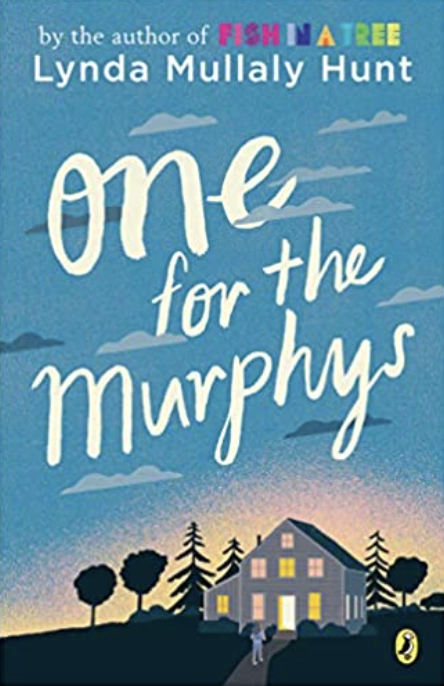
One for the Murphys
by Lynda Mullaly Hunt
|
|
|
|
Hunt's writing is fearless and One For The Murphys is a story that is at once compassionate, thought-provoking and beautifully told. From the first page, I was drawn into Carley's story. She is a character not to be missed or forgotten. Carley uses humor and street smarts to keep her emotional walls high and thick. But the day she becomes a foster child, and moves in with the Murphys, she's blindsided. This loving, bustling family shows Carley the stable family life she never thought existed, and she feels like an alien in their cookie-cutter-perfect household. Despite her resistance, the Murphys eventually show her what it feels like to belong--until her mother wants her back and Carley has to decide where and how to live. She's not really a Murphy, but the gifts they've given her have opened up a new future.
Enjoy!
|
|
|
|
|
MAKING PAPER HELICOPTERS
Use up your extra office supplies with a quick science lesson
|
|
“Falling with style” is how Woody famously described Buzz Lighyear’s flight in “Toy Story,” but he might have been describing these paper helicopters too.
Paper helicopters are a fun activity that demonstrates gravity, drag and thrust. Using paper, scissors, and a few paper clips to make helicopters, you too can design something to fall with style. Use the attached template for the design of the helicopters, or design your own! Even Woody and Buzz would be impressed.
GATHER THIS:
- Paper
- Scissors
- Paper clips
- Color pencils
THEN DO THIS:
- Cut along all of the solid lines of the helicopter pattern.
- Fold the lower sections (C & D) toward each other along the dotted lines.
- Hold the folded sections and place a paper clip at the end.
- Fold the top blades (A & B) in opposite directions.
- Hold the helicopter high above your head. Release!
- Try shaping your blades or using different amounts of weight. You can also try uneven blades.
ASK THIS:
- Did the helicopter rotate clockwise or counter-clockwise?
- How can you make it rotate in the opposite direction?
- Does the height you drop it from affect its flight?
- How does the weight (paperclips) affect the flight?
- If you cut the blades unevenly how does it affect the helicopter’s travel? How?
WHAT IS HAPPENING?
When the helicopter falls, air pushes up against the blades and bends them up just a little. When air pushes upward on the slanted blade, some of that thrust becomes a sideways – or horizontal – push.
The helicopter doesn’t move sideways through the air because there are two blades, each getting the same push but in opposite directions. The two opposing thrusts work together to cause the toy to spin.
|
|
If you feel your child might benefit from a group or individual tutoring program to prepare them for the next phase of their education, please contact McManus Tutoring.
Programs are structured so that students learn independence, accountability, and self-possession. They will develop a repeatable structure that can be used to build success in the future.
|
|
Three Writing Prompts and an Essay Topic
These prompts and questions will help jump-start your daily writing. Just as it's important to read for at least 30 minutes each day, you should also write for 30 minutes a day. Don't worry about your organization or spelling, just write!
"A loud crash sent me thundering down the stairs to the kitchen..."
"There was nobody with him. Without thinking, I took off after him and..."
"As my eyes adjusted to the light, I saw..."
|
|
October 18th
World Rain Forest Week begins today. This week, people will work to raise awareness of rain forest destruction. Every second, 2.4 acres of forest are destroyed. That's equal to two football fields. The forests are clears so that builders can use the land.
Prompt: Can you think of a way to save the rain forest, but make farmers and builders happy? If not, which cause do you think is more important? Explain
|
|
|
|
|
|
|