|
|
October 4, 2022
Fall Issue #6
|
Weekly activities and lessons to keep your child thinking and progressing all year long. |
|
“Even the smallest person can change the course of the future."
|
|
Hello,
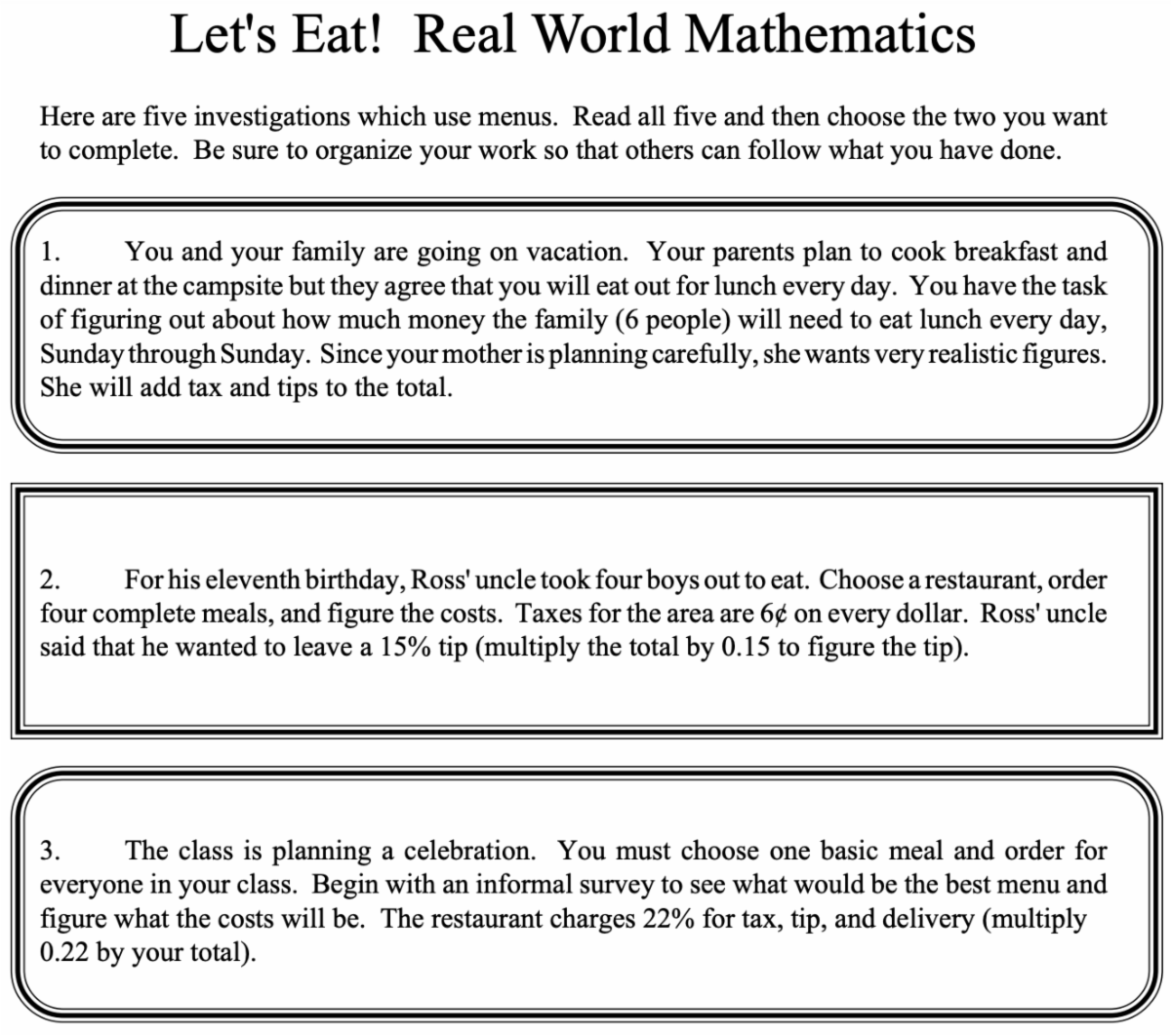
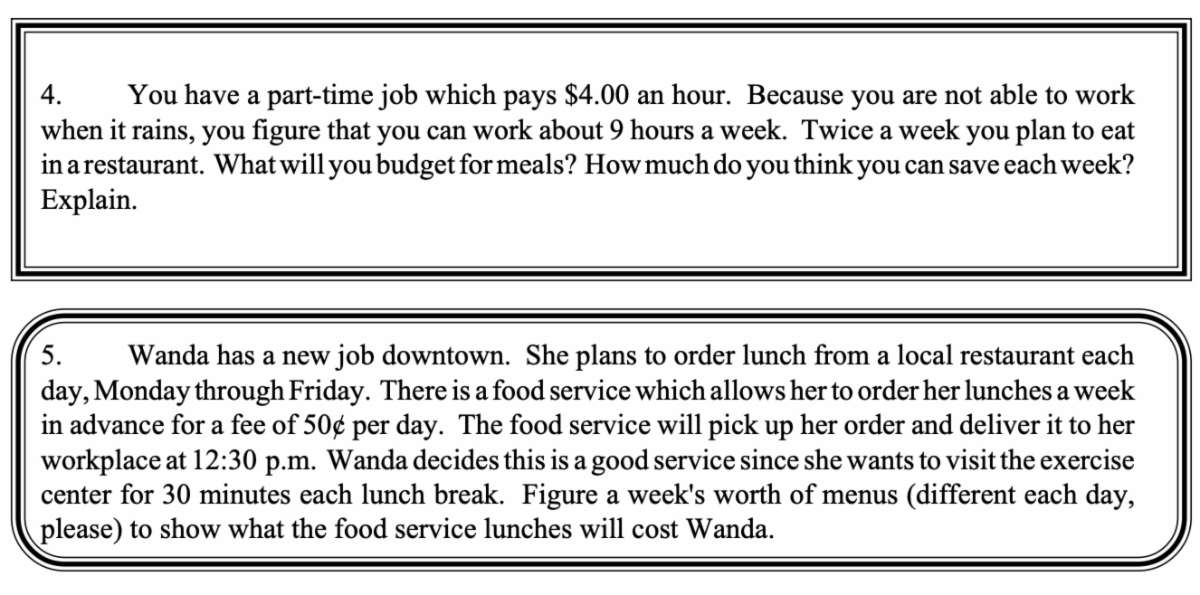
I hope you find this week's issue fun and educational. The Inquiry Quest is an enjoyable and clever way to build something and then test it scientifically. I would have loved an experiment like this when I was a kid, especially the climbing into a high place... Two Roads is a powerful, well paced and compelling story of self-discovery, family, belonging, and friendship. It addresses one of the many dark marks in our country's history with grace and sensitivity. When I've shared stories like this with my classes, they have always been extremely moved. This book is a great history lesson packed into an engaging story. The Problems of the Week are challenging, real world explorations. This is these are the kinds of lessons that really drive home concepts since it is math done in our everyday life. I think it would be fun for the students to use their favorite local restaurants to solve some of these. Happy learning.
If you know anybody who you think would benefit from the weekly learning activities in this flyer, please share it with your friends and encourage them to join The McManus Files mailing list by following the links on this page.
Discover something new today,
Mr. McManus
|
|
Habits of Mind
Habits of Mind are thinking habits that push us far past simple answer retrieval. They change our pattern of thinking to help us gain success when we don’t know the answer to a question or problem.
Information on Habits of Mind are taken from the book Habits of Mind by Costa and Kallick.
|
|
The 16 Habits of Mind include:
• Persisting
• Thinking and communicating with clarity and precision
• Managing impulsivity
• Gathering data through all senses
• Listening with understanding and empathy
• Creating, imagining, innovating
• Thinking flexibly
• Responding with wonderment and awe
• Thinking about thinking (metacognition)
• Taking responsible risks
• Striving for accuracy
• Finding humor
• Questioning and posing problems
• Thinking interdependently
• Applying past knowledge to new situations
• Remaining open to continuous learning
|
|
Applying Past Knowledge to New Situations
What is it? – Using past experiences as a source of information and help.
Sounds like – “this reminds me of….This is just like the time when I…..?”
Looks like – Explaining what is happening based on previous experiences.
Feels like – I am able to move forward with……. because I know that last time….. (making connections)
Too often, students begin each new task as if it were being approached for the first time. Students that are good at applying past knowledge to new situations recall how they have solved a problem previously. These students make connections and understand the relationship between the previous problem and the new one. They are able to encapsulate their experience and apply it to new learning. They are able to draw forth from one event and apply it in another context. This habit builds confidence and allows students to understand new learning much faster than students that do not apply this habit as well.
“I’ve never made a mistake. I’ve only learned from experience.” Thomas A. Edison
|
|
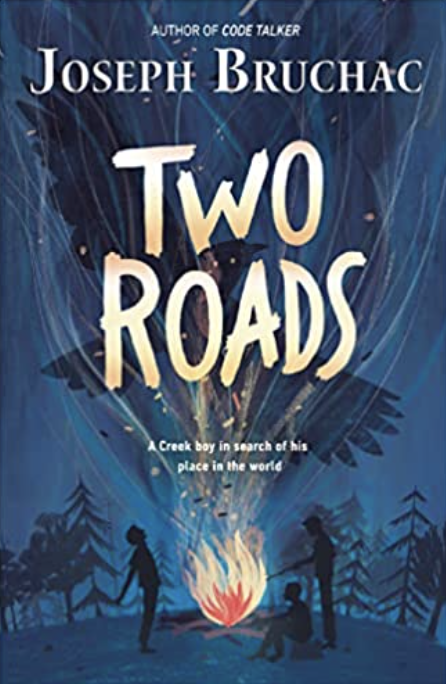
Two Roads
by Joseph Bruchac
|
|
|
|
It's 1932, and twelve-year-old Cal Black and his Pop have been riding the rails for years after losing their farm in the Great Depression. Cal likes being a "knight of the road" with Pop, even if they're broke. But then Pop has to go to Washington, DC--some of his fellow veterans are marching for their government checks, and Pop wants to make sure he gets his due--and Cal can't go with him. So Pop tells Cal something he never knew before: Pop is actually a Creek Indian, which means Cal is too. And Pop has decided to send Cal to a government boarding school for Native Americans in Oklahoma called the Challagi School. At school, the other Creek boys quickly take Cal under their wings. Even in the harsh, miserable conditions of the Bureau of Indian Affairs boarding school, he begins to learn about his people's history and heritage. He learns their language and customs. And most of all, he learns how to find strength in a group of friends who have nothing beyond each other. Enjoy!
|
|
|
|
|
Parachute Plummet
Launch parachutes to see how they fall.
Make a parachute using simple materials and watch how the forces of gravity and air resistance affect it as it falls.
|
|
Tools and Materials
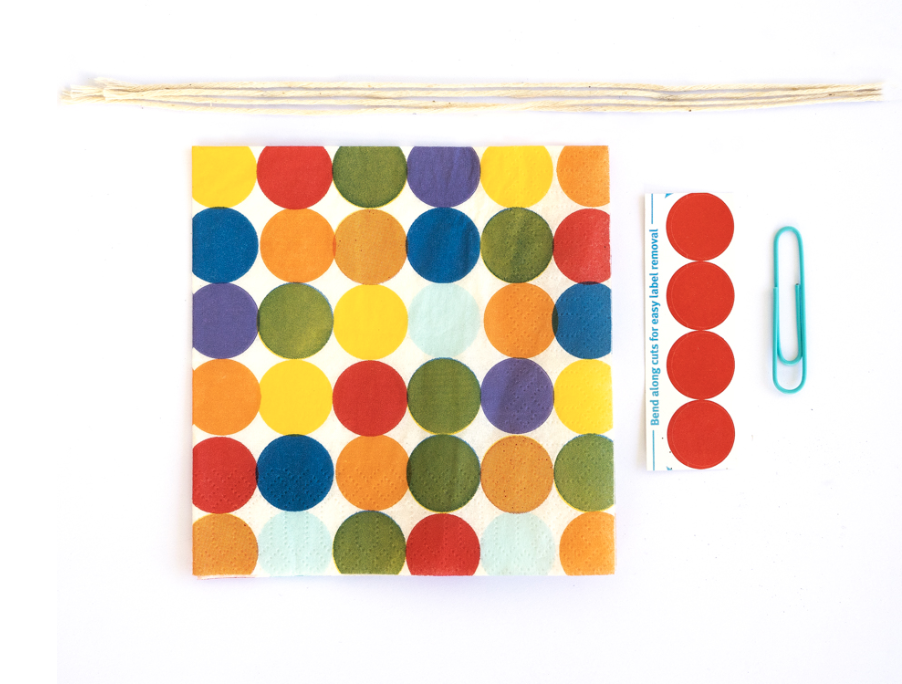
- One single-ply square paper napkin roughly 10 inches by 10 inches (25 cm by 25 cm); you can also separate double-ply napkins
- Four 10-inch (25-cm) pieces of lightweight string
- Five adhesive dots or pieces of tape
- One jumbo paper clip
- Optional: different types of string, such as yarn, cotton string, or ribbon; different types of material for the canopy, such as fabric, tissue paper, newspaper, or plastic bags; different kinds of weights, such as washers
|
|
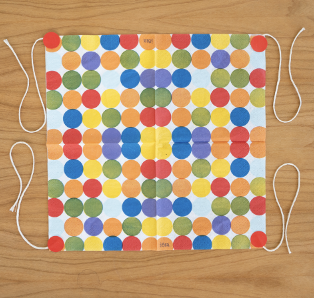
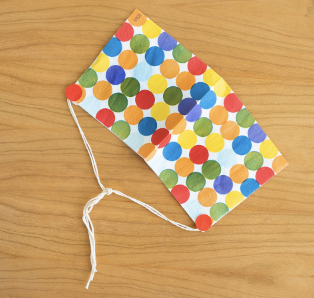
1.Using a sticky dot or piece of tape, secure a string to each corner of the napkin. |
|
|
|
|
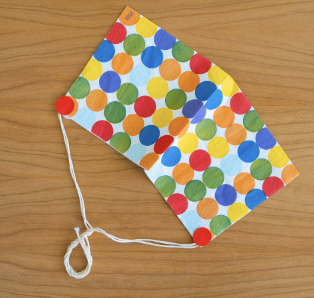
2.Twist the free ends of the four strings together |
|
3.Fold up the twisted ends of the strings to form a loop
|
|
|
|
|
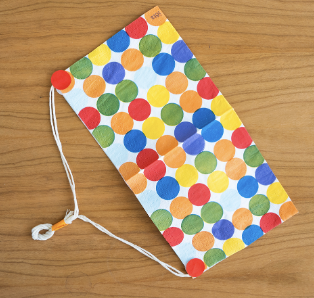
4.Secure the loop with a sticky dot or piece of tape
|
|
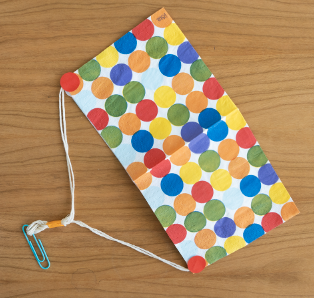
5.Hook the paper clip through the loop
|
|
|
To Do and Notice
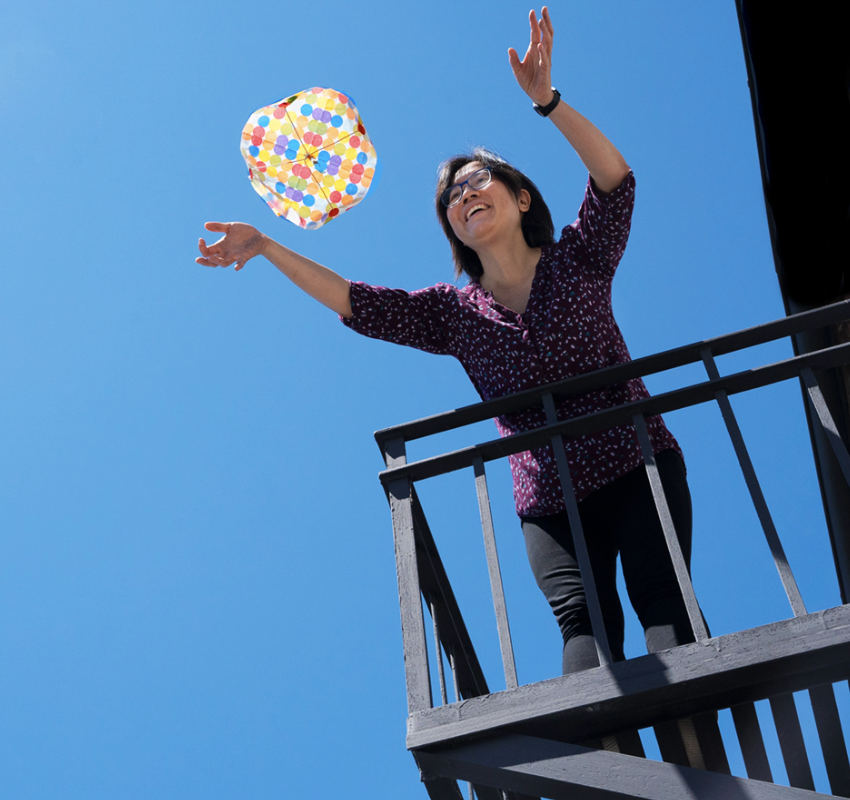
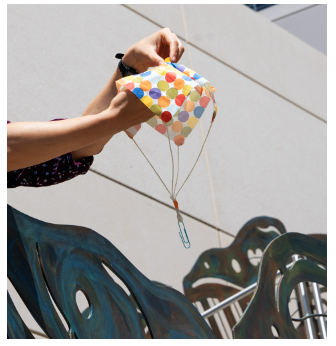
Take your assembled parachute to a safe, elevated launching location, such as a flight of stairs or a balcony. Then, to launch your parachute, pinch the top in the middle of the canopy (see photo below), hold it up, and release it!
Watch your parachute carefully as it falls. Notice how it falls quickly at first, then slows to a steady rate. What else do you notice about how your parachute moves?
|
|
What’s Going On?
Even though we can’t see it, air is made of matter and will push back against an object moving through it. The force of air against an object is called air resistance, or drag. The faster an object goes, the greater the drag, since more air molecules are getting pushed out of the way.
The main forces acting on a parachute are gravity and drag. When you first release the parachute, the force of gravity pulls it downward, and the parachute speeds toward the ground. The faster the parachute falls, though, the more drag it creates. The drag force resists the downward movement of gravity, pushing the parachute back up.
As the parachute falls, the drag increases until it just balances out the pull of gravity. At that point, the parachute stops speeding up, and begins to fall at a steady speed. This steady speed is known as terminal velocity, the fastest something will go when pulled on by gravity in the presence of air resistance.
|
|
Going Further
Can you slow the fall of your parachute even more? See if changing parts of your parachute makes it fall more slowly. Try changing the type or length of string you secure to your parachute. Try a new material for the parachute canopy, or change its shape or size. Try adding more weight to your parachute.
Watch your new parachutes as they fall. How do you think the changes you make affect the parachute’s motion?
|
|
If you feel your child might benefit from a group or individual tutoring program to prepare them for the next phase of their education, please contact McManus Tutoring.
Programs are structured so that students learn independence, accountability, and self-possession. They will develop a repeatable structure that can be used to build success in the future.
|
|
Three Writing Prompts and an Essay Topic
These prompts and questions will help jump-start your daily writing. Just as it's important to read for at least 30 minutes each day, you should also write for 30 minutes a day. Don't worry about your organization or spelling, just write!
"Shivering, I tried to open the door of my car before…"
"I looked up and scanned the parking lot to make sure nobody had seen me..."
"I looked at the bottle; the contents were unlike any I’d ever seen..."
|
|
October 2nd
October 2nd was National Custodial Worker Day, celebrated in honor of the men and women who cleanup after us in school and office buildings everywhere.
Prompt: We often take custodial workers for granted and needlessly add to their workload each day. Name at least three ways you can make your school custodian's job easier. (Consider classrooms, the cafeteria, rest rooms, hallways, etc...)
|
|
|
|
|
|
|