|
|
September 13, 2022
Fall Issue #3
|
Weekly activities and lessons to keep your child thinking and progressing all year long. |
|
“Every day the clock resets. Your wins don't matter. Your failures don't matter. Don't stress on what was, fight for what could be.”
|
|
Hello,
I hope you are well and staying hydrated :-) It is not by accident that this week's Inquiry Quest is about melting ice sheets and rising ocean levels after the miserable heat wave we just endured. What a week that was. Lovers of math, animals, and smart fiction will enjoy this week's book recommendation. Along with a beautifully written story there are many valuable lessons about overcoming social anxiety, making new friends in new situations, and self acceptance. It is a perfect book in preparation for bridging to middle school. I hope you enjoy the three new story starters and essay topic. I'm especially proud of the math problems of the week. They are fun and challenging problems that involve some creative thinking. Happy learning...
If you know anybody who you think would benefit from the weekly learning activities in this flyer, please share it with your friends and encourage them to join The McManus Files mailing list by following the links on this page.
Be calm and try something new today,
Mr. McManus :-)
|
|
Habits of Mind
Habits of Mind are thinking habits that push us far past simple answer retrieval. They change our pattern of thinking to help us gain success when we don’t know the answer to a question or problem.
Information on Habits of Mind are taken from the book Habits of Mind by Costa and Kallick.
|
|
The 16 Habits of Mind include:
• Persisting
• Thinking and communicating with clarity and precision
• Managing impulsivity
• Gathering data through all senses
• Listening with understanding and empathy
• Creating, imagining, innovating
• Thinking flexibly
• Responding with wonderment and awe
• Thinking about thinking (metacognition)
• Taking responsible risks
• Striving for accuracy
• Finding humor
• Questioning and posing problems
• Thinking interdependently
• Applying past knowledge to new situations
• Remaining open to continuous learning
|
|
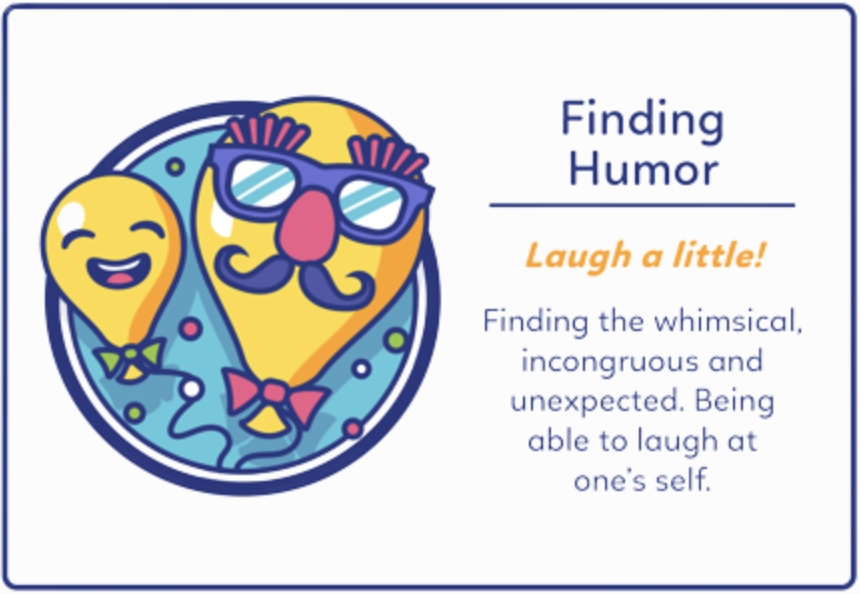
Finding Humor
“Laughter is the shortest distance between two people.” - Victor Borge
Scientists have found that laughing has positive effects on both physiological and psychological functions. When we laugh, our blood vessels relax, stress hormones disperse and the immune system gets a boost.
Additionally, laughter releases creativity and provokes higher-level thinking skills, such as anticipating, finding novel relationships, visual imaging and making analogies. Students who have a whimsical frame of mind thrive on finding inconsistencies, perceiving irony and satire, and being able to laugh at situations and themselves.
We want students to acquire the habit of finding humor in a positive sense (rather than laughing at human differences, ineptitude or violence) so they can distinguish between those situations of human frailty and fallibility that require compassion and those that truly are funny (Dyer, 1997).
Finding humor is a useful skill because it makes people feel good, brings people closer together and helps people connect ideas and be creative. Common language for this habit includes: merry disposition, laughable, funny, playful, whimsical, pun and irony.
“Warning: Humor may be hazardous to your illness.”
Ellie Katz
What is the astronauts’ favorite place on the computer?
The space bar
“A fool and his money are soon elected.”
Will Rogers
“Remember: Marriage is the number one cause of divorce.”
Red Skelton
|
|
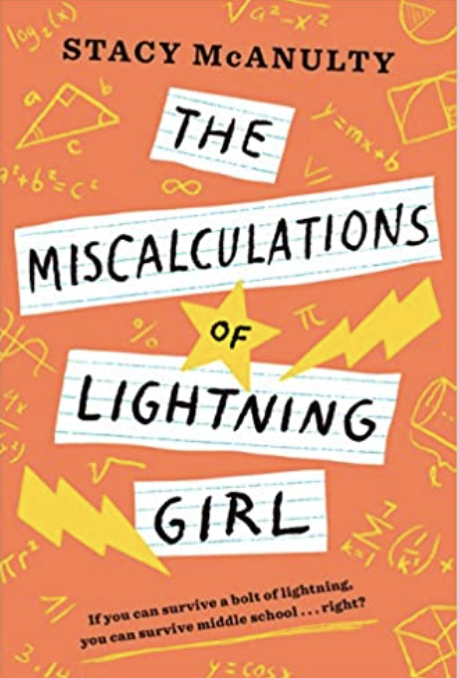
The Miscalculations of Lightning Girl
by Stacey McAnulty
|
|
|
|
I don’t think The Miscalculations of Lightning Girl is a good middle grade book, I think it’s a good novel, which just happens to have children as its characters. Lucy, a 12 year old girl who, when struck by lightning, develops an incredible ability in mathematics. After a period of home schooling, her grandmother decides that attending a regular school will help Lucy develop social skills. This smart and funny novel will teach all readers about math and show how it can be used to solve real world problems that mean something - like boosting the chances of adopting a dog from the local shelter. One of the things that Lucy learns during her time at school is that although she might feel like the only "freak" in the world, other people have their own concerns and are not really taking much notice of her. This novel is a celebration of friendship and a thoughtful reminder to get out of our comfort zones and embrace what makes us different!
Enjoy!
|
|
|
|
|
Melting Ice and Rising Seas
There’s ice on land and ice floating in the sea, but how do they contribute to sea level rise?
|
|
Melting ice is a major factor contributing to sea level rise. This happens due to warming air temperature. Does the location of melting ice on Earth affect the way sea level rise occurs? Investigate with this model of seas and continents. |
|
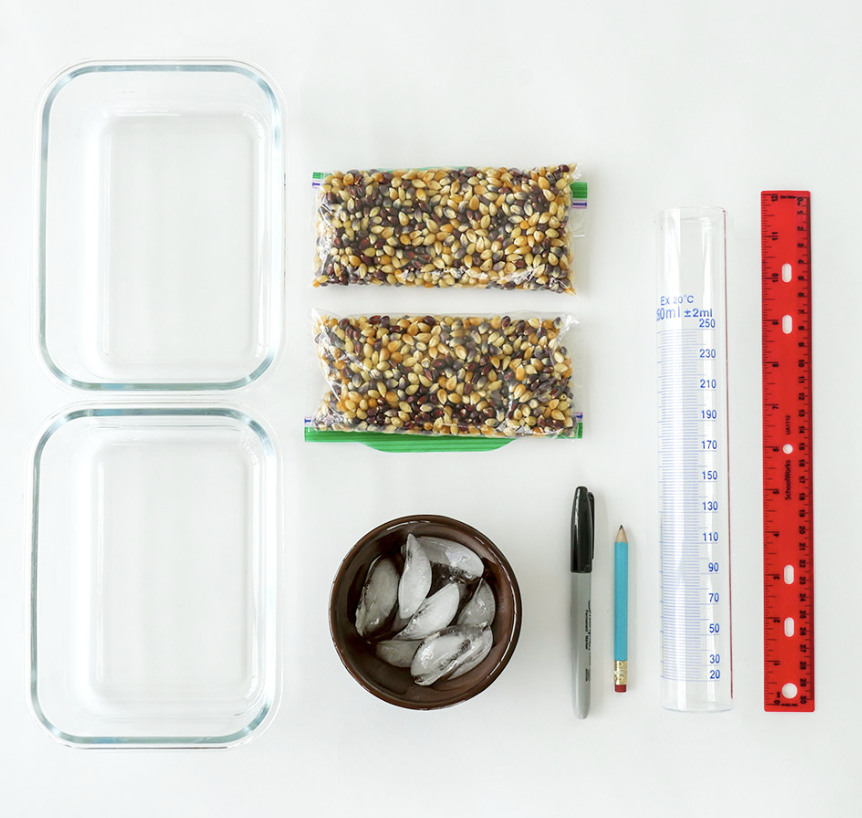
Tools and Materials
- Two small, clear containers of the same size
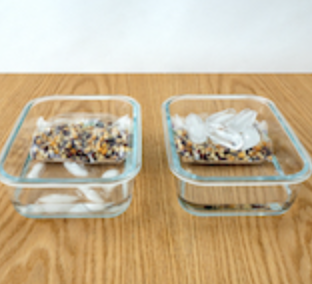
- Two solid objects of the same size that fill about half the container volume (e.g., two equal-sized lumps of clay, two small cans, two tightly sealed plastic zip-top bags filled with equal amounts of dried beans, lentils, etc.)
- An even number of identically-sized ice cubes
- Water, room-temperature (not shown)
- Vessel for pouring, such as a 250mL graduated cylinder (other sizes will work, too)
- Ruler to measure depth
- Writing tool and paper for recording observations (paper not shown)
- Graph paper (not shown)
- Marker
- Optional: Timer
|
|
|
|
|
Assembly
- Place one of your solid objects in each container, as close to the side as you can get it, leaving no gaps. This represents "land"; the rest of the container represents the "sea."
- Place half of the ice cubes on top of the “land” in one container and the other half in the “sea” in the other container.
- Add the same volume of water to both containers, making sure the water level stays below the edge of the “land”.
|
|
To Do and Notice
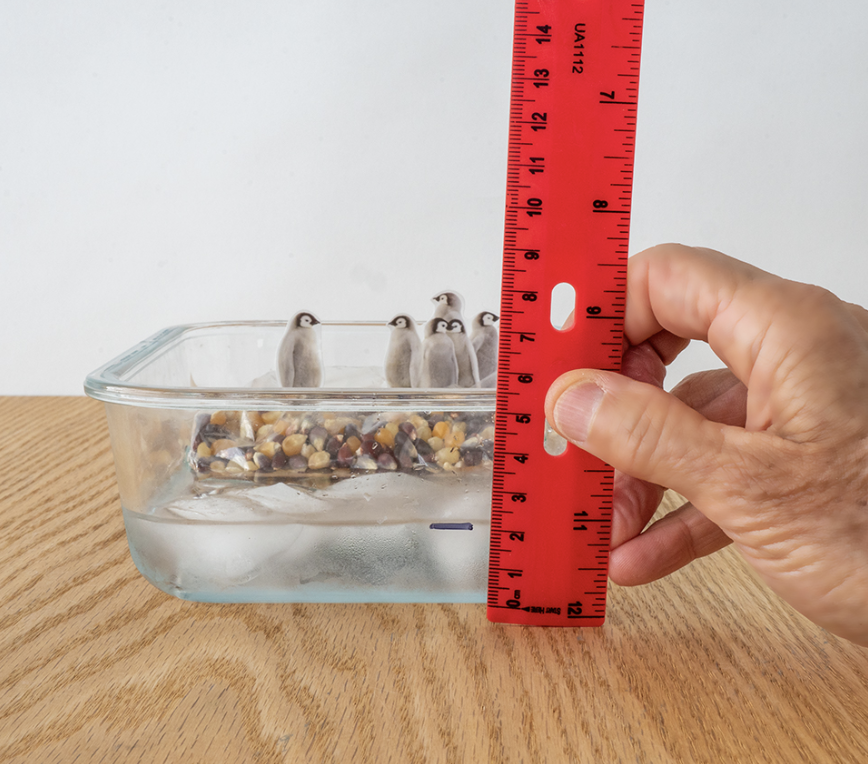
Mark the water level of each container with a permanent marker. Next, place the ruler along on the side of each container to measure the water depth in millimeters. Record these water levels as your first observation of sea level.
As the ice on “land” and in the “sea” melt, what do you predict will happen? Where do you expect the melted ice water to go?
Measure the water level again at regular intervals, such as at the same time every hour, until all the ice has melted. (Tip: Set a timer to go off every hour.) This could take several hours. At each interval, record the time and the water levels you observe. Optionally, you can continue to mark the levels on the side of the container to help you keep track.
After the ice in both containers has melted, graph the water levels you recorded at each time interval for both containers. Plot the data points on a graph, with time on the x-axis and water level on the y-axis. Connect the “land ice” points. What do you notice? Connect the “sea ice” points. What do you notice? How did the sea levels change, or not change, in each container?
What might change if you conducted your experiment under different conditions (for example, both containers in a warmer or cooler location)?
|
|
What’s Going On?
Rising sea levels mean the volume of water in the sea has changed.
The land ice melted and flowed down into the sea, adding more water to the sea and causing the volume of the sea to change. The melted land ice is a new addition to the ocean and causes a change in sea level over time (as your graph shows!).
Sea levels are rising due to melting ice from glaciers and ice sheets found on every continent except Australia. As water from melted land ice pours into the ocean, the volume of water in the global oceans increases.
What about the melting sea ice? Ice is less dense than water, which is why it floats. When ice melts, the resulting water is denser, so a particular mass of what had been solid ice will have a smaller volume when it becomes liquid water. This change in volume exactly offsets the small percentage of ice that is above the water's surface. Therefore, melting sea ice does not affect sea levels.
|
|
Going Further
Melting ice isn’t the only culprit for sea level rise. Other factors in the environment also cause sea level rise, including the effects of heating liquid water. When liquid water is warmed up, it increases in volume (takes up more space), while the actual amount of water (number of water molecules) stays the same. This is called thermal expansion, and it’s causing sea levels to rise as sea water is warmed by higher air temperature and expands, taking up more space. Investigate the effects of thermal expansion yourself by trying the Swelling Seas in next weeks issue :-)
|
|
If you feel your child might benefit from a group or individual tutoring program to prepare them for the next phase of their education, please contact McManus Tutoring.
Programs are structured so that students learn independence, accountability, and self-possession. They will develop a repeatable structure that can be used to build success in the future.
|
|
Three Writing Prompts and an Essay Topic
These prompts and questions will help jump-start your daily writing. Just as it's important to read for at least 30 minutes each day, you should also write for 30 minutes a day. Don't worry about your organization or spelling, just write!
"The lights dimmed and the curtains opened. I felt like..."
"As soon as I boarded the train, I began my letter to..."
"We were canoeing across the inlet when we noticed some unusual movement alongside the boat."
|
|
September 12th
Runner Jesse Owens, the star of the 1936 Olympics at Berlin (he won four track-and-field medals, including the 100-meter dash and the long jump), was born today in 1913 in Oakville, Alabama.
What athlete from the past or present inspires you to be your best? Why? If you could compete in the Olympics, which sport would you choose? Why?
|
|
|
|
|
|
|