|
|
September 20, 2022
Fall Issue #4
|
Weekly activities and lessons to keep your child thinking and progressing all year long. |
|
“The time is always right to do what is right." |
|
Hello and Happy Tuesday,
What a glorious thing rain is. It has been such a long, dry summer, and this recent storm brought me so much hope for a wet winter. Fingers crossed!
I hope your intake conferences are going well. This is such a valuable time to gain insights about your child's progress and current levels after a summer of fun. I find these sessions to be the most valuable and constructive of all our reporting periods. I hope you do, too.
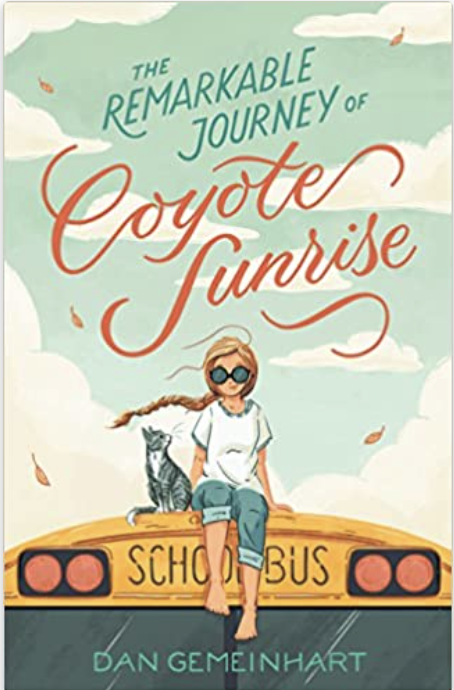
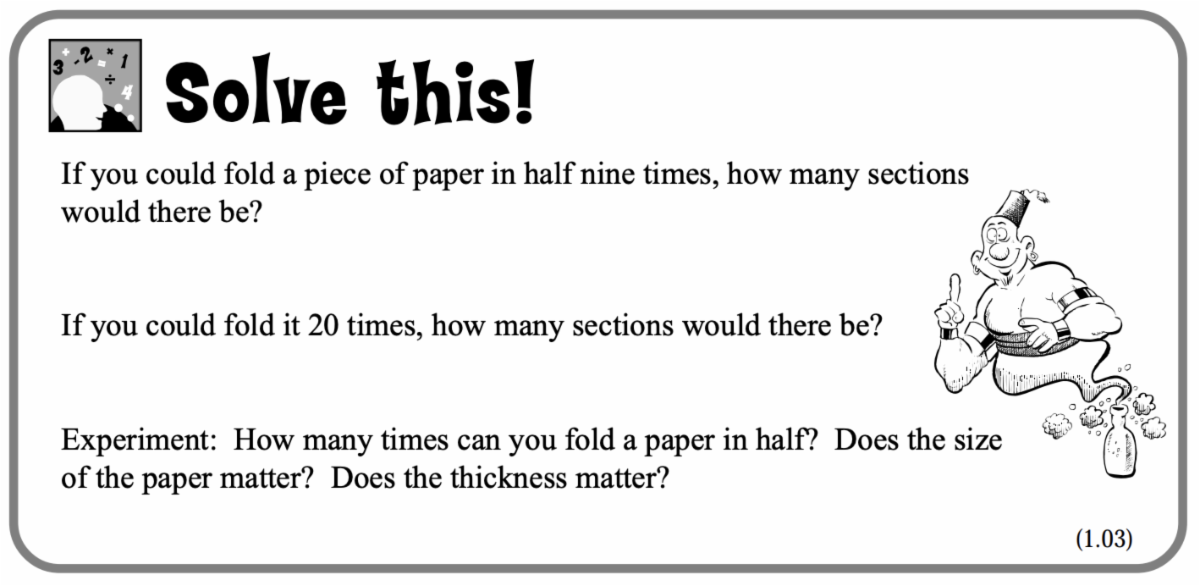
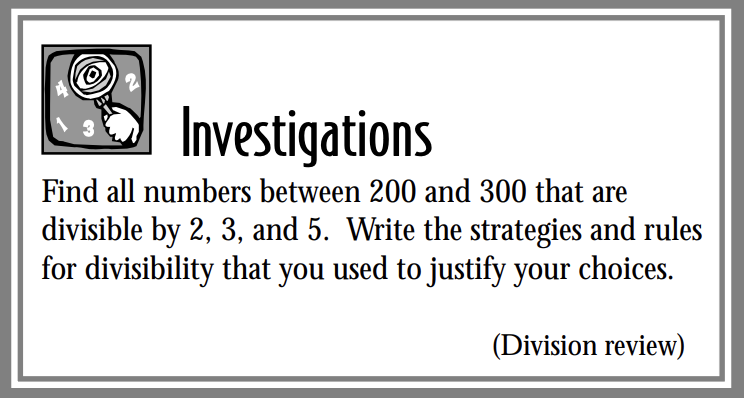
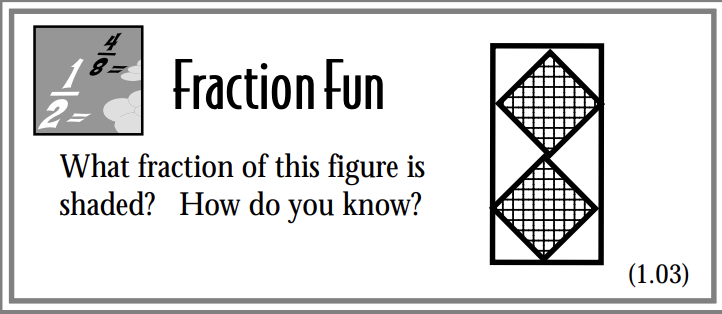
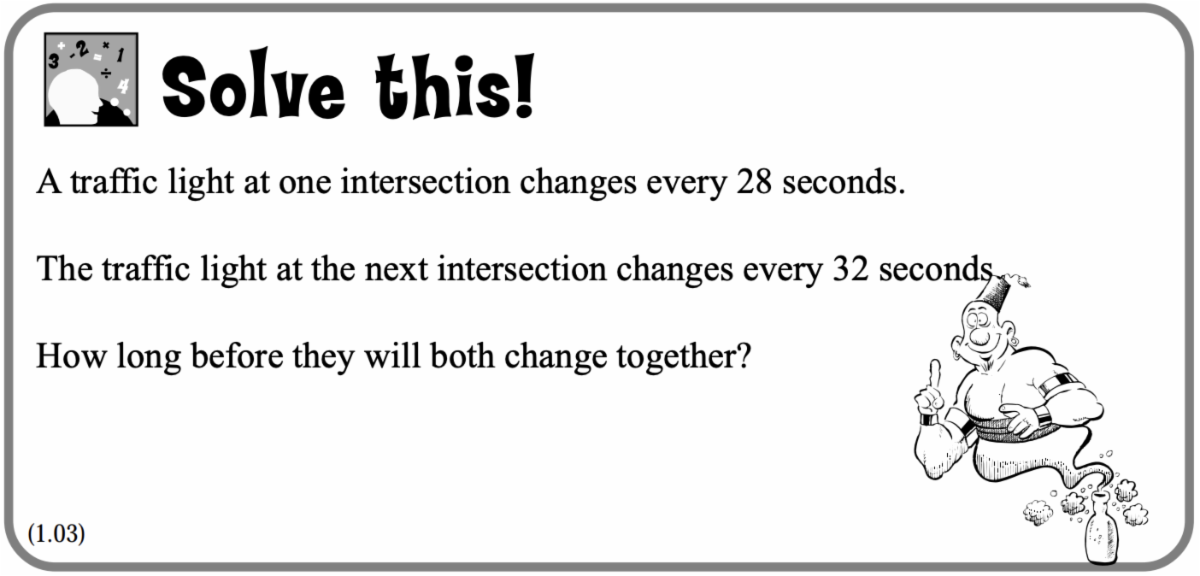
This weeks flyer concludes our two week investigation into warming sea waters. This activity is a bit detailed, but the lesson and knowledge are invaluable. I've stumbled across another gem of a book that I am so glad I get to share with you. The Remarkable Journey of Coyote Sunrise takes you by the hand and leads you through a very crazy, sometimes slap-sticky, journey. A beautiful, empathic, funny, sad and entertaining book that I read with joy and sometimes a tear in my eye. I Recommend it for children, teenagers and adults. There are three new story starters and an essay topic for extended writing practice. I'm posting two of my favorite problems of the week. I hope your child attempts the paper folding activity. If they do, check out the video using a hydraulic press to fold paper. Warning! There is some mild language when the press completely breaks down the paper's bond and it explodes. Such a wicked experiment :-) Have a great week!
If you know anybody who you think would benefit from the weekly learning activities in this flyer, please share it with your friends and encourage them to join The McManus Files mailing list by following the links on this page.
Stay happy,
Mr. McManus
|
|
Habits of Mind
Habits of Mind are thinking habits that push us far past simple answer retrieval. They change our pattern of thinking to help us gain success when we don’t know the answer to a question or problem.
Information on Habits of Mind are taken from the book Habits of Mind by Costa and Kallick.
|
|
The 16 Habits of Mind include:
• Persisting
• Thinking and communicating with clarity and precision
• Managing impulsivity
• Gathering data through all senses
• Listening with understanding and empathy
• Creating, imagining, innovating
• Thinking flexibly
• Responding with wonderment and awe
• Thinking about thinking (metacognition)
• Taking responsible risks
• Striving for accuracy
• Finding humor
• Questioning and posing problems
• Thinking interdependently
• Applying past knowledge to new situations
• Remaining open to continuous learning
|
|
Question and Posing Problems
What is it? – Finding problems to solve.
Sounds like – “I wonder if…. How high can birds fly? How are these related to each other?”
Looks like – Being curious and seeking answers.
Feels like – If I ask the right questions I can figure out this question.
Some students may be unaware of how asking questions help make sense of the world. They may not realize that questions vary in complexity, structure, and purpose. Students that are good at questioning and posing problems go beyond asking simple questions. When confronted with a discrepancy they have a strategy to search and find a solution. It is helpful to model how you pose problems and ask questions to solve complex problems.
“The formulation of a problem is often more essential than its solution, which may be merely a matter of mathematical or experiential skill….. To raise new questions, new possibilities, to regard old problems from a new angle, requires creative imagination and marks real advances.” Albert Einstein
|
|
The Remarkable Journey of
Coyote Sunrise
by Dan Gemeinhart
|
|
|
|
Five years. That's how long Coyote and her dad, Rodeo, have lived on the road in an old school bus, criss-crossing the nation. It's also how long ago Coyote lost her mom and two sisters in a car crash. Coyote hasn’t been home in all that time, but when she learns that the park in her old neighborhood is being demolished―the very same park where she, her mom, and her sisters buried a treasured memory box―she devises an elaborate plan to get her dad to drive 3,600 miles back to Washington state in four days...without him realizing it. Along the way, they'll pick up a strange crew of misfit travelers. Lester has a lady love to meet. Salvador and his mom are looking to start over. Val needs a safe place to be herself. And then there's Gladys... Over the course of thousands of miles, Coyote will learn that going home can sometimes be the hardest journey of all...but that with friends by her side, she just might be able to turn her “once upon a time” into a “happily ever after.” Enjoy!
|
|
|
|
|
Swelling Seas
Watch water swell and shrink with changes in temperature.
One of the main causes of sea level rise is the warming of our oceans. In this Science Snack, you’ll see for yourself the effect of temperature change on water.
|
|
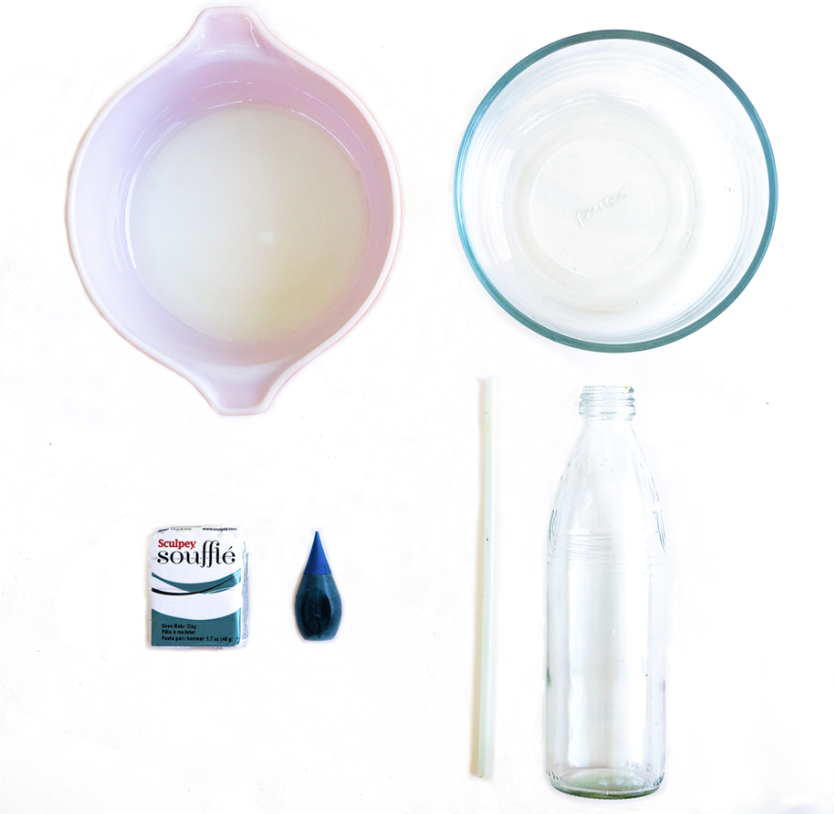
Tools and Materials
- Glass bottle, 12-ounce size works well
- Clay or masking tape, or other material to make a watertight seal
- Clear glass or plastic straw (or a ballpoint pen with a clear exterior that you can disassemble to make a tube that's open at both ends)
- Two larger containers, such as bowls or pots
- Water (very hot tap water, very cold water—ice helps—and room-temperature water)
- Permanent marker (not shown)
- Optional: Food coloring
|
|
|
Assembly
1.Fill the bottle completely with room-temperature water.
2.If you’re using food coloring, add a drop or two to the water in the bottle.
3.If you're using a ballpoint pen instead of a straw, carefully pull the pen cartridge and ball point out of one end and the end cap off of the other end. You may need pliers. Note: Some clear pens have a tiny hole in the side; if yours does, cover it with clear tape or find a different pen without a hole.
|
|
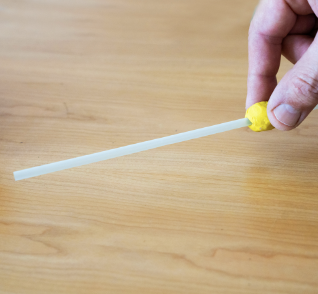
4.If you're using clay as a sealant, wrap a small piece near one end of the straw without letting the clay block the opening.
If you're using masking tape, wrap the tape around and around the straw until it forms a "donut" of tape with a diameter large enough to fit into the top of the bottle and plug it tightly.
|
|
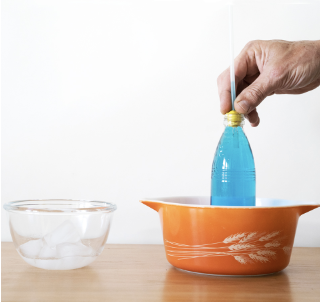
5.Place the straw and its attached ball of clay (or tape plug) into the top of the bottle, plug side first. Push the sealant into the top of the bottle to make a tight seal. |
|
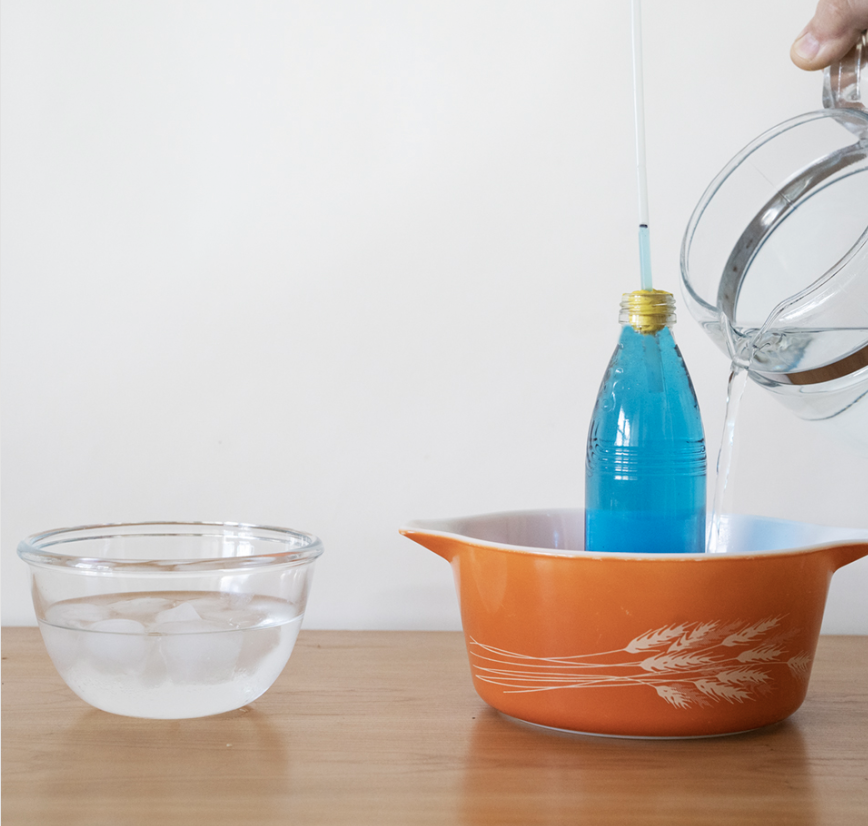
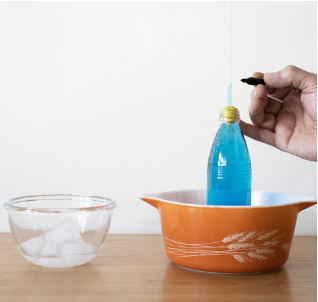
6.Gently press the plug into the bottle until you see water rising into the straw. If your seal is tight enough, the water level in the straw will remain constant. If the water level in the straw keeps dropping, you have a leak—try repeating Steps 4 and 5. Try to get the water level in the straw to stabilize at a level about 5 cm (2 inches) above the top of the bottle, as shown in the photo below. |
|
|
|
|
7.With a permanent marker, mark the height of the water in the straw (see photo). |
|
To Do and Notice
Pour hot water into one of the large containers and very cold water into the other. The two containers should be full enough to cover most of your bottle, but not so full that they overflow when you place the bottle inside.
Place the bottle into the container of hot water and watch it for 5 to 10 minutes. What do you notice?
Can you guess what will happen when you place the bottle in the container of cold water? Try it and see.
|
|
What’s Going On?
You probably noticed that the water level in your bottle rose when you placed it in the hot water and sank when you placed it in cold water. That's because the water in the bottle expanded with the heat of the hot water and shrank when it cooled back down. Most materials expand when heated—a property called thermal expansion—and liquid water is no exception.
As the water in the bottle gets warmer, molecular motion increases and causes the volume of water to increase as well. This raises the water level in the straw, even though no water was added to the system.
When the water is cooled, molecular motion decreases, and the volume of the water in the bottle contracts. The water level in the straw goes down.
The water in your bottle serves as a model for what's happening in our oceans. Ocean temperatures are getting warmer because our atmosphere is getting warmer. Increasing amounts of greenhouse gases in our atmosphere prevent heat from Earth’s surface from radiating back into space as freely as it used to. That makes the atmosphere warmer. The oceans absorb 90% of this excess heat, making them warmer, too.
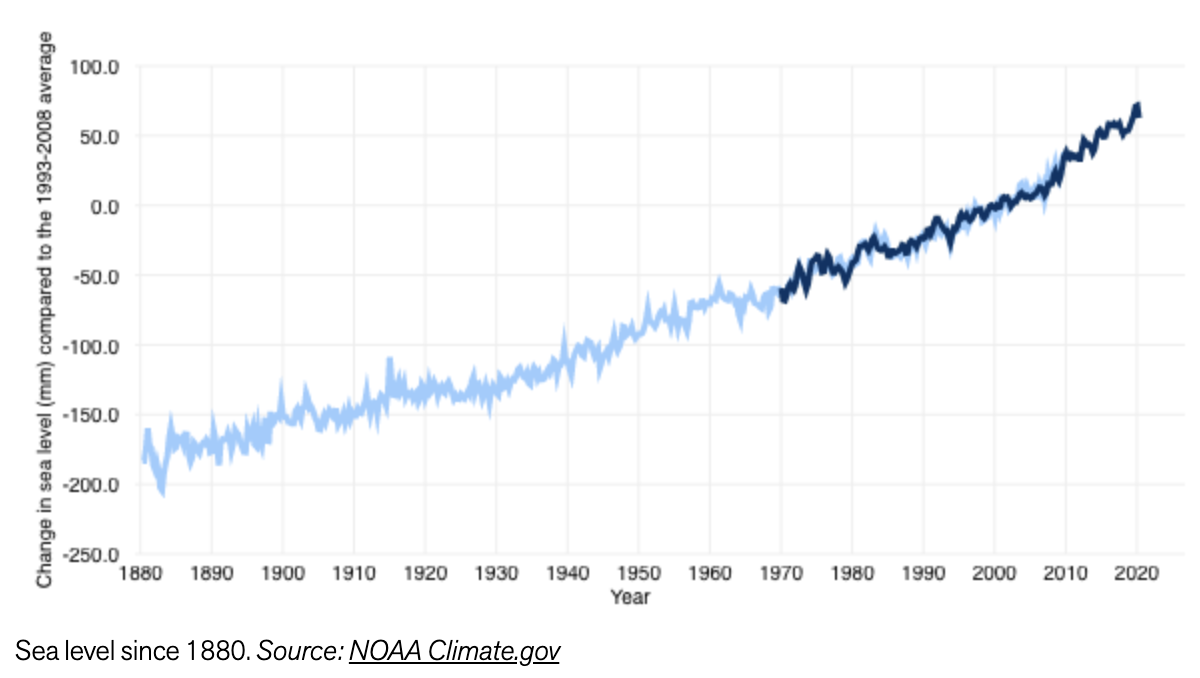
Like the water in your bottle, ocean water expands when heated. This expansion and the melting of land ice, such as glaciers and ice sheets, are the two main factors contributing to rising sea levels around the globe. When land ice melts, the resulting water flows into the ocean, raising sea levels. Until the last decade or so, thermal expansion of water and melting land ice contributed roughly equally to rising sea levels. In the last decade, melting land ice has become the greater contributor to rising sea levels, responsible for twice the increase of that caused by thermal expansion (see diagram below).
|
|
Going Further
You may notice the column of water in the straw temporarily goes down when the bottle is first placed in the container of hot water (and it may rise temporarily when the bottle is first placed in the cold water). This is due to the expansion (and contraction) of the bottle itself. The bottle expands when it's immersed in the hot water it, increasing its volume. As a result, some of the water in the straw flows back into the bottle and the water level in the straw decreases. After a few moments, the water in the bottle begins to heat up, expand, and push back up into the straw.
|
|
If you feel your child might benefit from a group or individual tutoring program to prepare them for the next phase of their education, please contact McManus Tutoring.
Programs are structured so that students learn independence, accountability, and self-possession. They will develop a repeatable structure that can be used to build success in the future.
|
|
Three Writing Prompts and an Essay Topic
These prompts and questions will help jump-start your daily writing. Just as it's important to read for at least 30 minutes each day, you should also write for 30 minutes a day. Don't worry about your organization or spelling, just write!
"I was just about to clear my throat when I noticed Sam and Layla standing apart from the group, whispering..."
"We sat around the campfire in eerie silence, nobody wanting to bring up our predicament..."
"The pancakes were perfect—round and golden, soft but a little crispy near the edges..."
|
|
September 20th
The Equal Rights For Women Party was formed of this day in 1884, to ensure equal representation in presidential elections. Their candidate for President was Mrs. Belva Lockwood. The Vice-Presidential candidate was Marietta Stow.
Why do you think women had to form their own party in order to nominate a female Presidential candidate? Do you think there will ever be a woman President in the United States? Why or why not?
|
|
|
|
|
|
|