|
Meditations From Blackness
As the United States prepares to observe Juneteenth tomorrow - the commemoration of when the news of freedom from bondage was received by the last enslaved African Americans in the United States, two and a half years after the Emancipation Proclamation - we reflect on a writing by our preacher for next Sunday, the Rev. Izett Samá Hernández.
This reflection was originally shared on Trinity Sunday 2020 to a virtual gathering of Cuban and Puerto Rican Presbyterian youth.
The text was translated into English by the Rev. Amaury Tañón-Santos.
I am Black. A reality since birth, but an identity I have not always dwelled in. Many years ago, to hear phrases like “you are almost White”, “you don’t look Black”, or “your hair isn’t that kinky” (tu pelo no es tan malo) were moments I interpreted as flattery. I felt relieved because I felt accepted. I smiled with sarcasm when I was told that I wanted to “improve the race” (mejorar la raza) because I fell in love with a White young man. I responded, with total assurance, “but, of course!” I wouldn’t allow anything to affect me, to damage me. Every scornful phrase, every
pejorative joke, was not about me. It was about someone else. It was about some other Black person, not me.
My encounter with God, the beginning of my journey of conversion, did not change this scenario. As in the rest of society, in church I heard the same phrases, the same words, the same jokes, the same affirmations that everything Black was evil, and that everything White was good.
It was in my vocational awakening and attending seminary that something kindled in me, allowing me to recognize my identity. It changed my life forever. It was in a particular class, hearing the precise words, that removed the scales from my eyes. I saw myself for the first time for what I am, a Black woman. When I looked back, I felt shame. I was a victim. But I was also part of the mechanisms of discrimination, exclusion, and marginalization of Blacks in society.
With indignation and pain, today we repudiate the brutal assassination of a young Black man. He is not the only one. There have been many, and more will occur. This act is nothing but the consequence of a bigger evil that begins with jokes that might appear innocent, but end up in systems of total exclusion, rejection, discrimination, and death.
We normalize the rejection of Black folk. We live with this rejection inside and outside of our congregations – churches that do not want to accept a pastor because s/he’s Black, the disciplining of a young black man for falling in love with a White young woman who happened to be the pastor’s daughter, church people being suspicious when a Black person shows up for worship, and while saying “you are welcome”, inside they think of phrases that ridicules that person, without thinking, without being guided by the ethics of the Gospel. All these actions are
as dangerous, damaging, shameful, and abominable as the knee over the neck of George Floyd.
“I am not racist”
“My best friend is Black”
These are (self) comforting phrases that (seek) to spare accusation. But these phrases do not save. To say that
“We are all equal before God”
“We are one family”
is a cover-up that seeks to hide the truths we do not want to talk about.
Make no mistake, these phrases hurt even when the weeping, the rage, the suffering, the pain is not visible. They wound. It hurts when the pain leads you to indignation, and indignation to the struggle, only to be labeled as being a "drama queen" and an extremist. Some even say that “Blacks are more racist than Whites.” It demonstrates the lack of awareness of the effects of the establishment, of culture, and of structures lording over every human being.
It hurts that, having no awareness of the construct of one’s identity as a Black person, you are looked upon with distrust, with an expectation of evil - purses are held tight at the store, or the cops shame you in front of friends, asking you alone for a form of identification. And after all, your friends laugh because, in the
end, this is normal… You are Black.
“I assure you that everything you did for one of my siblings, even to the least of them, you did it for me.” That is the call. What are we waiting for? The life proposed by the Gospels does not commune with any manifestation of discrimination against any human being. It is a call to every person of goodwill to seek justice everywhere, in every moment.
Today, we see protests, we make statements, and we want to shout out our indignation. And this is urgent, necessary. And at the same time, why not fight that demon we have inside? Why not confront the racist attitudes around us? Why not cut out our indifference and position ourselves to do for all siblings that which we say we are willing to do for Jesus?
To you, young Black person – accept, live out your identity without shame and prejudice, with courage, dignity, and with the eternal willingness to struggle for justice.
To you, young White person – do not be flattered by false privileges, do not join your ancestors who classified humans according to skin color. Be brave. Join the struggle for justice out of your own heart.
To you, Christian youth – remove all prejudice. Allow yourselves to be questioned by the ethics of the Gospel, by the image of God on this Trinity Sunday that confirms for us the blessing of diversity, and our obligation to respect diversity. Do not repeat (the) mistakes (of the past). Do not be accomplices of evil.
For all of us – let’s care for the feelings in our hearts, for the words (out of) our mouths, the actions of our lives, which can asphyxiate someone that is screaming, “I can’t breathe.”
Izett Samá Hernández is the pastor of our sister congregation - the Iglesia Presbiteriana Reformada en Los Palos (Mayabeque Province, Cuba), and serves as the stated clerk (chief ecclesial officer) of the Presbiterio de La Habana of the Presbyterian Reformed Church in Cuba.
She is a theologian, researcher, writer, and nurse with decades of engagement for inclusion and social justice in church and society. Most recently, Pastor Izett served as executive coordinator of the Centro Memorial Martin Luther King, a learning and community engagement space she has been a part of for decades.
Rev. Samá Hernández has degrees from the Universidad de La Habana (nursing) and the Seminario Evangélico de Teología en Matanzas (theology)
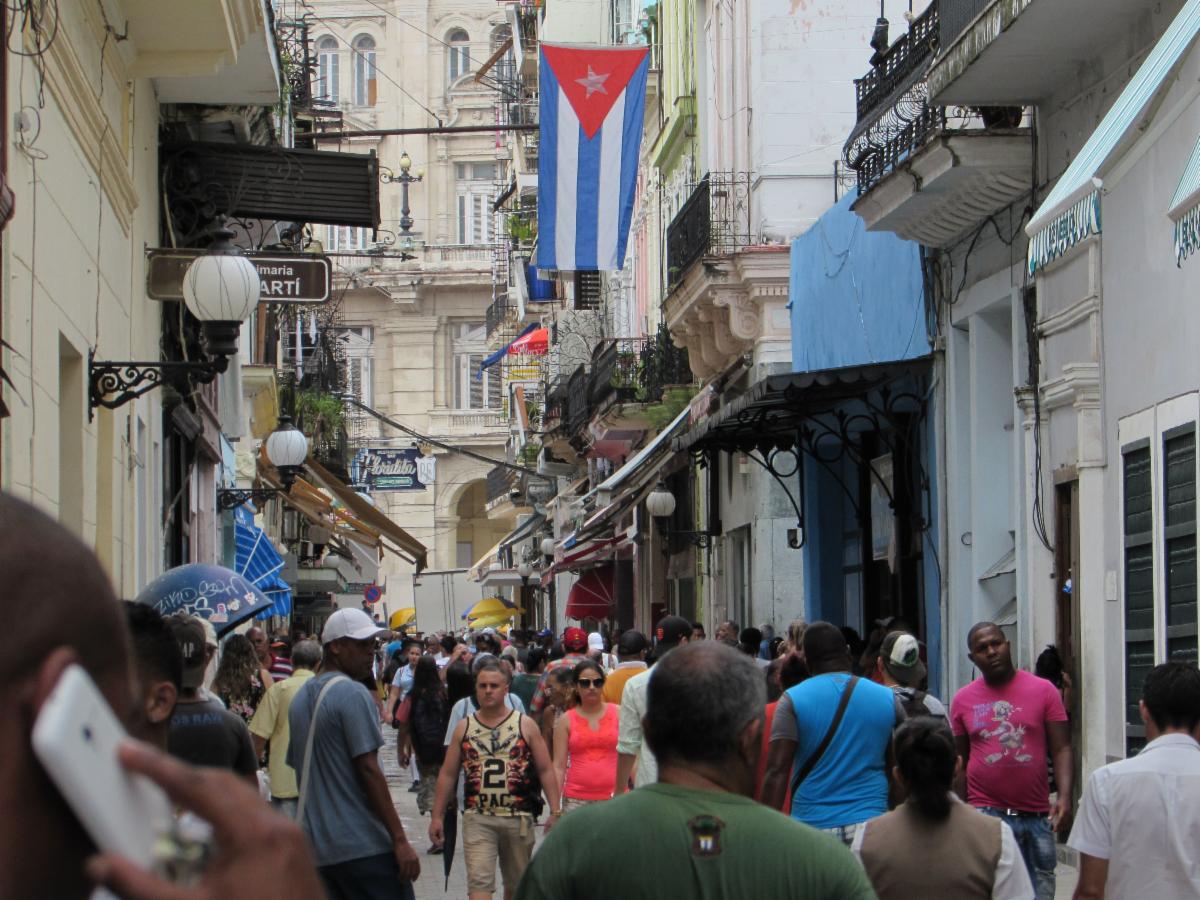
photo by STOUTfilmsHavana
|