Protect Transducers and Pipes from the Deep Winter Freeze |
Extreme weather is expected across the United States and Canada in the coming weeks, putting water systems that use pressure transducers at risk. If your application includes pressure transducers consider the following actions:
- Insulate transducers
- Wrap the feed line with heat tape
- Implement oil–filled feed lines
- Bury the transducer below the frost line
- Implement pressure relief valves
If time permits, consider implementing equipment better suited for freezing temperatures:
- Submersible transducer
- UltraSonic or radar transducer
- Bubbler level measurement device
- Milltronics–style level probe
Keep spare parts on hand in the event that freezing temperatures damage components in your system. Mission continues to fulfill orders quickly, even during the holiday season.
|
Each year, in lieu of holiday greeting cards, Mission makes donations to charitable organizations. Please consider joining us in supporting these worthy causes.
Water.org aids communities without access to clean water receive funding, long term guidance, and partnerships. Water.org requires communities to take ownership of their projects to ensure that the people are engaged and invested.
Paul Duke STEM High School aims to ignite and foster success and creativity in all students through a challenging STEM curriculum, which connects students to their future through technology and relevant learning experiences.
|
Mission RV in New Orleans |
Book our fully–customized training center to your utility or municipality.
|
Pierre, SD
January 10 – January 12
Boston, MA
January 22 – January 25
Kearney, NE
January 26 – January 27
Bismarck, ND
January 31 – February 2
Baraboo, WI
February 7 – February 8
Honolulu, HI
February 7 – February 9
Vancouver, WA
February 14 – February 16
Des Moines, IA
February 20 – February 22
Effingham, IL
February 21 – February 23
St. George, UT
February 27 – March 3
St. Cloud, MN
March 7 – March 9
St. Charles, MO
March 7 – March 9
Boise, ID
March 8 – March 10
Myrtle Beach, SC
March 12 – March 15
Montgomery, AL
March 19 – March 22
Reno, NV
March 21 – March 22
Great Falls, MT
March 22 – March 24
|
All trade show information is subject to change. Please confirm dates and schedules with the individual trade shows. |
Hardware and Instrumentation
Web Portal II—Advanced Features, Reporting, Supergraph, Volumetric Flow
Survey of Features
Hardware and Instrumentation
Web Portal I—Unit Setup Options, Notification Setup Options, Alarm Groups, Website Tools
Survey of Features
Hardware and Instrumentation
Web Portal I—Unit Setup Options, Notification Setup Options, Alarm Groups, Website Tools
Certificates are available for any webinar attended, by request.
|
|
Wholesale Water Supplier OMRPWA Replaces Legacy System With Mission |
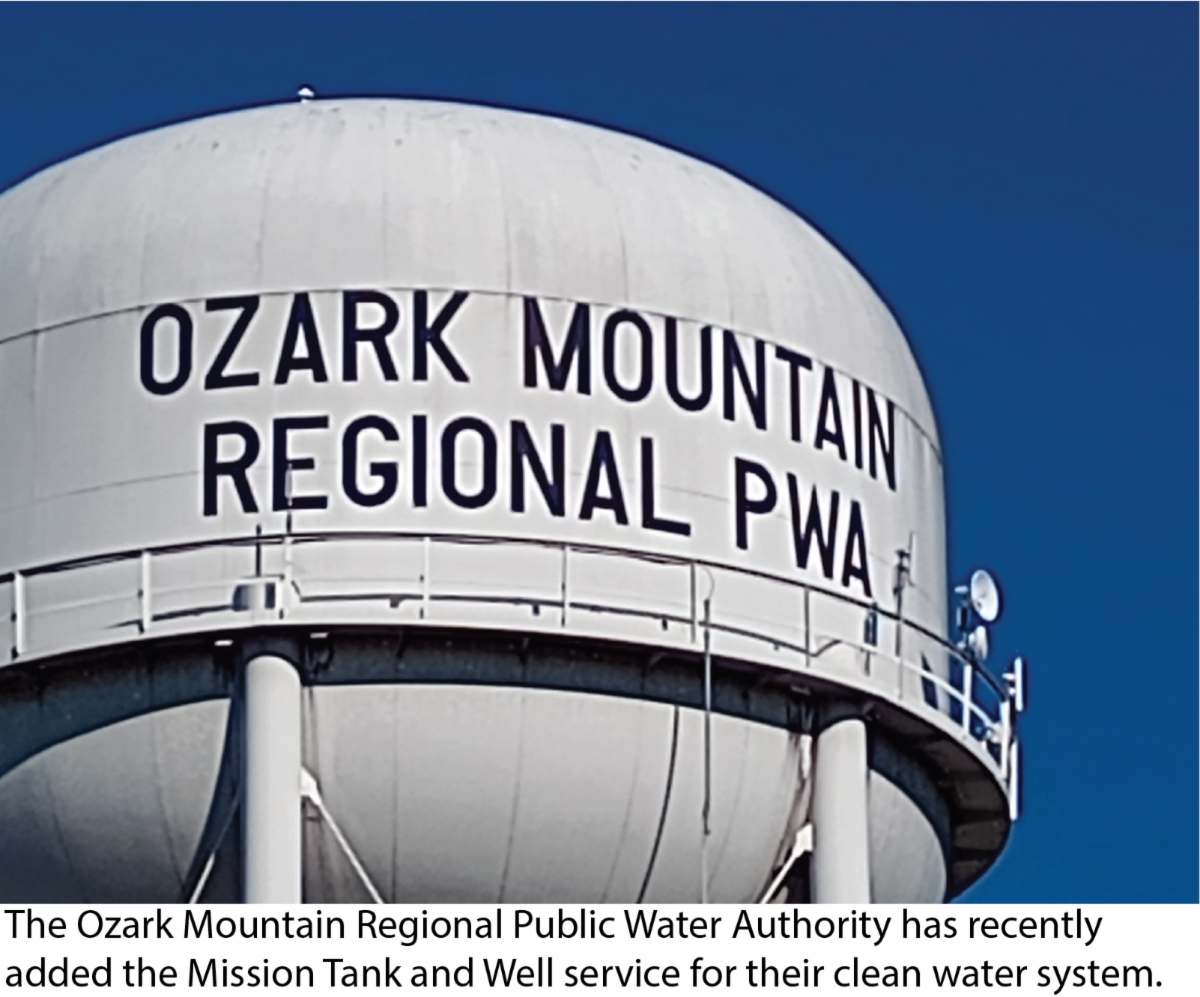
The Ozark Mountain Regional Public Water Authority (OMRPWA) recently updated their remote monitoring system from their original solution to Mission Communications. They improved their remote site connectivity, gained functionality, and even got a visit from the Mission RV along the way.
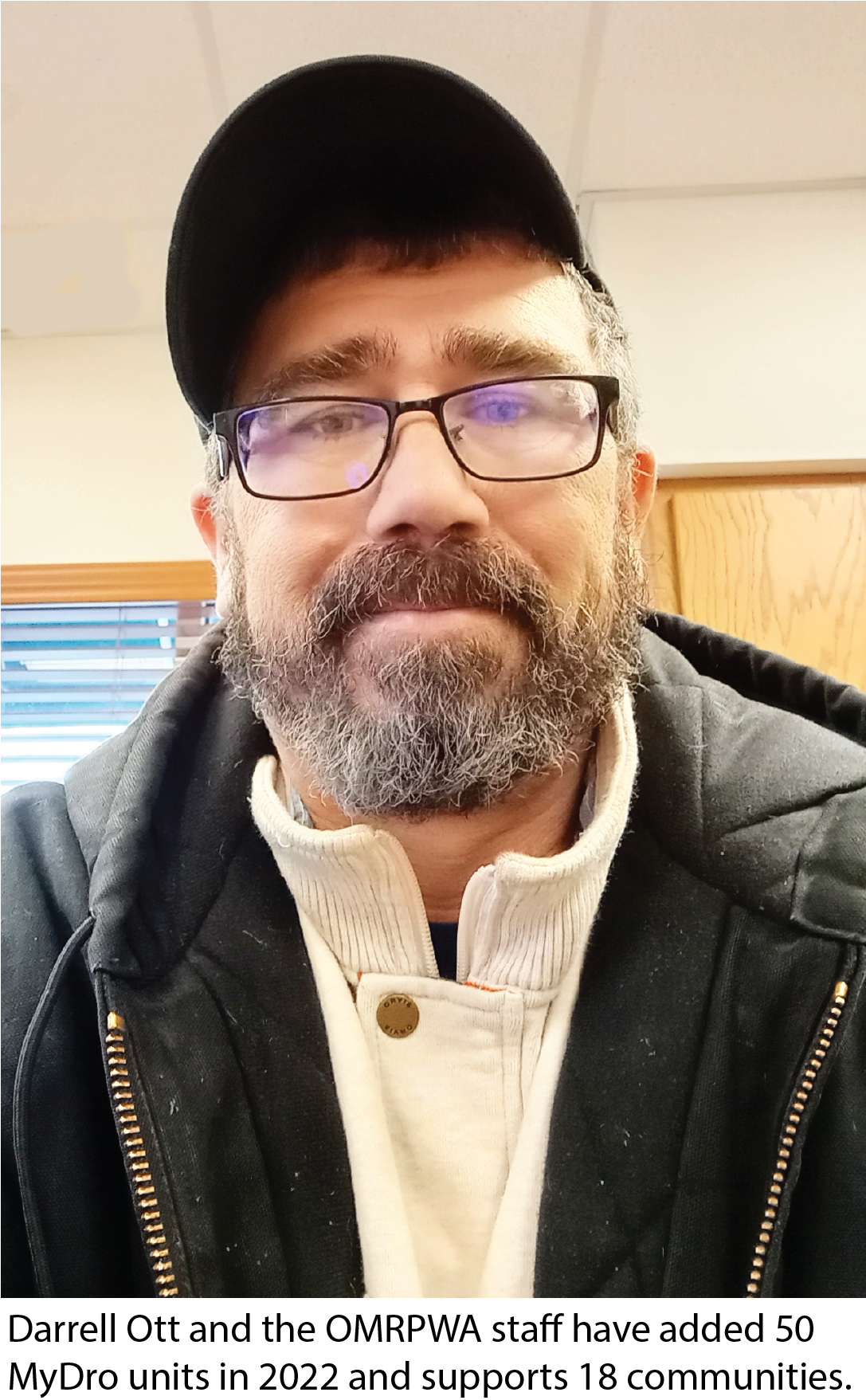
Eighteen communities and towns across three counties rely on the OMRPWA to supply their clean water. This entails managing a system of 120 miles of water pipe and pumping a capacity of 4.5 million gallons of water per day to meet the demands of wholesaling clean water from tanks and wells throughout the area. “Our customers are mostly small municipalities and cities that don’t have their own clean water system,” explains Darrell Ott, the Manager and Operator of Record for the OMRPWA.
The OMRPWA originally used a radio–based monitoring system to keep track of their outside–the–gate tanks, wells, pumps, and meters. “We had an old system that had been growing increasingly difficult to maintain,” continues Ott. This original system constantly struggled to stay connected. “That company doesn’t work in the water industry as much anymore so it became hard to find parts. We had to get them from Europe or find rebuilt parts ourselves. We just wanted to get away from that.”
Ott and his staff also ran into problems even if they found the right kind of hardware. “We could eventually find a card or radio to replace a broken component, but if something needed to be reprogrammed, we had to find a programmer to make any changes.” That’s right, the legacy system was requiring efforts to independently find contracted back–end technicians to visit the locations to update settings and install firmware. “When we would find somebody, it would take up to two days before they could even address the issue so it was very frustrating.” It wasn’t very efficient and since it takes almost an hour and a half to drive to some of their sites it was risky when those remote sites weren’t communicating.
Bertrem Products, Inc. (BPI), a Mission distributor, looked at the problem and advised Ott to replace the radio system on their remote sites with Mission devices. Ott recounts that “Joshua Christiansen, BPI’s Arkansas Branch Manager, came out and showed us what we really needed to do to get rid of all of these problems.” BPI and Mission supplied two risk–free Mydro units to let OMRPWA test the Tank and Well service. This let Ott and his staff familiarize themselves with the equipment and with the interface while they considered bids for their new system.
|
During the trial, Ott liked what he saw. “The 123SCADA tool is more user friendly than the system we had before. We can diagnose things that we previously could only see at the site.” This is a big deal when you’re monitoring a system that is as spread out as the Ozark mountain region. They could avoid unnecessary trips just to check on a site. “I can see the RTU views and troubleshoot issues. I can even use the trends to help my customers find out when a leak of theirs started.”
Since OMRPWA is a wholesaler, they wanted to consider their customers when selecting a new monitoring service. During the trial period, Christianson visited the OMRPWA again, and this time he brought the Mission RV along with Eddie Stewart, Mission Regional Sales Manager, and Matt Crousillac, Mission National Sales Manager. Together they were able to demonstrate the system to the OMRPWA staff and to several of the cities they supply. Stewart remembers driving to the Ozarks after a nearby trade show. “We took the RV to a trade show in Arkansas and then drove up to the Ozark mountain region to demonstrate things like the 123SCADA system in the mobile classroom.”
Once Mission was selected to monitor the remote sites, OMRPWA operator Steve Vande Weerd installed 50 MyDro units around Boone, Newton, and Searcy counties, configuring the automated tank–and–well controls to supply their customers with their water and monitoring the system at all of the key remote sites.
The OMRPWA operators already see good things about the Mission system, including how quickly and easily settings can be changed. Where they had to find their own qualified technicians and book on–site changes before, now they can just contact Mission Technical Support. Ott explains, “Now I just call Mission and they remote in and make the change. It’s real simple.”
The design of the MyDro RTUs were also a selling point. Previously, there were more components to worry about, which added to the difficulty of finding replacement parts. With the Mission RTU units there are fewer components. “These are going to be much easier to maintain since they only require a couple of parts,” Ott explains.
Another drawback to the legacy radio system, and radio–based monitoring systems in general, was how one site’s connectivity issue could take out other sites that were relaying their radio signals. Ott explains, “we had subsites that would spread water and would have 11 or 12 units connected. If a subsite lost its connection it would knock out the others.” Since each Mission RTU has its own secure connection, no single device is dependent on any other devices for its connectivity.
Ott is extremely satisfied with the new setup. “60% of our old problems were communications going out. Now we’re not having those constant communication outages. I get a Daily Summary every day in my email so I can keep track of the sites. It’s working really well.”
|
The Government is Funding More Water
and Wastewater Projects Than Ever —
Don't Miss Out!
|
Utilities that need infrastructure and system overhauls may find their best opportunities for funding coming up, but only if they apply for them. The federal government has passed several spending bills in recent years and many of these bills include significant financing for water and wastewater improvements. This can include assistance for monitoring services such as those Mission Communications provides. Because these types of bills contain awarding and spending windows, timing is crucial. It is important to pursue these opportunities when they become available. |
One of the largest funding opportunities that the water and wastewater industries have ever seen starts making awards in early 2023 and is currently requiring those funds to be spent over the next five years. The Bipartisan Infrastructure Law for water and wastewater–related projects has been allocated and distributed through the Environmental Protection Agency (EPA), to individual states, territories, and tribes. According to the EPA’s fact sheet, this bill contains:
- $1.9 Billion for states to spend on general projects — Drinking Water State Revolving Fund (DWSRF)
- $2.79 Billion for lead service line replacement projects — DWSRF
- $800 Million for emerging contaminants — DWSRF
- $1.9 Billion for general projects — Clean Water State Revolving Fund (CWSRF)
- $100 Million for emerging contaminants — CWSRF
The states are now responsible for evaluating projects and distributing this money. Bryan Abeyta, owner of Chuck Homer & Associates and a Mission distributor, explains, “Your state representative is the one who knows what money is available. They can direct you how to apply for these funds and what type of projects they're for. There is also language about qualifying communities due to financial need.” The language Abeyta mentions is written into the law and is meant to give communities that need these projects the most preferential consideration. But all utilities that need help should apply.
The first thing local utilities should do is contact their state or territory representative. Tribe utilities should check with the Indian Health Service (tasked with distributing to those utilities). These representatives not only have knowledge of the process, they should also advocate for you when it comes time to award funds since it directly affects their constituents. Most states either distribute a detailed brief with instructions on applying for the funding or hold in–person or online sessions. If your state has already had these sessions, they should be archived and can be made available to you. Some have posted them on websites like YouTube, but the state representative can provide them wherever they are.
There may even be more funds available for water projects. Abeyta explains that “a lot of states even add to the Federal money, which increases the size of the bucket. Here in New Mexico the state added $20 Million to the federally–allocated $63 Million.” Even if the federal and state grants don’t fully fund your project, your state representative can help you with a loan to fill the gap. “This is a good time to get projects funded,” Bryan added.
Each state will judge projects based on criteria that must align with the original text of the law, and the application process will usually include a scoring system. For example, the Bipartisan Infrastructure Law contains text that requires states to consider and award points for areas where the population falls below the poverty line and where the household percentages spent on housing costs is high. Municipalities and utilities should be prepared to include any of this information to increase chances of a successful application.
|
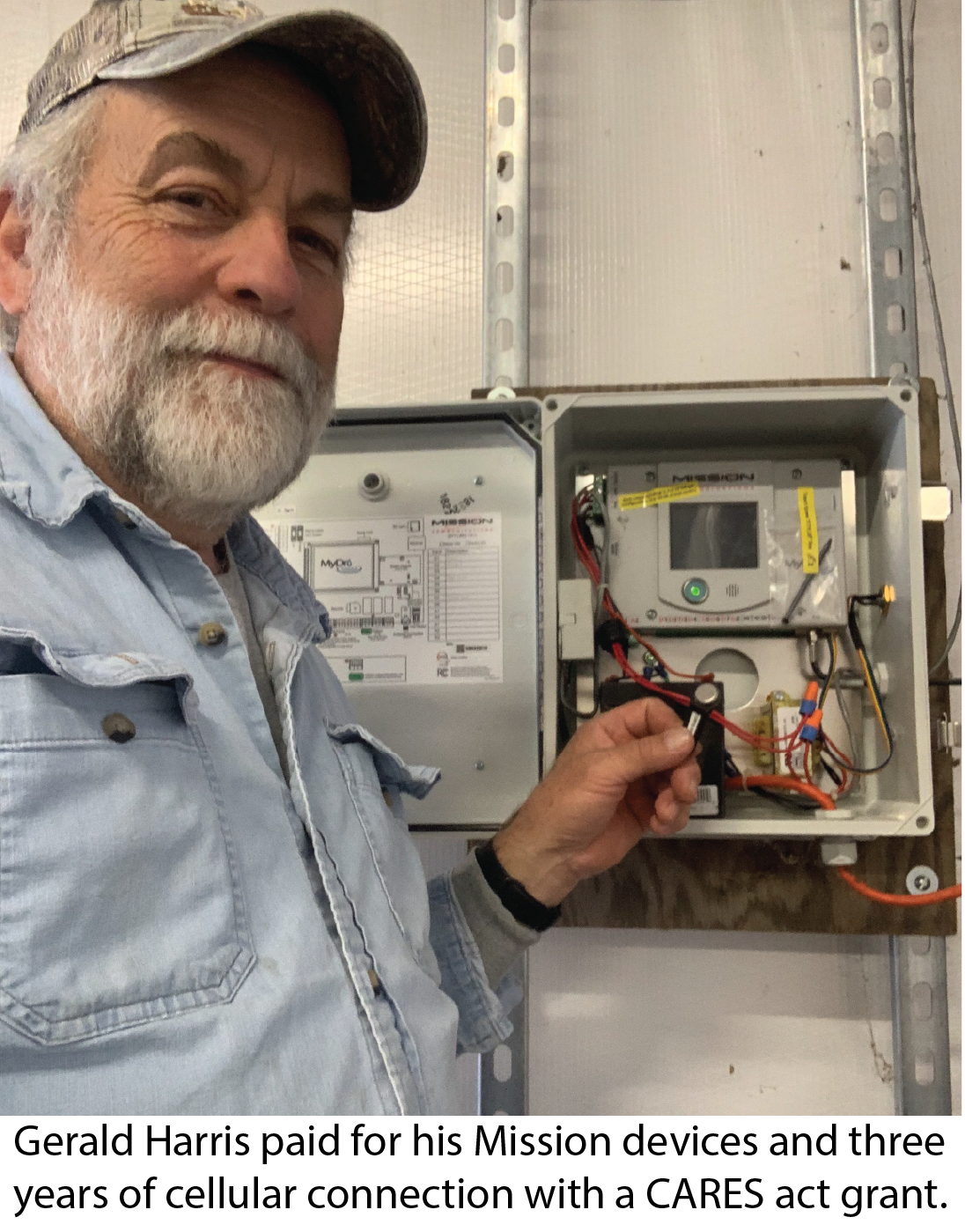
One city that has benefited greatly by applying for Federally–funded infrastructure money is the city of Branch, Arkansas. Gerald Harris has been the mayor since 1990 and also serves as the water and wastewater manager. He recalls funds becoming available even after he installed his Mission system. “We put our Mission devices in, and then a couple of months later the CARES Act came out and one of the things you could pay for was water and wastewater improvements. So we applied and used those funds to pay for all of our Mission installations, plus three years of cellular data service fees.”
Harris continues, “The original water system was paid for through a grant and then we earned a grant for our sewer system of $1.5 million. We currently have a grant for a new water tower that will double our water capacity and increase the pressure to some of our lines. About two–thirds of it was grant money and the rest was paid by the city.”
There still may be un–awarded funds coming available from previous laws, and even more laws have been passed and signed since the Bipartisan Infrastructure Law.
-
America's Water Infrastructure Act of 2018: Signed on October 23rd, 2018, included $550 Million funding in grants for sewer improvements
-
Coronavirus Aid, Relief, and Economic Security (CARES) Act: Signed on March 27th, 2022, concentrated on businesses keeping workers employed during the pandemic; however, there were also water infrastructure funds
-
American Rescue Plan Act (ARPA): Signed into law on March 11, 2021 and has $500 Million allocated to the Water Assistance Plan
-
Inflation Reduction Act (IRA): Signed on August 16th, 2022 and has $550 Million allocated to Bureau of Reclamation Domestic Water Supply Projects
-
Infrastructure Investment and Jobs Act: This law was signed on November 15th, 2022 and includes earmarks for $55 Billion for water infrastructure. The EPA has not delivered guidance yet on how these funds will be allocated.
There may be others and there may also be independent state funding. Ask your state representative to check on the availability of these funds and for any other federal or state infrastructure spending laws that you would qualify for. Also learn when the application periods are so that you can be prepared when they start accepting applications.
Abeyta has several customers who have used government funding to pay for infrastructure renewals and included Mission devices. They just include Mission in their requests when they hire engineers to start the project. “Just like schools can specify particular fire alarm manufacturers, utility companies can specify Mission.”
Your Mission distributor can help you include Mission devices in an engineering plan. They can also provide some useful context when applying for grant funding since they deal with utility issues in your surrounding area. Use them as a resource to learn how successful other projects have been to refine your plan and maximize your grant.
|
The Legacy of the London Frost Fairs — The River Thames in a Frozen State |
In the coldest days and nights of the city of London arose a phenomenon of community, spirit, and fun—bringing kings, queens, workers, sportsmen, revelers, and opportunistic business proprietors together on a block of ice a half–mile long. These rare but well–documented events between 1506 and 1814 became known as London’s Frost Fairs—a gathering of frivolity and commerce on the frozen River Thames. They were part block party, part carnival, which seems impossible when you see the Thames river today.
Extreme winters in those days would cripple the economy—crops froze, livestock were threatened, transportation and imports halted—even keeping the population alive could be difficult. Additionally, the Thames didn’t typically freeze, so London and all of southern England itself was unprepared when it did. But if the ice stayed long enough, people and businesses saw a renewal of the city. The ice became a temporary bustle of activity.
At first, people would start to venture out onto the frozen ice to check the stability. Then, as confidence grew, more people gathered. Games started, merchants and taverns set up tents. Bakers sold gingerbread and some drawings even show children’s rides. Skittle bowling and soccer were played, and foxes were hunted on the ice. Leather blankets laid out and fires built to cook ox and sheep. It became a combination of business opportunism and community fun. One Frost Fair diary referenced as many as 10 printing press machines dragged out onto the ice, printing and selling customized souvenirs. For a shilling you could buy a piece of parchment with your family’s names, with a date saying that it was printed for you on the Frozen Thames, a sort of 17th century selfie that proved that you were there. One printer wrote that he was making £5 U.K. per day, the equivalent of $575 today.
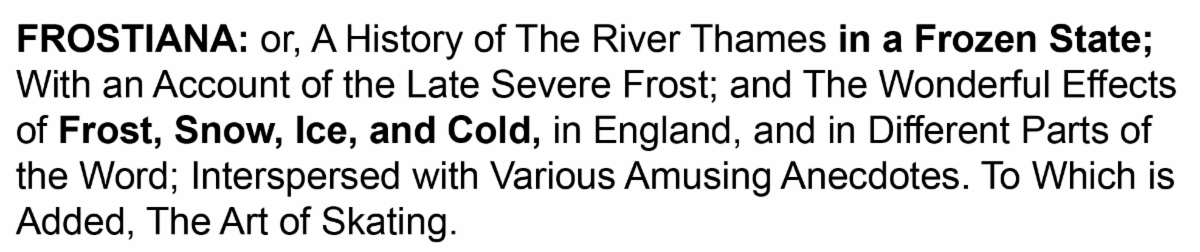
British writer John Evelyn witnessed the last Frost Fair of 1814 and wrote that more than 1,000 people per day were on the ice. That same year, an elephant walked around the frozen Thames. Activities lasted up to four days. Printing press operator George Davis was also there and wrote, published, and printed at least some of his 124–page account of the fair as a book with a very descriptive title:
|
The most famous participants of the Frost Fairs in London were, of course, royalty. In 1536, King Henry VIII is believed to have ridden a sleigh on the river from Central London all the way to Greenwich; however, there is no specific writing by an eyewitness, so that’s more of a legend. In 1564, however, Queen Elizabeth I walked out onto the frozen Thames and even practiced her archery alongside her subjects.
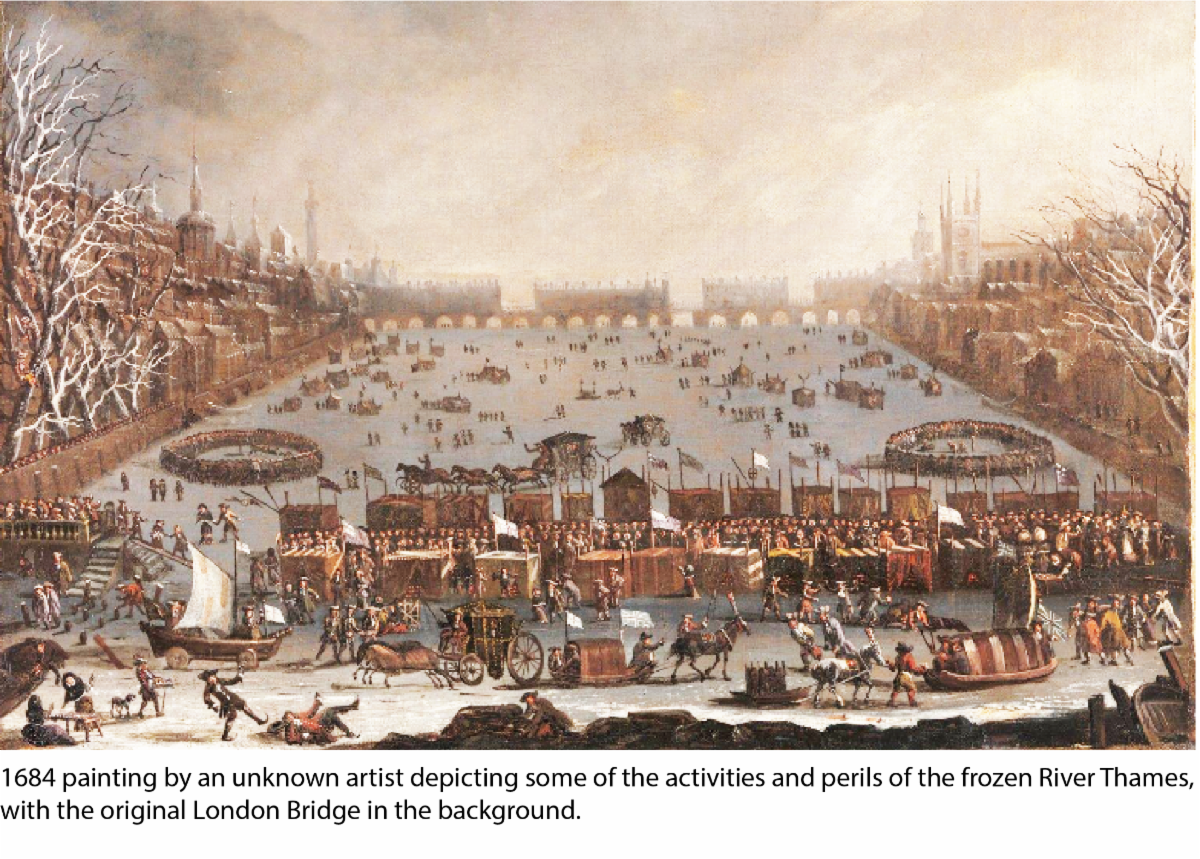
King Charles II experienced a frost fair in 1684, one year before he died, and it was recorded that he ate a slice of ox that was cooked on an open fire that he bought himself in a merchant's tent. He also bought a souvenir print (currently on display at the British Museum), listing the family that was with him.
With every Frost Fair there also came the perilous judgment of when to stop. The ice, as magical as it was, was temporary. With the slightest temperature rise, the Thames would quickly thaw. Many merchants lost their business effects to the water because they didn’t want the party (or the money making) to stop. At the end of the 1789 fair, a crippled ship that was secured to a public house near the river crashed into the thawing water and pulled the building completely down.
But how did a saltwater river in that region ever freeze so completely? Historians point to three possible elements that contributed. One of these elements was a historic event called the Little Ice Age. This was not a true ice age, but the name is used to describe a period following a massive volcano eruption from the Samalas volcano in Indonesia. Data shows that winters were more extreme in certain regions, including the northern Atlantic Ocean, for the next 500 years.
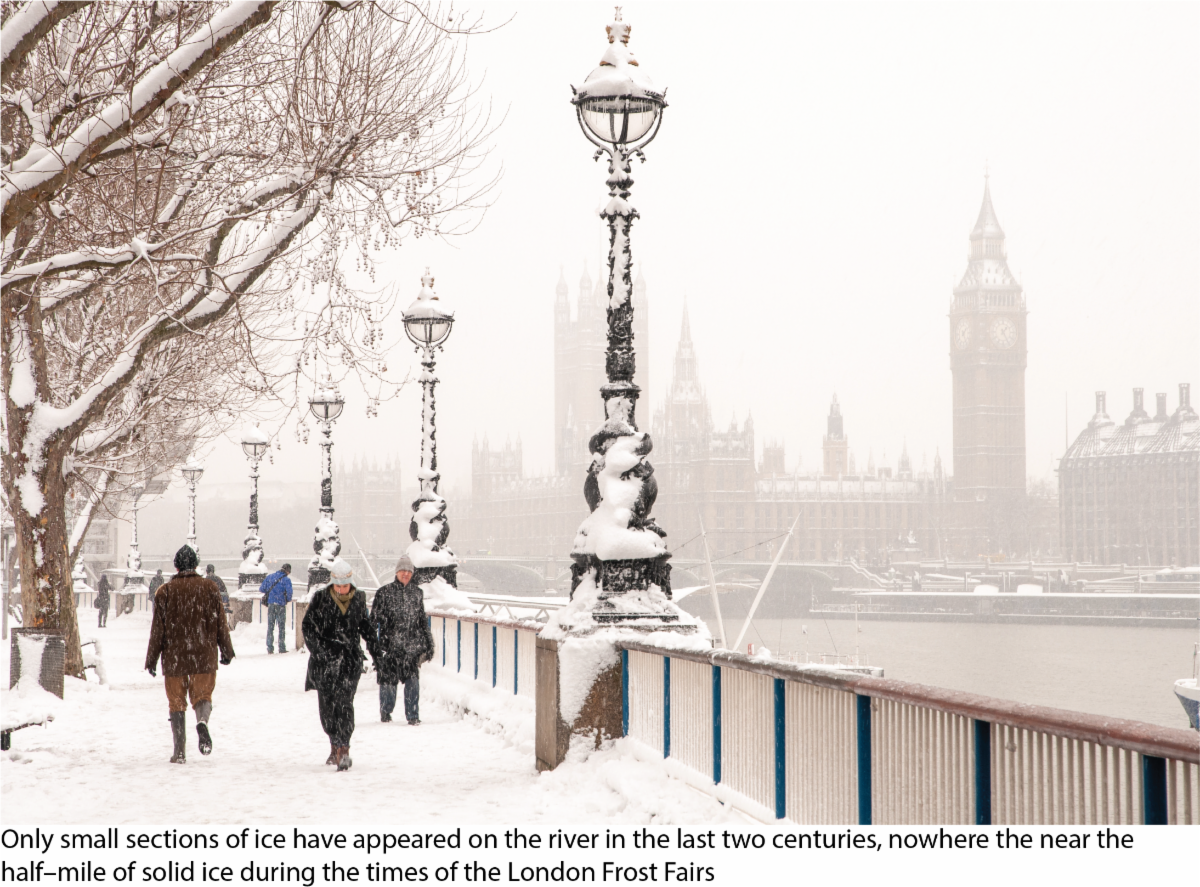
Another element that encouraged the Thames to freeze were the dimensions of the Thames itself. The modern river is very different now. It was dredged to make it deeper and embanked during the late 1800s making it almost impossible to freeze. Before this time it was wider and shallower.
|
Another key factor was the original London Bridge—not the modern London Bridge, and not even the London Bridge before that (which is now in Arizona). The original London Bridge was built by the Romans in 43 A.D. and was made up of several narrow arches–which, along with the buttresses supporting them, created a web below the typical water line. When the winter was cold enough and when the current moved frozen water into the Thames from the English Channel, it would get caught and stuck in the support structures underneath London Bridge. As more ice accumulated, the current slowed down, the water got colder, and it even desalinated it, which raised the freezing temperature. Most of the Frost Fairs only saw significant freezing between London Bridge and Blackfriars Bridge, approximately a half mile long. The original London Bridge was replaced in 1832 without the arches that contributed to the freezing.
There are only 23 documented occurrences of the River Thames freezing completely during the Little Ice Age—including one stretch of three years in a row. So Frost fairs were very rare, and because of that they inspired lots of stories, legends, and artist depictions, many of them created by unknown artists.
Modern storytellers have used these images to recreate the Frost Fair in historical fiction stories. Virginia Woolf’s book Orlando famously features a chapter titled The Great Frost, setting part of her tale during the 1684 fair. The film version of Woolf’s book features this recreation. Science fiction fans that watch the television series Dr. Who saw a depiction of the 1814 Frost Fair in the episode titled Thin Ice (season 10, episode 3). Thanks to retellings, paintings, sketches, and artifacts, we can enjoy and ponder the stories of the London Frost Fairs even if we didn’t get to witness them ourselves.
|
|