﷽


Muharram Lights: Saints of the Golden Chain 🌙

وَجَعَلْنَا مِنْهُمْ أَئِمَّةًۭ يَهْدُونَ بِأَمْرِنَا لَمَّا صَبَرُوا۟ ۖ وَكَانُوا۟ بِـَٔايَـٰتِنَا يُوقِنُونَ


“And We made from among them leaders guiding by Our command when they were patient and [when] they were certain of Our signs.”


Surat as-Sajdah 32:24


This week's newsletter is dedicated to the Awliya of the Naqshbandi Golden Chain whose lives and legacies are commemorated this month. Each of their blessed souls offers a doorway into the timeless transmission of knowledge, love, and truth, from the deserts of Arabia to the mountains of Dagestan, from Delhi to Samarqand.


This week, we honor the ‘Urs (heavenly anniversaries) and births of these illuminated saints:


🕌 The Urs of Muharram

  • 17 Muharram 1265 AH, Shaykh Muhammad Effendi al‑Yaraghi ق in Kural, Dagestan
  • 10 Muharram 1195 AH, Shaykh Shamsuddin Habib Allah ق in Delhi, India
  • 19 Muharram 970 AH, Shaykh Darwish Muhammad ق in Samarqand, Uzbekistan
  • 10 Muharram 425 AH, Shaykh Abū al‑Hassan al‑Kharqāni ق in Karqhani, Iran
  • 9 Muharram 108 AH, Sayyidina Qāsim ibn Muḥammad ibn Abī Bakr ق, in Al-Qudayd between Mecca and Madinah.
  • 25 Muharram 94-95 AH, Sayyedina Ali ibn Zayn al-Abidin ق, in Madinah


🌟 The Blessed Births of Muharram

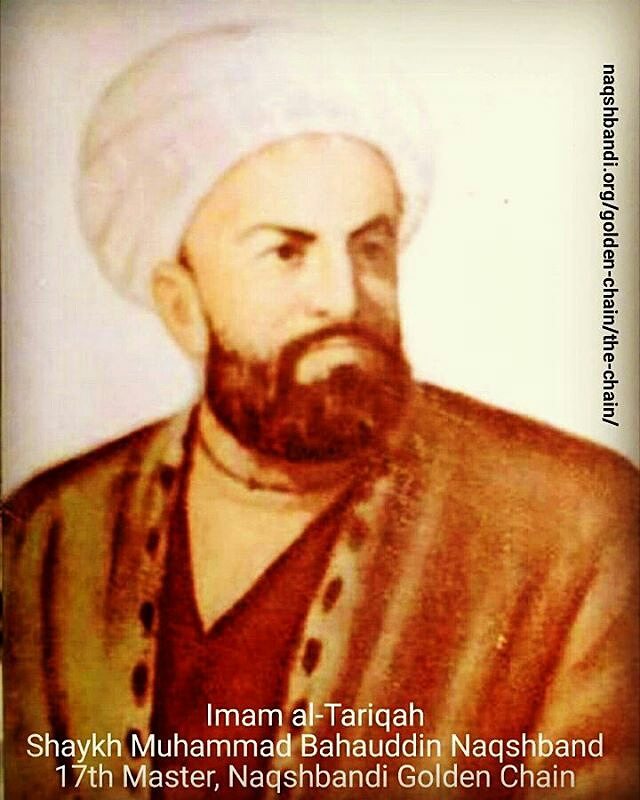
  • 14 Muharram 717 AH, Khwaja Shah Naqshband Bahauddin ق (the master of this way)
  • 1 Muharram 1201 AH, Khas Muhammad ash-Shirwani ق
  • 10 Muharram 971 AH, Shaykh Ahmad Al-Faruqi As-Sirhindi ق
  • 16 Muharram 1203AH, Shaykh Jamaluddin al-Ghumuqi al-Husayni ق


May their light guide us through the new year of 1447 AH with strength, sincerity, and steadfastness on the path of truth.


The Muharram Ascension: A Gift from the Prophet ﷺ to Shah Naqshband

Mawlana Shaykh Hisham Kabbani

March 6, 2009


This is from the notes of Grandshaykh ‘Abd Allah al-Daghestani (ق). It was not meant to be public, but now, by the permission of Mawlana Shaykh Nazim (ق), it’s being opened. Those who want to take it, let them take it. Those who don’t, we are not interested in their opinions.


Grandshaykh said: When Shah Naqshband (ق) was 31 years old, on the 7th of Muharram of that year, he went out for siyāḥah, for wandering. Now, what is siyāḥah? When we say siyāḥah, we understand it to mean travel, going from one place to another. But their siyāḥah is not like our travel. When they go for siyāḥah, they go into Wonderland, a land full of wonders.

Where is that land of wonders? Is it on earth? In the heavens? In the universe? Their travel is not like our travel.


He went out on the 7th of Muharram and returned on the 14th, his birthday. He wandered for seven days, but his wandering was not like ours. In those seven days, he was moving with a speed you cannot imagine. Not like a rocket. Not like a plane. Greater. Grandshaykh said, “That event happened in 1326,” meaning he was mentioning it 104 years later. So when it happened, it must have been even earlier. Allah gave him Sayyidina Bayazid al-Bistami's (ق) power, the power of spiritual ascension, that allowed Bayazid to reach the station of Shah Naqshband.


But Shah Naqshband (ق) was moving faster than Bayazid (ق), because he was inheriting directly from Sayyidina Muhammad ﷺ. He was carrying the speed of the Prophet ﷺ, the speed of the Mi‘rāj. The speed by which Sayyidina Jibrīl (ع) carried the Prophet on the Burāq. A speed that can’t be described.


The Prophet ﷺ went to the Divine Presence and came back, and his bed was still warm. But Shah Naqshband (ق) took seven days. Why? Because he did not leave one planet in this entire universe without visiting it. Don't think we are alone. There are creations on those planets that we don’t know about.

He said: In those seven days and nights, I visited every planet Allah created, and on each I received 7,000 knowledges about who lived there, when it was formed, and for what reason Allah created those beings. And Allah dressed him with that knowledge.


On the night of his birthday, the 14th of Muharram, he returned, and that night was a gift to him from Prophet ﷺ and from Allah ﷻ.

It was the night when Prophet ﷺ said: “He will fill all four Paradises by himself.”


That reward was given to him as a gift on his birthday. When that came to him, Shah Naqshband (ق) was sweating in shyness in the presence of Prophet ﷺ. He asked permission:


“Yā Rasūlullah, allow me to dress all my followers in what You are dressing me with. Let none of them be left behind. Even if someone sat five minutes with us, let them be included. Even those who claim to be Naqshbandi shaykhs, real or not, because they carry the name of Naqshbandi in their mouth, let them be present.”


On that night, all his followers began appearing before him—shaykhs and students. The real shaykhs were the first to be called. The fake shaykhs were called too, like regular people.


At that moment, as he was dressing his followers, Sayyidina Khidr (ع) appeared, because he is Naqshbandi.


He said:


“Ya Shah Naqshband, I have a question. Why are you lowering yourself to the level of these students when you are from the highest level in the Divine, the Honorable Presence of the Prophet ﷺ, where you are receiving fifteen Lights that Allah is manifesting on him, and he is manifesting on you? Why come down to these levels?”


Even awliya’ tease each other sometimes. Shah Naqshband looked at him and replied: “Ya Khidr, I will tell you why…”


And we leave that for next time.


In the Footsteps of Muhammad Baha’uddin Shah Naqshband ق


Shah Baha’uddin Naqshband (1318–1389 CE), the spiritual pillar of the Naqshbandi Golden Chain, was born in Bukhara and named after Prophet ﷺ and Imam Jaʿfar as‑Sadiq (q). Trained by spiritual giants like Sayyid Amir Kulal and Uwaysi connection to Abdul Khaliq al-Ghujdawani (q), Shah Naqshband upheld the highest station of siddiqiya (truthfulness) and concealed his sainthood in deep humility.


His path emphasized silent dhikr, service to the poor, and constant awareness of Allah — captured in the principle: “Dilin Allah ila, elin iş ile” (“The heart with Allah, the hands at work”). He revived and preserved the prophetic sunnah and inspired countless souls through adab (spiritual manners), discipline, and inner vigilance.


Among his guiding principles were: solitude in crowds, traveling in one’s homeland, and awareness in forgetfulness — a reminder to maintain presence with the Divine in all states. His blessed resting place in Qasr al-Arifan near Bukhara remains a source of blessings for seekers to this day.


On 14 April, 2001 Mawlana Shaykh Muhammad Nazim Adil an-Naqshbandi al-Haqqani (ق), accompanied by his blessed wife Hajjah Amina Adil (ق), Mawlana Shaykh Hisham Kabbani (ق) and many other members of his immediate family as well as over 100 mureeds from around the globe, visited the Holy Tomb of as-Sayyid Shaykh Muhammad Bahauddin Shah Naqshband (ق), 17th Master of the illustrious Naqshbandi Golden Chain. founder of the Naqshbandi Tariqah


طريقتنا الصحبة والخير في الجمعية

Ṭarīqatuna aṣ-ṣuḥbah wa l-khayru fī al-jam‘iyya


“Our way is companionship, and all good is in the gathering.”


— Shah Naqshband ق


Use the Qur'anic Mind

Shaykh Nour Kabbani

Streamed live on July 7, 2025

Dunya is the marketplace of Akhirah, where we use our minds to lead us to goodness. We work in the dunya, hoping Allah will perfect our actions and reward us in the Akhirah. How do we cultivate the mind? Through reading Qur'an. Furqan, is the mind that can discern between right and wrong. You think you find it in the books of philosophy, politics, or literature? No, Qur'an is the guide for teaching the mind the difference between good and bad, truth and falsehood. The most important principle we must know is what is Shirk. The mind has to be clear to know that there is no one at the same level of Allah, nothing in this world of creation can be equal to The Creator. We must know how to depend on and ask from Our Creator. Allah is al-Ahad, al-Samad, al Wahid-al Qahhar, the One on which all creation depends. There is no equal to Allah. This is Tawhid.


The second principle we must acquire is obedience in following the right way and leaving disobedience and sins (ma'asi). The third and highest level of piety is to become a devout servant. What is devotion? It means you have given yourself to Allah, not to yourself, not to dunya, not to Shaytan, not to anything else but Allah. Those who reach this level of purity can see the realms of the divine, the reality of La illaha il Allah, reciting this is the best of all deeds. We cannot reach this by ourselves, or we will only end up listening to our egos. This is why we follow our Masters with humility and gratitude for what Allah bestows on us with His wisdom and knowledge of what we truly need in every moment. Alhamdulillah!


Listen to the full sohbat and uncover the secrets of this teaching for yourself.


Mashallah, we are grateful to our generous Sufilive donors! Your Ashura donations were multiplied manifold this 10 Muharram with Qurban meal distribution.


Continue to add blessings to your life by giving today.


Visiting Fenton Zawiyah?

We created this Whatsapp group dedicated to helping visitors at Fenton Zawiyah. This group connects local mureeds who can host and welcome our visiting mureeds from out of town. Let us know when you are planning to visit, inshallah!


Build Your Naqshbandi Library


Classical Islam and the Naqshbandi Sufi Tradition


By Shaykh Hisham Kabbani


This esteemed work includes an unprecedented historical narrative of the forty saints of the renowned Naqshbandi Golden Chain, dating back to Prophet Muhammad in the early seventh century. With close personal ties to the most recent saints, the author has painstakingly compiled rare accounts of their miracles, disciplines, and how they have lent spiritual support throughout the world for fifteen centuries. In simple terms, the book outlines practical steps to develop stress, anger and time management, and to identify and prioritize what is truly important in life, all of which “awakens” the inner self to a higher dimension of spiritual consciousness.

Traditional Islam and the Naqshbandi Sufi Tradition is a shining tribute to developing human relations at the highest level, and the power of spirituality to uplift humanity from its lower nature to that of spiritual triumph.

  • Detailed life stories of the Masters of the Golden Chain
  • Descriptions of the Qualifications for Mastery
  •  Over 200 pages about Naqshbandi Master Mawlana Shaykh Nazim Adil al-Haqqani
  • Shariah citations in support of Tasawwuf, Dhikr, Seclusion, Bayah, Salawat.


[ EMAIL]  [SUFILIVE.COM]

Sufilive/ISCA is a 501(c)(3) nonprofit religious organization. Your contribution is tax-deductible to the extent allowed by law. Update your contact information BELOW in order to receive year-end tax-deduction documentation for tax purposes.