The NAHLN Update 2018
Volume 9, No. 3
|
THE OFFICIAL NEWSLETTER OF THE NATIONAL ANIMAL HEALTH LABORATORY NETWORK (NAHLN)
A STATE AND FEDERAL PARTNERSHIP TO SAFEGUARD ANIMAL HEALTH
|
|
Founding Principles and Features of the NAHLN
|
- Operate within a quality management system
- Establish and maintain competency of laboratory personnel
- Use Standardized protocols, reference materials, and equipment
- Use facilities with biosafety/biosecurity levels requisite for testing performed
- Participate in communications and real time electronic reporting systems
- Evaluate preparedness (identify and prioritize gaps) through scenario testing
|
|
In This Issue:
New Briefs
Virulent Newcastle Disease Virus update
Intergovenmental Personnel Act (IPA) Assignment Agreement
Upcoming Messaging Competencies
Messaging Competencies Update
Laboratory Assessment Matrix (LAM) updates
Getting to know us
Quality Management Systems (QMS) update
With Great Partnerships Come Great Responsibilities - Part 5
How is a NVSL quality document identified for use by NAHLN laboratories?
Round up
|
|
NEWS BRIEFS
:
October 15, 1:00 – 2:00 PM CST
NAHLN Coordinating Council call
October 23, 10:00 – 11:00 AM CST
AMR pilot project call
November 7, 10:00– 1:00 AM CST
NAHLN IT Committee – General member call
November 14, 1:00 – 2:00 PM CST
NAHLN Methods Technical Working Group – General member call
November 16, 11:00 – 12:00 PM CST
NAHLN Exercises and Drills Working Group call
November 19, 1:00 – 2:00 PM CST
NAHLN Coordinating Council call
November 27, 11:00 – 12:00 PM CST
AAVLD/NAHLN Joint Committee conference call
Input Welcome!
We appreciate hearing from you!
Are there other topics that you would like to hear about? Please email your comments to us at
|
|
|
 |
Current Number of Subscribers:
1616
|
|
|
|
Virulent Newcastle Disease Virus Update
|
The California Animal Health & Food Safety Laboratory tested a total of 8,758 samples since May 16th. In the month of August they tested 2,805 samples.
NVSL had 145 accessions with 269 samples. This includes a few samples that were not able to be confirmed by PCR at NVSL.
|
|
|
|
Intergovernmental Personnel Act (IPA)
Assignment agreement
|
|
After the 2015 highly pathogenic avian influenza (HPAI) outbreak, the NAHLN Program Office (NPO) searched for a more efficient mechanism to reimburse travel costs for NAHLN laboratory personnel deployed to assist during outbreaks. The
Intergovernmental Personnel Act (IPA)
,
OF 69# (REV.2-89)
provides an avenue to improve the timeliness and efficiency by which travel costs associated with deployment requests.
During an outbreak, activated NAHLN laboratories may request resources to increase their local capacity including increased reagents, equipment and personnel. In order to increase the number of personnel at an activated NAHLN laboratory the NPO will coordinate the deployment of either administrative staff or technical staff from other NAHLN laboratories.
The activated NAHLN laboratory must submit requests for assistance to the NPO that include:
- Reason for the request
- Specific area requiring additional support (e.g., administrative or analytical) or special requests
-- Specific knowledge required (e.g., LIMS, equipment)
- Number of individuals needed in each rotation
- Proposed length of a rotation
- Number of proposed rotations
- Proposed start of first rotation.
The NPO will confirm receipt of the request and identify individuals at other NAHLN laboratories that are eligible for deployment to the activated NAHLN laboratory. Once the individuals are identified the NPO will work with them to complete the IPA (
OF 69#
REV.2-89).
The IPA outlines the expenses covered by VS and the traveler’s home laboratory. The NAHLN laboratory who is sending staff to support the outbreak will continue to pay the regular salary of the deployed individual. VS will provide reimbursement for travel, lodging and any overtime accrued while working in the activated NAHLN laboratory.
During the virulent Newcastle Disease virus (VNDV) outbreak in California employees from the following NAHLN Laboratories provided administrative support personnel for 2-week deployments:
- Colorado State University Veterinary Diagnostic Laboratory
- Oregon Veterinary Diagnostic Laboratory.
Article submitted by Traci Imlau, Program Assistant, NAHLN Program Office, USDA APHIS VS STAS NVSL, Ames, IA and Christina Loiacono, Coordinator, NAHLN Program Office
USDA APHIS VS STAS NVSL, Ames, IA
|
|
Upcoming Messaging Competencies
|
|
Messaging Competencies Update
|
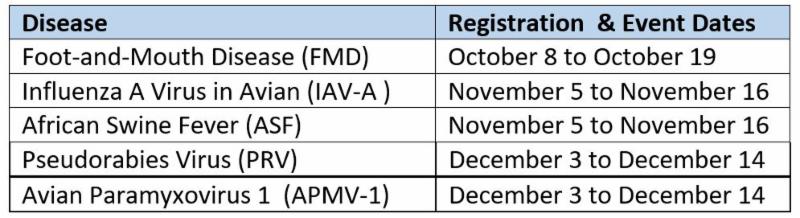
Over the last 2 years there has been an increased emphasis on the ability for NAHLN laboratories to electronically message test results. During outbreaks, real-time data is essential to decision makers. However, not every laboratory has an active surveillance stream, so NAHLN began conducting electronic messaging competency events. These competencies are modeled after disease proficiency tests and provide NAHLN laboratories an opportunity to:
- practice and maintain electronic messaging capability;
- verify updates and changes are integrated into messages;
- ensure software and IT systems function properly; and
- check quality control.
Laboratories may participate once they are approved to test and have been vetted to message for the disease. To date, 43 laboratories are approved to message for at least one disease. Since these events began in late March, the NAHLN Program Office has completed eight competencies, with three more in process. Competencies are available for ASF, APMV-1, IAV-A, Influenza A Virus of Swine (IAV-S), FMD, PRV, and Vesicular Stomatitis Virus (VSV).
Looking ahead to FY 2019, we will begin modifying the registration process in October. Laboratories sending a message to the Laboratory Messaging System’s (LMS) “Test” environment, will send their message first, then register for the messaging competency. This change will streamline registration and eliminate the need to upload documents for the event. Messaging competencies for Classical Swine Fever (CSF) and Scrapie will be added. More information about messaging competency events and the schedule, may be found on the APHIS laboratory portal in the General Library.
Article submitted by Jennifer Rodriguez, Management and Program Analyst NAHLN Program Office, USDA APHIS VS STAS NVSL, Ames, IA
|
|
Laboratory Assessment Matrix (LAM) updates
|
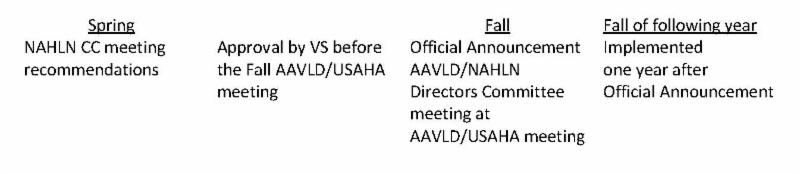
NAHLN Laboratories must complete the Laboratory Assessment Matrix (LAM) each fall providing specific information regarding the laboratory’s capability and capacity to support the NAHLN. The NAHLN Program office reviews, verifies, and uses the information collected on the LAM to determine NAHLN laboratory designation and infrastructure funding. The LAM is reviewed every 2 years but may be modified more often if a critical need is identified. With input from the NAHLN Coordinating Council, APHIS and NIFA have developed a timeline for communicating and implementing any approved changes to the LAM. The approved changes will be in effect during the laboratory assessment for a minimum of 12 months after the date of approval. All changes will be communicated officially at the AAVLD/NAHLN Laboratory Directors Committee meeting during the annual AAVLD/USAHA meeting.
|
|
|
The approved LAM changes are listed below. They will be officially announced in October 2018 and in effect for the LAM to be completed in October 2019 as follows:
--A new category
entitled “Laboratory Accountability/Compliance” will be based on the Laboratory Accountability Process that was finalized and provided to the NAHLN laboratories in November 2017. This category will have a weighted score of 1. Laboratories with no reported issues, as outlined in the Laboratory Accountability Process, are eligible to earn 4 points. Laboratories incurring issues at the level of “letter of caution” and beyond will receive 0 points for this category.
--Electronic messaging
of test results is necessary to meet our mission and the expectations of internal and external stakeholders. The following timelines are set in the Electronic Messaging category for laboratories to have the capability to message:
- Level 1 Laboratories will message all approved to test diseases by Sept. 30, 2019
- Level 2 Laboratories will message all approved to test diseases by Sept. 30, 2020
- Level 3 Laboratories will message all approved to test diseases by Sept. 30, 2021.
If a new approval occurs for a laboratory, or another test is added to the messages that we can receive from the laboratories, laboratories will
have a year to successfully message these.
NAHLN scope diseases that can be messaged include: Avian paramyxovirus 1 (APMV-1); African swine fever (ASF); Classical swine fever (CSF); Foot-and-Mouth Disease (FMD); Influenza A Virus in Avian (IAV-A); Influenza A Virus in Swine (IAV-S); Pseudorabies (PRV); Scrapie; and Vesicular stomatitis virus (VSV).
--
The foreign animal disease
(FAD) testing capacity category will ask more focused questions on:
- Number of PCR tests that can be completed in 24 hours for FAD
- Number of PCR tests that can be completed in 24 hours for IAV-A
--
For the NAHLN surveillance testing category
, changes will specifically spell out the NAHLN scope diseases and platforms we are asking the Laboratories to report surveillance numbers tested. NAHLN program office (NPO) will also continue to include the non-NAHLN PCR testing that laboratories do for the National Poultry Improvement Plan (NPIP), as that speaks to the overall capacity for a laboratory to do that testing.
--
NAHLN Participation changes
:
- Add subcategories for Outbreak testing
- Add subcategories for Outreach
- Add request for number of FAD investigations (> 100 equals a point)
- Require working group attendance on at least 50% of calls
- Only take information for 1 year to ensure that all information provided covers a consistent time period (prior Federal fiscal year)
The NPO is working with American Association of Veterinary Laboratory Diagnosticians (AAVLD) to have the opportunity to present these changes at the AAVLD Directors Committee meeting in October.
Article submitted by Traci Imlau, Program Assistant, NAHLN Program Office, USDA APHIS VS STAS NVSL, Ames, IA and Christina Loiacono, Coordinator, NAHLN Program Office
USDA APHIS VS STAS NVSL, Ames, IA
|
|
|
Getting to know US:
Dr.
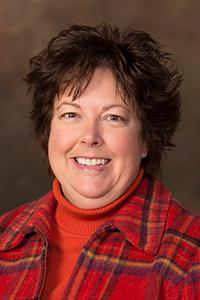
Tracy Sturgill Samayoa
|
Tracy Sturgill Samayoa
Diagnostic Services Section Head, Foreign Animal Disease Diagnostic Laboratory (FADDL)
Tracy Sturgill Samayoa is the section head for Diagnostic Services Section in FADDL (yep, that’s APHIS). Neither of her last names are easy to say if you have not at least heard them at least once, so feel free to call her Tracy. She has only asked three people in her entire professional life to call her Dr. Sturgill. Tracy completed her undergraduate work at Morehead State University in Eastern Kentucky, and her Doctorate of Veterinary Medicine at Ohio State University. She completed her Doctorate of Philosophy with a primary focus on Equine neonatal immunology/infectious disease at the Gluck Equine Research Center, University of Kentucky. Tracy also served as a post-doctoral research associate for Equine neonatal immunology/
Rhodococcus equi
/pharmacokinetics at the University of Georgia, College of Veterinary Medicine.
Tracy began her profession in large animal practice for 8 years. This worked out to be 50/50 food animal and equine; then she switched to about 80% equine/10% food animal/10% exotic (e.g., llama, bison, deer, wild boar, wild sheep/goats). As her the practice grew and after a significant injury (Tracy was kicked in the face by a bull, among other cattle related injuries), she chose to return to school and pursue a PhD.
Tracy began her Federal career in Ames, Iowa, at the National Veterinary Services Laboratories in the Diagnostic Virology Laboratory’s (DVL) Equine/Ovine (EO) section. During her 4 years in Ames, she began as VMO before taking the Equine/Ovine section head position. Tracy transitioned over to the FADDL DSS position in December 2017.
When asked to share an unusual or interesting job experience, Tracy replied,
“The most unusual job I had was working on a road crew for the State of Ohio during the summers between undergraduate years. I had a strong stomach and was tasked to assist with carcass removal, in addition to flagging traffic and pothole repair. The most interesting jobs were working with exotic species while in large animal practice. I worked with deer, bison, llamas, wild boar, and other exotic species.”
While in the EO section of DVL, Tracy’s interactions with the NAHLN were more peripheral in nature. Today, she finds herself regularly involved in some aspect of assessing new methods, investigating related science, or exploring new options in an attempt to improve testing alternatives and build on both existing and new collaborations--efforts of which are crucial to protecting U.S. Agriculture.
When asked to share about her family, Tracy replied,
“I come from a very large family, while being an only child. I have more cousins than I can count. I have an understanding and tolerant, although often exasperated, husband, and a lovely fourteen year-old step-daughter who I need to start teaching to drive. Color me scared…”
Tracy states that she is a bit of a nomad and loves to travel both domestic and internationally. She loves the outdoors, whether it is the woods, the water, or a garden. She finds her Zen-like place by pulling weeds and often finds inspiration when her hands are in the dirt. Tracy likes to refurnish old and revamp interesting furniture and enjoys fixing up houses that are in need of a little love.
On behalf of the NAHLN Program Staff, welcome Dr. Sturgill Samayoa!
Article submitted by Traci Imlau, Program Assistant, NAHLN Program Office, USDA APHIS VS STAS NVSL, Ames, IA.
|
|
|
Quality Management Systems (QMS) Update
|
A new version of the ISO 17025 requirements has been released. The AAVLD Accreditation Committee (AC) and National Veterinary Services Laboratories (NVSL) personnel are reviewing the revision to evaluate the impact the changes may have for the laboratories.
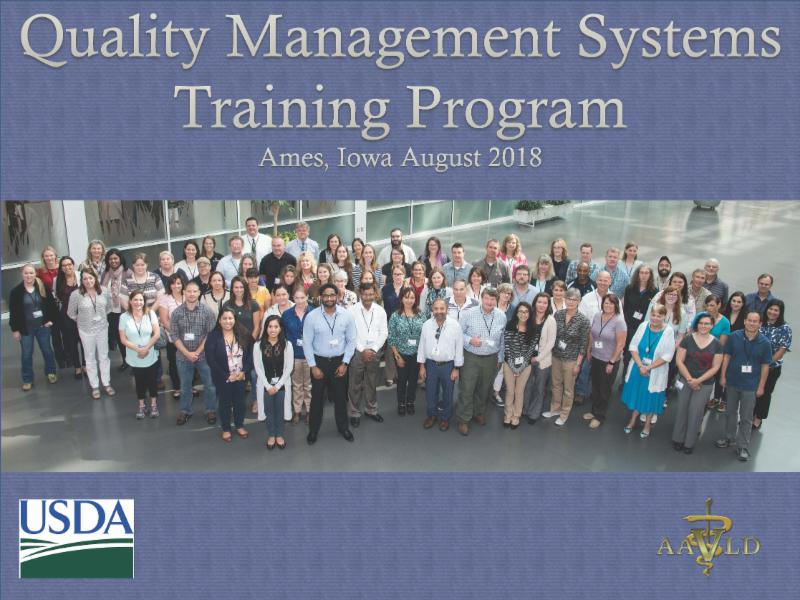
The 2018 QMS course was reviewed and modified through a collaboration between members of the AAVLD AC and NVSL personnel. The course was provided in August to 76 participants:
64 NAHLN Laboratories participants from 32 states
11 Aquaculture Laboratories participant from 9 states
1 Plant Network participant.
The next QMS course is scheduled for summer 2020.
Article submitted by Traci Imlau, Program Assistant, NAHLN Program Office, USDA APHIS VS STAS NVSL, Ames, IA.
|
|
With Great Partnerships Come
Great Responsibilities…
Part 5 of 5
|
NAHLN laboratories may be involved in surveillance for early detection of foreign animal disease, surge testing during an outbreak, and testing samples during the outbreak recovery phase. As such, there must be a high degree of confidence in the quality of the laboratories and associated test results. The potential consequences of a foreign animal disease outbreak could be catastrophic! Therefore, it is important that the needs and expectations of the NAHLN to meet this challenge be defined and agreed to by all participating parties.
The
Agreement for Participation in the National Animal Health Laboratory Network (NAHLN)
is a document that is completed annually by all laboratories requesting or renewing NAHLN approval. The purpose of this document is to serve as a transparent agreement that describes, communicates, and ensures commitment of relevant State and Federal parties to the expectations for membership of a NAHLN veterinary diagnostic laboratory. This document must be signed by the following personnel:
- Laboratory Director
- Responsible Official (RO - in Select Agent registered laboratories) or Biosafety Officer
- Dean of College (if appropriate)
- State Animal Health Official (SAHO)
- APHIS-Veterinary Services (VS) District Director (DD) or Assistant District Director (AD)
- State Department of Agriculture Director, Agriculture Commissioner, or equivalent.
There are 20 standards that must be understood and agreed to by each participating laboratory and stakeholders, that cover such topics as disease approval requests, quality management, testing requirements, sample handling, communication and reporting, and support of the NAHLN mission. While some of the standards are the same for all laboratories, there are some standards that are worded specifically for the responsibilities at the different levels of participation (Level 1, Level 2, Level 3, or Affiliate).
This document is handled at the executive management level. However, it is important that all laboratory personnel understand what is required in the agreement and how it applies to them. This 5-part series explores the standards listed in the agreement, and explicates why they are important for NAHLN participation.
Part 5 discusses Standards 17-20 regarding Support of the NAHLN Mission. Links are available to direct you to the specific standard for the various levels of participation.
This standard emphasizes the importance for NAHLN laboratories to have and maintain ongoing state and local funding adequate for participation in NAHLN functions, including equipment maintenance and provisions for adequate laboratory space to be used for NAHLN purposes. Significant changes in state and local funding affecting the laboratory’s ability to meet NAHLN requirements must be communicated to the NPO as soon as possible. NOTE: This standard is not applicable for Affiliate laboratories due to Federal restrictions.
This is important to ensure that NAHLN laboratories are able to meet the requirements for which they have signed up. While the NAHLN does provide infrastructure funding to laboratories in Levels 1, 2, and 3, this level of funding is not sufficient to sustain operations in all NAHLN laboratories. If a reduction or loss of state/local funding impacts the laboratory’s ability to meet NAHLN requirements, the laboratory must contact the NPO to discuss the situation and possible options.
This standard requires that NAHLN laboratories receiving federal funding are willing and able to fulfill associated administrative requirements, including maintaining and monitoring indefinite delivery indefinite quantity (IDIQ) contracts and cooperative agreements. Reimbursable activities may include, but are not limited to: diagnostic testing and reporting for both APHIS-VS surveillance programs and FAD investigations, response testing for foreign animal disease outbreaks, and/or participation in methods development and validation projects. NAHLN laboratories are expected to comply with reporting and reimbursement requirements, including monthly invoicing for tests conducted. Failure to comply with administrative/financial requirements may result in nonpayment for that particular activity and/or disapproved future participation. NOTE: This standard is not applicable for Affiliate laboratories due to Federal restrictions.
This is important to ensure that each NAHLN laboratory is appropriately reimbursed for the testing that is conducted. This requires that each laboratory monitor their financial agreements, invoice for testing services on a monthly basis, and communicate with the NAHLN Program Office when task order funding levels are low to ensure that either additional funding can be provided as needed, or samples can be redirected. This helps our federal programs to monitor surveillance testing numbers and associated funding levels to ensure that they are getting the necessary data to make informed decisions. It is VERY important for NAHLN laboratories to understand that testing must not be conducted unless sufficient funding is available on the task order.
This standard encourages the participation of all NAHLN laboratories in activities coordinated by the NPO in trainings, working groups, development and validation studies, scenarios, auditing, etc. These activities support the NAHLN’s overall mission and ensures continual growth and improvement of the network. NAHLN laboratories possess knowledgeable and talented personnel that can provide input and expertise in these areas which are valuable contributions to the NAHLN. Different NAHLN laboratory designations have different levels of responsibility:
- Level 1 Laboratories – Agree to participate in NAHLN-related activities, and as requested by the USDA, agree to provide training to other laboratories (i.e., test procedures, messaging).
- Level 2 Laboratories – Agree to participate in NAHLN-related activities, and as resources allow, agree to provide training to other laboratories (i.e., test procedures, messaging).
- Level 3/Affiliate Laboratories – Agree to participate in NAHLN-related activities, as resources allow.
This is important because the activities offered by the NAHLN Program Office provide an opportunity for personnel within the network laboratories to learn, collaborate with other laboratories, share knowledge, and provide input on how the network can grow and improve. In addition, the NPO (a staff of nine individuals) coordinates numerous efforts across a network of 60 laboratories. Many of these efforts would not be available to the network laboratories if not for the willingness of laboratory personnel to step up and get involved, which ultimately benefits the network as a whole.
Standard 20: Laboratory Accountability
(
Link – All
)
This is a new standard in 2018 and emphasizes that all laboratories in the NAHLN are expected to perform in accordance with the standards outlined in the NAHLN Agreement for Participation. If a NAHLN laboratory is not meeting the established standards, a progressive counseling and disciplinary process will be enacted to correct nonconforming activities.
This is important because NAHLN laboratories are approved to test for high consequence diseases, and therefore, there must be a high degree of confidence in the quality of the laboratories and associated test results. The intent of the accountability process is to provide a systematic and transparent way of identifying and correcting network issues
.
Article submitted by Kelly Burkhart, Microbiologist, NAHLN Program Office, USDA APHIS VS STAS NVSL, Ames, IA.
|
|
How is a NVSL quality document identified for use by NAHLN laboratories?
|
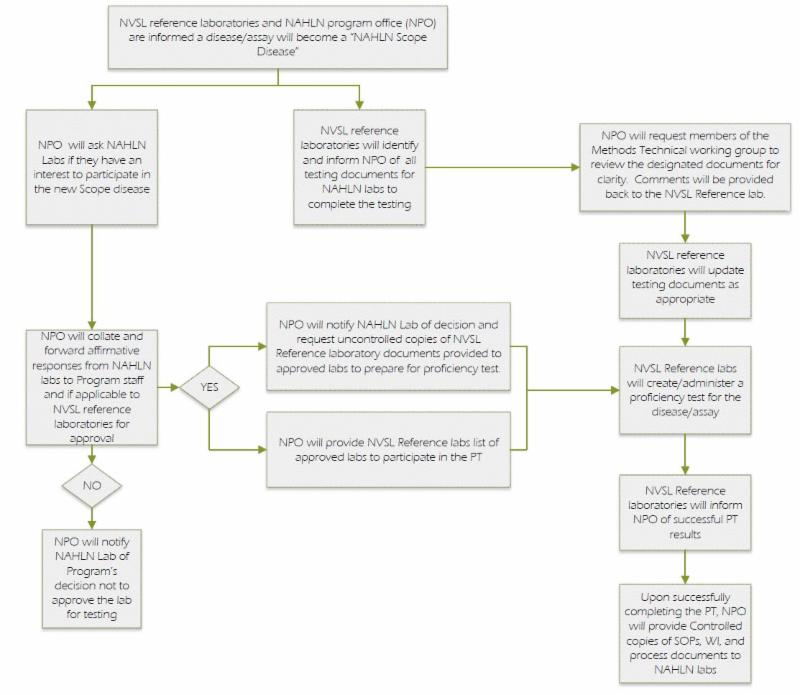
After a disease/assay is identified to become a part of the NAHLN scope, the responsible NVSL reference laboratory identifies all documents a NAHLN laboratory needs to complete the test. The NVSL reference laboratory provides the list to the NPO. The NPO then requests the Method Technical Working Group (MTWG) to review the documents for clarity. The NVSL reference laboratory reviews the comments from the MTWG to ensure content can easily be followed in all NAHLN approved laboratories. The identified documents are flagged in the NVSL electronic document control system, which notifies the NPO when the new version is released for use. The NPO distributes controlled copies of the documents to NAHLN-approved laboratories through the APHIS Laboratory Portal.
Click here for an overview of the processes that occur when a new disease becomes a part of the NAHLN scope.
|
|
Article submitted by Traci Imlau, Program Assistant, NAHLN Program Office, USDA APHIS VS STAS NVSL, Ames, IA.
|
|
NVSL Quality Document Nomenclature
As a part of the NAHLN founding principles the NAHLN laboratories use standardized NVSL protocols provided through the NAHLN program office. Each segment of the document number provide a piece of information about the document.
Example number:
WI
.NAHLN.
1111.01
The first segment identifies the type of document:
- FM = form
- Process = process
- REF = reference
- SOP = standard operating procedure
- WI = work instruction
Example number: WI.
NAHLN
.
1111.01
The second segment identifies the NVSL reference laboratory or NVSL Reference laboratory section responsible for the document:
NVSL – National Veterinary Services Laboratories (Reference laboratories and sections)
- NAHLN – National Animal Health Laboratory Network
- DVL-Diagnostic Virology Laboratory
AV -Avian Viruses
BPA -Bovine, Porcine, Aquaculture Viruses
EO - Equine / Ovine Viruses
- DBPL- Diagnostic Bacteriology and Pathology Laboratory
BI – Bacterial Identification
MB – Mycobacteria-Brucella
PS – Pathology Section
- DBRL- Diagnostic Bioanalytical and Reagent Laboratory
SERO - Serology
CAS - Chemistry and Analytical Services
PTR – Proficiency Testing and Reagents
BMRT/HRU - Brucella, Mycobacterium, and Hemoparasitic Reagents
PARA – Parasitology
- FADDL-Foreign Animal Disease Diagnostic Laboratory
DS - Diagnostic Services
RVS - Reagents and Vaccine Services
Example number: WI.NAHLN.
1111
.
01
The third segment is the document number and the fourth segment identifies the revision number.
The four segments together identify the document.
NAHLN Diseases or APHIS Program Diseases and APHIS-Approved Laboratory Document List
A list of NVSL documents associated with NAHLN scope diseases, or APHIS Program diseases and APHIS-Approved Laboratory documents is compiled by the NVSL quality management team. The list is posted online
here
.
Laboratories approved for NAHLN or APHIS Program disease and APHIS-approved laboratory documents use the list in their internal audits as a reference to verify they have the most recent version of a specific document. The header and footer of each page will identify the audience for the documents listed and the appropriate contact email for inquiries.
Article submitted by Traci Imlau, Program Assistant, NAHLN Program Office, USDA APHIS VS STAS NVSL, Ames, IA.
|
|
NAHLN Facts
The following link show a map and laboratory list of laboratories that have been approved as part of the
NAHLN Testing Network
.
|
|
Abbreviation / Acronym Key
|
|
|
|
|
|
|
|