|
The NAHLN Update 2022
Volume 13, No. 3
|
THE OFFICIAL NEWSLETTER OF THE NATIONAL ANIMAL HEALTH LABORATORY NETWORK (NAHLN)
A STATE AND FEDERAL PARTNERSHIP TO SAFEGUARD ANIMAL HEALTH
| |
Founding Principles and Features of the NAHLN |
- Operate within a quality management system
- Establish and maintain competency of laboratory personnel
- Use Standardized protocols, reference materials, and equipment
- Use facilities with biosafety/biosecurity levels requisite for testing performed
- Participate in communications and real time electronic reporting systems
-
Evaluate preparedness (identify and prioritize gaps) through scenario testing
| |
|
In This Issue:
Recurring call schedule
HPAI Update
2020 Farm Bill Showcase
NAHLN 20th Anniversary
NIFA NAHLN History
Getting to Know Us
FAD Investigation: Why you Need to Phone a Friend
Funding available for NAHLN Testing of Unusual Morbidity and/or Mortality events in animals.
NAHLN AMR Pilot Turning Into a Permanent APHIS Program
Evaluation of Messaging Competency Events, 2018-2022
Round-up
| |
|
Recurring call schedule:
NAHLN Coordinating Council (CC) calls occur on the third Monday of each month.
NAHLN Methods Technical Working Group (MTWG) Core group calls occur on the second Wednesday of each month.
NAHLN Exercises and Drills Working Group (EDWG) calls occur on the fourth Wednesday of each month. People interested in serving on this group should email the NAHLN Program Office by clicking here.
NAHLN IT committee Core group calls occur on the first Wednesday of each month, except for months with quarterly NAHLN IT general membership calls (March, June, September, and December). People interested in attending the general call can do so by selecting the personnel contact options of IT General committee member in the APHIS Laboratory Portal.
Input Welcome!
We appreciate hearing from you!
Are there other topics that you would like to hear about? Please email your comments to us at NAHLN@usda.gov.
| | |
Current Number of Subscribers:
1216
| |  |
|
Did you know the FAD PReP Material and References website includes information on:
Highly Pathogenic Avian Influenza (HPAI)
Virulent Newcastle Disease (vND)
and many more useful resources.
| | |
|
NAHLN laboratories continue to meet our mission by both responding to the current Highly Pathogenic Avian Influenza (HPAI) outbreak, on-going since February 2022, and providing the routine surveillance testing for other NAHLN scope diseases. There are currently 52 NAHLN laboratories activated to test for HPAI in 47 states. Six hundred ninety-four commercial or backyard premises have been confirmed to have the virus and over 5,100 wild birds have tested positive. Over the course of the outbreak NAHLN laboratories have provided over 147,800 PCR tests, including post cleaning & disinfection, removing the burden of screening samples from the National Veterinary Services Laboratories (NVSL) Reference Laboratory so they may focus on confirmatory testing and monitoring the virus through sequence analysis. Messaging of these test results by the NAHLN laboratories has also allowed for nearly real-time decision making by those responding in the field.
_____________________________________________________________
Outbreak Snapshot
HPAI 2014-2015
•December 11, 2014: First confirmation, Oregon
•342 days later (11/18/2015): Final OIE report issued; outbreak considered closed
•211 commercial, 21 backyard
•21 states (commercial, BY, wild captive, and wild birds)
•Approximately 50.4 million birds affected
•16/59 NAHLN laboratories activated (27% of network)
•Approximately 79,000 tests at NAHLN laboratories
HPAI 2022
•February 8, 2022: First confirmation, Indiana
•311 days later: November 21, 2022
•300 commercial, 394 backyard
•Approximately 54.93 million birds affected
•52/60 NAHLN laboratories activated (87% of network)
•47 states (commercial/BY), one additional for wild birds
•Over 147,800 tests at NAHLN labs including H5 2.3.4.4 assay
•Messaging error rate average = 0.18%
_____________________________________________________
Article submitted by Kelli Almes, DVM, DACVP, Associate Coordinator, NAHLN Program Office, USDA APHIS VS D & B, NVSL.
| |
|
The NAHLN Program Office hosted a showcase of the 2020 NAHLN Farm Bill projects over 2 days in November 2022.
30 approved projects
- Showcase held November 8-9, 2022
- 15 presentations, recordings available on the APHIS Laboratory (NAHLN) Portal
- 15 additional abstracts submitted (Capacity building)
-
Abstracts for all projects provided in Proceedings book
The 2021 NAHLN Farm Bill showcase is tentatively scheduled for November 2023.
Article submitted by Traci Imlau, Program Assistant, NAHLN Program Office, USDA APHIS VS D & B, NVSL.
| | | |
NIFA NAHLN History
In early 2002, the Secretary of Agriculture announced that funds were available for USDA agencies to use in strengthening the post-9/11 biosecurity of American agriculture systems. Among other options, APHIS proposed an allocation of $10 million to fund five "surge" laboratories that would provide increased federal testing capacity in the event of a major animal disease outbreak. Concurrently, Dr. Bill Wagner, then Cooperative State Research, Education, and Extension Service (CSREES; now USDA’s National Institute of Food and Agriculture, NIFA) Animal Protection Division Director, proposed, in consultation with CSREES' resident plant pathologist, Dr. Kitty Cardwell, an allocation to establish two diagnostic networks, one for animal diseases and one for plant diseases, which would become the NAHLN and the National Plant Diagnostic Network, based upon the concept of a mutually leveraging, highly integrated, state-Federal partnership.
A unique aspect of the early vision of NAHLN was bringing state and Federal animal diagnostic laboratories into unprecedented close operational collaboration and interdependence to better protect our nation against significant animal disease threats. A concept paper was quickly approved by the Secretary's Office and, in March of 2002, CSREES was allocated $9 million to initiate the two diagnostic networks.
Later discussions with the Secretary's Office refined the model to reflect that it would be more effective to pool the allocations and make awards under CSREES’ granting authority on behalf of both agencies. CSREES and APHIS worked together to establish a co-equal Federal leadership partnership. Over the years, APHIS and NIFA, led by National Program Leader for Animal Biosecurity Gary Sherman, worked with the NAHLN Coordinating Council. In 2012, the NAHLN Concept Paper provided guidance on the details, transition and implementation of a NAHLN restructure (2014-2015). NIFA was fully engaged in the process and participated in the external review process. The new funding structure that allocated funds within levels based on available funds and number of laboratories per level was implemented in 2016 utilizing both APHIS and NIFA funding.
Since that time, NIFA has continued to participate actively as a member of the NAHLN Coordinating Council and the NAHLN Executive Council, while partnering with APHIS to explore opportunities to improve the efficiency of the NAHLN funding mechanisms.
Article submitted by Michelle Colby, DVM, MS, National Program Leader (NPL) for Animal Biosecurity, NIFA
| | |
|
Getting to Know Us –
Michelle Colby, DVM, MS, National Program Leader (NPL) for Animal Biosecurity, NIFA
| |
Dr. Colby has served in various policy and research coordination roles prior to her time at NIFA, including two years as the Chief of the National Security Division in USDA’s Office of Homeland Security, where she provided guidance and direction for national security programs related to homeland security, agroterrorism, biodefense, disaster response and recovery, and efforts to coordinate national-level homeland security policy initiatives. From 2009-2017, Michelle served as the Branch Chief for Agricultural Defense in the Chemical and Biological Defense Division (CBD) of the Department of Homeland Security’s (DHS) Science and Technology Directorate, where she directed all of CBD’s research and development efforts related to agricultural defense, including programs in foreign animal disease modeling and advanced development of veterinary countermeasures. Before joining DHS in 2009, she served as the Assistant Director for Chemical, Biological, Radiological and Nuclear Countermeasures in the Homeland and National Security Division of the White House Office of Science and Technology Policy (OSTP), where she managed all of OSTP’s work on coordinating research and development on countermeasures to chemical, biological, radiological, and nuclear threats. She began her career at OSTP as an American Association for the Advancement of Science/Nuclear Threat Initiative Global Security Fellow in October of 2003.
Dr. Colby completed a post-doctoral research fellowship at the Maryland campus of the Virginia-Maryland Regional College of Veterinary Medicine (VMRCVM), as well as a M.S. in Epidemiology and three-year applied veterinary epidemiology residency program. Her research focused on the use of Geographic Information System databases in the management of infectious diseases of livestock and poultry. She received her Doctorate of Veterinary Medicine from VMRCVM and a B.S. degree in Animal Science from the University of Maryland, Eastern Shore.
As the National Program Leader (NPL) for Animal Biosecurity, Dr. Colby is the lead NPL supporting the NAHLN activities within USDA’s NIFA. This includes representing NIFA on the NAHLN Coordinating Council and the NAHLN Executive Committee, coordinating with APHIS on NAHLN administration, and working with other NIFA program staff in the processing of the NIFA funded NAHLN awards.
Before working at your current position, what was the most unusual or interesting job you had?
“Though all of my previous positions have been challenging and fascinating, I think the most well rounded and engaging position I’ve ever had was serving as a summer counselor for Maryland Summer Centers for Mathematics, Science and Technology which included chauffeuring/chaperoning field trips to places like NASA Wallops Island; ensuring hands, feet and faces were safe during rocket launches; learning how to play 3D chess; and exercising my creative side by teaching a poetry elective for the high school and middle school participants.”
Are there any hobbies or random facts about yourself that you could share with us?
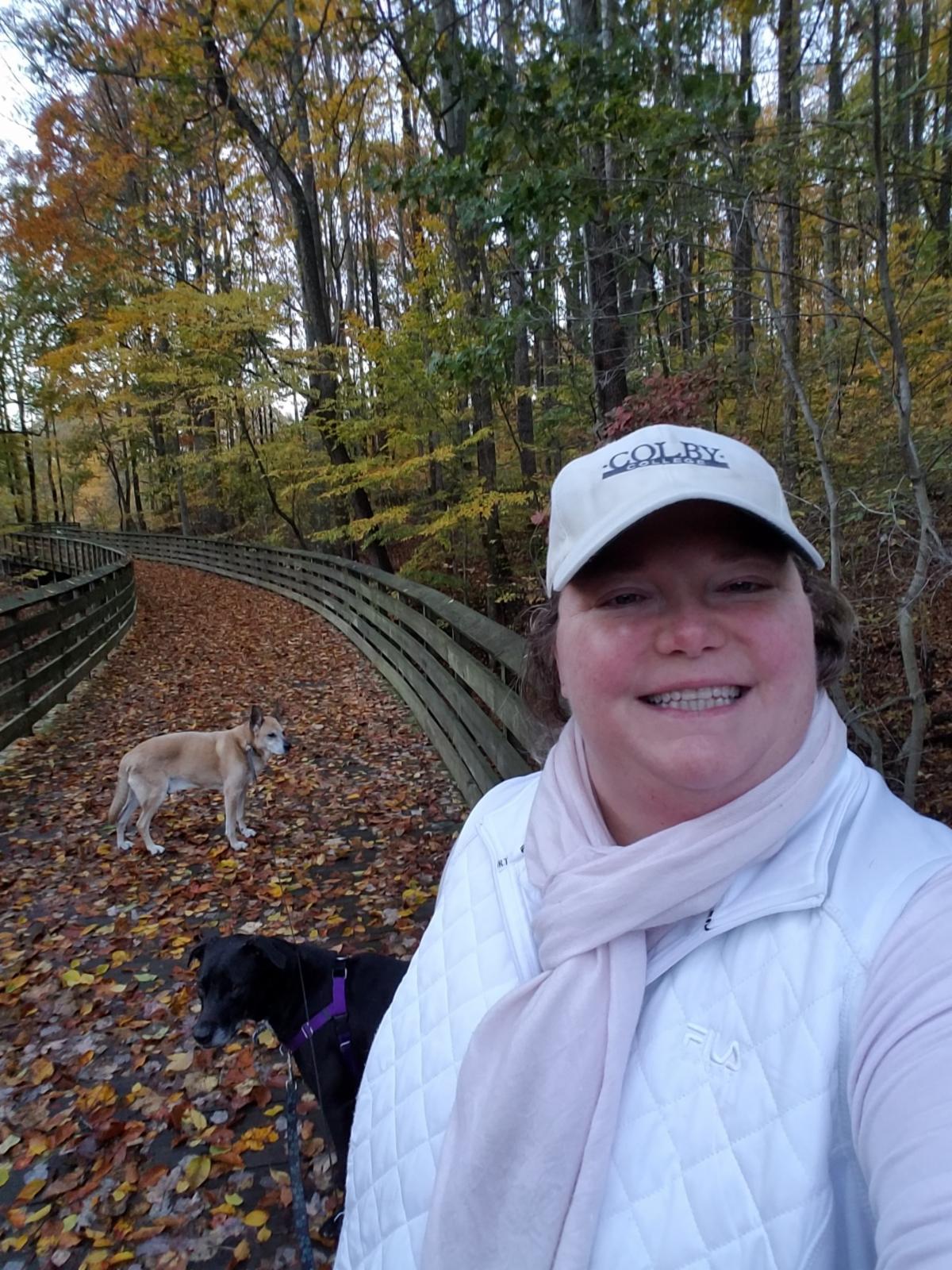
“I am always on the hunt for a new hiking trail to explore with friends or my canine companions (or both!). Travel is another passion of mine, which I often combine with hiking, seeking out a good walking tour or a new trail to explore along the way. When I am not on the move or working, I enjoy reading, cooking, gardening, and genealogy. A note about the cap I am wearing in my photo, while I did not attend Colby College, through my genealogical explorations, I’ve discovered that my family is related to Gardiner Colby, who founded the College. It’s certainly an interesting conversation starter with Colby alums!”
What family information would you like to share?
“I am part of a very close-knit extended family who are mostly located along the East Coast. You might find us vacationing together anywhere between the Outer Banks to the Adirondacks! I am currently in between canine companions and everyone in my family is busy sending me photos of potential candidates to fill the vacancy.”
Please share your thoughts on the NAHLN Program/ mission?
“The NAHLN has been an element of my portfolio in some way, shape or form since I started my Federal career. I am looking forward to once again working more closely with the NAHLN Coordinating Council, coordinating with APHIS and ensuring that all NAHLN labs are aware of applicable competitive opportunities at NIFA.”
Article submitted by Traci Imlau, Program Assistant, NAHLN Program Office, USDA APHIS VS D & B, NVSL.
| |
FAD Investigations: Why you Need to Phone a Friend
Do you know your NAHLN laboratory’s phone number? Find it here.
During a Foreign Animal Disease (FAD) Investigation, it is paramount to communicate with all laboratories that may be involved in testing of the samples you are collecting in the field. The earlier the better and there can never be too much communication. Alerting your NAHLN laboratory when you are en route to the FAD investigation or at least letting them know that you will be heading out, will give them as much warning as possible. This will allow for any needed alterations in their normal workflow, give them a heads up on possible after hours testing that may be needed, and allow for open dialogue between the foreign animal disease diagnostician (FADD) and the laboratory for any questions that need to be addressed.
This phone call allows for the FADD to be assured that the NAHLN laboratory is still able to run the test needed, review sample types they are approved to test, and talk through logistics of sample delivery. FADDs may not have all needed information at this initial contact; but the more time the laboratory has to prepare, the faster you will get results. This also allows the laboratory time to communicate with the NAHLN Coordinators as they have been asked to do. Getting everyone the same information in a timely fashion allows for real time situational awareness for all.
Once you have obtained samples, a follow-up call or email to let them know how many samples you have taken and what sample types they are will allow for preparation in the laboratory to occur long before sample arrival. Sending your VS 10-4 as soon as it is complete also allows for accessioning of the samples, a frequent bottleneck that can slow testing and results. If you will be arriving after normal business hours, this pre-accessioning is often extremely helpful to the laboratory. An electronic VS 10-4 or even a cell phone picture will do.
We expect that in addition to contacting your NAHLN laboratory that you have also contacted the NVSL Director and appropriate NVSL reference laboratory to communicate details of the investigation, samples collected, and details of your outgoing shipment of duplicate samples. After preliminary testing is completed by your NAHLN laboratory, they are responsible for communicating preliminary results to their State Animal Health Official (SAHO), the NVSL Director, and the appropriate NVSL Reference Laboratory.
As outlined here, good communication is extremely valuable in these situations, as emphasized by two of the seven steps of “Initiating and Conducting an Investigation” within the FAD Investigation Manual, which are focused on laboratory communication. Getting to know your laboratory contacts and reaching out to them early and often will help everyone involved in a FAD investigation or outbreak.
Article submitted by Kelli Almes, DVM, DACVP, Associate Coordinator, NAHLN Program Office, USDA APHIS VS D & B, NVSL.
| | | |
Funding available for NAHLN Testing of Unusual Morbidity and/or Mortality events in animals.
APHIS-Veterinary Services (VS) is excited to work with the NAHLN to conduct further diagnostic testing for unusual morbidity and/or mortality events (UME) in animals. VS was awarded monies through the American Rescue Plan (ARP) for a 3-year project to fund additional diagnostics to determine pathogen involvement in UMEs that otherwise would not be diagnostically investigated. A primary objective of the ARP funding is to identify and understand SARS CoV-2 involvement in animal disease, so most samples will be screened; however, funding will reimburse testing for other pathogens as well. Enhanced testing for these situations will strengthen the animal health community’s ability to identify new or emerging SARS CoV-2 variants or other emerging diseases and increase the country’s ability to detect and respond to these threats earlier. Enhanced testing will be achieved by reimbursing NAHLN laboratories directly for conducting agreed-upon testing in cooperation with the respective SAHO and VS-Area Veterinarian in Charge (AVIC).
| |
|
What is a UME?
- Draft Case Definition: An event will be considered as an Unusual Morbidity and/or Mortality Event if:
An initial investigation fails to establish a diagnosis AND 1 or more of the below is true:
- There is an unusual or atypical manifestation of disease, including high morbidity, mortality and/or rate of spread.
- There are findings suggesting a possible effect on trade, public health, or the viability of an industry or region.
- There is a genuine suspicion of an exotic or emergency animal disease that is not otherwise being investigated by VS as a FAD.
Example: A report of numerous sick pigs with signs suggestive of African swine fever/classical swine fever* leads to an FAD investigation and testing rules out FADs. Local health officials and the laboratory believe additional testing would be useful to reach a diagnosis.
1. If the SAHO and AVIC are in support, the respective NAHLN laboratory submits a diagnostic proposal, including estimated cost, to VS via the UME email (APHIS.UME@USDA.gov) for additional testing to reach a diagnosis. SARS
CoV-2 screening should be included with any additional proposed diagnostics.
2. Once approved, the NAHLN laboratory conducts proposed testing and reports results to the respective state(s) and VS.
a. NVSL will provide diagnostic support such as confirmatory testing or testing beneficial to the event but not available at the NAHLN laboratory.
3. The laboratory is reimbursed by VS directly. Note this payment is not associated with current NAHLN agreements.
*Note: The example provided here is for an FAD investigation. It is not required that an FAD investigation be conducted first. If the UME is not suggestive of an FAD, but otherwise meets the case criteria above, it is eligible for reimbursement for additional testing. An initial investigation is necessary to provide basic epidemiologic information, such as mortality and/or morbidity and results of any initial screening diagnostics completed to date.
| |
|
Interested in participating? Have a case you think fits this definition?
This new testing process will improve our ability to identify new or emerging diseases including SARS CoV-2 variants and increase the country’s ability to detect and respond to these threats earlier.
Email APHIS.UME@USDA.gov to reach out for case consideration and testing proposal.
Want to know more? VS is happy to meet individually with any NAHLN laboratory to further discuss details and possibilities. Reach out to the email above.
Article submitted by Sara Ahola, VMO-Epidemiologist, MRP-APHIS-VS
| |
NAHLN AMR Pilot Turning Into a Permanent APHIS Program | |
APHIS is nearing the successful completion of the 5-year pilot surveillance program developed and managed by the APHIS NAHLN Program Office to monitor antimicrobial resistance (AMR) in animal pathogens across veterinary diagnostic laboratories. We will establish a permanent surveillance program starting in January 2023. The 31 laboratories participating in the final year of the NAHLN pilot surveillance program have met all targets for AMR samples submitted in FY 2022. These samples are a critical component for establishing the permanent program and allow us to monitor antimicrobials over time.
This project was accepted as an APHIS Priority Goal in FY 2022. The permanent program will monitor AMR profiles for eight veterinary pathogens from cattle, swine, poultry, horses, dogs, and cats. These are E. coli, which causes diarrhea and gastrointestinal disease in animals and humans; Salmonella spp., also a cause of gastrointestinal infections in animals and humans; Mannheimia haemolytica, a causative agent of shipping fever in cattle; Streptococcus suis, a pathogen that causes severe pneumonia in swine; Streptococcus equi ssp equi, which causes strangles in horses; Streptococcus equi ssp zooepidemicus, an opportunistic pathogen in horses; Pasteurella multocida, the causative agent of fowl cholera in poultry; and Staphylococcus pseudintermedius, which causes severe skin infections in cats and dogs. The goals of the program are to collect antimicrobial susceptibility data from 5000 isolates per year, plus perform whole genome sequencing on at least 500 of these isolates, for the purpose of monitoring both antimicrobial resistance and the genetic elements that contribute to antimicrobial resistance.
This data is being made available to the public through annual reports and a dashboard hosted on the NAHLN website (https://www.aphis.usda.gov/aphis/ourfocus/animalhealth/lab-info-services/nahln/).
| |
|
Our sincere thanks to the 31 veterinary diagnostic laboratories participating in this program for 2022, and for your support that has allowed our vision to turn into a permanent program!
AL Bacteriology & Mycology Diagnostic Laboratory, College of Veterinary Medicine, Auburn, AL
AL Thompson Bishop Sparks State Diagnostic Laboratory, Auburn, AL
CA California Animal Health & Food Safety Laboratory System, Davis, CA
CO Colorado State University Veterinary Diagnostic Laboratory, Ft. Collins, CO
FL Bronson Animal Disease Diagnostic Laboratory, Kissimmee, FL
GA Athens Veterinary Diagnostic Laboratory, Athens, GA
IA Iowa State University Veterinary Diagnostic Laboratory, Ames, IA
IL Veterinary Diagnostic Laboratory of University of Urbana-Champaign, Urbana, IL
IN Indiana Animal Disease Diagnostic Laboratory, West Lafayette, IN
KS Kansas State Veterinary Diagnostic Laboratory, Manhattan, KS
KY Breathitt Veterinary Center, Hopkinsville, KY
KY University of Kentucky, Veterinary Diagnostic Laboratory, Lexington, KY
LA Louisiana Animal Disease Diagnostic Laboratory, Baton Rouge, LA
MI Michigan State University Veterinary Diagnostic Laboratory, Lansing, MI
MN University of Minnesota Veterinary Diagnostic Laboratory, St. Paul, MN
MO-C University of Missouri Veterinary Medical Diagnostic Laboratory, Columbia, MO
MS Mississippi State University Veterinary Research & Diagnostic Laboratory System, Pearl, MS
NC Rollins Animal Disease Diagnostic Laboratory, Raleigh, NC
ND North Dakota Veterinary Diagnostic Laboratory, Fargo, ND
NE University of Nebraska Veterinary Diagnostic Center, Lincoln, NE
NY Cornell University Animal Health Diagnostic Center, Ithaca, NY
OH Ohio Animal Disease Diagnostic Laboratory, Reynoldsburg, OH
PA PADLS-Pennsylvania Veterinary Laboratory, Harrisburg, PA
PA Pennsylvania State University, Animal Diagnostic Laboratory, University Park, PA
PA University of Pennsylvania PADLS New Bolton Center, Kennett Square, PA
SD Animal Disease Research & Diagnostics Laboratory, Brookings, SD
TN Kord Animal Health Diagnostic Laboratory, Nashville, TN
TX Texas A&M Veterinary Medical Diagnostic Laboratory, College Station, TX
WA Washington Animal Disease Diagnostic Laboratory, Pullman, WA
WI Wisconsin Veterinary Diagnostic Laboratory, Madison, WI
WY Wyoming State Veterinary Laboratory, Laramie, WY
Article submitted by Beth Harris, Associate Coordinator, NAHLN Program Office USDA APHIS VS D & B, NVSL, Ames, IA
| |
Evaluation of Messaging Competency Events, 2018-2022 | |
Evolution of Messaging Competency Events
Messaging competencies were developed in 2018 at the request of the NAHLN laboratories to provide a venue for practice sending electronic messages to VS’ laboratory messaging system (LMS) database. Messaging competencies allow laboratories to practice their electronic messaging capability for diseases that they do not test for routinely as well as provide a spot check to verify that periodic messaging updates are being integrated correctly into the laboratory’s message. Other benefits include ensuring that all IT systems and software are functioning properly and serving as an early detection mechanism for any messaging issues not previously identified.
NAHLN Laboratory Participation
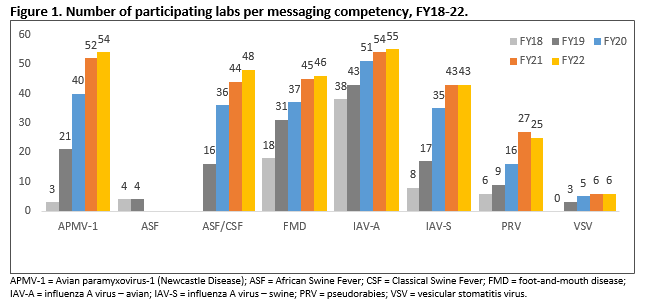
Since 2018, the number of laboratories messaging and participating in messaging competencies has increased. In 2022, 56 labs participated in messaging competencies.
Figure 1 depicts the number of participating laboratories for each of the eight messaging competency events provided by the NAHLN from 2018 through 2022. Most laboratories in the NAHLN are approved to test for avian influenza (IAV-A), Newcastle disease (APMV-1), African swine fever (ASF), Classical swine fever (CSF), and foot-and mouth disease (FMD), which is reflected in the number of laboratories participating in messaging competencies for these diseases.
| |
|
Evaluation of Messaging Competency Errors
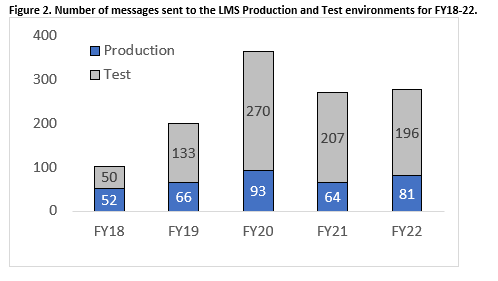
For these competency events, laboratories had the option of providing a message sent to the NAHLN LMS Production database, representing real data submitted within the past three months, or submitting a message to the LMS Test environment. Messages sent to LMS Test contained artificial data and were meant to evaluate message structure and content only.
In FY22, we saw an increase in the percentage of messages evaluated from the Production environment (Figure 2). We couldn’t correlate this increase to the highly pathogenic avian influenza outbreak that began in February 2022. We will continue to monitor to see if the increase continues into future years.
| | | |
|
The large number of messages sent to LMS Test is a result of many laboratories not routinely receiving samples for testing for many of these diseases, thus having no testing data sent to VS in the three months prior to the competency.
In FY22, we saw an increase in the percentage of messages reviewed that had no errors. FY20 and 21 had remained constant at 62%, but in FY22 this increased to 74% (206 out of 277 messages reviewed that had no errors). Additionally, the number of laboratories with no errors for all the competencies they participated in during the year increased to 26 labs, from 15 labs in FY21.
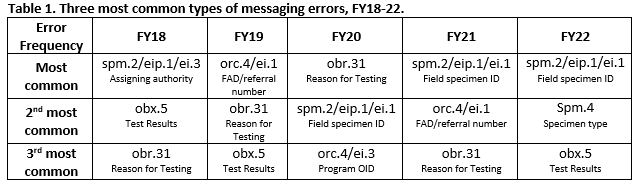
The types of errors identified for each year of messaging competencies has changed slightly over time (Table 1). This is likely because as one type of error is being corrected by participating laboratories, other errors are being more commonly identified.
| | | |
|
Looking closer at the top three most common errors found during FY22 messaging competencies, the spm.2/eip.1/ei.1 (field specimen ID) field is reserved for any identification that is applied to a sample by whoever collects the sample prior to sending it to a NAHLN laboratory. Most common errors in the message associated with this field were due to one of three reasons: 1) this field had the animal ID instead of the specimen ID, 2) this field had the identification applied to the sample by the laboratory once the sample arrived at their facility, or 3) the animal and sample IDs had been concatenated.
The specimen type was transmitted in the electronic message using the standardized SNOMED code for that specimen type. Errors identified for this field during messaging competency events primarily were due to a generic swab or tissue listed rather than a more specific specimen type indicated on the submission form. There were also occasional issues where the text description didn’t match the SNOMED code.
The actual test results within a message are found in the obx.5 fields. For the messaging competencies, there were a variety of errors for obx.5: additional information besides the test result was included, an incorrect value was entered, or incorrect obx.5 fields were being used depending on the type of result that was being messaged (numeric, structured numeric, coded with exceptions, or string).
Summary and Conclusion
The increased percentage of messages without errors this year is encouraging, and we hope to see a continuation of this in future years. We’ve been able to see this improved quality of the messages throughout the HPAI outbreak in 2022. At the end of September, 115,000 messages had been sent since the outbreak started in February. Of those, only 0.1% had issues where the NAHLN Program Office needed to reach out to the laboratory to address it.
Article submitted by Jennifer Rodriguez , Management and Program Analyst, NAHLN Program Office, USDA APHIS VS D & B, NVSL.
| |
|
Welcome to the new members of the Coordinating Council
Level 2 Laboratory Directors:
Dr. Yan Zhang - Arizona Veterinary Diagnostic Laboratory
Dr. Heidi Percoraro – North Dakota Veterinary Diagnostic Laboratory
State Animal Health Official
Dr. Annette Jones – California
Thank you to the members rotating off the Coordinating Council
Dr. Francois Elvinger, Animal Health Diagnostic Center, Cornell University
Dr. Larry Forgey, Missouri Department of Agriculture Veterinary Diagnostic Laboratory
Welcome to the new members of the Methods Technical Working Group
Ms. Lalitha Peddireddi – Rollins Diagnostic Laboratory, North Carolina Department of Agriculture
Ms. Rebecca Wolking – Washington Animal Disease Diagnostic Laboratory
Ms. Michelle Gibison – University of Pennsylvania, School of Veterinary Medicine, New Bolton Center
Thank you to the member rotating off the Methods Technical Working Group
Dr. Jeremy Snyder, New Jersey Department of Agriculture, Animal Health Diagnostic Laboratory
Dr. Binu Velayudhan, Athens, Georgia, Veterinary Diagnostic Laboratory
| |
Abbreviation / Acronym Key | Click Here for Volume 13, No.2 Acronym Key | |
|
NAHLN Facts
The following link show a map and laboratory list of laboratories that have been approved as part of the NAHLN Testing Network.
| | | | |