December 2023

The Need for New Approaches

to Address Patient Complexity

Patients are getting older with more chronic conditions and more urgent needs.


This increased complexity is challenging for family doctors.


Family doctors are not trained to deal with this level of complexity. New family doctors don’t have the breadth and years of experience to interpret this complexity. And family doctors are not paid for addressing this level of complexity.


So complex patients, especially those who are elderly, can go untreated and undiagnosed.

How Do We Solve This?

One suggestion being proposed is for family doctors to require one extra year of formal training in order to support patient complexity.


This is a very unpopular idea with doctors and medical students.


It would provide one additional year of training and then release family doctors into the same system that does not support them in treating complex patients.


And in fact, nurse practitioners, some with less formal training than family doctors, must manage the same level of patient complexity.

Collaboration as a Solution to Patient Complexity 

One solution that we have employed at RCM Health is collaboration.


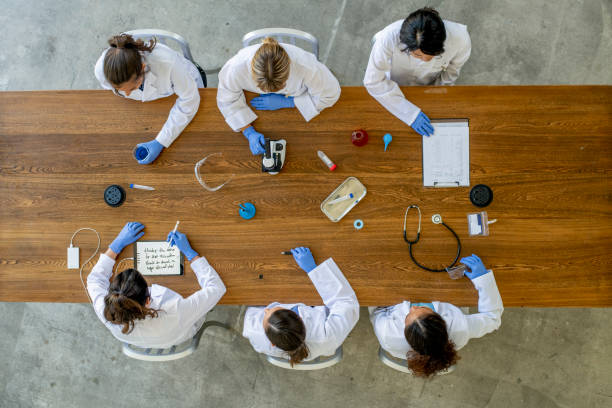
Our doctors and nurse practitioners work on teams with specialists.


That has been an important workflow at RCM Health from the day we started focusing on complexity 27 years ago.


We encourage effective collaboration between family doctors, NPs, nurse case managers and specialists.

Case Study

Mrs B. was 52 years of age. She was very complex. She had very severe pelvic pain.


She had seen at least ten types of doctors ranging from surgeons to pain specialists.


She eventually had an ileostomy. This did not resolve anything. In fact, it made the matter worse. She felt defeated. She had suicidal thoughts.


Her father had heard of RCM Health from a neighbour who had done well with RCM's services.


RCM Health was retained by the family.


Our approach was to complete a discovery process and clinical audit. Our team reviewed her voluminous medical records. We reached out to a team of experts.


The conclusion was that this patient had a type of neuropathy. And the solution was to consider a device called a dorsal column stimulator. This device has been available for about 25 years. It is like a pacemaker. The device blocks pain signals from reaching the brain.


This proved to be an excellent approach to this very complex patient. 

Conclusion

For complex patients to be treated properly, a team approach is required.


Collaboration with experts is the key.


To do that there has to be appropriate funding for the doctors and nurse practitioners and specialists.


And advanced technologies to make collaboration much easier and more effective.  

To Start The Conversation

To learn more about RCM services:


647-350-5500


info@rcmhealth.ca


Raymond Rupert  

CEO  

RCM Health Consultancy Inc.

www.rcmhealth.ca