undefined

The Newton News

October 8, 2026

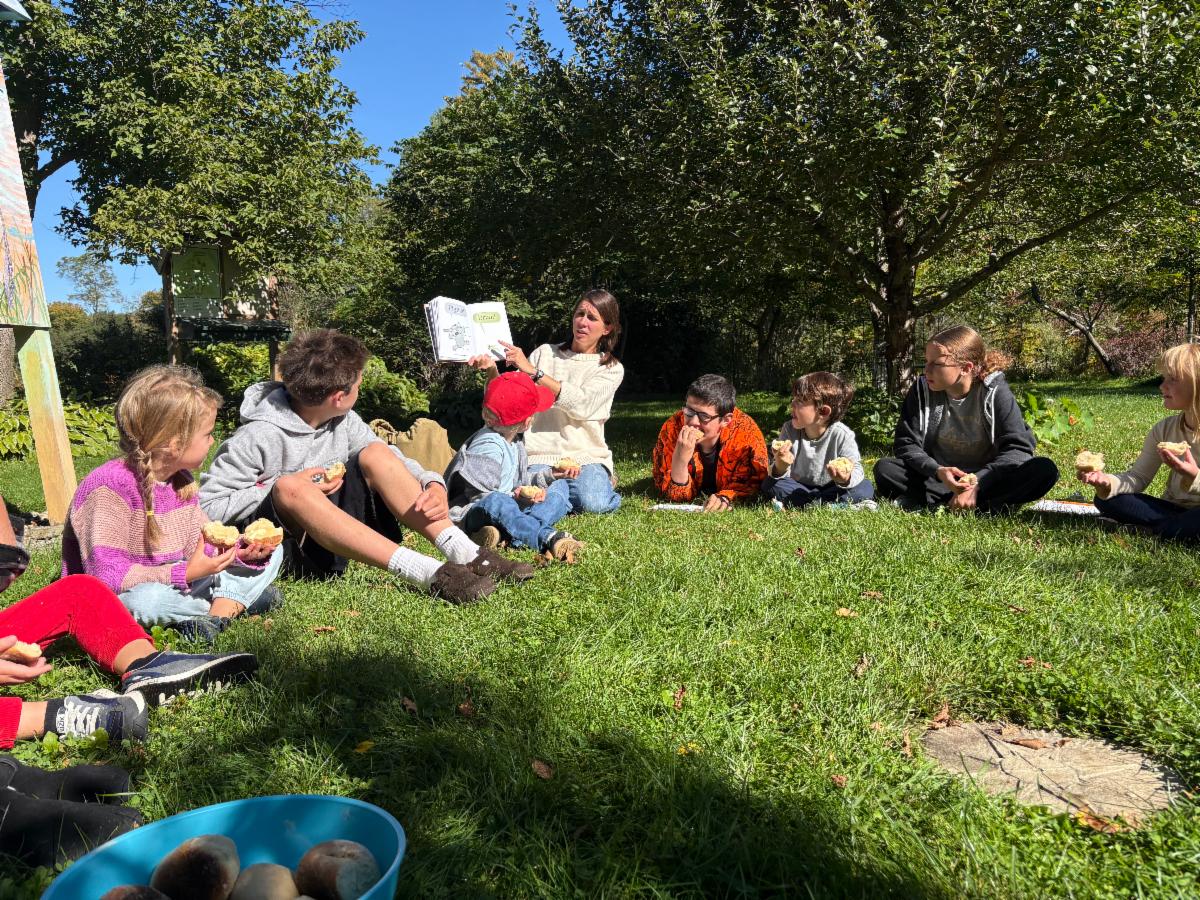
Kindergartners and 8th graders enjoy a read aloud outside
 

Eighth graders and their kindergarten buddies enjoy a read-aloud on a sunny day.


Upcoming Events


Friday, October 9

No School


Friday, October 12

No School

Indigenous People's Day


Tuesday, October 13

PTA Meeting, 7PM


Friday, October 16

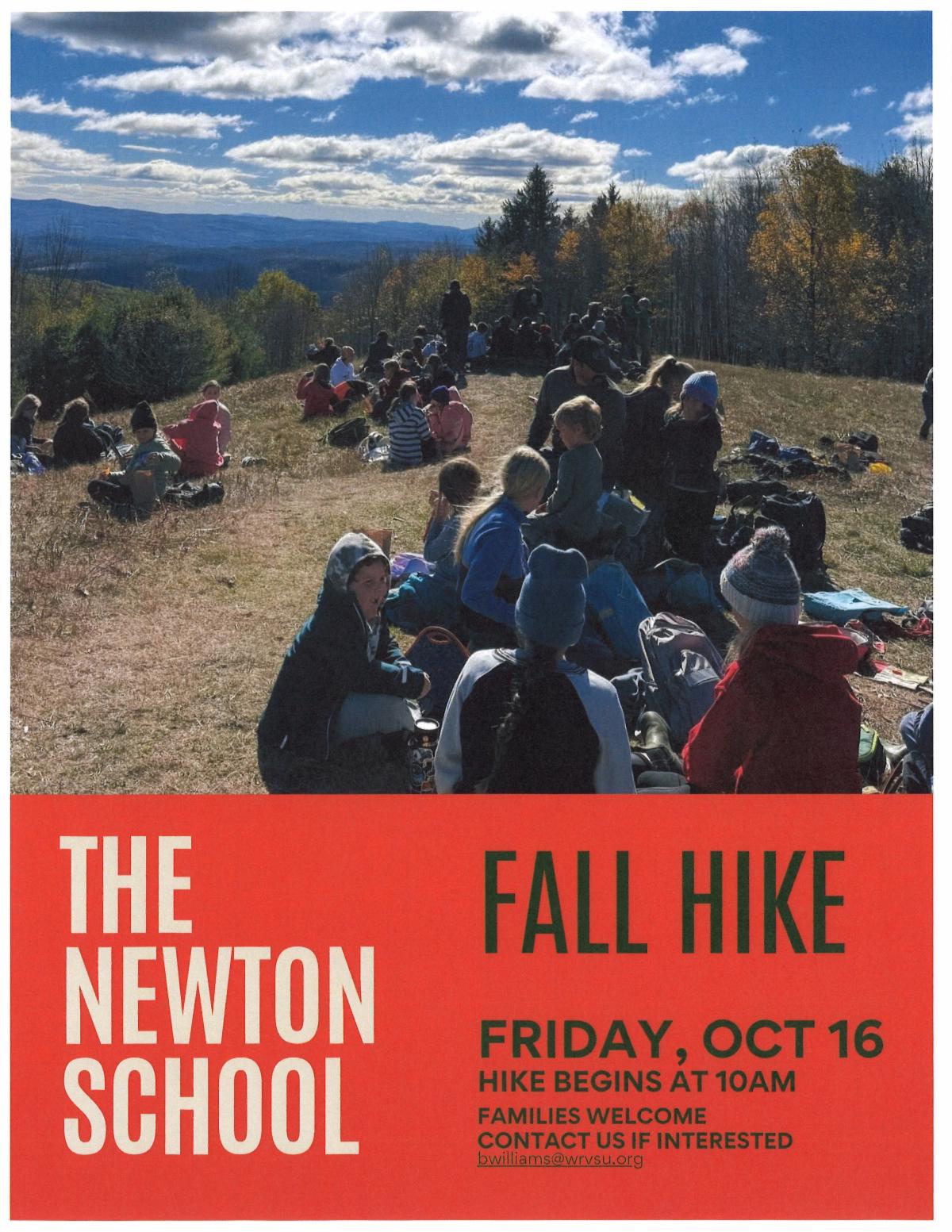
Fall Hike


Sunday, October 18

Sharon Academy Information Session

11AM


Friday, October 23

Early Dismissal, 12PM


Kindergarten

Ms. Teachout


Spotlight on Kindergarten Forest day!


Each Wednesday we venture into the woods from about 9-11:30 AM with outdoor educator Becky Proulx. We bring our snacks in our backpacks; we plan and think about how to stay warm and comfortable based on the weather; we exit the building and take a big deep breath of fresh air. You can feel the energy shift as we walk out the door and the cool air washes over us. 


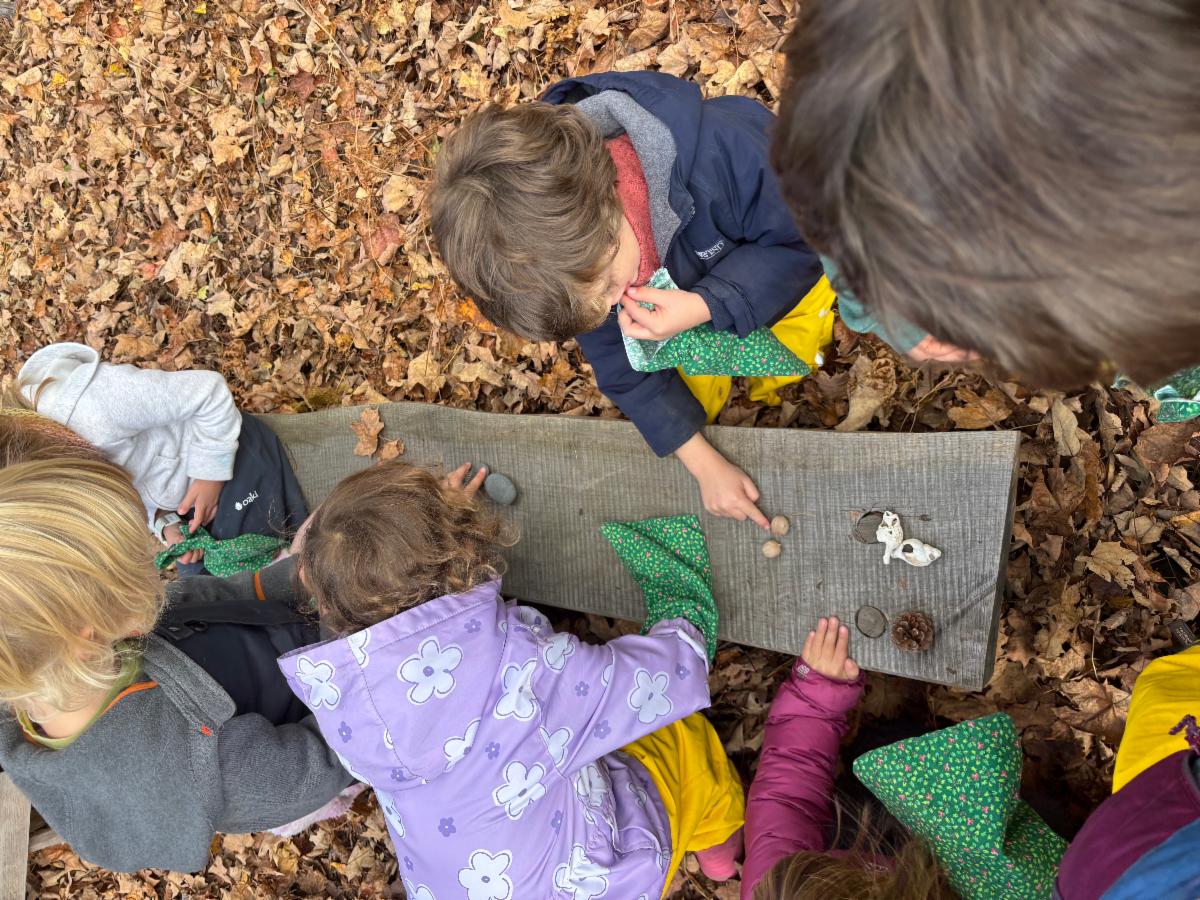
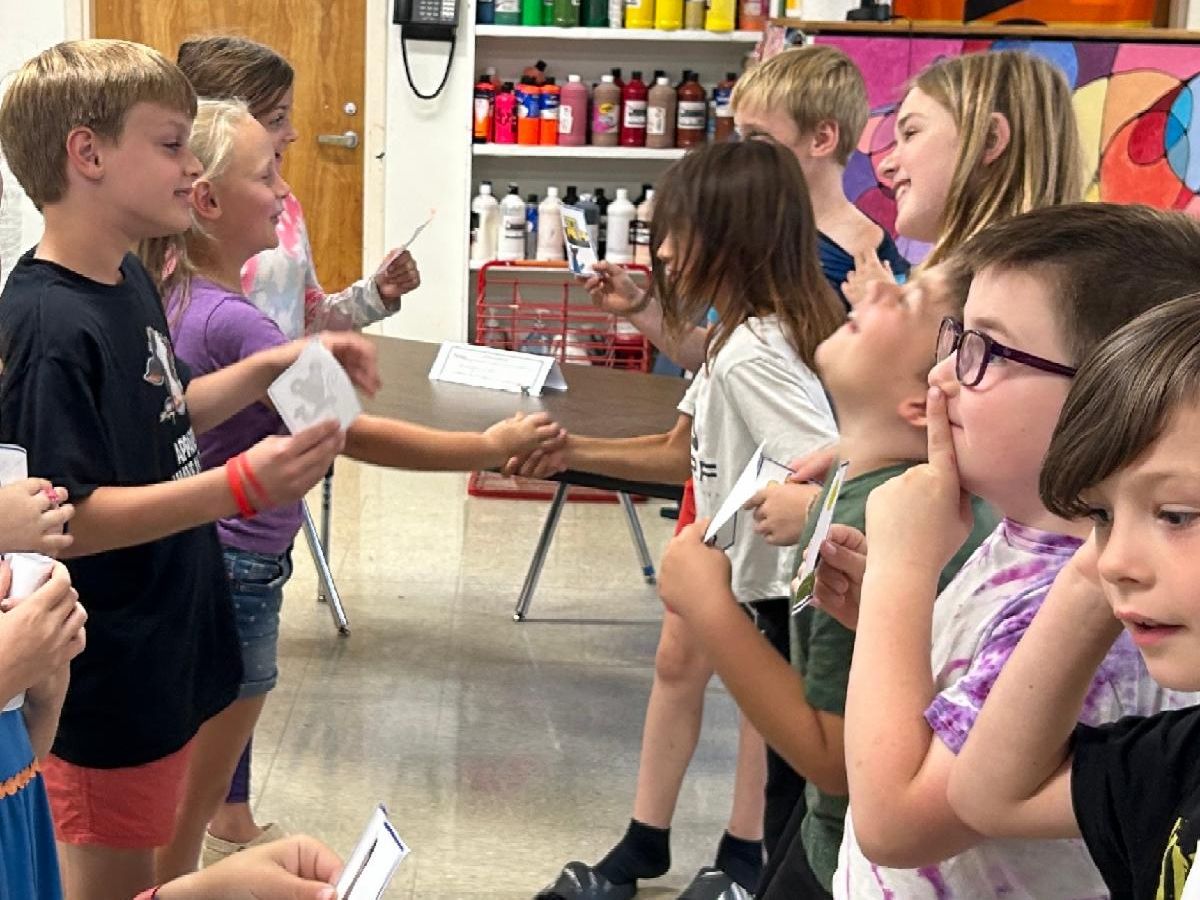
We have been choosing one sense each week to focus the children on. We have used our "owl eyes," our "deer ears," our "coyote noses," and, most recently, our "raccoon hands." In this photo, children are looking at collection of items that they had used their "raccoon hands" to explore and describe. The objects were hidden in a bag and each child found another child with the object that matched. As a policy, we don't taste wild things on forest day. Even though some students and teachers forage and harvest wild edibles at home. We did bake and eat apple crisp a few weeks back, though--so all senses are engaged!


Forest day is my favorite day of the week. It feels like a weekly reset. A time for kids to really move their bodies, explore and experiment. A time to use play to build critical physical, academic and social skills. Big thank you to Becky for supporting this work school wide! 

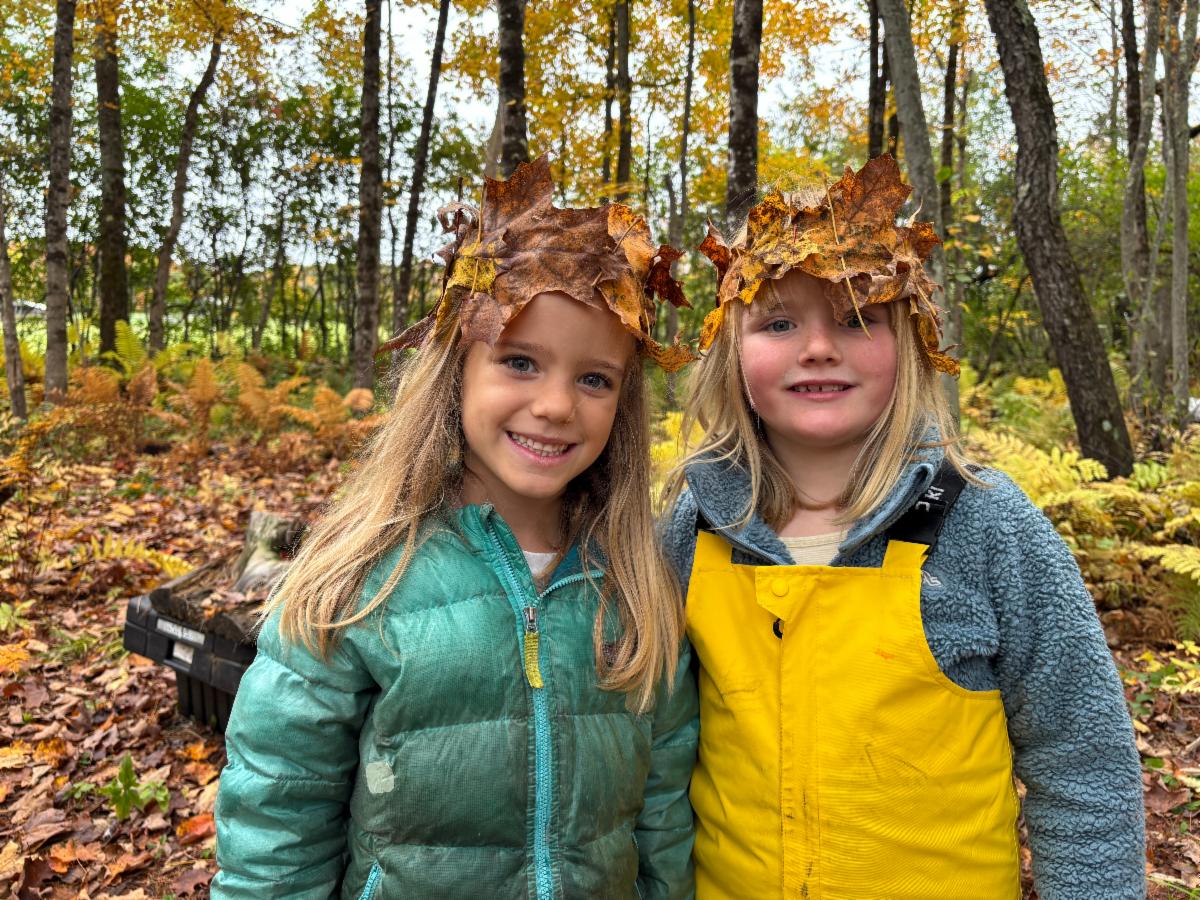
Two Kindergartners wear flower crowns
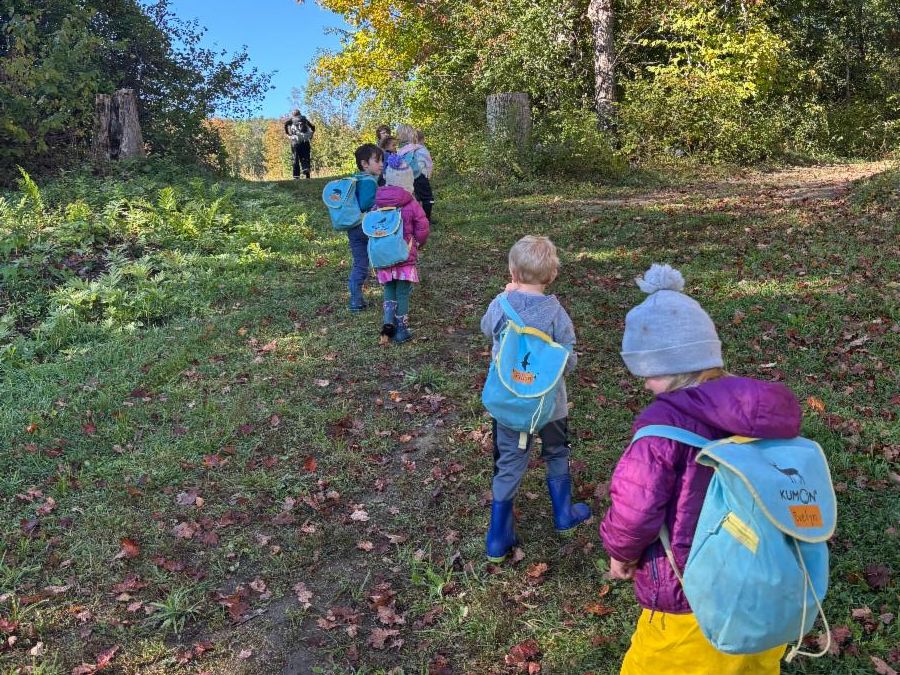
Kindergartners head up to their outdoor classroom

Third Grade

Ms. Panella


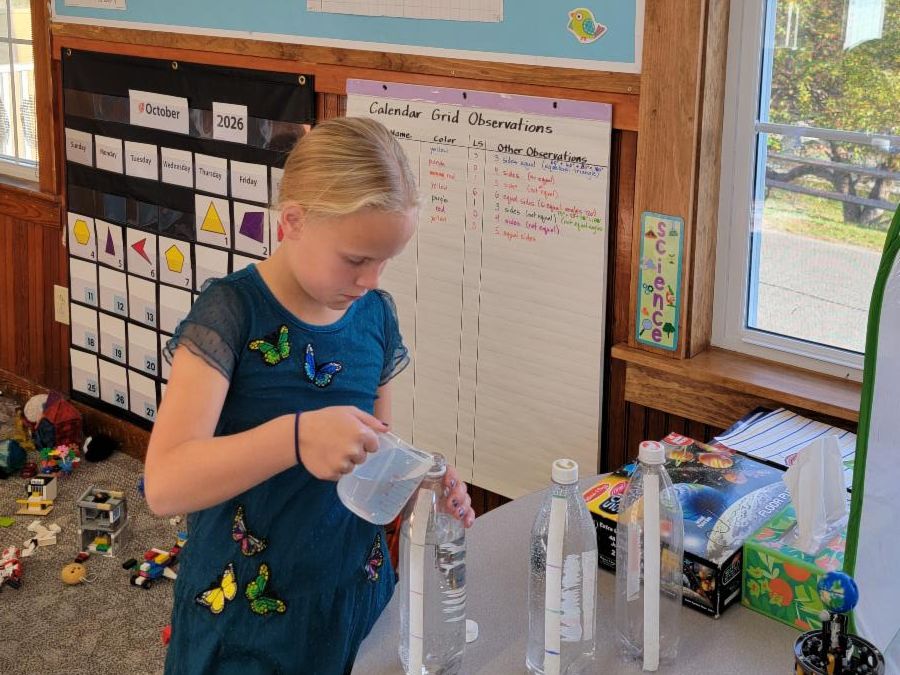
Third graders just started learning multiplication this week in math, playing ‘loops and groups’ to build conceptual understanding. In Number Corner we’re learning about liquid volume by collecting 250 mL each day and recording our running total in both milliliters and fractions of a liter. We began making predictions of how many liters we will collect by the end of the month.


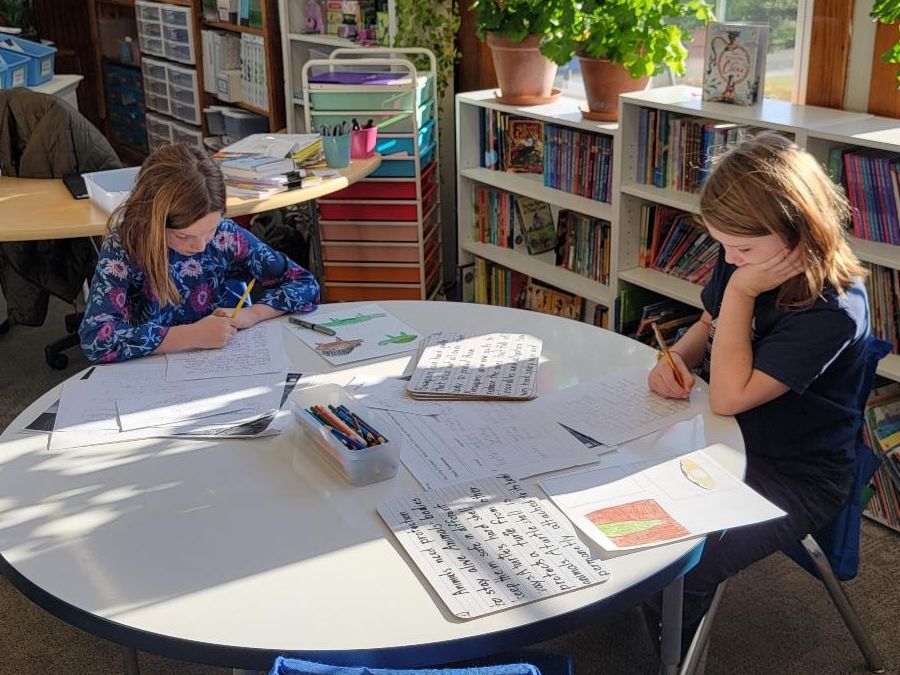
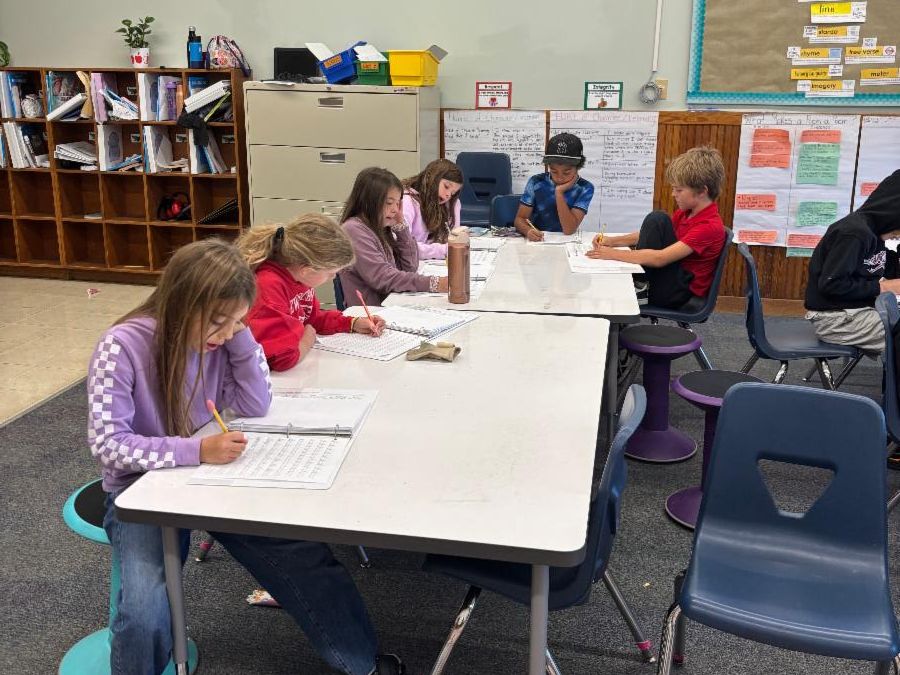
In writing, third graders are writing either a hand paragraph with elaboration or a three paragraph essay on the different ways animals’ bodies protect them. They’ve been learning how to take their own notes from the text by highlighting relevant information, create a thesis statement from the focusing question, design a hand-planner, and then write their piece. Next week they will repeat the process independently with a text on how animals keep cool.


Finally, we’ve been collaborating with Profe Katie in EL during push-in Spanish time. We’ve modified our Biblioburro lesson to be totally in Spanish, culminating in later this trimester writing narrative stories in Spanish for our own ‘biblioburro’ which we’ll take to the kindergarten and read. Stay tuned!

Third graders work on a writing piece in a sunny classroom
A third grader pours liquid in a tube as part of number corner

Fourth Grade

Ms. Cayer and Mr. Walker


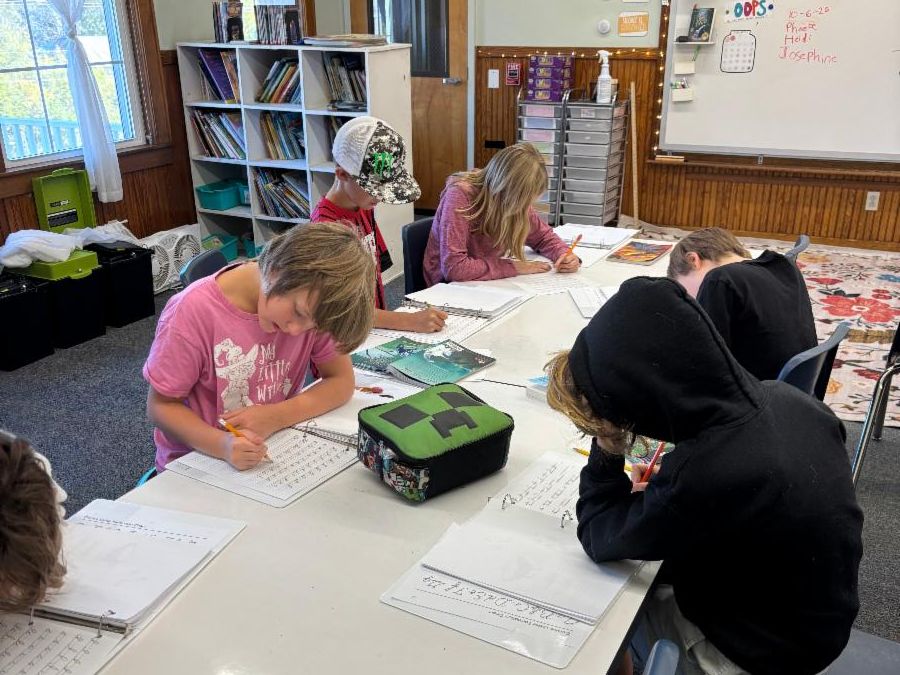
The 4th grade class is learning and discussing about what inspires poets, and using the elements of poetry to explain the meaning of different poems we have been reading in Love That Dog. We have also started a new spelling program to help us learn about the layers of our language components and how they build on one another. We are learning and practicing cursive letters as well. Your students are up to letter I and are putting in the work to be able to write in beautiful cursive.


Mr. Walker and I have been working with the students on a series of three writing activity, gradually releasing guidance for them to write the third essay on their own. In Outdoor Education, it has been so much fun learning about maps with Becky. 4th graders will be traveling to the Hood Museum this Thursday for our first visit of the year!!

Fourth graders work on writing pieces

Middle School Math

Mr. Pooler


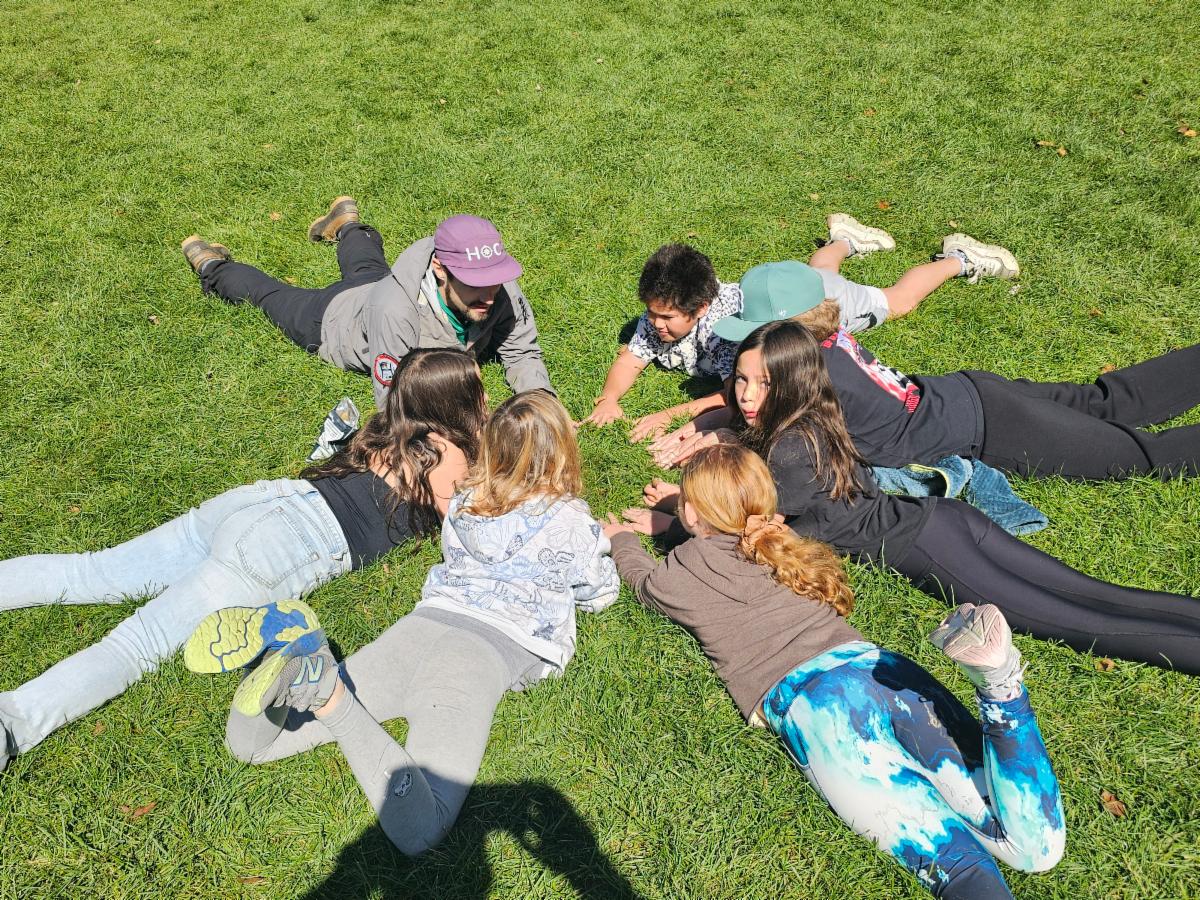
As many of you 5th grade families heard, we went to Hubert with the 8th grade the other week, and it was a blast... well, I thought so! We got to do some bonding games and canoeing. 

Fifth  graders engage in a team building activity at Hulbert Outdoor Center
Fifth graders engage in a team building activity at Hulbert Outdoor Center
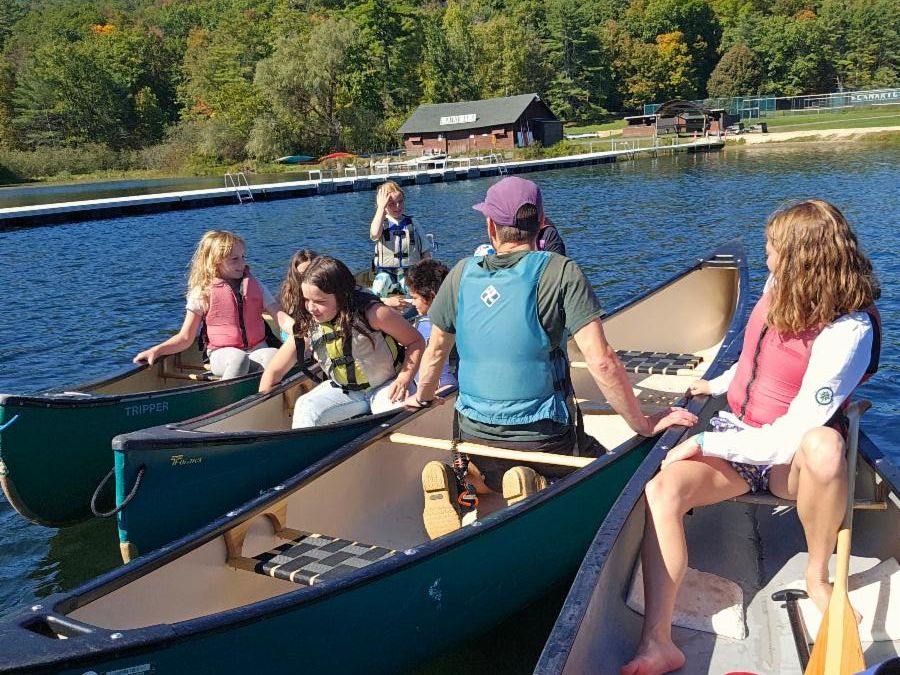
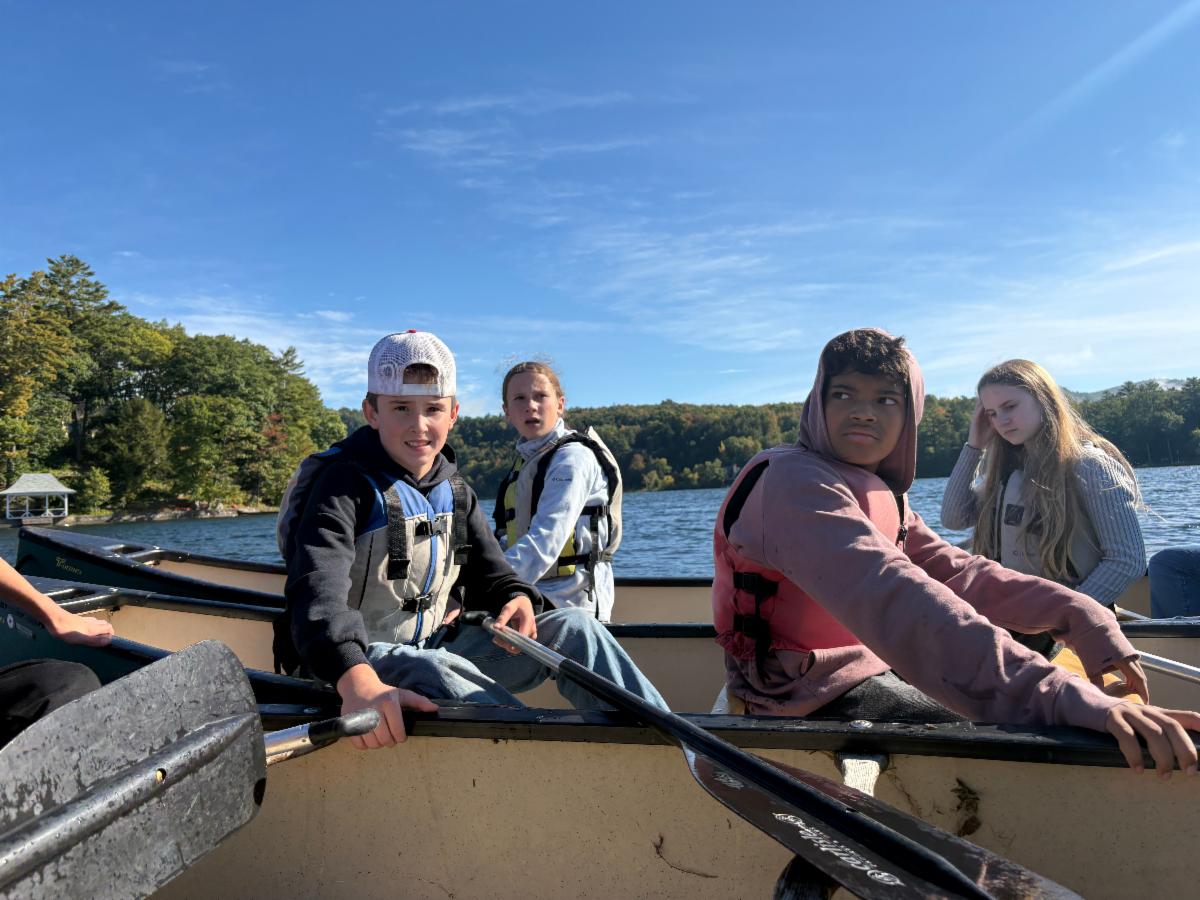
Fifth graders do some canoeing at Hulbert Outdoor Center

Middle School Science

Ms. Hardy


On Nov 17, 2026 ( rain date the 19th), between 5:00 and 7:00PM, we will have a Newton School star-gazing night. Dartmouth College is coming with telescopes and graduate students to give us a tour of the night sky. Everyone is invited! I hope all of my students 5-8 can attend, and families are welcome! Plan to stay about 20-25 minutes.


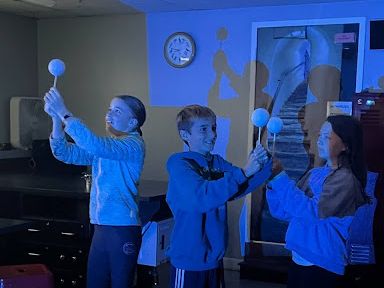
In class, students are learning about the motions of the sun, Earth and moon…. eclipses, moon phases and the planets.

Students modeling Moon phases
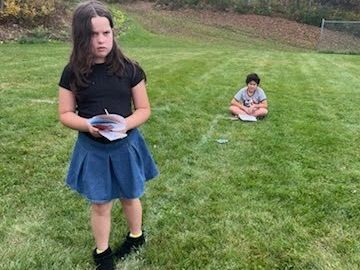
Mapping out the distances between planets
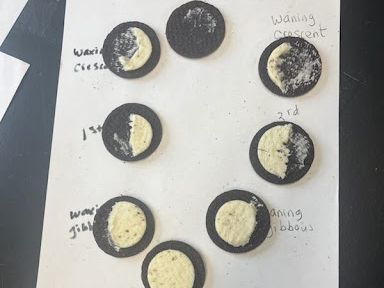
Oreo Moon phases

Middle School Social Studies

Mr. Breen


In 5/6 Social Studies, the kids are getting ready for a quiz on the states. Please remind them to study! There will be opportunities for retakes if they don't pass. We're still working on general geographic and map reading concepts, with excursions into topics like water stress, urban development, global conflict and refugee rights, and many more. 


The 7th and 8th grades are taking a break from strict content work to take a deep-dive into colonial literature, reading three smash hits of the colonial period: Ben Franklin's life-coaching; the poetry of Phillis Wheatley; and the captive narrative of Mary Rowlandson to piece together a picture of what colonists in New England wanted out of the literature they consumed. They'll write an assessment essay (sit down and write it in one go) based on themes they identify in these texts and the connections they're able to make to the larger historical narratives we're identifying. 


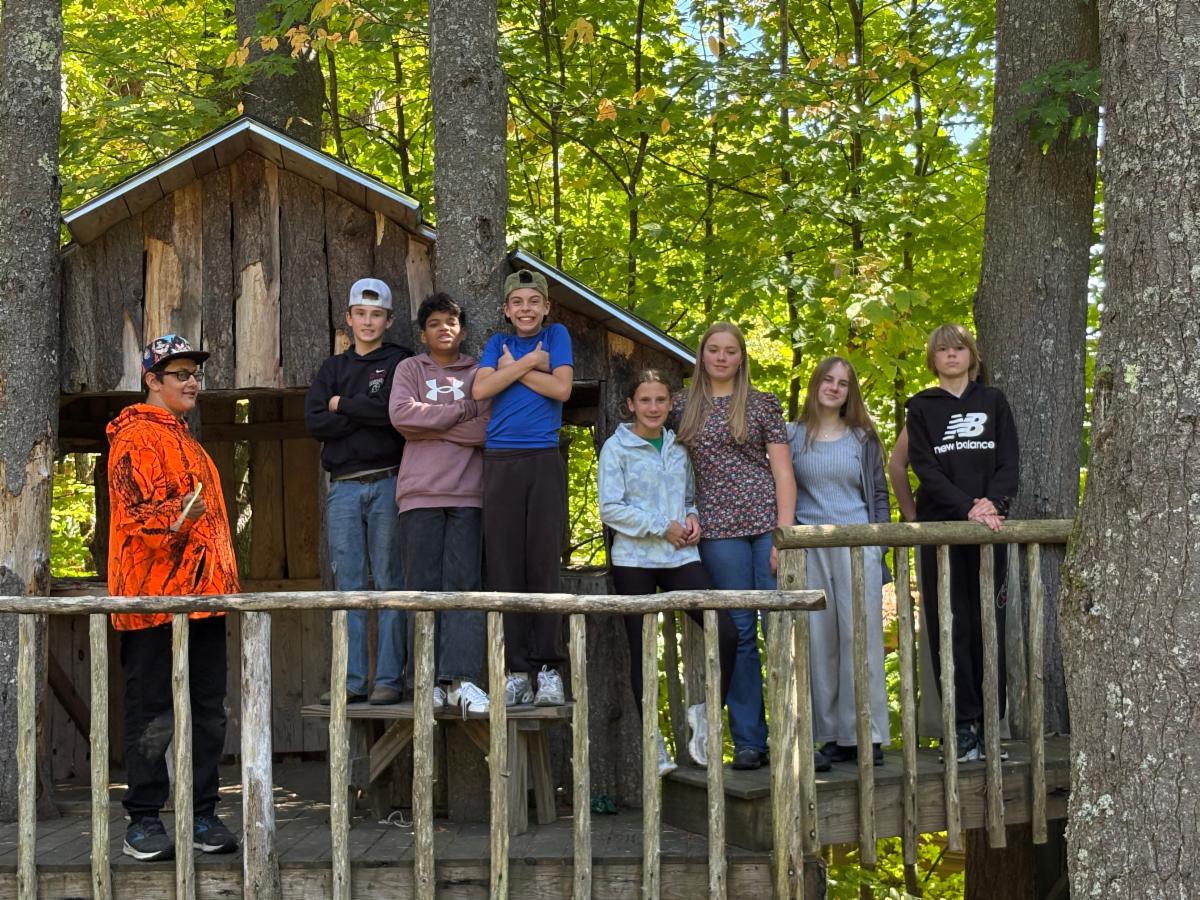
Fifth and 8th grades had an awesome time at the Hulbert Outdoor Center; 8th grade also did a really incredible job connecting with their kindergarten buddies.

eighth graders canoing at Hulbert Outdoor Center
Eighth graders at Hulbert Outdoor Center

Elementary Spanish

Profe Katie


¡Hola familias!

Happy conferences week!


Elementary students continue to impress in their Spanish classes, adjusting to instruction mostly in Spanish and practicing through reading, games and activities. Kindergarteners are practicing "Buenos días" (Good morning) and nature vocabulary, while 1-4 is finishing our Greetings unit.


Phrases to practice with your child:

K:

Buenos días: Good morning / Buenas tardes: Good afternoon / Buenas noches: Goodnight


1st-4th: 

Hasta mañana: See you tomorrow

Mucho gusto: Nice to meet you

Me llamo ____: My name is ___

Gracias: Thank you

Middle School Spanish

Profe Katie


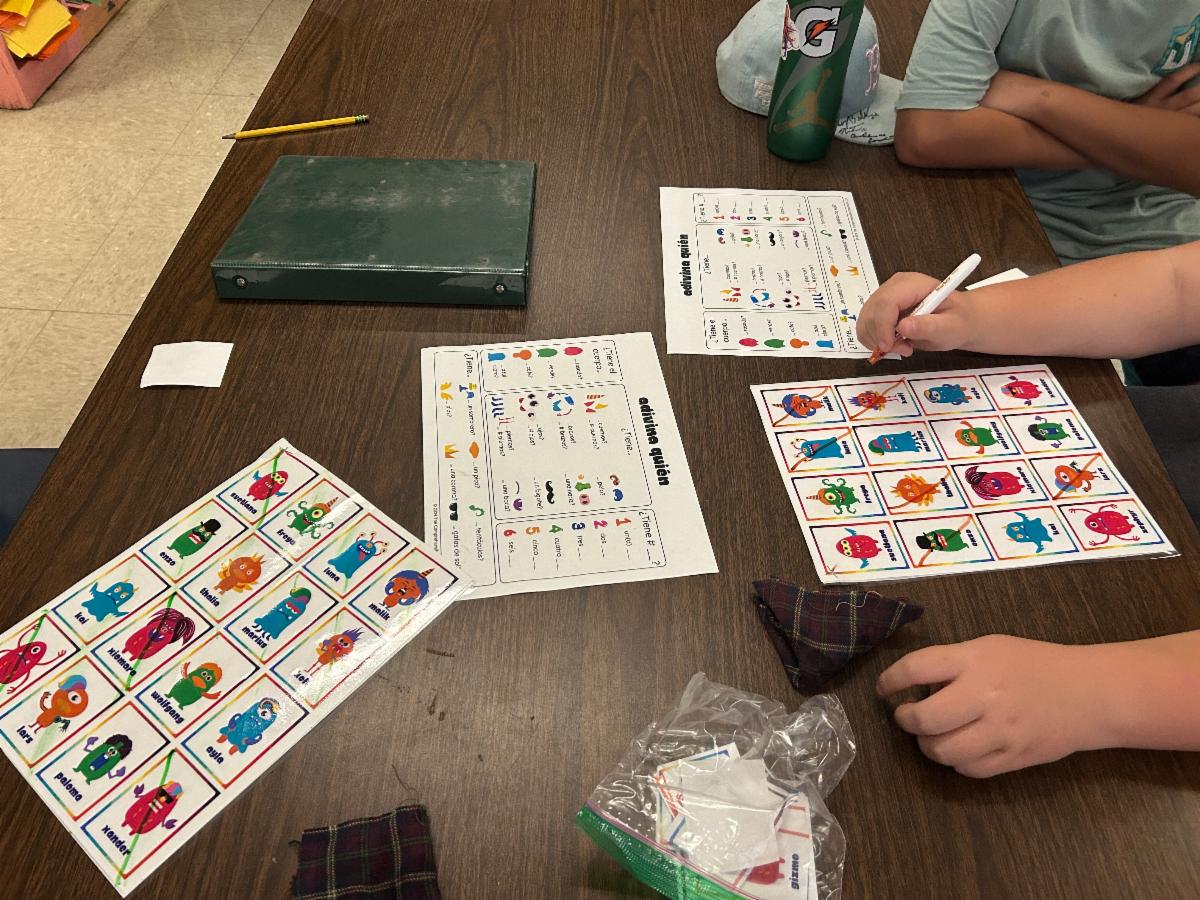
¡Hola familias! Happy Hispanic Heritage Month!


Middle Schoolers are working hard in Spanish class, delving into new vocabulary and themes after a few weeks of review and some geography lessons for Hispanic Heritage Month. 


5th graders are focusing on the phrases: "camina" (walks), "corre" (runs), "ve" (sees), and "hacia" (toward). We will be practicing these structures in the context of stories, songs, and other activities before connecting them to a cultural topic (Running of the Bulls and the San Silvestre road race). 


6th and 7th graders are focusing on the phrases: "abre la puerta" (opens the door), "cierra la puerta" (closes the door), "nunca" (never), and "son las ____" (it's ___ o'clock). We'll be practicing this through storytelling and songs before jumping into a unit about the Panama Canal. 


Finally, the 8th graders are practicing possessive adjectives like "mi" (my), "tu" (your), "su" (his/her/their/y'all's) and "nuestro" (our) in the context of someone sharing about their home country of Bolivia. Ask them what new information they have learned about Bolivia!


Phrases to practice with your child (other than the ones listed above):

Bienvenido: Welcome

Buenos días: Good morning

Gracias: Thank you

¿Cuál prefieres?: Which do you prefer?

¿Tienes ___?: Do you have___?

Tengo ….. : I have……

Also, quiz your child on the geography of North, Central, and South America and the Caribbean! And, which countries in the Americas are Spanish-speaking, and which are not.

Art

Ms. Butter


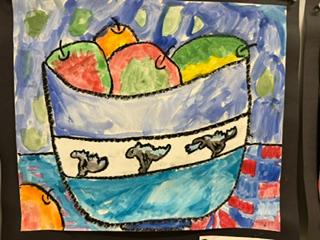
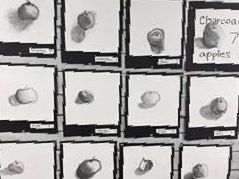
All grades have been busy creating wonderful apple-inspired artwork across a range of mediums and techniques:


Kindergarten: Cézanne-inspired apple paintings


1st & 2nd Grade: Cézanne-inspired paintings of apples in bowls


3rd & 4th Grade: Oil pastel apples with background tessellations


5th Grade: Van Gogh-inspired apples in oil pastel


6th Grade: Cézanne-inspired apple still life in oil pastel


7th & 8th Grade: Apple drawings in charcoal (with moody forest scenes in charcoal up next!)


Wishing everyone an apple-solutely fantastic fall! 


Please don't hesitate to reach out with any questions or concerns! 

PTA News


Our PTA meeting is Tuesday night at 7pm in the library. A Zoom meeting is available and the link will go out that morning. We are still looking for a secretary to help take notes. We are looking forward to supporting Mr. Walker with the Cornhole tournament. We may be looking for some help; more information to follow. 

NURSE'S NEWS


Need extra clothing for all students! 

Students of all grades end up getting wet or just simply have some sort of accident. Please send your students in with an extra set of clothing. Middle schoolers are often coming to me for extra clothing as well. 


If anyone has a few sweatshirts or jackets to donate to Newton for extra layers, we would be grateful! Thanks so much! 


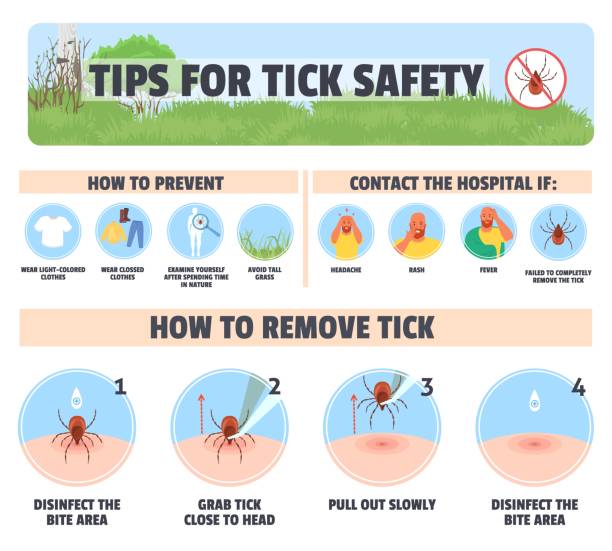
TICKS!

We have already had reports of, and seen some ticks. But - let's not stay away from being outdoors! No. Let's just get tick smarter...


Doctor Reporting Tips: 

An embedded tick means attached to the skin; an engorged tick means the tick has been attached long enough to fill with the blood of their host and enough to appear "fatter." The doctor will often use these terms when asking you questions over the phone. They will also ask you (if possible to provide) for the type of tick it was/is; and/or a picture of the tick; and/or the tick itself. If you can provide the actual tick, this is certainly best- especially if it has become engorged. 


Tick Lifespan and Feeding

The lifespan of the ticks that exist in our area is about two years. During this time, ticks go through three stages: larva, nymph and adult. At each of these phases of life, the tick needs to eat at least once to survive. It is also when and how the tick acquires the diseases that they can transfer to hosts- at a feeding. Given these facts, this also means that ticks are more likely to have a tick-borne illness, the older they are, ie, the more feedings the more times it could acquire the disease to spread to the next host. Despite this- it is the larva and nymph stages that are least likely to be detected due to their smaller sizes- so this compounds that phase's likelihood of spreading a disease.  


Ixodes scapularis (deer tick) typically lays eggs in the spring. These hatch into larva and during the summer, larvae feed and then molt into nymphs the following spring. During the summer, nymphs feed and then molt into adults over the winter. Adults females will seek a winter or spring blood meal before laying eggs in spring, completing the life cycle.


I have included here a chart--see page 4/14 in the pdf format--from recent research on tick-borne illness transmission (to a host) versus times of attachment to that host. Although Lyme disease seems to be the most prevalent of the known illnesses, other bacteria get transmitted and should also be watched for also. Some of these lesser-known illnesses, although less common, are nonetheless quicker to transmit- at least according to research thus far. Given this information, it is wise to get medical attention given this information, depending on your situation. 


A friend of mine had been bit and knew for sure that her tick had not been attached for long (well under 16 hours) and she ended up unable to move from the waist down for several hours!! They tested her for several known tick-born illnesses only to never know which one it was! They never discovered what it was! The antibiotics she was given did eventually kick the illness and it never did return; and- they were very certain that this was a tick-born illness. I say this because there are still a lot of unknowns about ticks! 


Here is more general information should you want more


Stay well!- Be safe!- Enjoy the Outdoors!


Hygiene!

Please be sure to check your students for hygiene upkeep. There are so many students who certainly need to be bathing more. Understandably there is a learning curve--and many go through this--but the body odor is really getting strong downstairs at times. Let's help our kids learn to go through puberty smoothly and without an embarrassing social moment. If you don't like antiperspirant, baking soda works great too. However, if a body odor already exists, it means there is already bacteria growing, and it is too late to cover it with another substance. Washing first is important- then using deodorant or antiperspirant immediately after. 


To develop each child’s potential for academic success, engagement and overall well-being by enriching each child’s education with community involvement, collaboration and outreach.

Facebook