IAugust is the bridge between Summer and Autumn - between how the year has been and how the year will end. - Dani DiPirro | | Leading Off: A Marlboro Man | | |
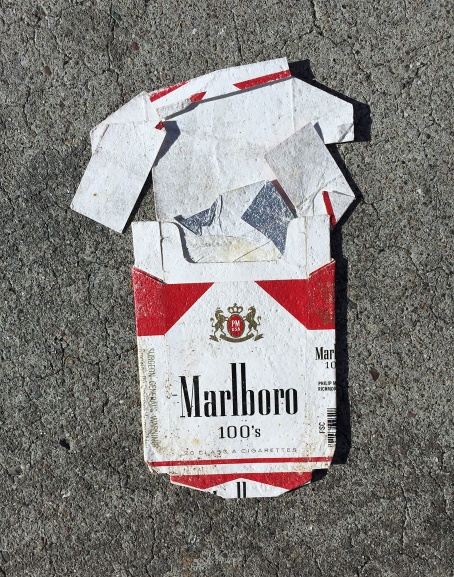
I became a smoker because of a union contract, a supervisor wearing a white hard hat, and an Irishman named Ray.
I'm not making that up. And nearly four decades after I finally stopped smoking, I've come to appreciate that the story isn't really about cigarettes. It's about how easily we acquire habits, how difficult they can be to break, and how often we confuse wanting to change with actually being committed to changing.
It also taught me something about leadership that took me years to fully appreciate. Sometimes the person most resistant to being led is the one staring back at you in the mirror. But I'm getting ahead of myself, so let me take you back to a summer when I was nineteen years old, convinced I knew just about everything, and about to begin a twenty-year relationship with Marlboro cigarettes.
| | The Night I Changed My Mind About My Mind | | |
Third Class, Unskilled
Shortly before finishing my freshman year at UMass, I received some wonderful news.
One of my new fraternity brothers had helped me land a summer job at the General Dynamics Shipyard in Quincy, Massachusetts, within walking distance of my home. I would be a union pipefitter, officially classified as Third Class, Unskilled, earning the princely sum of $2.89 per hour. The minimum wage was $1.60, gasoline was about 36 cents a gallon, and I was convinced I was on my way to financial independence. If I wasn't going to be rich by September, I was certainly going to be close.
My shipyard schedule was Monday through Saturday, 6:30 a.m. to 2:30 p.m.
I was assigned to a gang of about a dozen pipefitters working below deck on a U.S. Navy ship destined for Vietnam. Every morning, we gathered at a designated location and waited for instructions from a supervisor wearing a white hard hat. The pipefitters wore baby blue hard hats, while the other trades wore different colors. I never understood the significance of the color coding, but I quickly learned that the people wearing white hats had considerably more authority than those of us wearing blue ones.
On my second day, while our group stood around waiting for assignments, a white hat came directly toward me and demanded to know why I wasn't working. I was nineteen, new to the shipyard, and somewhat unfamiliar with the finer points of labor-management relations. I explained that I was waiting for instructions, which seemed like a reasonable explanation to me. Apparently, it wasn't. He threatened to write me up if he caught me standing around doing nothing again, then headed off in search of another unsuspecting employee.
| |
Later that morning, Ray, an experienced pipefitter from Ireland who had taken me under his wing, explained what had happened. Under the union contract, workers were permitted to smoke. If you were standing around smoking, you were exercising a contractual privilege. If you were simply standing around, you could be disciplined. The distinction seemed rather ridiculous to me, but Ray had been around long enough to understand that sometimes the rules of the workplace had little to do with common sense.
The next morning, Ray gave me a cigarette to hold while we waited for our assignments. The white hat walked by without saying a word, and I thought the problem had been solved. Unfortunately, on the following day, the supervisor noticed that my cigarette wasn't lit. He stopped, looked at me, and issued a two-word instruction: "Light it." So, I did, and within a couple of weeks, the other pipefitters grew tired of my borrowing their cigarettes and suggested I buy my own. I did.
Before long, I was a smoker. I had entered the shipyard as a nonsmoker and acquired a habit that would follow me for the next two decades, courtesy of a union contract, an overzealous supervisor, and my complete inability to recognize a bad decision while I was making it. I sometimes wonder what would have happened if that supervisor had simply told me to get back to work. I might have avoided twenty years of smoking, although I probably would have missed out on a pretty good story.
| |
For younger readers, it may be difficult to imagine just how commonplace smoking once was.
People smoked in restaurants, airplanes, offices, hotel lobbies, meetings, and even hospitals. Most homes had ashtrays everywhere, and a particularly attractive ashtray was considered a perfectly respectable Christmas gift.
When my parents entertained friends, the living room could develop a cloud of cigarette smoke thick enough to require airport landing instructions. Airplanes had smoking and nonsmoking sections, as though the smoke from Row 18 had agreed not to cross the invisible boundary into Row 17.
Smoking was everywhere, and I enjoyed it. That's an important admission because I didn't simply tolerate cigarettes. I liked them. I liked having one with coffee, after dinner, while driving, and during countless other little rituals that had become part of my daily routine.
Of course, I knew smoking was bad for me and made several attempts to quit, but there was a fundamental problem with each attempt. I wanted the benefits of being a nonsmoker without giving up the enjoyment of smoking. Looking back, that was a difficult negotiating position.
| |
A Shocking Experience in LA
Years later, I was living in Los Angeles, married, and the father of a newborn baby. I had an additional reason to stop smoking, and I began exploring ways to quit.
This was before nicotine patches and many of the smoking cessation products available today.
Somewhere, probably in a newspaper, I read about a program called Shick Shock Therapy, an approach based on aversion therapy. The concept was straightforward: if smoking could be associated with something unpleasant, eventually the smoker might develop an aversion to cigarettes. It sounded reasonable enough, although I failed to appreciate just how unpleasant the treatment could be.
Several times a week, I traveled to an office in downtown Los Angeles carrying two packs of cigarettes. I was placed in a tiny room, perhaps three feet by four feet, containing a desk covered with overflowing ashtrays and thousands of cigarette butts. The smell was beyond description. Imagine the world's dirtiest ashtray being locked inside a closet for several months, then heated to a comfortable temperature. That was the atmosphere, and it was intentional.
The room was rarely cleaned because the treatment was designed to make smoking as disgusting an experience as possible.
The technician attached equipment to my wrists and smoking hand, and for the next hour, every time I lifted a cigarette to my mouth, I received a mild electrical shock. But the electricity was only part of the experience. In one exercise, I was instructed to smoke an entire cigarette in sixty seconds. In another, I smoked with my face pointed toward the floor so the smoke would rise directly into my eyes. Over the course of a session, I might smoke twenty or thirty cigarettes, often at an extraordinary pace, while sitting in a room with virtually no ventilation.
Remember, I was paying good money for this. I occasionally wonder what I would have thought if, years earlier, someone had predicted that I would voluntarily spend an hour in a filthy closet, smoking until I was sick while a stranger administered electrical shocks.
Did it work? Sort of. I reduced my smoking considerably, but I also became quite skilled at sneaking cigarettes and borrowing them from other people.
| |
The Charlatan in Memphis
A few years later, we had relocated to Memphis. One day, my wife left a newspaper advertisement where I would be certain to see it. A hypnotist was coming to town, promising to help hundreds of smokers quit in a single session which would be held in a hotel ballroom.
My initial reaction was predictable. I thought the guy was a charlatan, and I was absolutely certain that no one could hypnotize me. I considered myself a disciplined, independent thinker with a mind far too powerful to be manipulated by some guy standing on a stage in Memphis, Tennessee.
There is probably a leadership lesson in that statement alone. Nevertheless, I registered for the session because something had changed. Smoking was becoming increasingly inconvenient, expensive, and socially unacceptable.
The ballroom was packed with smokers carrying their cigarettes. There was an aluminum ashtray on every chair, and the hypnotist explained that the evening would consist of two parts. During the first half, we could smoke while he explained the process and discussed habits, behavior, and the changes we hoped to make. I sat there listening, smoking, and silently evaluating the credibility of everything he said.
After all, I hadn't traveled to a Memphis hotel to surrender my independent judgment to some fellow with a microphone.
Then he said something I have never forgotten. The objective wasn't to quit smoking. The objective was to become a former smoker and a nonsmoker. At first, it seemed like clever wordplay, but the more he talked, the more the distinction began to make sense.
Quitting described something I was giving up, while becoming described someone I wanted to be. One focused on losing something I enjoyed, while the other focused on gaining something I valued. It was a relatively simple distinction, but it caused me to think about my goal differently than I had during all my previous attempts.
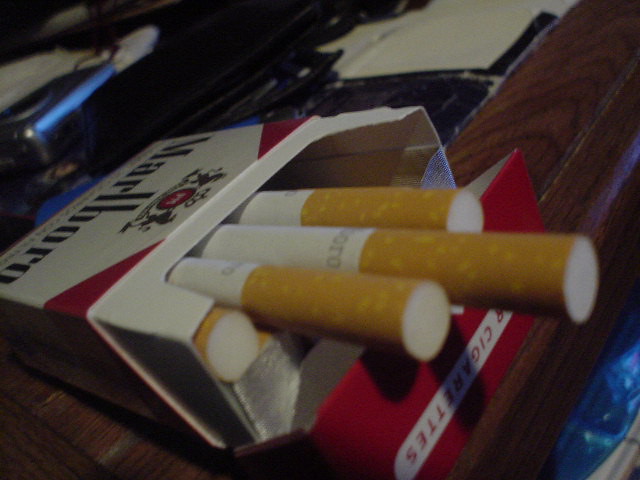
At intermission, he instructed us to smoke our last cigarette and throw away whatever tobacco we had remaining. Outside the Hyatt Hotel, with traffic humming along Interstate 240, I finished a Marlboro and dropped the remaining cigarettes into a large trash barrel. I hoped it would be my last cigarette, although I certainly wasn't convinced. I had tried to quit before, and I knew how easy it was to make promises that lasted until the next cup of coffee. Still, something felt different that evening, and I returned to the ballroom willing to find out whether there might be something to this hypnosis business after all.
Back in the ballroom, the lights dimmed, and the hypnotist began speaking softly. He instructed us to relax, gradually moving through different parts of the body. Before beginning, he had started a large timer on the stage and turned it away so we couldn't see the elapsed time. He then began suggesting that we wouldn't want cigarettes in the situations where we normally smoked. With coffee, after meals, while driving, first thing in the morning, or with a beer. As he described each situation, I remember thinking that he clearly didn't understand how much I enjoyed smoking in precisely those circumstances.
As he continued, however, I found myself hoping it would work. Really hoping. I had finally decided that becoming a nonsmoker mattered more to me than the pleasure of another cigarette, and I wanted to believe that something was happening. Eventually, the lights came back on, and the hypnotist asked how much time we thought had passed. He offered several choices, and I raised my hand when he suggested approximately four minutes. I was quite confident in my estimate, although by this point in my life, I probably should have learned to be a little less confident about such things.
| |
Then he turned the timer around, and I was stunned. Almost twenty minutes had passed! How could I have been so wrong? Had I actually been hypnotized? Had I simply lost track of time? Had the man somehow outsmarted my supposedly superior mental powers? Whatever the explanation, my certainty that I understood everything about my own mind had taken a serious beating. For someone who had entered the ballroom convinced that hypnosis was impossible, the experience was more than a little unsettling.
I drove home without cigarettes, arriving around 8:30 that evening. I informed my wife that I was going directly to bed because I had developed what I considered to be an exceptionally clever strategy. To the best of my recollection, I had never smoked while sleeping. Therefore, eight hours in bed would give me an excellent head start on becoming a nonsmoker. Sometimes brilliance comes in very small packages, and I figured that if I could make it through the first night, I might actually have a chance.
The following morning, I woke up and wanted a cigarette, but the urge disappeared after a few seconds. I had coffee, experienced another urge, and watched it pass. I got into the car, and the same thing happened. Throughout that first day, the urge returned every ten minutes or so, but each time it disappeared after a short while. On the second day, the urges were perhaps thirty minutes apart. By the third day, the intervals were longer, and by the end of the week, they were infrequent. Eventually, they disappeared altogether.
For the first time in twenty years, I wasn't a smoker trying to quit. I was a nonsmoker, and I've remained one for nearly four decades. I still don't know whether the hypnotist actually hypnotized me or whether I was finally ready to make the commitment that all my earlier attempts had lacked. Perhaps it was a combination of the two. Whatever happened in that Memphis ballroom, the result was extraordinary for me, and it changed much more than my relationship with cigarettes.
| |
The Lesson Took Longer Than Twenty Minutes
When I originally began telling this story, I thought the most remarkable part was the hypnosis. After all, I had gone into that ballroom absolutely convinced that I couldn't be hypnotized, and I left with an experience that challenged that certainty.
But with the perspective that comes from a few additional years of living, leading, succeeding, and occasionally making a complete mess of things, I now see several lessons that extend well beyond smoking.
The first is about humility. I walked into that hotel believing I understood my own mind better than anyone else possibly could. I walked out realizing how little I knew.
Whether I was actually hypnotized remains an open question, but I had discovered that confidence and understanding are not necessarily the same thing. Over the years, I've worked with some remarkably talented people who knew things I didn't know, possessed skills I didn't have, or saw possibilities I had overlooked.
The better I became at acknowledging those differences, the more effective I became as a leader. Being the person in charge doesn't require being the smartest person in the room, and sometimes the smartest thing you can do is listen to someone who knows more than you do.
The second lesson is about commitment. For years, I told myself I wanted to quit smoking. I made attempts, invested time and money, tolerated discomfort, and even submitted to electrical shocks in a room that smelled like the inside of a chimney. But wanting to change and committing to change are not the same thing. I had been willing to experiment with quitting, but I hadn't been willing to become a nonsmoker. The difference was enormous, and I suspect it helps explain why so many of our well-intentioned promises, resolutions, and personal improvement plans never produce the results we expect.
Of course, commitment alone doesn't overcome every addiction or personal obstacle. Nicotine dependence is real, and many people need medical treatment, counseling, medication, or other support to stop smoking. Hypnosis is not a guaranteed solution, and my experience shouldn't be considered a recommendation of that particular treatment. But in my case, something changed that evening, and I believe my willingness to make a genuine commitment was an important part of it. I stopped looking for a way to smoke less and started thinking about the person I wanted to become.
The third lesson, and perhaps the one I appreciate most today, is about self-leadership. I've spent much of my professional life helping people develop leadership skills. We talk about setting expectations, making decisions, developing others, taking action, and staying with difficult challenges. Yet we sometimes overlook a rather obvious question: How well do we lead ourselves? We may be quite good at recognizing what other people need to do differently while remaining remarkably creative at explaining why we haven't made the changes we know we should make.
| |
We know we should exercise more, listen better, make that difficult phone call, spend less time worrying about things we cannot control, or stop postponing decisions that need to be made.
We understand the benefits, recognize the obstacles, and may even have a perfectly reasonable plan. And then we begin negotiating with ourselves. Tomorrow would be better. Next week makes more sense. After the holidays. When things slow down. When the timing is right.
I spent twenty years having that conversation with myself over cigarettes, and I became exceptionally good at winning arguments that allowed me to keep smoking.
Today, with more information, technology, advice, and self-improvement programs available than ever before, it's tempting to believe there must be a shortcut to personal change.
Sometimes those resources help enormously, but no app, book, seminar, or clever slogan can make every decision for us. We still have to pay attention to our behavior, decide what matters, and follow through when the initial enthusiasm disappears. In the language I now use when discussing Observational Leadership, we have to Observe, Act, and Stay With It. That applies whether we're leading thousands of employees, managing a small team, raising a family, or simply trying to make a personal change that has eluded us for years.
And it all begins with being willing to see ourselves as we actually are, rather than as we would like to believe we are. That's not always comfortable, particularly for those of us who have spent a lifetime convinced that our judgment is exceptionally sound.
But recognizing where we have been fooling ourselves is often the first meaningful step toward doing something differently. I learned that lesson in a hotel ballroom in Memphis, although it took me a good many years to understand its broader implications.
| |
One Last Observation
For a long time, I assumed the biggest benefit of becoming a nonsmoker was the money I saved. And believe me, over nearly four decades, the savings have been considerable.
But money isn't the most valuable thing I gained. I gained freedom from a habit that had gradually taken control of dozens of little decisions every day. I no longer had to plan around cigarettes, worry about running out, look for places where smoking was permitted, or promise myself that the next pack would be the last.
More importantly, I gained a better understanding of myself. I learned that I wasn't quite as smart as I thought I was, that asking for help is not weakness, and that sometimes the first step toward lasting change isn't doing something differently. It's seeing yourself differently. Those lessons have stayed with me through decades of business decisions, personal challenges, and countless occasions when I was tempted to believe that I already knew the answer.
I still don't know whether the hypnotist in Memphis actually hypnotized me. Perhaps he did. Perhaps I was simply ready to make a commitment that all my earlier efforts had lacked. It's one of those mysteries I am perfectly content to leave unsolved, particularly since the result has lasted nearly forty years.
But I do know that on a night long ago, behind a hotel in Memphis, I dropped a pack of Marlboros into a trash barrel. Looking back, the most important thing I threw away that night wasn't the cigarettes. It was the belief that wanting to change and deciding to change were the same thing.
And that may be the most valuable lesson I learned from a man I was certain couldn't teach me anything.
| | Surprise Photo at the End: | | If you are reading this on a social media platform, click below and you'll automatically receive a 'different' story every week on Wednesday. | | |
The Roll Call of states and countries where readers reside: Arizona, California, Colorado, Connecticut, Delaware, Florida, Georgia, Hawaii, Illinois, Indiana, Iowa, Kansas, Kentucky, Louisiana, Maine, Massachusetts, Michigan, Mississippi, Missouri, Montana, New Hampshire, New Jersey, New Mexico, New York, North Carolina, North Dakota, Ohio, Pennsylvania, Puerto Rico, Rhode Island, South Carolina, South Dakota, Tennessee, Texas, Vermont, Virginia, Washington and Washington DC, Wisconsin plus Canada, Conch Republic, Australia and the United Kingdom.
| | |
Ed Doherty
774-479-8831
www.ambroselanden.com
ed-doherty@outlook.com
Forgive any typos please.
| | | | | |