|
Matt was the first person from the City (in this go-around at least) to present the City’s plan to City Council on March 24 concerning the next chapter on the subject of flood mitigation and flood prevention, after the City plans for a pump station in Waterfront Park was shut down by the National Park Service and the Department of Interior. These revisions were also presented to the Waterfront Commission on April 21.
Now, you will have the opportunity to see your neighbors, to hear the latest presentation from the City, and to ask questions and express your opinions about the new plan.
This is a program which you cannot miss!
In general, the City is now proposing a scaled down version of park improvements together with construction of a portion of the necessary bulkheading, and the use of flood control gates or valves, designed to eliminate sunny day flooding. As of this date, there are no plans to develop the Pt. Lumley area, nor of course a pump station
However, it must be noted that the construction of a pump station in the future, remains, of which more later.
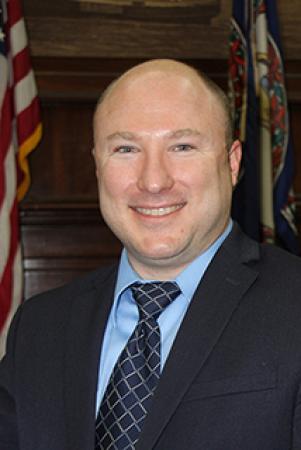
As many of you know, Matthew Landes, PLA, CCM, ISA, is a Division Chief in the Department of Project Implementation and Portfolio Manager of this project. Matt is a Licensed Landscape Architect, Certified Construction Manager, and Certified Arborist. Landes serves as the Program Manager for the City's Waterfront Implementation Program, Project Manager for the Waterfront Flood Mitigation Project, and is the Portfolio Manager for several sponsor project portfolios for the Parks and Recreation Department and the Office of Historic Alexandria. Matt started with the City in 2015 as a Principal Planner and Landscape Architect after practicing as a Professional Landscape Architect and Certified Arborist in the private sector with a special focus on Green Infrastructure, Low Impact Development strategies, and secure site design.
Matt, and possibly other staff members, will give us a review of the Waterfront Small Area Plan as it was initially adopted in 2012 and City Council approval of the Landscape Design presented by the Olin Studio in 2014. He will give us updates now that the pump station will not be built at this time. (REPEAT: don’t assume it is gone forever!)
Matt seemed to indicate at the Waterfront Commission meeting that, while the City has in fact tried to get the NPS to reconsider its rejection of a pump station in Waterfront Park, such a reconsideration is not likely at this time. Nor does the City have funds now to construct such a pump station, anyway.
It is vital to note when the same question was raised at a City Council briefing, both Vice Mayor Bagley and Councilman Elnoubi asked if the construction of a pump station in the park could be brought up again, after a change of administrations across the river. This option was not completely closed down and Mr. Landis confirmed that no funds expended in the current proposal would be wasted if the pump station were to be constructed in the Park in the future. The Vice Mayor noted that “we understood this to be a permissible use for nearly 10 years” and that “probably in the future under a different leadership at NPS this “will become a permissible use again, as it is something that is needed all over the east coast.”
Therefore, it cannot be stressed enough that the possibility still exists whereby the City will proceed to build the connecting pipe structures currently designed to move all stormwater flowing from Oronoco Street and Prince Street, and from S. Fairfax Street to the river will occur. Then, the pitch will be “The infrastructure is already in place and we need a pump station to get rid of all of this water”.
Here is the key: What exactly does the City want to build by way of storm drain pipes? Will the City construct the stormwater drainage system to run to the Park, as has been the idea all along, and then would wait for another chance to build a pump station there to handle it?
Of course, there would be more clarity on this point if the City were to be more forthcoming on the location of the new stormwater lines, which to date it is failed to do.
There are no clear depictions of the precise location and size of those pipes draining to the river to be constructed north or south of King Street. It is also uncertain as to how far they will extend west of Lee Street. (The best guess on the latter is Fairfax Street is the westernmost limit.) Matt’s most recent presentation shows only the storm water pipes beginning at King and Lee Streets.
We need to have clarity on whether the City will be amending its plans regarding the stormwater drainage system between Fairfax Street and the river, and between Oronoco Streets and Prince Streets. Only then can we be assured that the system is not being built for a pump station to be included in the project area at some time in the future, without being straightforward about it in the planning process.
One option for the City is to revert to the option of improving the west/east out flows out to the River from each street end, that has done the job since 1749. We also recognize the problem of deteriorating (and probably too small) pipes already in place.
Another solution might be on the horizon, or, rather, just across the Potomac River.
DC Water, faced with the problem of similar outdated and broken sewer pipes leading to spills of polluted water into the Potomac last winter, is now utilizing a “new” technique of repairing, or relining, of the existing sewer pipes with a geopolymer material. It is estimated that those repaired pipes will have an additional lifetime use of 50 years. More information needs to be obtained on this DC Water approach, and whether it would work here.
The question would nonetheless remain on how to drain the “bathtub”-- although it could now be thought of as a “sink”-- if the City reverts to the option of creating more west/east outflows to the River from the street ends that now do the job. Still, a repair rather than a replacement would undoubtedly be cheaper and would strongly lessen the likelihood that we have just kicked the pump station issue down the road.
Given the removal of the pump station in the current plans, we now have the opportunity to separate the issues of stormwater management from that of park improvements.
In the City’s now-abandoned approach initiated more than two years ago, the park improvement plan that City Council approved in 2014 was essentially turned into an infrastructure maintenance and stormwater management plan. Now the two can and must be treated separately, both in terms of plan implementation and of funding. For the park improvements, our pitch should be to proceed in accordance with the 12-year-old Olin plan.
The funding for the park improvement plan would, appropriately, come from the City’s CIP fund, in the amount of approximately $120 million.
The stormwater management plan, to handle the stormwater collection and disposal, can then be financed through the City’s stormwater utility fee, as it is handled everywhere else throughout the City. If there had been any justification for this separation in prior years, it was because riverine flooding was considered to be a part of the overall issue of stormwater management throughout Old Town. Now the two can reasonably be separated.
The City can, and should, proceed as promptly as possible with the construction of the new bulkheading and promenade along Waterfront Park, along with as many other park improvements as can possibly occur within the remaining budget, for the benefit of residents, tourists and the surrounding businesses.
Now, more than ever, we must keep in mind that there is more to come here, and most importantly, this is an issue that remains to be resolved in a manner that is best for us as citizens, but also for the future of the park as we wish to leave it to the next generation.
For your convenience, the website for the City's flood mitigation plans is below, however they have still not been updated since before the NPS made their decision.
|